Two New Planets Discovered?
06 Sep 2020 Leave a comment
in economics of education, economics of media and culture
Affirmative Action and Its Mythology – Fryer and Loury
06 Sep 2020 Leave a comment
in applied price theory, applied welfare economics, discrimination, economics of bureaucracy, economics of education, human capital, income redistribution, labour economics, labour supply, occupational choice, politics - USA, poverty and inequality, Public Choice, rentseeking Tags: affirmative action, political correctness, racial discrimination, regressive left, sex discrimination


Ocean carbon uptake widely underestimated, say researchers
05 Sep 2020 Leave a comment

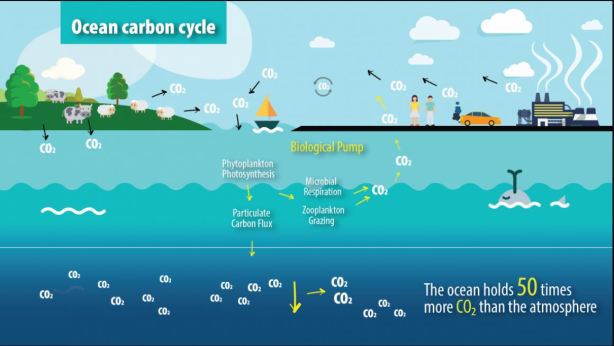 The ocean carbon cycle [credit: IAEA]
Shockingly – for some – nature’s ocean carbon cycle is functioning quite well, despite constant attempts by feckless humans to undermine it [/sarc]. Time to revisit those troublesome computer models yet again.
– – –
The world’s oceans soak up more carbon than most scientific models suggest, according to new research, reports Phys.org.
Previous estimates of the movement of carbon (known as “flux”) between the atmosphere and oceans have not accounted for temperature differences at the water’s surface and a few metres below.
The new study, led by the University of Exeter, includes this—and finds significantly higher net flux of carbon into the oceans.
It calculates CO2 fluxes from 1992 to 2018, finding up to twice as much net flux in certain times and locations, compared to uncorrected models.
View original post 176 more words
Reality Check: Green Energy Fantasies Threaten Post COVID Economic Recovery
05 Sep 2020 Leave a comment


There’s debate over which did more harm: the coronavirus or government policy responses to it. But there’s no argument that our economic recovery requires reliable and affordable electricity. Which means that the current arguments about recharging economies using heavily subsidised and chaotically intermittent wind and solar are as dangerous as they are delusional.
Ross McKitrick makes the point that, if subsidised renewables didn’t make economic sense the lockdowns were enforced, they make even less sense now.
Ditch the fashionable green recovery plans
Financial Post
Ross McKitrick
19 August 2020
Green technologies that were known money-losers before the pandemic are still money-losers today.
There’s a curious idea floating around that the COVID crisis undid the principles of economics. Nobody puts it exactly like that, but it’s implied in the various proposals for restructuring the post-pandemic economy so that it will look very different from the one we experienced up to the…
View original post 729 more words
The ϟϟ and Wehrmacht Murder Inc. – War Against Humanity 017 – August 1941, Part 2
05 Sep 2020 Leave a comment
in defence economics, laws of war, war and peace Tags: The Holocaust, World War II
JAMES SHAW … DAMAGED GOODS
05 Sep 2020 Leave a comment


Just returned from a couple of days in Wellington. Boy, you need to look no further than our airports to see the effect of the lock-down on the economy. Both Auckland and Wellington terminals were dead. 5 pm on Friday night in Wellington and you would expect the Koru lounge to be rocking … twas less than half full. When I got to the Auckland Regional lounge just before 7 and just 8 persons there in a facility catering for 150. I digress.
James … when you’re in a hole stop digging. Your latest attempt to shift the blame for your deliberate decision to fund the Green (Party) Private School by claiming that the Education Minister gave his tacit endorsement to the grant keeps giving the story legs. Charitable interpretation … you heard what you wanted to hear and didn’t hear it very well. Less charitable interpretation … either you…
View original post 124 more words
The Allocation of Talent and U.S. Economic Growth
05 Sep 2020 Leave a comment
in discrimination, economic growth, economics of education, gender, geography, human capital, industrial organisation, labour economics, labour supply, macroeconomics, occupational choice, occupational regulation, politics - USA, poverty and inequality, transport economics, urban economics Tags: creative destruction, racial discrimination, sex discrimination
HIS TRUTH IS MARCHING ON: JOHN LEWIS AND THE POWER OF HOPE by Jon Meacham
05 Sep 2020 Leave a comment


Reverend Martin Luther King Jr., center right, is escorted into a mass meeting at Fisk University along with Student Nonviolent Coordinating Committee chair John Lewis, left, and Lester Mckinnie, center, in Nashville, Tenn., in 1964.Bettmann Archive/Getty ImagesJuly 21,
When John R. Lewis died recently, part of America’s conscience passed with him. With all the turbulence, chaos, lies, and antipathy toward race that is endemic to the Trump administration it makes every day difficult. A case in point was yesterday in Kenosha, WI when Trump refused to acknowledge the shooting of Jacob Blake by police and his subsequent paralysis or his support for Kyle Rittenhouse, the seventeen year old AR-15 carrying killer of two men. For me this has led to despair as I do not see a way out of America’s current condition with a “serial igniter” when it comes to race. Trump and his acolytes blame everyone but their…
View original post 1,233 more words
Richard Dawkins: One Fact to Refute Creationism
05 Sep 2020 Leave a comment
in economics of education Tags: evolution
536
05 Sep 2020 Leave a comment
in economic history, economics of media and culture, economics of natural disasters

@caseybmulligan on @paulkrugman’s unwitting usefulness
05 Sep 2020 Leave a comment
in applied price theory, history of economic thought, industrial organisation, international economics, macroeconomics, politics - USA, Public Choice Tags: useful idiots
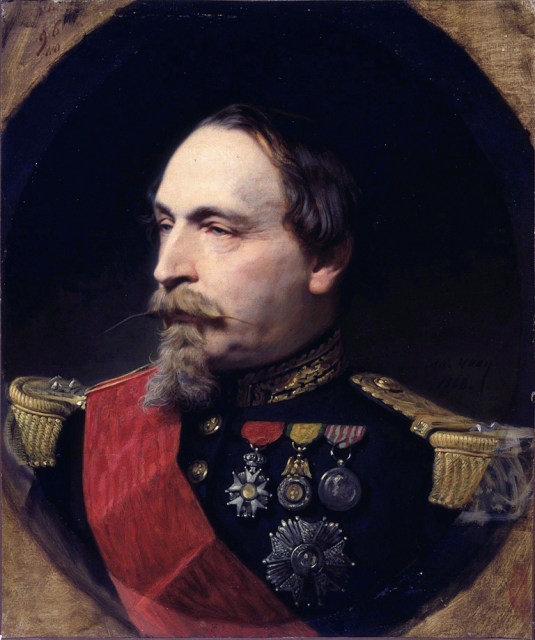
September 4, 1870: Emperor Napoleon III of France is deposed and the Third Republic is declared.
05 Sep 2020 Leave a comment

Napoleon III (Charles-Louis Napoléon Bonaparte; April 20, 1808 – January 9, 1873), the nephew of Napoleon I, was the first president of France, from 1848 to 1852, and the last French monarch, from 1852 to 1870. First elected president of the French Second Republic in 1848, he seized power by force in 1851, when he could not constitutionally be re-elected, and became the emperor of the French. He founded the Second French Empire and was its only emperor until the defeat of the French Army and his capture by Prussia and its allies in the Franco-Prussian War in 1870. He worked to modernize the French economy, rebuilt the center of Paris, expanded the French overseas empire, and engaged in the Crimean War and the Second Italian War of Independence.
The Battle of Sedan was a total disaster for the French—the army surrendered to the Prussians and Napoleon himself was made a…
View original post 593 more words
10 ideas from Good Reasons for Bad Feelings – Insights from the Frontier of Evolutionary Psychiatry
04 Sep 2020 Leave a comment

Good Reasons for Bad Feelings by Randy Nesse examines emotions and mental illness from an evolutionary psychology perspective. I was really excited about reading this book because Nesse’s Why We Get Sick had a huge impact on me when I read it as an undergrad, encouraging me to think of the intersection between health psychology and evolutionary psychology. Here is a good primer on Darwinian Medicine from around that time.
Last month I had this discussion on free will versus determinism with Gena Gorlin, a clinical psychologist who expressed a great deal of skepticism about an evolutionary approach to clinical psychology and mental health in our conversation. I was reminded that, in the therapeutic community, an evolutionary perspective is often considered wrongheaded, counterproductive and offensive to human dignity.
Good Reasons for Bad Feelings is essential reading for anyone interested in how an evolutionary perspective improves our thinking about mental health…
View original post 2,207 more words


Recent Comments