
Woke left feminism
15 Aug 2020 Leave a comment
in economics of religion, law and economics, liberalism, libertarianism, politics - Australia, politics - New Zealand, politics - USA Tags: Freedom of religion, political correctness, regressive left, useful idiots
@Greens @BernieSanders @NZGreens @AOC @Greenpeace
15 Aug 2020 Leave a comment
in economics of education, economics of information, economics of media and culture, politics - Australia, politics - New Zealand, politics - USA Tags: cognitive psychology, political psychology

Movie Review: Filipino life can be short and bleak when you’re on the “Watch List”
15 Aug 2020 Leave a comment


Only you know what your tolerance for dark, grim stories that offer little hope for justice in an unjust world, little hope for hope itself, for that matter.
But “Watch List” is a bleak but riveting thriller worth girding yourself for and immersing yourself in. It’s a Filipino thriller directed by American Ben Rekhi (“The Ashram”) about a newly-widowed mother of three, a recovered junkie, caught up in the authoritarian slaughter of President Rodrigo Duterte.
“Extra judicial killings” is one of those phrases, like “ethnic cleansing,” that tidies up a murderous horror. That’s what “Watch List” is about, the rapid descent of a half-compliant culture into off-the-books but state-sanctioned murder and “disappearances.”
A police van empties out in Quezon City’s District 120. It’s part of Operation Tokhang, which news footage shows the Filipino strong man authorizing. They’re rounding up everybody ever caught and convicted of using or selling drugs, giving…
View original post 679 more words
@oxfam @Greenpeace @jeremycorbyn @BernieSanders @SenWarren @Greens @NZGreens @AOC
15 Aug 2020 Leave a comment
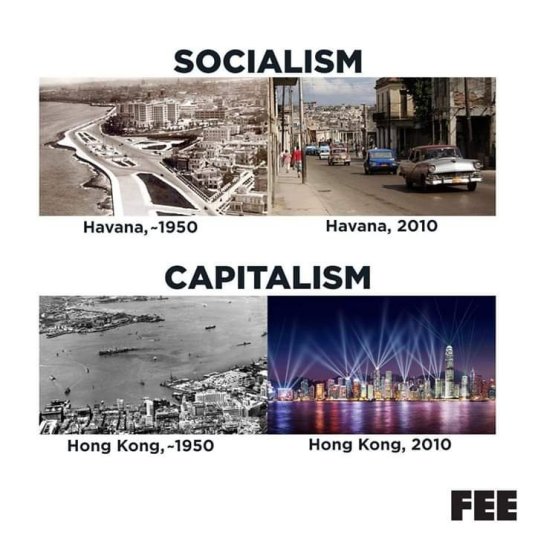
Glenn C. Loury on Ethics of Affirmative Action in Higher Education
15 Aug 2020 Leave a comment
in discrimination, economics of education, human capital, income redistribution, labour economics, law and economics, occupational choice, politics - USA, poverty and inequality, Public Choice, rentseeking Tags: affirmative action, racial discrimination, regressive left
#COVID19 #OTD
14 Aug 2020 1 Comment
in health economics, politics - New Zealand Tags: economics of pandemics, The fatal conceit

Pirates and Time Travel
14 Aug 2020 Leave a comment

The ability to slide on the data visualization goggles to filter, pivot, animate, and otherwise magically parse a phenomenon is a real wonder.
This StoryMap walks through the visual analysis of 30 years of nautical piracy through various cross-sections of the calendar. While I am not a marine security expert or global economist/sociologist/explorer, I do make maps for these sorts of people. The story map presents nautical piracy in place and time, which offers up all sorts of questions. Questions I don’t know the answer to; but maps don’t necessarily have to answer questions. Maps prompt new and more specific questions.
Here are a couple extracts from the StoryMap. First, a linear look at the past three decades…

And here is a seasonal cross-section of this era…

I hope you check it out and ask questions of your own. The data is sourced from the National Geospatial Intelligence agency, and…
View original post 29 more words
Claim: cutting speed limits could slow climate change
14 Aug 2020 1 Comment


The assertion being of course that human-caused emissions of the trace gas carbon dioxide somehow have a specific effect on the Earth’s climate, which must be countered. But if everyone is forced into electric cars, the speed limit argument becomes obsolete. Lower speed limits also mean more vehicles on the road at any one time, trying to complete their journeys, which in turn could lead to more traffic delays, potentially undermining the whole idea. As usual they conflate pollution and climate arguments to cause confusion.
– – –
Canadian cities from Edmonton to Montreal are lowering speed limits, primarily in an attempt to save lives, says CBC News.
But slowing down may also be an easy way to reduce greenhouse gas emissions and air pollution — not just on urban roadways but also on highways (and even the high seas).
View original post 265 more words
Woke birders win: McCown’s Longspur renamed because McCown was a Confederate general (though he made contributions to ornithology and repudiated the Confederacy)
14 Aug 2020 Leave a comment

Five days ago I wrote about a campaign by two birders, operating under the name Bird Names for Birds, that had singled out a number of birds whose common names honored people who performed actions seen as odious or unsavory in modern lights. Those included John James Audubon, whose oriole may now be renamed because he did this:
Audubon scoured the battlefield for the remains of Mexican soldiers. He decapitated several bodies and sent the heads to Samuel George Morton, a notorious practitioner of phrenology, a pseudoscience that attempted to use skull dimensions to prove the superiority of White Europeans to other races. For Audubon, this might have been just another way of practicing science — but his actions hardly align with modern values, and his scientific contributions do not excuse him from judgment.
Judging from the numerous comments on my post, readers were unanimously opposed to this renaming. (It appears…
View original post 1,436 more words
What does “statistically significant” mean?
14 Aug 2020 Leave a comment

Lately, social media has been flooded with people sharing studies about various aspects of COVID. This is potentially great. I’m all for people being more engaged with science. Unfortunately, many people lack a good foundation for understanding science, and a common point of confusion is the meaning of “statistically significant.” I’ve written about this at length several times before (e.g., here and here), so for this post, I’m just trying to give a brief overview to hopefully clear up some confusion. In short, “statistically significant” means that there is a low probability that a result as great or greater than the observed result could arise by chance. Statistical tests are designed to show you how likely it is that the sample in a study is representative of the entire population from which the sample was taken. I’ll elaborate on what that means below (don’t worry, I’m not going to…
View original post 1,265 more words
An interview with Noam Chomsky and why he signed the Harper’s letter
14 Aug 2020 1 Comment
I’ve been remiss in following—or even learning about—Noam Chomsky. I’m not much into linguistics, and, truth be told, I couldn’t even recount his big contributions there beyond the concept of Universal Grammar, or how well they’ve stood up over time. I have read several of his political pieces, so I’m aware of his severe criticism of the American government and its actions overseas, and not just under Trump. But in the past few years I haven’t read a word he’s written.
Chomsky is now 91, and when I saw him at a meeting in Puebla, Mexico a few years back, he was frail and needed help walking. But that’s to be expected at his age, and, according to the interview with Anand Giridharadas in The Ink (click on screenshot below), Chomsky is as sharp as ever. According to Wikipedia, he’s now a part-time professor of linguistics at the University…
View original post 909 more words
A Primer on the Laffer Curve
14 Aug 2020 Leave a comment

Last week, I gave a presentation on the Laffer Curve to a seminar organized by the New Economic School in the nation of Georgia.
A major goal was to help students understand that you can’t figure out how changes in tax rates affect tax revenues without also figuring out how changes in tax rates affect taxable income.
As you might expect, I showed the students a visual depiction of the Laffer Curve, explaining that the government won’t collect any revenue if the tax rate is zero (the left point of the horizontal axis), but also pointing out that the government won’t collect any revenue if tax rates are 100 percent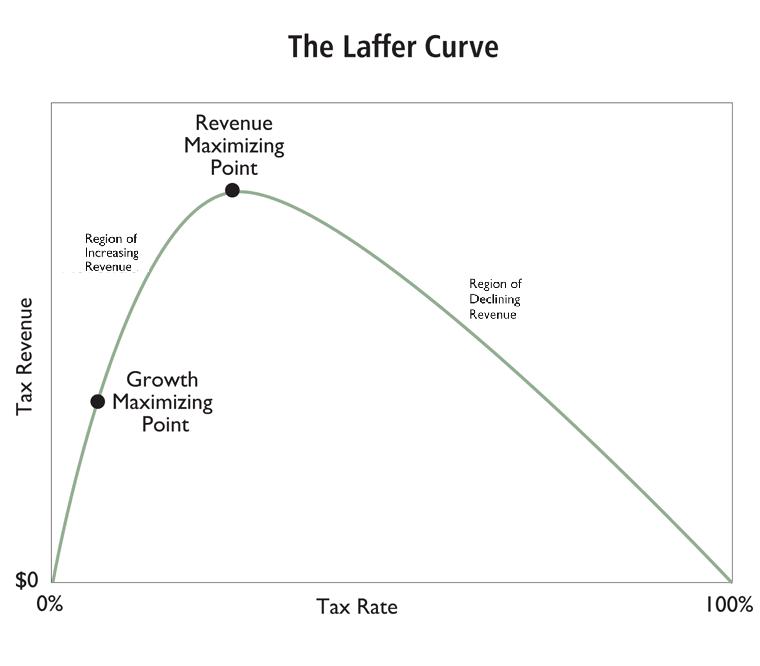 (the right point on the horizontal axis).
The curve between those two points shows how much tax is collected at various tax rates.
The upward-sloping part of the curve shows the “region of increasing revenue” (i.e., where higher tax rates…
View original post 590 more words


Recent Comments