
Final part looks like the strongest part of the judicial review
29 Jul 2020 Leave a comment
in health economics, law and economics, politics - New Zealand Tags: economics of pandemics
Godless Spellchecker reviews “White Fragility”
29 Jul 2020 Leave a comment

Robin DiAngelo’s book White Fragility has enjoyed a tremendous resurgence of popularity since George Floyd’s murder. It’s appearing on many college reading lists, and is even a recommended resource of the Society for the Study of Evolution, which has now gone uber woke and has a full page of resources that will teach the guilt-ridden evolutionist “how to be an anti-racist”, including a list of places where you can give money. (Why a society dedicated to promoting the study of evolution needs such a page is beyond me.)
I suppose that, given its popularity, I need to read DiAngelo’s book. Not willing to pay for it, I see that it’s online at my University library, and I suppose I will essay it. But I’m looking forward to it about as much as I looked forward to my hernia operation. That is, I know it’s necessary but also that it will…
View original post 1,586 more words
Why does Belgium Exist?
29 Jul 2020 Leave a comment
in defence economics, economic history, international economic law, International law, law and economics, Public Choice Tags: Belgium, Napoleonic wars, World War I, World War II
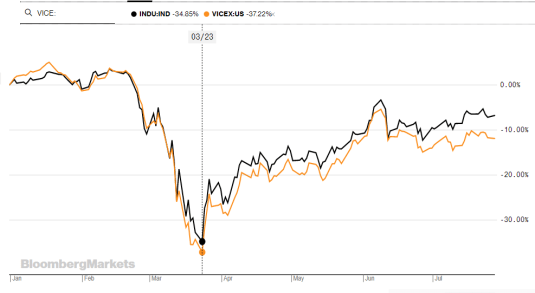
The wages of sin #OTD The Vice Fund #COVID19
28 Jul 2020 Leave a comment
in defence economics, economics of regulation, financial economics, health economics, rentseeking
Casto @BernieSanders
28 Jul 2020 Leave a comment
in development economics, economic history, growth disasters, Marxist economics Tags: Cuba, regressive left, useful idiots

#climateemergency #globalwarming @GreenpeaceAP @Greens @NZGreens @jamespeshaw @AOC @BernieSanders @SenWarren
28 Jul 2020 Leave a comment
in energy economics, environmental economics, global warming, politics - Australia, politics - New Zealand, politics - USA Tags: climate alarmists

Mugged By Reality – in Three Tweets
28 Jul 2020 Leave a comment

In an earlier post – Bliss it was in that dawn to be alive – I noted an ESPN reporter who rapidly evolved from being a BLM “Burn that shit down” supporter to angrily denouncing “these animals” invading his neighbourhood.
Something similar happened again the other day, this time in Seattle, where it seems Antifa/BLM are having another crack at things after the murderous failure of CHAZ.

Paul Gallant is a talk show host at 710 ESPN Seattle. He’s the co-host of “Danny and Gallant”, weekday mornings on the channel.
Back when Seattle was not dealing with CHAZ and President Trump was calling out the mayor’s uselessness, Gallant responded in an interesting way.
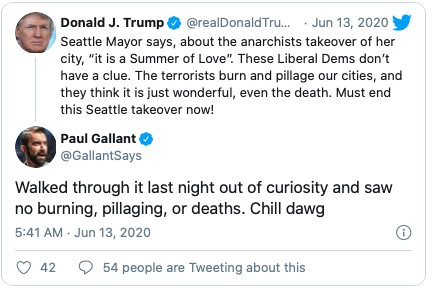
“Chill Dawg.” That is so cool, even with the cultural appropriation, but then he is a sports reporter. It sounds much like the “peaceful protests” headline being pushed…
View original post 79 more words
New Zealand 2020 preview
28 Jul 2020 Leave a comment

New Zealand’s general election will be 19 September (grrr, they are holding it on Rosh HaShanah). Given the generally good record of the government of Prime Minister Jacinda Ardern in handling COVID-19, at this point the question seems to be, how big will her win be? And how much will her two coalition partners suffer as Ardern’s party gets most of the credit?
Through today, there have been seven recent polls that have put Ardern’s Labour Party over 50% in votes. If this were to happen on election day, it would make for the first time since the mixed-member proportional system was first used (1996) that a single party won a majority of seats or votes.
The last poll showing the main opposition National Party ahead was conducted in February. The party has changed leaders not once, but twice, since then.
Obviously, with a majority, Labour would not…
View original post 955 more words
Policy in 60 Seconds: The Border Tax (and why it’s a bad idea)
28 Jul 2020 Leave a comment
in health economics, politics - New Zealand Tags: economics of pandemics
#climateemergency #globalwarming #OTD
28 Jul 2020 Leave a comment
in economic history, energy economics, environmental economics, global warming Tags: climate alarmism

Simply Staggering: What Weather Dependent Wind & Solar Really Costs
27 Jul 2020 Leave a comment


Assume, for the moment, the wind always blew and the sun always shone, then wind and solar power just might make sense. That’s why those talking about an ‘all wind and sun powered future’ sound like they’re coming from another planet.
Renewables rent seekers keep telling us how cheap wind and solar are, compared to those ‘evil’ fossil fuels, coal and gas.
But ‘price’ and ‘value’ are not the same animals. What we pay for something, and what it’s worth depends entirely upon what we get. And, in relation to the consumption of electricity, whether or not we get it, at all.
Wind power might be ‘free’, but try purchasing it, at any price, when the wind stops blowing. Ditto with solar power, when the sun does what it’s been doing every day since the dawn of time.
Comparing weather dependent wind generation and sunshine dependent solar with sources available…
View original post 2,599 more words
Ignorance is strength @jamespeshaw @mfe_news #globalwarming #climateemergency
27 Jul 2020 Leave a comment
in energy economics, environmental economics, environmentalism, global warming, politics - New Zealand

Upgrading The Past
27 Jul 2020 Leave a comment

Between crappy TV cameras and 16mm film cameras that only ran at 12fps (frames per second), it’s fair to say that video coverage of the Apollo missions to the Moon could have been better.
How much better? Well, the idea of using a computer to build new frames in between the old ones, to get the video up to the standard 24fps, has been around for decades. Basically each pixel in a new frame would have to be created and its movement between frames calculated so that the transition was smooth to the human eye. Plus calculating all the other things like colour, contrast and so forth. Throw in the idea of upgrading the picture to HD or even 4K and your multiplying the workload by orders of magnitude.
It could have been done decades ago on supercomputers but they were too expensive to be used for such frippery, and…
View original post 480 more words


Recent Comments