I pretty much hate the term “systematic racism,” which is a clever rebranding by the DEI folks of the Christian concept of “original sin.” Try to tell the Church that you have behaved ethically? Doesn’t matter, you still need us to remove the stain of your original sin. Try to tell the DEI trainer you…
Here Lies the Systematic Racism
Here Lies the Systematic Racism
28 Jan 2025 Leave a comment
in discrimination, economic history, economics of education, labour economics, law and economics, liberalism, Marxist economics, politics - USA, urban economics Tags: political correctness. regressive left, racial discrimination. free speech
ELIZABETH RATA: Oral Presentation to the Parliamentary Justice Committee on the Principles of the Treaty of Waitangi Bill
28 Jan 2025 1 Comment
in economic history, law and economics, politics - New Zealand, property rights Tags: constitutional law, racial discrimination
January 27, 2025 What is the best title given to any New Zealand legislation? My money is on the 1877 Education Act – ‘An Act to make Further Provision for the Education of the People of New Zealand’ – the People of New Zealand. So as early as the 1870s there’s the commitment to a…
ELIZABETH RATA: Oral Presentation to the Parliamentary Justice Committee on the Principles of the Treaty of Waitangi Bill
Book review: Hidden games
28 Jan 2025 Leave a comment
in applied price theory, behavioural economics, economics of information Tags: game theory

Game theory has a lot of real-world applications. I am never short of good examples to use when teaching game theory in my ECONS101 class. However, I can always use more examples. And so, I was really interested to read Hidden Games, by Moshe Hoffman and Erez Yoeli. The subtitle promises: “The surprising power of…
Book review: Hidden games
Interview with Eugene Fama: For Whom are Financial Markets Efficient?
28 Jan 2025 Leave a comment
in applied price theory, economics of information, entrepreneurship, financial economics Tags: efficient markets hypothesis, Internet
Joe Walker interviews Eugene Fama (Nobel ’13) with the title “For Whom is the Market Efficient?” (The Joe Walker podcast, December 31, 2024). Here are some bits and pieces of their exchange that caught my eye. Are financial markets efficient? WALKER: Gene, I was talking with a few friends who work in high finance in preparation…
Interview with Eugene Fama: For Whom are Financial Markets Efficient?
MICHAEL BASSETT: REFORMING THE WAITANGI TRIBUNAL
27 Jan 2025 Leave a comment
in economic history, law and economics, politics - New Zealand, property rights Tags: constitutional law, racial discrimination
So loud are the squeals from the likes of Debbie Ngarewa-Packer against the new appointments to the Waitangi Tribunal that I can only assume that Minister Tama Potaka has got things right. And that the new members are likely to shake the organisation into some sort of compliance with its mission that was set out…
MICHAEL BASSETT: REFORMING THE WAITANGI TRIBUNAL
The Energy Storage Fiasco — How Soon Will It Be Abandoned?
27 Jan 2025 Leave a comment
in economics of climate change, energy economics, environmental economics, environmentalism, global warming, politics - Australia, politics - New Zealand, politics - USA Tags: batteries
It seems that the frequency of these spontaneous fires increases with the size of the battery. Can this problem be solved? I have no idea. But it certainly has not been solved yet.
The Energy Storage Fiasco — How Soon Will It Be Abandoned?
“No Consistent Patterns:” Scientists Find No Evidence that Closing Schools Materially Reduced Transmission
27 Jan 2025 Leave a comment
in economics of education, economics of information, health economics, liberalism, politics - USA Tags: economics of pandemics, free speech

For years, scientists and commentators who questioned COVID policies were censored, blacklisted, and canceled across the country. Many of these dissenting views have since been vindicated from the lab origins theory to the lack of efficacy of surgical masks to the opposition to the closure of schools. Now, a new study in the Journal of […]
“No Consistent Patterns:” Scientists Find No Evidence that Closing Schools Materially Reduced Transmission
Civil War in Finland and Ukraine I THE GREAT WAR Week 183
26 Jan 2025 Leave a comment
in defence economics, war and peace Tags: Russian revolution, World War I
We Are Close To Blackouts Now–But What About 2030?
26 Jan 2025 Leave a comment
in economics of climate change, economics of regulation, energy economics, environmental economics, environmentalism, global warming Tags: British politics, climate activists, climate alarmism
We will no doubt muddle through again, but nobody in the media seems to be pointing to the elephant in the room; the fact that demand for electricity will start to rise rapidly as we transition to heat pumps and EVs.
We Are Close To Blackouts Now–But What About 2030?
Daron Acemoglu expects only a tiny macroeconomic impact of AI
26 Jan 2025 Leave a comment
in applied price theory, economic growth, entrepreneurship, industrial organisation, labour economics, labour supply, macroeconomics, unemployment
It would be fair to say that 2024 Nobel Prize winner Daron Acemoglu has been a bit of a sceptic about the impacts of generative AI (for example, see here). This scepticism is exemplified in a new paper forthcoming in the journal Economic Policy (ungated earlier version here). Acemoglu first notes that:Some experts believe that truly…
Daron Acemoglu expects only a tiny macroeconomic impact of AI
A Wartime Natural Experiment About Copyright
26 Jan 2025 1 Comment
in applied price theory, comparative institutional analysis, defence economics, econometerics, economic history, economics of education, economics of information, economics of media and culture, economics of regulation, industrial organisation, law and economics, politics - USA, property rights, war and peace Tags: patents and copyrights, World War II
One of the hardest questions in copyright policy is: “What would have happened otherwise?” When Disney lobbies for longer copyright terms or academic publishers defend high subscription fees, we struggle to evaluate their claims because we can’t observe the counterfactual. What would happen to creativity and innovation if we shortened copyright terms or lowered prices? […]
A Wartime Natural Experiment About Copyright
Net Zero Is Unstoppable–Says Ed Miliband
26 Jan 2025 Leave a comment
in development economics, economics of climate change, energy economics, environmental economics, environmentalism, global warming Tags: British politics, climate activists, climate alarmism

By Paul Homewood Justin Rowlatt is not the only deluded clown, when it comes to Net Zero. The idiot Miliband has warned President Trump that Net Zero is unstoppable. The Telegraph report: Ed Miliband has warned Donald Trump that the rise of net zero is “unstoppable”, just hours after the President vowed to […]
Net Zero Is Unstoppable–Says Ed Miliband
Barrett-Lite: The Supreme Court Takes Up Major New Religion Clause Case With One Notable Exception
26 Jan 2025 Leave a comment
in economics of education, economics of religion, politics - USA Tags: Freedom of religion, School choice

On Friday, the Supreme Court agreed to review a potentially blockbuster religion clause case in Oklahoma Charter School Board v. Drummond. However, there is a catch. While the lawyers representing St. Isidore of Seville Catholic Virtual School may need every vote they can get in this heaving contested area, they may have to prevail without Justice […]
Barrett-Lite: The Supreme Court Takes Up Major New Religion Clause Case With One Notable Exception
Quotation of the Day…
25 Jan 2025 Leave a comment
in applied price theory, economics of information, industrial organisation, Milton Friedman
Tweet… is from page 224 of Milton & Rose Friedman’s great 1980 book, Free To Choose: What about the claim that consumers can be led by the nose by advertising? Our answer is that they can’t – as numerous expensive advertising fiascoes testify. One of the greatest duds of all time was the Edsel automobile,…
Quotation of the Day…
Koonin: Reckless Claim of Climate Emergency
25 Jan 2025 Leave a comment
in economics of climate change, energy economics, environmental economics, environmentalism, global warming, politics - USA Tags: climate activists, climate alarmism
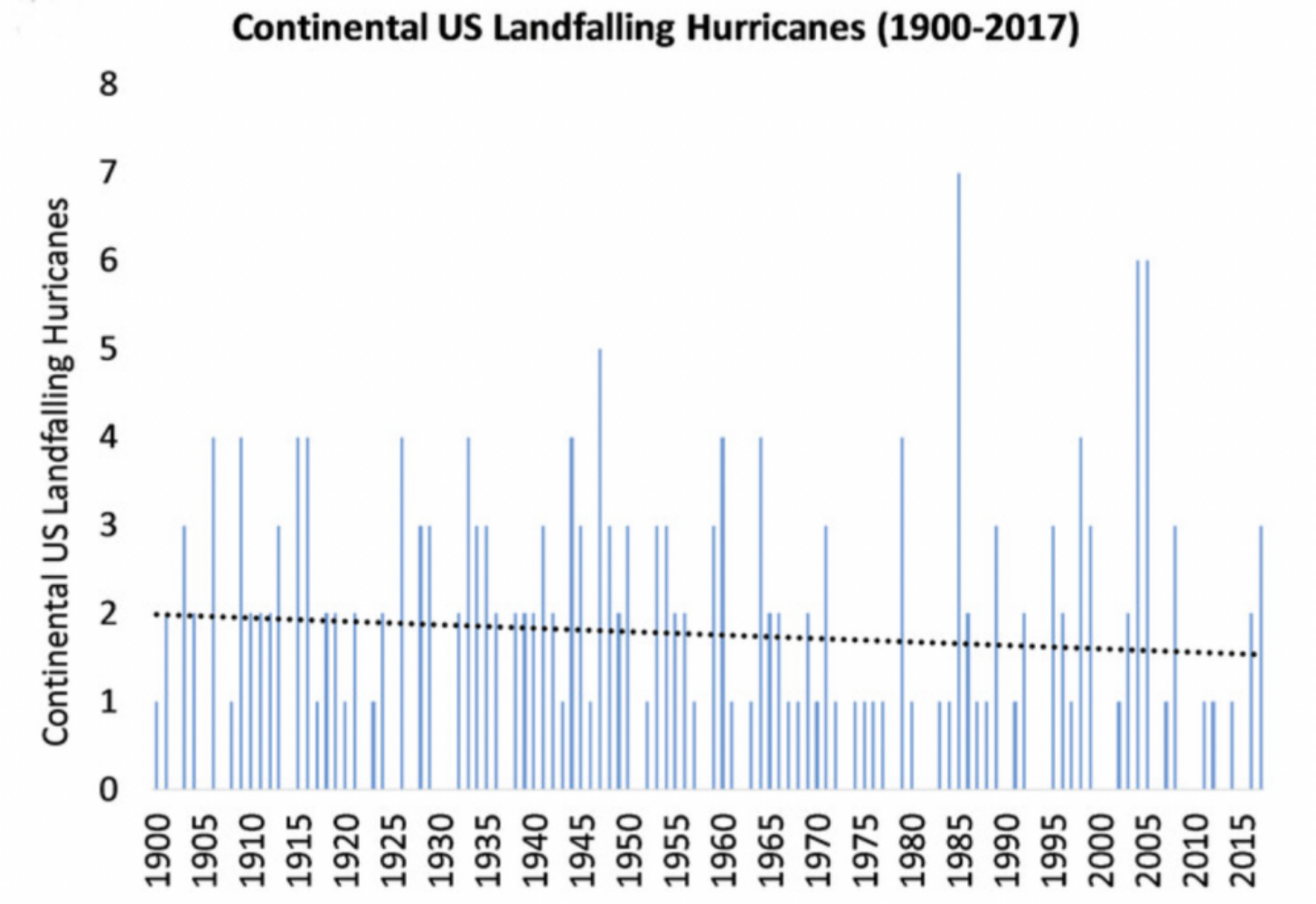
Transcript Hubris is a Greek word that means dangerously overconfident. Based on my research, hubris fairly describes our current response to the issue of climate change. Here’s what many people believe: One: The planet is warming catastrophically because of certain human behaviors. Two: Thanks to powerful computers we can project what the climate will be […]
Koonin: Reckless Claim of Climate Emergency
 Utopia, you are standing in it!
Recent Comments