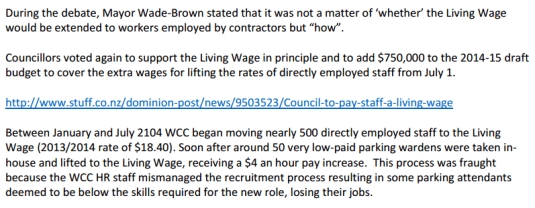
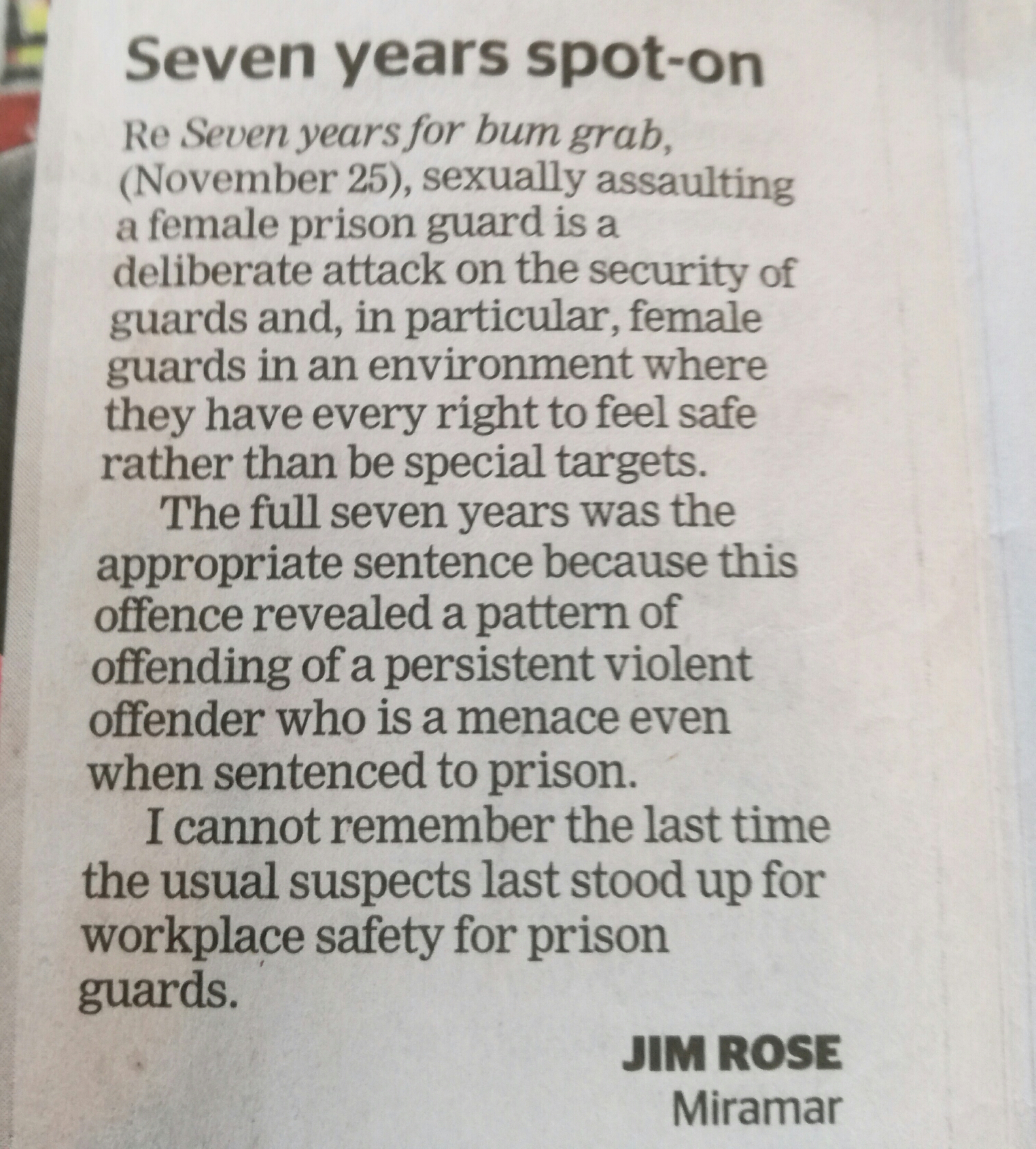
The report was my source for the Wellington Parking wardens not being rehired after their jobs were upgraded to a living wage job. The jobs were taken in house as a legal subterfuge to get around the inability to pay them the living wage when they are employed by Parkwise, a council contractor. The Local Government Act requires value for money to be secured if you pay more for a service.
Times have changed since a 1930s Philadelphia dockyard foreman hired day labour by throwing apples over the front gate (Jacoby 1985, p. 13). Whoever waiting outside caught them passed the physical and the initiative test too. In the 1960s, Ford had a waiting lounge at its factory gate:
“If we had a vacancy, we would look outside in the plant waiting room to see if there were any warm bodies standing there. If someone was there and they looked physically OK and weren’t an obvious alcoholic, they were hired” (Murnane and Levy 1996, p. 19).
These rather casual approaches to the screening of applicant quality and job fit are well behind us.
There has been a revolution in how private and public employers husband employees at all pay grades. Human resource management gained ground in the 1980s at the expense of old style personnel management (Acemoglu 2002). Strategic human resource management stresses rigorous selection and recruitment, more training at induction and on the job, more teamwork and multi-skilling, better management-worker communication, the encouragement of employee suggestions and innovation, and common canteens and uniforms as unifying status symbols (Lazear 1998).
Modern human resource management strives for a single unified organisational culture made up of highly committed, capable workers who pull together at their own initiative (Baron and Kreps 1999). This pays because, for example, the share prices of firms rise on the announcement of family-friendly policies and the winning of good employer awards (Arthur and Cook, 2004, 2009).
The strength of alternatives to no agreement drives wage bargaining as Alchian and Allen explain:
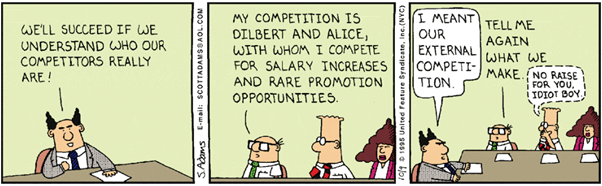
An important truth is that employers compete against other employers, and employees against other employees-not employees against employers, as folklore says. It is the availability of higher-valued alternatives, not the ability to bargain collectively, that increases bargaining power (Alchian and Allen 1967, p. 328).
The side with more outside options and a stronger ability to credibly commit to a specific wage offer wins the larger share of the split (Manning 2005; Cahuc and Zylberberg 2004; Lazear 1998).
Those searching for new jobs while on-the-job play a better hand than the unemployed (Manning 2005). Concerns about workers not holding their own in this wage bargaining date back to Adam Smith:
… in the long run the workman may be as necessary to his master as his master is to him; but the necessity is not so immediate (The Wealth of Nations).
Calls for a minimum wage arise partly out of concerns over who has the upper hand in bargaining:
… labour is often sold under special disadvantages arising from the closely connected group of facts that labour power is ‘perishable’, that the sellers of it are commonly poor and have no reserve fund… The want of reserve funds and of the power of long withholding their labour from the market is common to nearly all grades of those whose work is chiefly with their hands.
But it is especially true of unskilled labourers, partly because their wages leave very little margin for saving, partly because when any group of them suspends work, there are large numbers who are capable of filling their places (Marshall 1920).
Take-it-or-leave-it wage offers are more common for lower paid vacancies (Cahuc, Postel-Vinay and Robin 2006). Employers who post the going rate for lower-paid vacancies saves transaction costs for both sides of a more routine job match (Alchian and Allen 1967; Boeri and van Ours 2013).
The take-it-or-leave-it offer for a standard vacancy to be filled by similarly qualified job applicants may reflect where bargaining would have gone in any case and so saves that predictable journey. The market discipline on employers is posting an offer below the going rate attracts an inferior job applicant pool (Mortenson 2003; Boeri and van Ours 2013; Cahuc, Postel-Vinay and Robin 2006).
A well-matched recruit is a valuable find and the better paid is the job, the more it is worth haggling over the spilt (Alchian 1969; Lazear 1998). One-third of workers bargain over the wage paid in a new job; only about 5% for blue collar workers haggle but 86% for knowledge workers make counter-offers (Krueger and Hall 2012; Brenzel, Gartner and Schnabel 2014; Brenčič 2012). The less skilled job seeker finds new jobs faster because they have less specialised human capital to match up with prospective vacancies than say a knowledge worker (Alchian 1969; Oi 1983, 1987: Lazear 1998).
Lower paid jobs entail less search and bargaining because there is less to haggle over; there is more variance in applicant quality and goodness of fit for higher paid vacancies so both sides search for longer and haggle more (Lazear 1998; Alchian 1969; Oi 1987).
The going rate for low skilled vacancies is common knowledge. Employers that post an inferior offer risks lowering the quality of their recruitment pools. It saves search costs for both sides to post the going rate (Alchian and Allen 1967; Lazear 1998). The rub is less skilled employees are laid-off sooner in downturns because less firm-specific human capital is lost for both sides of the job match (Oi 1962, 1983; Becker 1993).
Joe’s Crab Shack tested a no-tip model in 18 of its 130 restaurants. A 12-15% service charge replaced tips. Joe’s Crab capture is the first major restaurant chain to experiment with a tipping policy to experiment with abolishing it. The tipping minimum wage is far less than the federal, state and local minimum wages.
Joe’s Crab Shack had high hopes. The aims were customers would pay less, get a greater value experience, reduce labour costs and increase profits. The reactionary left represented by Salon and Huffington Post have quite strong views on tipping. Salon says
Tipping is a repugnant custom. It’s bad for consumers and terrible for workers. It perpetuates racism. Tipping isn’t even good for restaurants, because the legal morass surrounding gratuities results in scores of expensive lawsuits.
Tipping does not incentivize hard work. The factors that correlate most strongly to tip size have virtually nothing to do with the quality of service. Credit card tips are larger than cash tips. Large parties with sizable bills leave disproportionately small tips.
According to a 2000 study, a customer’s assessment of the server’s work only accounts for between 1 and 5 percent of the variation in tips at a restaurant.
Salon adds that federal and state law requires restaurants to ensure that tips bring employees up to minimum wage, but few diners know that.
Huffington Post managed to marshal 9 reasons why tipping should be abolished arguing that it was in no one’s interests either employers, employees or customers. The old efficiency at wage argument was rolled out arguing that employers gain in terms of diligent motivate employees by paying a straight wage rather than leaving it up to customer judgements of the services tended.
Not surprisingly this sounded like a business opportunity to Joe’s Crab Shack. Better customer service, better motivated employees and lower labour costs were promised by abolishing tips. You wonder why tipping survived in competition against alternative forms of restaurant service formats for all these decades?
Well, Joe’s Crab Shack got more than it bargained for when it abolished tipping. The pilot restaurants lost an average of 8-10% of customers during the test run.
The restaurant’s research showed that around 60% of customers disliked the policy because it took away an incentive for good service and that they don’t necessarily trust that management is passing along the money to workers.
The no tipping structure worked at four restaurants and will continue to work out why it succeeded there but failed at 14 other places.
What is even more interesting that the abolition of tipping lead to some workers quitting. This outcome at Joe’s Crab Shack is inconsistent with the notion that tipping is a by-product of the inequality of bargaining power between workers and employees. Turnover is supposed to reduce when tipping is abolished rather than increase with the employer losing their best workers.
Lazear found in data for Safelite Glass that average productivity will rise and the firm will attract a more able workforce will rise when it shifts to piece rates. The 44% increase in output per worker suggested the firm previously had a suboptimal compensation system. Half of the increase in labour productivity came from workers quitting when piece rates are introduced and being replaced by workers motivated to apply by the lure of piece rates. The average worker received a 10% increase in pay as a result of the switch to piece rates.
The only economic analysis of any value on tipping was written in 1985 by David Sisk at the Federal Trade Commission. He wrote a paper about both tipping and commissions. Sisk approached tipping not as a motivational device but a form of contracting.
Sisk points out that tipping takes the place of reputation as a way of guaranteeing good services are at a restaurant. Many do not plan to return to a restaurant so an alternative form of contracting emerges to ensure good service because the threat of taking future custom elsewhere does not work.
In the case of a tip, the buyer (or customer) is provided with a final means of automatic redress which serves to prevent unsatisfactory performance on the part of the seller.
The possibility of unsatisfactory performance arises when the brand-name, repeat purchase mechanism is not effective or because employees of the seller are too costly to monitor.
An example is tourists. They are protected from inferior service relative to the locals because they pay tips too and are well able to judge good and bad service.
Sisk argues that once a customer sits down at a restaurant, the customer commits ever increasing amounts of time and the restaurant commits ever increasing amounts of physical resources. As one commits more irrevocable resources, the greater is the incentive of the other to renege on the contract.
A tip allows the customer to withhold a portion of the price without further negotiation. The tip serves to protect the customer from bad service and to protect the restaurant from bad service by an errant employee
The system of tipping provides the motivation for the waiter to properly identify and accommodate the individual desires of customers subject to the profit maximizing constraint of the restaurant owner…
The tip protects the buyer from exploitation by a seller (when the brand-name mechanism is insufficient) or from exploitation by the shirking employees of the seller
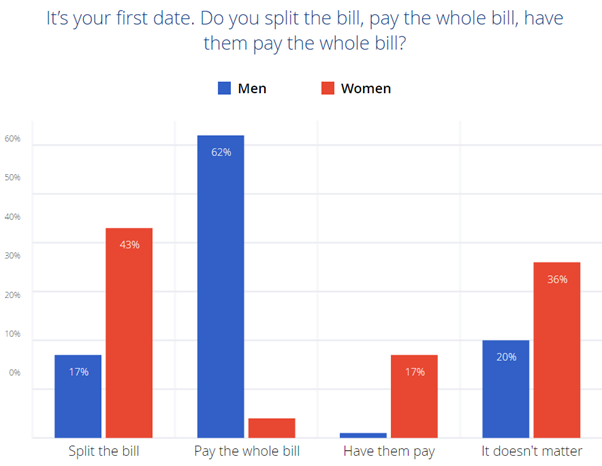
The worst tippers are single males; the best are couples and groups. The biggest tippers are single males on a date.
A living wage at a local council will act as a hiring standard that stops low paid workers from being shortlisted for vacancies in the 129 council jobs affected by the proposed living wage increase.
The Council must hire on merit so only those who currently earn about $19 in other jobs will be shortlisted. That is the law. The Council must hire the best available applicant. The minimum wage workers who currently fill these minimum wage jobs simply could not cannot be lawfully shortlisted.
It is explicit in the living wage literature that a living wage improves the quality of applicants for future vacancies.
When a living wage job is advertised, more qualified applicants will apply. This will crowd-out the existing workers had who shortlisted for these Council jobs. They will have to apply for other minimum wage jobs but pay rates to fund council jobs they can never win.
There is no way around this because of the duty of the Council to hire on merit.
All future vacancies covered by the living wage increase will be filled by workers who are currently better paid than the existing applicants who won those jobs in the past.
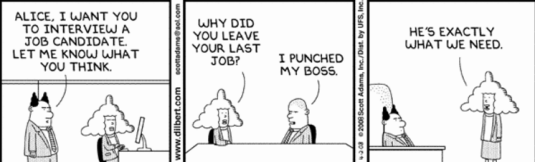
Any employer who unilaterally introduces a living wage is simply raising their hiring standards saying they will not hire applicants who do not currently earn the equivalent of the living wage in their previous job.
A living wage will exclude low paid worker from council jobs in the future. I have attached a more detailed analysis of the economics of a living wage as proposed by the Wellington City Council.
Why Evolution is True is a blog written by Jerry Coyne, centered on evolution and biology but also dealing with diverse topics like politics, culture, and cats.
“We do not believe any group of men adequate enough or wise enough to operate without scrutiny or without criticism. We know that the only way to avoid error is to detect it, that the only way to detect it is to be free to inquire. We know that in secrecy error undetected will flourish and subvert”. - J Robert Oppenheimer.







 Utopia, you are standing in it!
Recent Comments