


Close the Gender Pay Gap, Change the Way We Work – Claudia Goldin
19 Jul 2014 1 Comment
in human capital, labour economics, labour supply, personnel economics Tags: Claudia Goldin, gender wage gap

At least 20% of New Zealand workers are subject to occupational regulation
08 Jul 2014 Leave a comment
in applied price theory, applied welfare economics, comparative institutional analysis, David Friedman, economics of information, economics of regulation, entrepreneurship, industrial organisation, labour economics, law and economics, managerial economics, market efficiency, Milton Friedman, personnel economics, politics - New Zealand, Ronald Coase Tags: adverse selection, asymmetric information, blackboard economics, moral hazard, occupational regulation, screening, signalling
There are at least 98 regulated occupations in New Zealand covering about 20% of the workforce. In 2011, this amounts to 440,371 workers. The skills that are regulated range across all skill sets and many occupations:
- 49% of regulation is in the form of a licence;
- 18% of regulated work is in the form of licensing of tasks;
- 31% of regulated workers require a certificate; and
- 4% of regulated workers require registration.
There are 32 different governing Acts that regulated occupations in New Zealand with 55% of the workers subject to occupational regulation are employed in just five occupations:
- 98,000 teachers;
- 48,500 nurses;
- 42,730 bar managers;
- 32,733 chartered accountants; and
- 22,749 electricians.
The Health Practitioners Competency Assurance Act 2003 regulates 22 occupations and a total of 89,807 workers. The next best is the 10 occupations regulated by the Health and Safety in Employment Act 2002 which regulates an unknown number of occupations. The Civil Aviation Act 1990 regulates eight occupations and 19,095 workers, the Building Act 2004 regulates seven occupations and 21,101 workers and the Maritime Transport Act 1994 regulates six occupations and 20,500 workers. 12 of the regulated occupations are regulated under laws passed since 2007.
The purpose of occupational regulation is to protect buyers from quacks and lemons – to overcome asymmetric information about the quality of the provider of the service.
Adverse selection occurs when the seller knows more than the buyer about the true quality of the product or service on offer. This can make it difficult for the two people to do business together. Buyers cannot tell the good from the bad products on offer so many they do not buy to all and withdraw from the market.
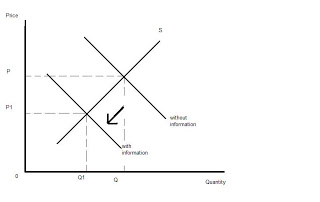
Goods and services divide into inspection, experience and credence goods.
- Inspection goods are goods or services was quality can be determined before purchase price inspecting them;
- Experience goods are goods whose quality is determined after purchase in the course of consuming them; and
- Credence goods are goods whose quality may never be known for sure as to whether the good or service actually worked – was that car repair or medical procedure really necessary?
The problem of adverse selection over experience and credence goods present many potentially profitable but as yet unconsummated wealth-creating transactions because of the uncertainty about quality and reliability.
Buyers are reluctant to buy if they are unsure of quality, but if such assurances can be given in a credible manner, a significant increase in demand is possible.
Any entrepreneur who finds ways of providing credible assurances of the quality of this service or work stands to profit handsomely. Brand names and warranties are examples of market generated institutions that overcome these information gaps through screening and signalling.
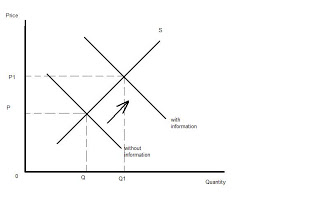
Screening is the less informed party’s effort, usually the buyer, to learn the information that the more informed party has. Successful screens have the characteristic that it is unprofitable for bad types of sellers to mimic the behaviour of good types.
Signalling is an informed party’s effort, usually the seller, to communicate information to the less informed party.
The main issue with quacks in the labour market is whether there are a large cost of less than average quality service, and is there a sub-market who will buy less than average quality products in the presence of competing sellers competing on the basis of quality assurance. This demand for assurance creates opportunities for entrepreneurs to profit by providing assurance.
David Friedman wrote a paper about contract enforcement in cyberspace where the buyer and seller is in different countries so conventional mechanisms such as the courts are futile in cases where the quality of the good is not as promised or there is a failure to deliver at all:
Public enforcement of contracts between parties in different countries is more costly and uncertain than public enforcement within a single jurisdiction.
Furthermore, in a world where geographical lines are invisible, parties to publicly enforced contracts will frequently not know what law those contracts are likely to fall under. Hence public enforcement, while still possible for future online contracts, will be less workable than for the realspace contracts of the past.
A second and perhaps more serious problem may arise in the future as a result of technological developments that already exist and are now going into common use. These technologies, of which the most fundamental is public key encryption, make possible an online world where many people do business anonymously, with reputations attached to their cyberspace, not their realspace, identities
Online auction and sales sites address adverse selection with authentication and escrow services, insurance, and on-line reputations through the rating of sellers by buyers.
E-commerce is flourishing despite been supposedly plagued by adverse selection and weak contract enforcement against overseas venders.
In the labour market, screening and signalling take the form of probationary periods, promotion ladders, promotion tournaments, incentive pay and the back loading of pay in the form of pension investing and other prizes and bonds for good performance over a long period.
In the case of the labour force, there are good arguments that a major reason for investments in education is as a to signal quality, reliability, diligence as well as investment in a credential that is of no value the case of misconduct or incompetence. Lower quality workers will find it very difficult if not impossible to fake quality and reliability in this way – through investing in higher education.
In the case of teacher registration, for example, does a teacher registration system screen out any more low quality candidates for recruitment than do proper reference checks and a police check for a criminal record.
Mostly disciplinary investigations and deregistrations under the auspices of occupational regulation is for gross misconduct and criminal convictions rather than just shading of quality.
Much of personnel and organisational economics is about the screening and sorting of applicants, recruits and workers by quality and the assurance of performance.
Alert entrepreneurs have every incentive to find more profitable ways to manage the quality of their workforce and sort their recruitment pools.
Baron and Kreps (1999) developed the recruitment taxonomy made up of stars, guardians and foot-soldiers.
Stars hold jobs with limited downside risk but high performance is very good for the firm – the costs of hiring errors for stars such as an R&D worker are small: mostly their salary. Foot-soldiers are employees with narrow ranges of good and bad possible outcomes.
Guardians have jobs where bad performance can be a calamity but good job performance is only slightly better than an average performance.
Airline pilots and safety, compliance, finance and controller jobs are all examples of guardian jobs where risk is all downside. Bad performance of these jobs can bring the company down. Dual control is common in guardian jobs.
The employer’s focus when recruiting and supervising guardians is low job performance and not associating rewards and promotions with risky behaviours. Employers will closely screen applicants for guardian jobs, impose long apprenticeships and may limit recruiting to port-of-entry jobs.
The private sector has ample experience in handling risk in recruitment for guardian jobs. Firms and entrepreneurs are subject to a hard budget constraints that apply immediately if they hire quacks and duds.
Blackboard economics says that governments may be able to improve on market performance but as Coase warned that actually implement regulatory changes in real life is another matter:
The policy under consideration is one which is implemented on the blackboard.
All the information needed is assumed to be available and the teacher plays all the parts. He fixes prices, imposes taxes, and distributes subsidies (on the blackboard) to promote the general welfare.
But there is no counterpart to the teacher within the real economic system
Occupational regulation comes with the real risk of the regulation turning into an anti-competitive barrier to entry as Milton Friedman (1962) warned:
The most obvious social cost is that any one of these measures, whether it be registration, certification, or licensure, almost inevitably becomes a tool in the hands of a special producer group to obtain a monopoly position at the expense of the rest of the public.
There is no way to avoid this result. One can devise one or another set of procedural controls designed to avert this outcome, but none is likely to overcome the problem that arises out of the greater concentration of producer than of consumer interest.
The people who are most concerned with any such arrangement, who will press most for its enforcement and be most concerned with its administration, will be the people in the particular occupation or trade involved.
They will inevitably press for the extension of registration to certification and of certification to licensure. Once licensure is attained, the people who might develop an interest in undermining the regulations are kept from exerting their influence. They don’t get a license, must therefore go into other occupations, and will lose interest.
The result is invariably control over entry by members of the occupation itself and hence the establishment of a monopoly position.
Friedman’s PhD was published in 1945 as Income from Independent Professional Practice. With co-author Simon Kuznets, he argued that licensing procedures limited entry into the medical profession allowing doctors to charge higher fees than if competition were more open.
Data Source: Martin Jenkins 2012, Review of Occupational Regulation, released by the Ministry of Business, Innovation and Employment under the Official Information Act.

The Ethics of and Good Manners in Field Research
22 Jun 2014 Leave a comment
in personnel economics, technological progress Tags: research ethics
 I attended a course on ethics in field research once. It really was about how to get cover for using people as playthings in research.
At no time do they mention that people were gracious enough to give up their time to participate in your research and you should respect that. It was simply taken for granted that the subjects of the research were something that was to be used by the researcher.
The best example of this is the new fashion in economics and elsewhere of correspondence studies or audit studies.
Correspondence studies or audit studies are where you send thousands of dummy job applications out to job vacancies to see what happens in terms of how varying the race, the sex or other characteristics of otherwise identical dummy applicant influences the call-back rate to applicants.
 If the dummy application gets a call back, the researcher just says that the application has been withdrawn. The researcher never tells the employer who phoned that the application was a dummy and part of field research approved by an ethics board and that they were wasting that employer’s time when they made the dummy application.
 At no time, does the researcher express any regret that perhaps the employer might have called the dummy applicant in preference to a genuine applicant who was since moved on because they were not contacted in time. Time is money in the private sector and many small businesses operate on thin margins.
 These researchers were wasting peoples’ time.The rudeness of that was never discussed.

The car space measuring squad
29 May 2014 Leave a comment
in applied price theory, personnel economics Tags: Japan
I bought a BMW in Japan. Before I could, I had to rent a car space and have a policeman come out to measure it to make sure it will big enough from my car.

Anyone who steps out of line in the Tokyo Police Department, the car space measuring squad is where you will spend the rest of your career. I’m sure they envy the guys with the window seats in the big corporations.

Richard Epstein “The Coming Meltdown in Labor Relations”
07 May 2014 Leave a comment
in industrial organisation, labour economics, law and economics, liberalism, personnel economics, Public Choice, Richard Epstein
Tyler Cown on the common mistakes of right-wing and market-oriented economists?
24 Apr 2014 Leave a comment
in economics, personnel economics Tags: bias
1. There is excess fear of inflation and hyperinflation in the current economic environment. Further there is often an excess estimate of the costs of inflation in the two to five percent range.
2. We know much less about the causes and drivers of economic growth than we like to admit, and when pushed on this issue we fall back to citing relatively simple cases with extreme differences, such as East vs. West Germany.
3. Lower taxes don’t spur economic development as much as it is often claimed, at least not below the “fifty percent or less of gdp” range.
4. There are many climate change issues of relevance here, not mostly economics, but it seems remiss not to mention them.
5. I’m all for Health Savings Accounts, but unless done on a Singaporean scale, and with lots of forced savings, they’re not a health care plan to significantly benefit most Americans. There is less of a coherent health care plan, coming from this side, than one might like to think.
6. There is already considerable health care cost control embedded in the ACA, most of all for Medicare, and this is not admitted with sufficient frequency.
7. When it comes to the historical determinants of the Industrial Revolution, the Great Divergence, and the like, the importance of state-building in that process is often neglected.
8. The story of steady and significant economic progress for most Americans is accepted too readily.
9. The role of market failure in the recent financial crisis is underestimated. It is also believed that we can somehow commit to a policy of no future bailouts. Promoting that myth will make future bailouts more likely.
10. Relying on liability law, whether or not it is a good idea, is not intrinsically more pro-market, more libertarian, or less interventionist.
via Common mistakes of right-wing and market-oriented economists?.
Do empirical studies change minds?
19 Apr 2014 Leave a comment
in economics, personnel economics, politics Tags: data mining, fraud
Economics got on just fine before the attack of the econometricians and their data mining and publication bias:

From ‘The Scientific Illusion in Empirical Macroeconomics’, Lawrence H. Summers , The Scandinavian Journal of Economics, Vol. 93, No. 2, Proceedings of a Conference on New Approaches to Empirical Macroeconomics. (June 1991), pp. 129-148.
A baser reason for holding out against the latest empirical is in Most Published Research Findings Are False, John Ioannidis says that:
There is increasing concern that in modern research, false findings may be the majority or even the vast majority of published research claims. However, this should not be surprising. It can be proven that most claimed research findings are false
Ioannidis goes on the say that
- The truth of a research claim is true may depend on study power and bias, the number of other studies on the same question, and, the ratio of true to no relationships among the relationships probed in each scientific field; and
- a research finding is less likely to be true when the studies conducted in a field are smaller, when effect sizes are smaller, when there is a greater number and lesser preselection of tested relationships, where there is greater flexibility in designs, definitions, outcomes, and analytical modes; when there is greater financial and other interest and prejudice; and when more teams are involved in a scientific field in chase of statistical significance.
Simulations show that for most study designs and settings, it is more likely for a research claim to be false than true. Ioannidis also says that for many current scientific fields, claimed research findings may often be simply accurate measures of the prevailing bias.

Now let The Guardian finish matters with “False positives: fraud and misconduct are threatening scientific research: High-profile cases and modern technology are putting scientific deceit under the microscope”:
Cases of scientific misconduct tend to hit the headlines precisely because scientists are supposed to occupy a moral high ground when it comes to the search for truth about nature.
The scientific method developed as a way to weed out human bias. But scientists, like anyone else, can be prone to bias in their bid for a place in the history books.
Increasing competition for shrinking government budgets for research and the disproportionately large rewards for publishing in the best journals have exacerbated the temptation to fudge results or ignore inconvenient data.
Massaged results can send other researchers down the wrong track, wasting time and money trying to replicate them. Worse, in medicine, it can delay the development of life-saving treatments or prolong the use of therapies that are ineffective or dangerous.
Malpractice comes to light rarely, perhaps because scientific fraud is often easy to perpetrate but hard to uncover.
The Case Against Education – Bryan Caplan–updated with Japanese evidence
12 Apr 2014 2 Comments
in applied welfare economics, economics of education, human capital, labour economics, personnel economics Tags: Bryan Caplan, credentialism, human capital, signaling and screening, signalling
Bryan Caplan says that:
When you actually experience education, though, it’s hard not to notice that most classes teach no job skills.
The labour market heavily rewards educational credentials even though academic curriculum is seriously disconnected from the jobs people actually do.
The best explanation for this strange fact is that education is a strong signal of pre-existing worker productivity.
Caplan argues with annoying persuasiveness that education signals desirable employee traits such as intelligence, conscientiousness, conformity and a willingness to learn boring things:
- Most education is for sending a signal to employers that you can jump through hoops to show off your IQ, work ethic, and conformity.
- Schools and universities do not to produce wisdom, information, critical thinking or human capital.
- Subsidising education creates an arms race of credentialism as each student attempts to acquire more and more education than their rival job applicants.
His particular focus is the educational psychology literature on the transfer of learning. That literature started long ago with the question did learning Latin give you muscle to learn other subjects. The educational psychology literature has been looked at the transfer of learning for 100 years.
Educational psychologist found that Latin does not help much in studying other languages and other subjects. No significant differences were found in deductive and inductive reasoning or text comprehension among students with 4 years of Latin, 2 years of Latin, and no Latin at all.
The trouble is you do this in a race and many try to win the race by lengthening the race by going to and spending more time at university such as taking honours and master’s degrees etc.
Grades do not signal anything in Japan because everyone graduates with an A. It is the lecturer’s fault if you fail.
Japanese universities and employers make up for this everyone gets a A with strict entrance exams.
Getting into a top university signals intelligence and conscientiousness in preparing for their entrance exam. Few go to graduate school in Japan, preferring to learn more on the job.
Japanese students are lazy because everyone passes and therefore grades signal little in the way of intelligence, conscientiousness, conformity to employers.
I had great trouble getting my Japanese students to come to class. Other lecturers got around this by giving marks for attendance and replacing final exams with a pop quiz at the start of every class.
Nonetheless, something of value is acquired through 4-years at a Japanese university because otherwise why not skip straight from passing a university entrance exam to the employer exams.
The crucial objection to Caplan is that if most education expenditures are primarily about signalling, it should be possible to find other, cheaper ways to signal desirable traits to employers. As Bill Dickens noted:
For one thing I find it very hard to believe that we would waste so many resources on a nearly unproductive enterprise.
There are plenty of entrepreneurs out there trying to make money by selling cheaper, in time and money, versions of education and they aren’t very successful.
Mainstream schools have experimented with programmed learning, lectures on video, self-paced learning, etc. and none of the methods have caught on. Why wouldn’t they if they worked?
The spread of charter schools is an example of the rapid diffusion of an educational innovation valued by parents.
A major driver of the doubling of college tuition fees in the U.S. is demand for greater quality. As Becker and Murphy explain:
Indeed, it appears that the increases in tuition were partly induced by the greater return to college education. Pablo Peña, in a Ph.D. dissertation in progress at the University of Chicago, argues convincingly that tuition rose in part because students want to invest more in the quality of their education, and increased spending per student by colleges is partly financed by higher tuition levels
What specific and general skills are learnt at school and at university matters too, as Bill Dickens explains:
Education isn’t mainly about learning specific subject matter.
Rather education is mainly about practicing the sort of self-discipline that is necessary to be productive in a modern work environment.
High school allows you to practice showing up on time and doing what you are told.
College allows you to practice and work out techniques that work for you that allow you to take on and complete on time complicated multi-part tasks in an environment where you have considerable freedom about how you spend your time.
Some people may be more talented than others at this sort of thing (you come to mind as someone who is particularly talented at self-discipline), but this is also an acquired skill that one can develop with practice, and everyone needs to develop certain work habits that make one more productive at both types of tasks.
The debate really turns on the extent to which it is possible to find easier and cheaper ways to signal conscientiousness and conformity. As Bill Dickens noted as his fall-back position, which is based on comparative institutional analysis:
most of the return to education is due to it signalling desirable characteristics, but that there is no more efficient way to sort the capable from the incapable.
I also think that signalling performs a valuable sorting function that no alternative process can out-compete. But, as Caplan notes, a conventional education benefits from large government and private subsidies as compared to other sorting devices.
Table of Contents – The Case Against Education – Bryan Caplan
Introduction
Chapter 1: The Magic of Education
Chapter 2: Useless Studies with Big Payoffs: The Puzzle Is Real
Chapter 3: Signalling Explained
Chapter 4: Measuring Signalling
Chapter 5: Who Cares If It’s Signalling? The Private, Familial, and Social Returns to Education
Chapter 6: Is Education Good for the Soul?
Chapter 7: We Need Lots Less Education
Chapter 8: We Need More Vocational Education
Conclusion
The Book’s basic plot:
The labor market heavily rewards educational credentials even though academic curriculum is seriously disconnected from the jobs people actually do. The best explanation for this strange fact is that education is a strong signal of pre-existing worker productivity. (chapter 1)
While the return to education is often overstated, it remains high after making various statistical adjustments. Degrees in useless subjects really do substantially raise wages. (chapter 2)
Education signals a package of desirable employee traits: intelligence of course, but also conscientiousness and conformity. Many people dismiss the signalling model on a priori grounds, but educational signalling is at least as plausible as many widely accepted forms of of statistical discrimination. (chapter 3)
Empirically distinguishing signalling from human capital is notoriously difficult. But literatures on the sheepskin effect, employer learning, and the international return to education confirm that signalling is moderately to highly important. (chapter 4)
How much education should you get? The human capital-signalling distinction isn’t important at the individual level, but the policy implications are enormous. (chapter 5)
The non-pecuniary benefits of education are over-rated, and the non-pecuniary costs (especially boredom) are under-rated. There’s a massive selection bias because the kind of people who hate school rarely publicize their complaints. (chapter 6)
The most important implication of the signalling model is that we spend way too much money on education. Education spending at all levels should be drastically reduced, and people should enter the labor force at much younger ages. (chapter 7)
The education we offer should be more vocational. Especially for weaker students, vocational education has a higher private and social return than traditional academic education. (chapter 8)
Caplan has also posted this nice topology below to allow you to select your starting point:
| Model | Effect of Education on Income | Effect of Education on Productivity | Notes |
| Pure Human Capital | WYSIWYG
(What You See Is What You Get) |
WYSIWYG | Education may raise productivity by directly teaching job skills, but character formation, acculturation, etc. also count. |
| Pure Ability Bias | Zero | Zero | “Ability” includes not just pre-existing intelligence, but pre-existing character, acculturation, etc.
Pure Ability Bias is observationally equivalent to a Pure Consumption model of education. |
| Pure Signalling | WYSIWYG | Zero | Pure educational signalling can consist in (a) learning and retaining useless material, (b) learning but not retaining material regardless of usefulness, (c) simply wasting time in ways that less productive workers find relatively painful, leading to a positive correlation between education and productivity. |
| 1/3 Pure Human Capital, 1/3 Pure Ability Bias, 1/3 Pure Signalling |
2/3*WYSIWYG | 1/3*WYSIWYG | A good starting position for agnostics. |
| 0.1 Pure Human Capital, 0.5 Pure Ability Bias, 0.4 Pure Signalling |
.5*WYSIWYG | .1*WYSIWYG | Caplan’s preferred point estimates. He knows they’re extreme, but his book will explain his reasons and try to win you over. |
Steve Jobs and the Twitter Left
11 Apr 2014 Leave a comment
in entrepreneurship, personnel economics, politics Tags: Steve Jobs
We saw the movie Jobs:
- I could not work out what Steve Jobs actually achieved on his own by the time the film ended in about 2001.
- Jobs was portrayed as a thoroughly unlikable fellow who was a terrible CEO who deserved to be fired in the mid-1980s.
- If he had been hit by a bus in 2000, no one would remember him now. I read a biography of Jobs around that time.
By 2012, Jobs had been labelled “Greatest entrepreneur of our time”, “brilliant, visionary, inspiring”, and “the quintessential entrepreneur of our generation” and CEO of the decade.
My estimations of Jobs did go up later when I found out that after resuming control of Apple in 1997, Jobs eliminated all corporate philanthropy programmes. Jobs said he felt that expanding Apple would do more good than giving money to charity. This is a great point by him about the role of economic progress in abolishing poverty. There is no public record of Jobs giving money to charity apart from product RED.

Good to see that having a driven personality can still get you a pass on your membership of the top 0.1% of income earners in the eyes of the Twitter Left or should it be the IPhone Left.
On deference to experts – how honest are they?
10 Apr 2014 Leave a comment
Daniele Fanellis’ study claimed to be the first meta-analysis of surveys asking scientists about their experiences of misconduct. It found that, on average:
- About 2% of scientists admitted to have fabricated, falsified or modified data or results at least once and
- Up to one third admitted a variety of other questionable research practices including “dropping data points based on a gut feeling”, and “changing the design, methodology or results of a study in response to pressures from a funding source”.
- In surveys asking about the behaviour of colleagues, fabrication, falsification and modification had been observed, on average, by over 14% of respondents, and other questionable practices by up to 72%.
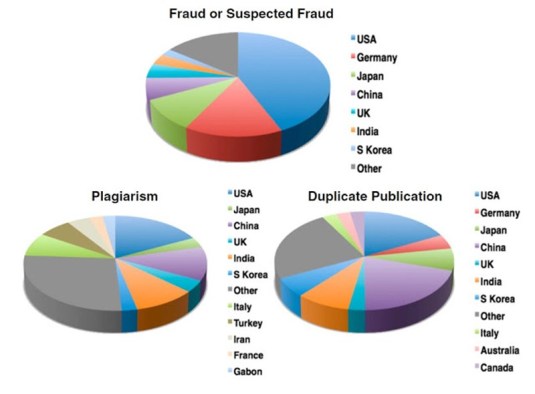
Bruno Frey found that at U.S. Universities:
- 17% of post-doctoral fellows said they would select or omit data to improve results; and
- 81% would select, omit or fabricate data to win research grants!
As one American elite sportsmen said, if you are not cheating, you are not trying hard enough.
 Utopia, you are standing in it!
Recent Comments