How do political parties screen their candidates to ensure they are made of the right stuff – a comparative institutional analysis?

People do complain about the narrow backgrounds of modern politicians: first a university politician, then MP’s staffer or union organiser, and then candidate perhaps first for a safe seat held by the other party. This is yet another test drive.

The real question is is this new screening process for parliamentary candidates the most efficient that is available?

With no working class left to speak of, do you know of any alternatives that ensure that endorsed candidates are true and loyal members of say the Labor Party?

In the past, the screening process was through occupation and club, union and working class memberships, and then a long apprenticeship on the backbenches.

People are unwilling to wait now on the backbenches because incomes are higher and alternative career opportunities are greater. For smart people these days, there are plenty more opportunities that pay better and do not have crazy working hours.

The purpose of political party internal labour markets such as university student politician, union organiser, MP’s staffer and then candidate is to screen for quality and loyalty and to groom for success. By socialising together, potential candidates can mutually monitor each other for true commitment to the party’s values and aims.

The process in the past and now is the same. Form a small club where members can then monitor each other daily for the qualities they seek.

Do you know of an alternative mechanism to the use of internal party career paths for eliciting the required knowledge?

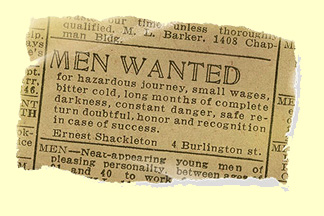
Ernest Shackleton’s famous job ad

via Advert.

Such was the age of the gentleman adventurer.

The incentives to research the economics of global warming – the minimum wage edition

David Card’s research suggested that small rises in the minimum wage do not reduce employment by much.
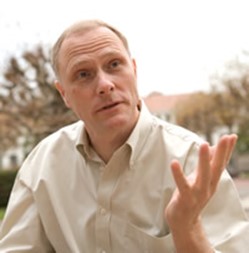
He said that he did not do much further research in the area because people were so personally unpleasant for him:

I haven’t really done much since the mid-’90s on this topic. There are a number of reasons for that that we can go into.

I think my research is mischaracterized both by people who propose raising the minimum wage and by people who are opposed to it.

… it cost me a lot of friends. People that I had known for many years, for instance, some of the ones I met at my first job at the University of Chicago, became very angry or disappointed.

They thought that in publishing our work we were being traitors to the cause of economics as a whole.

I also thought it was a good idea to move on and let others pursue the work in this area. You don’t want to get stuck in a position where you’re essentially defending your old research.

You need a thick hide and academic tenure to do research into the minimum wage these days. There are plenty of research topics that do not cost you friends.

Richard Tol has pointed out that maybe 20 or so academic economists work on climate change on a regular basis. Many of the key survey papers are written by the same few people, including him.

The reasons were that inter-disciplinary works is looked down on in the economics profession and government agencies do not like what economic research says about the costs and benefits of global warming so they pre-emptively do not fund it.

Richard Tol quit as the lead author of an economics chapter of the most recent of the IPCC report after a dispute about research techniques. Tol had been invited to help in the drafting in a team of 70 and was also the coordinating lead author of a sub-chapter about economics.

When he dissented about the quality and alarmist nature of the economics of the IPCC reports, they smeared him so badly as a fringe figure that you wonder why they hired him in the first place.

The co-chair of the IPCC working group that produced the report, said Richard Tol was outside the mainstream scientific community and was upset because his research had not been better represented in the summary:

“When the IPCC does a report, what you get is the community’s position. Richard Tol is a wonderful scientist but he’s not at the centre of the thinking. He’s kind of out on the fringe,” Professor Field said before the report’s release.

You cannot, on the one hand, say that you have hired the best and the brightest to work on “the greatest moral, economic and social challenge of our time” and then say that a dissenting member is a fringe figure. If that was true, rather than a smear, he would never have been hired in the first instance.

Nor would Richard Tol have been asked to write a 2009 survey of the economics of climate change for the leading surveys journal in all of economics – The Journal of Economic Perspectives. This fringe figure said in that survey in 2009 that:

Only 14 estimates of the total damage cost of climate change have been published, a research effort that is in sharp contrast to the urgency of the public debate and the proposed expenditure on greenhouse gas emission reduction.

These estimates show that climate change initially improves economic welfare. However, these benefits are sunk.

Impacts would be predominantly negative later in the century.

Global average impacts would be comparable to the welfare loss of a few percent of income, but substantially higher in poor countries.

Still, the impact of climate change over a century is comparable to economic growth over a few years.

The IPCC hired Tol because their economics of global warming chapters would have lacked credibility if he had not been on the team. LBJ said that it is better to have someone inside the tent pissing out than outside pissing in.

Richard Tol even has an academic stalker:

Bob Ward, has reached a new level of trolling. He seems to have taking it on himself to write to every editor of every journal I have ever published in, complaining about imaginary errors even if I had previously explained to him that these alleged mistakes in fact reflect his misunderstanding and lack of education. Unfortunately, academic duty implies that every accusation is followed by an audit. Sometimes an error is found, although rarely by Mr Ward.

Richard Tol blogs at http://richardtol.blogspot.co.nz/

Academics and their bias against the market

The expansion of jobs for graduates from the 1960s onwards increased the choices for well-educated people more disposed to the market of working outside the teaching profession. Those left behind in academia were even more of the Leftist persuasion than earlier in the 20th century.

Dan Klein showed that in the hard sciences, there were 159 Democrats and 16 Republicans at UC-Berkley. Similar at Stanford. No registered Republicans in the sociology department and one each in the history and music departments. For UC-Berkeley, an overall Democrat:Republican ratio of 9.9:1. For Stanford, an overall D:R ratio of 7.6:1. Registered Democrats easily outnumber registered Republicans in most economics departments in the USA. The registered Democrat to Republican ratio in sociology departments is 44:1! For the humanities overall, only 10 to 1.

The left-wing bias of universities is no surprise, given Hayek’s 1948 analysis of intellectuals in light of opportunities available to people of varying talents:

  • exceptionally intelligent people who favour the market tend to find opportunities for professional and financial success outside the universities in the business or professional world; and
  • those who are highly intelligent but more ill-disposed toward the market are more likely to choose an academic career.

People are guided into different occupations based on their net agreeableness and disagreeableness including any personal distaste that they might have for different jobs and careers. There is growing evidence of the role of personality traits in occupational choice and career success.

The theories of occupational choice, compensating differentials and the division of labour suggest plenty of market opportunities both for caring people and for the more selfish rest of us:

  • Personalities with a high degree of openness are strongly over-represented in creative, theoretical fields such as writing, the arts, and pure science, and under-represented in practical, detail-oriented fields such as business, police work and manual labour.
  • High extraversion is over-represented in people-oriented fields like sales and business and under-represented in fields such as accounting and library work.
  • High agreeableness is over-represented in caring fields like teaching, nursing, religion and counselling, and under-represented in pure science, engineering and law.

Schumpeter explained in Capitalism, Socialism, and Democracy that it is “the absence of direct responsibility for practical affairs” that distinguishes the academic intellectual from others “who wield the power of the spoken and the written word.”

Schumpeter and Robert Nozick argued that intellectuals were bitter that the skills so well-rewarded at school and at university with top grades were less well-rewarded in the market.

  • For Nozick, the intellectual wants the whole society to be a school writ large, to be like the environment where he or she did so well and was so well appreciated.
  • For Schumpeter, the intellectual’s main chance of asserting himself lies in his actual or potential nuisance value.

Richard Posner also had little time for academics who say they speak truth to power:

  • The individuals who do so do it with the quality of a risk-free lark.
  • Academics, far from being marginalized outsiders, are insiders with the security of well-paid jobs from which they can be fired with difficulty.
  • Academics flatter themselves that they are lonely, independent seekers of truth, living at the edge.
  • Most academics take no risks in expressing conventional left-leaning (or politically correct) views to the public, which is part of the reason they are not regarded with much seriousness by the general public.

Next Newer Entries

Bassett, Brash & Hide

Celebrating humanity's flourishing through the spread of capitalism and the rule of law

Truth on the Market

Scholarly commentary on law, economics, and more

The Undercover Historian

Beatrice Cherrier's blog

Matua Kahurangi

Celebrating humanity's flourishing through the spread of capitalism and the rule of law

Temple of Sociology

Celebrating humanity's flourishing through the spread of capitalism and the rule of law

Velvet Glove, Iron Fist

Celebrating humanity's flourishing through the spread of capitalism and the rule of law

Why Evolution Is True

Why Evolution is True is a blog written by Jerry Coyne, centered on evolution and biology but also dealing with diverse topics like politics, culture, and cats.

Down to Earth Kiwi

Celebrating humanity's flourishing through the spread of capitalism and the rule of law

NoTricksZone

Celebrating humanity's flourishing through the spread of capitalism and the rule of law

Homepaddock

A rural perspective with a blue tint by Ele Ludemann

Kiwiblog

DPF's Kiwiblog - Fomenting Happy Mischief since 2003

The Dangerous Economist

Celebrating humanity's flourishing through the spread of capitalism and the rule of law

Watts Up With That?

The world's most viewed site on global warming and climate change

The Logical Place

Tim Harding's writings on rationality, informal logic and skepticism

Doc's Books

A window into Doc Freiberger's library

The Risk-Monger

Let's examine hard decisions!

Uneasy Money

Commentary on monetary policy in the spirit of R. G. Hawtrey

Barrie Saunders

Thoughts on public policy and the media

Liberty Scott

Celebrating humanity's flourishing through the spread of capitalism and the rule of law

Point of Order

Politics and the economy

James Bowden's Blog

A blog (primarily) on Canadian and Commonwealth political history and institutions

Science Matters

Reading between the lines, and underneath the hype.

Peter Winsley

Economics, and such stuff as dreams are made on

A Venerable Puzzle

"The British constitution has always been puzzling, and always will be." --Queen Elizabeth II

The Antiplanner

Celebrating humanity's flourishing through the spread of capitalism and the rule of law

Bet On It

Celebrating humanity's flourishing through the spread of capitalism and the rule of law

History of Sorts

WORLD WAR II, MUSIC, HISTORY, HOLOCAUST

Roger Pielke Jr.

Undisciplined scholar, recovering academic

Offsetting Behaviour

Celebrating humanity's flourishing through the spread of capitalism and the rule of law

JONATHAN TURLEY

Res ipsa loquitur - The thing itself speaks

Conversable Economist

Celebrating humanity's flourishing through the spread of capitalism and the rule of law

The Victorian Commons

Researching the House of Commons, 1832-1868

The History of Parliament

Articles and research from the History of Parliament Trust

Books & Boots

Reflections on books and art

Legal History Miscellany

Posts on the History of Law, Crime, and Justice

Sex, Drugs and Economics

Celebrating humanity's flourishing through the spread of capitalism and the rule of law

European Royal History

Exploring the Monarchs of Europe

Tallbloke's Talkshop

Cutting edge science you can dice with

Marginal REVOLUTION

Small Steps Toward A Much Better World

NOT A LOT OF PEOPLE KNOW THAT

“We do not believe any group of men adequate enough or wise enough to operate without scrutiny or without criticism. We know that the only way to avoid error is to detect it, that the only way to detect it is to be free to inquire. We know that in secrecy error undetected will flourish and subvert”. - J Robert Oppenheimer.

STOP THESE THINGS

The truth about the great wind power fraud - we're not here to debate the wind industry, we're here to destroy it.

Lindsay Mitchell

Celebrating humanity's flourishing through the spread of capitalism and the rule of law

Alt-M

Celebrating humanity's flourishing through the spread of capitalism and the rule of law

croaking cassandra

Economics, public policy, monetary policy, financial regulation, with a New Zealand perspective

The Grumpy Economist

Celebrating humanity's flourishing through the spread of capitalism and the rule of law

International Liberty

Restraining Government in America and Around the World