Constitutions are brakes, not accelerators

Much of constitutional design is about checks and balances. This division of power slows the impassioned majority down.

clip_image002

Constitutional constraints are basically messages from the past to the present that you must think really hard, and go through extra hurdles before you do certain things.

The 18th and 19th century classical liberals were highly sceptical about the capability and willingness of politics and politicians to further the interests of the ordinary citizen, and were of the view that the political direction of resource allocation retards rather than facilitates economic progress.

Governments were considered to be institutions to be protected from but made necessary by the elementary fact that all persons are not angels. Constitutions were to constrain collective authority.

The problem of constitutional design was ensuring that government powers would be effectively limited. The constitutions were designed and put in place by the classical liberals to check or constrain the power of the state over individuals.

The motivating force of the classical liberals was never one of making government work better or even of insuring that all interests were more fully represented. Built in conflict and institutional tensions were to act as constraints on the power and the size of government.

Buchanan and Tullock on the calculus of politics

Image

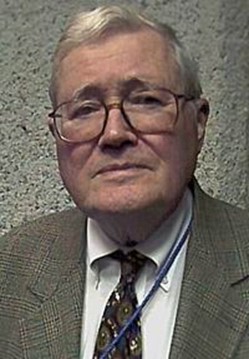
Gordon Tullock on realism in the analysis of politics and government

HT: Cafe Hayek

Gordon Tullock on Voting

https://www.youtube.com/watch?v=21uJUZuIcEo#t=37

Buchanan and Tullock on the rise of bourgeois virtues in the private and public sectors

Image

Tulloch (1967) on the inevitable fall of communism

Image

Gordon Tullock on honesty in the public sector and politics

Image

What should governments do?

Image

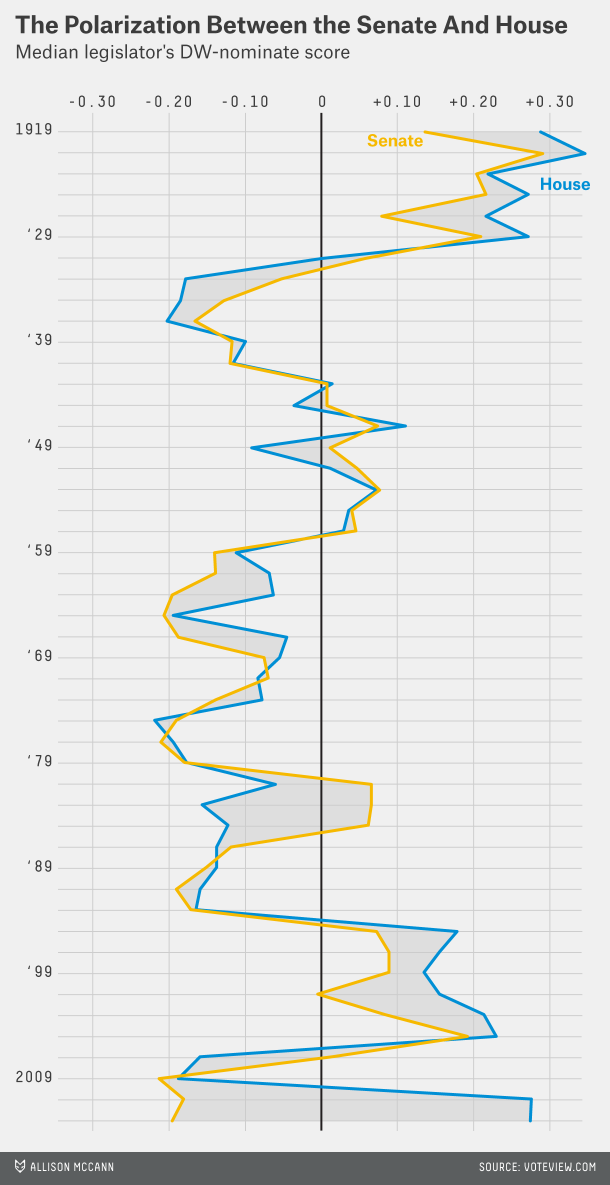
The system is working at last: The House And Senate Are the Most Divided in Our Lifetimes

image

One of the lessons of public choice for constitutional design is there should be two Houses of Parliament and each should be elected by a different method and different geographical basis.

Lower houses tend to be elected in single member constituencies; upper houses tend to be elected in larger multi-member, state-wide or national constituencies by proportional representation.

This diversity in legislative arrangements ensures that more people are participating in decision-making and it is harder to pass new laws without majority support.

The two elected chambers will clash as each exerts its mandate to represent the will of the people who elected it. The laws that pass these two chambers elected by different methods must have substantial popular support.

When upper and lower houses are elected by similar methods, it is much easier to assemble a majority through vote trading and lobbying.

Data via fivethirtyeight.com

Gordon Tullock on the motives for income distribution

Why do we have governments?

Ancient philosophers in general thought that it was to establish virtue or do good. Most modern public choice scholars are more modest in their evaluation of government.

We simply want government to provide those goods and services that people in fact want and that, for a variety of reasons, are hard to provide through the market.

Most people, for example, would like to have the poor taken care of by taxes on those better off. It is true they would have no objection if the poor were taken care of by voluntary contributions, but our experience seems to indicate that voluntary contributions don’t produce adequate funds for this purpose. Hence the use of the government to provide that particular service is generally approved. Of course, that does not prove that in general people are in favour of the exact quantity transferred or the methods used by the government.

There is a large literature on why certain types of things, sometimes called public goods, are provided by the market in a very inefficient way and will be provided in a better (although far from optimal) way by the government.

…We will just accept as a fact that there are a number of things which are better dealt with by the government. We will also accept as a fact that there are other things which are better dealt with by the market.

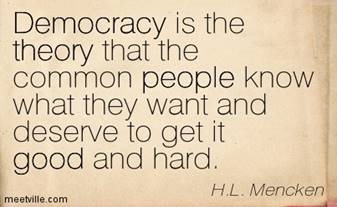
…In general, we want the government to give the citizens what they themselves want. That, indeed, is the point of democracy.

The smaller the government, the smaller the number of its voters. The smaller the number of voters, the more power each individual voter has. That’s one side of the argument.

On the other side, we have the fact that many government services are hard or impossible for small governmental units to provide.

These two arguments have to be set off against each other and since different government activities will turn out to have a different balance, having different governmental sizes is sensible.

… The existence of many small government units dealing with certain special problems has another advantage. Not only are these small governments more under the control of their voters in the sense that each individual voter’s preferences count for more than in the large government, their existence means that citizens may move from one to the other if they are dissatisfied.

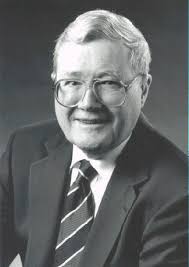
Gordon Tullock

The New Federalist (1995)

New Zealand is not a federal state. I like federalism because a divided government is a weak government.

Natural experiments and how South Korea became rich – updated again

In the early 1960s, Joan Robinson argued with a colleague about the great economic success of Korea. It was a confusing debate until a listener realised Robinson was talking about North Korea and the other about the South. Soon after this discussion, there was a military coup in South Korea.

Gordon Tullock is an interesting writer on South Korea and the consequence of this military coup saying that:

  • Syngman Rhee was a socialist who knew nothing of capitalism when he took over after the Second World War.
  • To make his country look capitalist to the Americans, Rhee gave many previously Japanese owned industries to his friends as monopolies.

When General Park overthrew Syngman Rhee in 1961, he knew no economics, but Park knew the bureaucracy was filled with Rhee’s cronies, so he fired them all. Before a new lot of cronies got properly in place, the economy boomed.

Tullock considered that South Korea became a prosperous, open economy as a by-product of this political purge. At the time of the 1961 coup, Tullock specialised in China and Korea. He was formerly a diplomat to both countries in the late 1940s and early 1950s. Tullock published in top economic journals on China and Korea in the 1950s despite having completed only one course in economics. Tullock is one of the last great polymaths.

Mancur Olson argued that the accumulation of interest groups in even a previously prosperous society may lead to its economic stagnation because of this institutional sclerosis. These special interests build their power over time and start to slow down a society’s capacity to adopt new technologies and to reallocate resources in response to changing conditions, and thereby reduce the rate of economic growth.

President Park swept away these interest groups after he came to power in Korea. The rest is history. When the old political networks are disrupted, the lack of political connections forces the remain entrepreneurs to focus on productive market activities. The defeat of Germany and Japan in the war also led to the overthrow of special-interest groups that impeded growth.

A realignment of patronage is common after leadership successions in autocratic societies. These routine reallocations of patronage – Perestroika is an example – can get out of hand and destabilise the entire pre-existing rent-seeking society. This happened to the old order when President Park cleaned house in South Korea.

For a discussion of Korean industry policy, see this paper by an old class mate of mine, Heather Smith. A more general survey of the myths of state-led development in East Asia was written by Ben Powell:

Although some state industrial planning did exist in East Asian countries, when these countries were growing, they were some of the most free market in the world.

Hong Kong and Singapore are consistently ranked the top two freest countries in the world, and in 1970, when Japan and Taiwan were growing quickly, they were ranked seventh and sixteenth. Even Korea ranked in the top 20 per cent.

Although state development planning did exist in these countries, overall broader measures of the market’s relative sphere of influence in these countries show that they were far more market oriented than slower growing areas of the world.

Latin America is a good example of stagnation after an extended period of prosperity because of the accumulation of special interests and barriers to efficient production. Latin America has many more barriers to competition than the successful East Asian countries. Why are there no Latin Tigers apart from Chile?

External threats, the dynamics of internal politics, including dramatic break-ups of established interest groups, low taxes and competition in export markets were the enablers of market-led rapid development in Japan, Singapore, South Korea, Hong Kong and Taiwan. Many other under-developed nations did not grow because institutional sclerosis locked them into yesterday’s technologies and industries.

The usual suspects for natural experiments are countries with the same cultures, peoples and similar resources that are suddenly partitioned for arbitrary reasons.

These would be East and West Germany, North and South Korea and Taiwan and China. In each case, the socialist solution was left for dead by capitalism.

Taiwan and Cuba were threatened with invasion and trade sanctions by large bellicose superpower neighbours. Cuba is a dump. Taiwan changed from a rural backwater to a rich country.

I am not too sure how Mises and other Austrian economists would view the use of these natural experiments. The view of Mises on theory and history is that the correctness of a theory can be ascertained without the aid of experience. Natural experiments make no sense without a correct theory to tell us what and how to measure and what to make of our discoveries. Without a theory, we neither know where to look nor what to look for.

p.s. there was some excitement over at Reddit about the role of Chaebol. These are Korean conglomerates. The term was first used in 1984, long after the 1961 coup and after President Park was assassinated in 1979.

The Chaebol invested heavily in export-oriented manufacturing. As such, they would have zero market power and would have been subject to strong global market disciplines on both their costs and any lack of innovation. Their relative domestic size does not matter much if their markets are global.

Post-war trade liberalisation and tariff cuts gave Korean and the other East Asian Tigers much greater access to major export markets. This allowed export production to expand without limit.

Institutional reforms and imported new technologies increased employment and incomes through this explosion in exporting. This allowed the losers from the economic changes to be compensated directly or with new opportunities in the export sectors (Parente and Prescott 1999, 2005; Olson 1982, 1984; Acemoglu and Robinson 2005).

The Arab Spring – will there ever be a successful popular revolution?

The Arab Spring is a good example of Gordon Tullock’s consideration of revolutions as palace coups that sometimes occur against the background of street protests. For Tullock, the puzzle is not that popular revolutions are so rare, but that they happen at all.
The role of street protests in the Arab Spring was to throw in the possibility of mutinies and desertions in the army and police. Previous alliances are thrown into doubt especially as the autocrat is old and sick, but had been for many years grooming his young son to inherit his power.

Ordinary citizens obey dictators because if they don’t, they are highly unlikely to make any difference in any revolt and could get killed during the uprising even if it succeeds. Worse awaits them if the revolt fails.

To stay in power, Tullock considers that an autocrat needs a moderately competent secret police willing to torture and kill, and a policy of rewarding generously those who betray coup plotters. Of course, the plotters must be shot.

Autocrats are fundamentally insecure. Wintrobe wrote of the “Dictator’s Dilemma” – the problem facing any ruler of knowing how much support he has among the general population, as well as among smaller groups with the power to depose him. Most dictators are overthrown by the higher officials of their own regime.

Most dictators do not anoint a formal successor while they are in office. Tullock argued that as soon as a likely successor emerges, loyal retainers start to form alliances with that person and may see private advantage in bringing his anointed day forward. Can’t have that.

More than a few autocrats were murdered in their sleep. To his very last day, Stalin locked his bedroom door because he did not trust the bodyguards who had been with him since the 1920s.

As for the populace, the autocrat must use both the carrot and the stick to buy loyalty. It is tricky to get the right mix of repression and co-optation due to lack of information. So dictators pay very high wages to select groups to secure their loyalty, especially the military and police. The communist party of the USSR started with 100,000 members in 1920. By the early 1980s, co-optation left it with 26 million members with the ensuing privileges.

Perfectly ordinary regular armed forces, with no counterinsurgency doctrine or training whatsoever, have in the past regularly defeated insurgents by using well-proven methods.

The simple starting point is that insurgents are not the only ones who can intimidate or terrorise civilians.

For instance, whenever insurgents are believed to be present in a village, small town, or city district, the local notables can be compelled to surrender them to the authorities, under the threat of escalating punishments, all the way to mass executions. That is how the Ottoman Empire controlled entire provinces with a few feared janissaries and a squadron or two of cavalry.

Terrible reprisals to deter any form of resistance were standard operating procedure for the German armed forces in the Second World War. Compare occupied France with the U.S. in Iraq:

  • German officers walked around occupied France with no more than side-arms because any mischief would be dealt with by savage reprisals.
  • American forces in Iraq bunker down and move in convoys because they do not launch reprisals.

On the side-lines, even better, watching it all on TV is the safest place for most to be in a popular revolution, uprising or insurgency.

Unless you control key military resources in the capital, what you do personally does not matter to the success of the revolution. Sticking your neck out can get you shot at or perhaps tortured. A classic ‘free rider’ dilemma.

If you must get involved, the best place to be in a mounting revolution is to be a ‘late switcher’. Switch sides when you are sure of joining the winning side. Back the winner just as he is about to win.

One reason for those post-revolution and post-coup purges is the small number of people actually involved in overthrowing the old autocrat and who actually stuck their necks out while plotting the coup do not trust their Johnny-come-lately new allies. They turn on these late-switchers before they change sides again to support a further coup of their own or a counter-coup.

People power in Manila in 1986 had a lot to do with late switching in a coup plot.

Originally, a military coup was planned by General Ramos and Defence Minister Enrile against the dying Marcos.

The coup plotters feared for their lives under Imelda. The plot was uncovered. Assassins were dispatched.

Ramos and Enrile gave up on forming a military junta and threw their lot with Cory Aquino and her popular movement in the hope that the army would split or hold off until the lay of the land was clearer, which the army did. That 1986 military coup and the coup attempts in succeeding years were staffed by different cabals of these late switchers.

Yeltsin on that tank in Moscow with a loud hailer was great TV, but remember he was calling for the army and security forces to switch sides or at least stay neutral. They did.

The mid-1980s Russian leaders were old and sick, so many ambitious younger army officers and nomenklatura saw their main chance if they boxed real clever and switched sides just at the right moment.

After every change of leadership in the USSR, there is a redistribution of patronage. Perestroika and Glasnost were, on closer inspection, another round of these reallocations of patronage. Patronage to their own entourages are routine for new autocrats throughout history.

Every Russian leader had his own reform initiatives after entering office and had periodic anti-corruption purges to redistribute the rents of high government offices and state-owned enterprise management positions to the up-and-comers he could trust more. Like Khrushchev, Gorbachev also wanted to transfer resources away from the military. Gorbachev went further and wanted to stop bleeding money and resources to the communist satellite states of Eastern Europe.

It also should be always remembered that Qadaffi got his main chance to take over when he was a mere Colonel Qadaffi leading a small group of junior officers. Colonels control strategic components of the military but are not as well paid as those in the autocrat’s inner circle.

Generals are often close to the leadership; their appointments are usually somewhat political and benefit from generous patronage from the autocrat. They have little to gain but their life to lose in a coup plot.

Enough military coups are led by more junior officers seizing their main chance. This make their generals nervous enough about their own survival in a colonels’ coup to strike first and displace the current autocrat before they are the next to be arrested and share his fate. There is then a post-coup realignment of patronage to buy off the junior officers.

Nasser did not believe that he, as a lieutenant-colonel, would be accepted by the Egyptian people and so he and the Free Officers Movement selected a general to be their nominal boss and lead the coup in 1952. Nasser did not become Prime Minister until 1954 after a spell as a minister and then as Deputy Prime Minister.

What appears to be a popular uprising is normally a split within the government. The Arab Spring, not by coincidence, occurred during a succession crisis in Egypt. President Mubarak has been very old and sick for a long time. Gamal Mubarak was old enough to covet the presidency but would have a large entourage of his own that would take many of the lucrative posts from his father’s retainers and courtiers.

A few autocrats call elections and retire abroad. The gratitude of the populace and the uncertain identity of his successors creates a big enough break in the traffic to allow the dictator to get to the airport alive.
Next Newer Entries

Bassett, Brash & Hide

Celebrating humanity's flourishing through the spread of capitalism and the rule of law

Truth on the Market

Scholarly commentary on law, economics, and more

The Undercover Historian

Beatrice Cherrier's blog

Matua Kahurangi

Celebrating humanity's flourishing through the spread of capitalism and the rule of law

Temple of Sociology

Celebrating humanity's flourishing through the spread of capitalism and the rule of law

Velvet Glove, Iron Fist

Celebrating humanity's flourishing through the spread of capitalism and the rule of law

Why Evolution Is True

Why Evolution is True is a blog written by Jerry Coyne, centered on evolution and biology but also dealing with diverse topics like politics, culture, and cats.

Down to Earth Kiwi

Celebrating humanity's flourishing through the spread of capitalism and the rule of law

NoTricksZone

Celebrating humanity's flourishing through the spread of capitalism and the rule of law

Homepaddock

A rural perspective with a blue tint by Ele Ludemann

Kiwiblog

DPF's Kiwiblog - Fomenting Happy Mischief since 2003

The Dangerous Economist

Celebrating humanity's flourishing through the spread of capitalism and the rule of law

Watts Up With That?

The world's most viewed site on global warming and climate change

The Logical Place

Tim Harding's writings on rationality, informal logic and skepticism

Doc's Books

A window into Doc Freiberger's library

The Risk-Monger

Let's examine hard decisions!

Uneasy Money

Commentary on monetary policy in the spirit of R. G. Hawtrey

Barrie Saunders

Thoughts on public policy and the media

Liberty Scott

Celebrating humanity's flourishing through the spread of capitalism and the rule of law

Point of Order

Politics and the economy

James Bowden's Blog

A blog (primarily) on Canadian and Commonwealth political history and institutions

Science Matters

Reading between the lines, and underneath the hype.

Peter Winsley

Economics, and such stuff as dreams are made on

A Venerable Puzzle

"The British constitution has always been puzzling, and always will be." --Queen Elizabeth II

The Antiplanner

Celebrating humanity's flourishing through the spread of capitalism and the rule of law

Bet On It

Celebrating humanity's flourishing through the spread of capitalism and the rule of law

History of Sorts

WORLD WAR II, MUSIC, HISTORY, HOLOCAUST

Roger Pielke Jr.

Undisciplined scholar, recovering academic

Offsetting Behaviour

Celebrating humanity's flourishing through the spread of capitalism and the rule of law

JONATHAN TURLEY

Res ipsa loquitur - The thing itself speaks

Conversable Economist

Celebrating humanity's flourishing through the spread of capitalism and the rule of law

The Victorian Commons

Researching the House of Commons, 1832-1868

The History of Parliament

Articles and research from the History of Parliament Trust

Books & Boots

Reflections on books and art

Legal History Miscellany

Posts on the History of Law, Crime, and Justice

Sex, Drugs and Economics

Celebrating humanity's flourishing through the spread of capitalism and the rule of law

European Royal History

Exploring the Monarchs of Europe

Tallbloke's Talkshop

Cutting edge science you can dice with

Marginal REVOLUTION

Small Steps Toward A Much Better World

NOT A LOT OF PEOPLE KNOW THAT

“We do not believe any group of men adequate enough or wise enough to operate without scrutiny or without criticism. We know that the only way to avoid error is to detect it, that the only way to detect it is to be free to inquire. We know that in secrecy error undetected will flourish and subvert”. - J Robert Oppenheimer.

STOP THESE THINGS

The truth about the great wind power fraud - we're not here to debate the wind industry, we're here to destroy it.

Lindsay Mitchell

Celebrating humanity's flourishing through the spread of capitalism and the rule of law

Alt-M

Celebrating humanity's flourishing through the spread of capitalism and the rule of law

croaking cassandra

Economics, public policy, monetary policy, financial regulation, with a New Zealand perspective

The Grumpy Economist

Celebrating humanity's flourishing through the spread of capitalism and the rule of law

International Liberty

Restraining Government in America and Around the World