The Supreme Court today unanimously threw out the convictions of Bridget Kelly, a former aide to Christie, and Bill Baroni, a former Port Authority official, for their role in “Bridgegate.” The dispute involved the controversial closing of lanes on the George Washington Bridge to create traffic problems for the mayor of Fort Lee, N.J., who […]
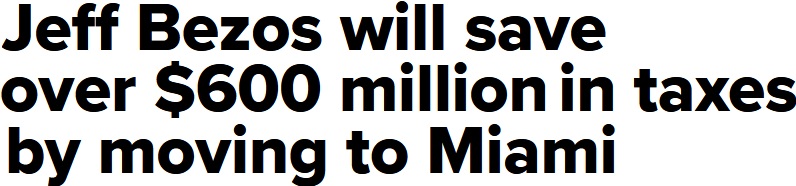
Inflation is having an effect on everything, even policy analysis. Back in 2013, I wrote that Phil Mickelson was “California’s One-Man Laffer Curve” because he wanted to escape the Golden State to save about $1.2 million per year in taxes. But now, when a goose that lays golden eggs wants to escape, the numbers are […]
A lot of academics who haven’t previously gone after DEI (Diversity, Equity, and Inclusion) initiatives are coming out of the woodwork to criticize the philosophy and actions of DEI. New critics include Steve Pinker, who, in his Boston Globe article on how to fix the problems of Harvard, included “Disempowering DEI” as one of the […]
Interpreting the agreement made at Waitangi as a social contract is a way to move forward on treaty issues (This column follows ‘Our Understandings Of Te Tiriti Has Evolved Organically’.) Brian Easton writes – Te Tiriti is in the form of a social contract of the sort that political theorists have discussed since the seventeenth […]
Here’s a new one-hour interview of Steve Pinker by John Tomasi, inaugural president of the Heterodox Academy. Here are the YouTube notes: Are our higher education institutions still nurturing true intellectual diversity? Our guest today is Steven Pinker, a cognitive scientist at Harvard, and today, we’ll be exploring the growing concerns within higher ed that […]
By Paul Homewood From The Telegraph: Labour’s green U-turn reflects the shifting sands of climate policy If you want to see how the politics of climate change are shifting, compare today with late 2009. In both cases, a general election was approaching. In October 2009, with the Copenhagen climate summit […]
This week, the argument before the Supreme Court in Trump v. Anderson captivated the nation as the justices considered the disqualification of former President Donald Trump from the 2024 presidential ballot. For some of us, the argument brought back vivid memories of covering Bush v. Gore almost 25 years ago. While one justice (Clarence Thomas) […]
Graham Adams writes — Sir Apirana Ngata has a pre-eminent place in the pantheon of Māori luminaries. He is widely regarded as a visionary leader who, in an illustrious political career, championed biculturalism when assimilationist policies were the norm. He energetically promoted Māori language and culture, and land reform. He was an MP for nearly […]
Three years ago a friend of mine who’s a District Court Judge asked me if I would be guest speaker at the annual DCJ shindig, scheduled that year for the Hilton in Taupo. Despite a feeling of significant intellectual inferiority, I accepted on the condition that all I would talk about were personal experiences from…
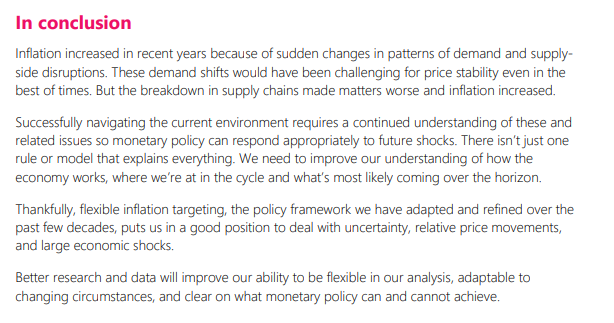
I’ve been rather tied up with other stuff for the last few weeks (including here) which is why I’ve not previously gotten round to writing about the first piece of monetary policy communications from our Reserve Bank this year. That was the “speech” by the Bank’s chief economist (and MPC) member Paul Conway given to […]
Why try to stop that evolution? Brian Easton writes – In 1956, historian Ruth Ross presented her investigations of the treaty signed at Waitangi on 6 February 1840 to a seminar concluding, ‘The [Māori and Pakeha] signatories of 1840 were uncertain and divided in their understanding of [Te Tiriti’s] meaning; who can say now what […]
Last Sunday, the Sunday Star-Times recalled on its front page the “fiery debate” triggered by my speech to the Orewa Rotary Club just 20 years earlier. Articles by several authors in the same paper brought the debate up-to-date and warned of the dangers of ACT’s Treaty Principles Bill, which the National Party’s coalition agreement with…
The euro technically started in 1999, when the 11 founding European members of the currency agreed to keep their exchange rates fixed and to hand over monetary policy to the European Central Bank. The euro then became the actual currency that people and firms used in 2002. I confess that, back in the early 1990s,…
Why Evolution is True is a blog written by Jerry Coyne, centered on evolution and biology but also dealing with diverse topics like politics, culture, and cats.
“We do not believe any group of men adequate enough or wise enough to operate without scrutiny or without criticism. We know that the only way to avoid error is to detect it, that the only way to detect it is to be free to inquire. We know that in secrecy error undetected will flourish and subvert”. - J Robert Oppenheimer.




 Utopia, you are standing in it!
Recent Comments