Jagdish Bhagwati Reveals the Problem With Foreign Aid
15 Jan 2018 Leave a comment
in applied price theory, development economics, economics of bureaucracy, growth disasters, growth miracles, Public Choice, rentseeking Tags: overseas aid
James Robinson: “Why Nations Fail” | Talks at Google
14 Jan 2018 Leave a comment
in comparative institutional analysis, constitutional political economy, development economics, economic history, growth disasters, growth miracles, Public Choice, rentseeking Tags: economics of colonialism, The Great Enrichment
Daron Acemoglu and development economics
14 Jan 2018 Leave a comment
in comparative institutional analysis, constitutional political economy, development economics, income redistribution, Public Choice, rentseeking Tags: economics of colonialism
Imperialism: Crash Course World History #35
14 Jan 2018 Leave a comment
in defence economics, development economics, economic history, economics of bureaucracy, Public Choice, rentseeking Tags: Age of Discovery, age of empires, economics of colonialism
Interesting but flawed. The age of empires was prior to the industrial revolution.
Sam Peltzman on Teacher’s Unions
07 Jan 2018 Leave a comment
in applied price theory, economics of bureaucracy, economics of education, Public Choice, rentseeking Tags: teachers unions
How does @MontPelerinSoc rule the world from such a crappy website?
06 Jan 2018 Leave a comment
in constitutional political economy, Public Choice, rentseeking

You would think the global ringmaster of the neoliberal conspiracy would scrape off enough labour surplus to have a decent website. How are its minions to know want to do in this age of social media if they cannot even download the papers delivered at recent meetings?
Mind you, in Australia, the local ringmaster of the vast Mont Pelerin conspiracy that ruled the roost in public policy making in Canberra in the 1980s, which John Quiggin outed as the Centre for Independent Studies, did not have a full time staff member until about 1979: Greg Lindsey. Their 1st office opened above Uncle Pete’s Toys in St Leonards in 1980.
Build More Housing! San Francisco’s YIMBY Movement Has a Plan to Solve the City’s Housing Cris
06 Jan 2018 Leave a comment
in applied price theory, economics of religion, Public Choice, rentseeking, urban economics Tags: land supply, NIMBYs, zoning
The Vision of Jeffrey Sachs by Bill Easterly
03 Jan 2018 Leave a comment
in applied price theory, comparative institutional analysis, constitutional political economy, development economics, growth disasters, growth miracles, Public Choice, rentseeking Tags: Bill Easterly, overseas aid, The fatal conceit
Moral superiority is the payoff of righteous outrage. No surprise there.
29 Dec 2017 Leave a comment
in Public Choice, rentseeking Tags: moral psychology, political correctness
There are no externalities from hosting the America’s Cup because externalities arise from incomplete property rights
23 Dec 2017 Leave a comment
in applied price theory, applied welfare economics, politics - New Zealand, rentseeking, sports economics

Externalities arise out of incomplete property rights. The only externalities that arise from an airport expansion proposed in Wellington is from noise.
There are no externalities from building sports stadiums or hosting mega sports events because all of the effects are transacted through the market. No inputs are used without the permission of the owner, nothing is produced that is not charged for by the venue or event organisers.
As for the use of benefit cost analysis to strengthen the claim for a government subsidy, you use cost benefit analysis when you are too stupid to charge for the good or service such as a road or you are evaluating regulations because they deal with nonmarket effects, effects that are not mediated through the market process.
Sports stadiums and mega sports events should pass the usual market test. Is it profitable for the entrepreneurs backing the project when they are using their own money.
Net neutrality must be anti-competitive! @GarethMP favours net neutrality
15 Dec 2017 Leave a comment
in applied price theory, entrepreneurship, industrial organisation, rentseeking, survivor principle
Netscape shipped its first browser for the friendly price of $49. Nasty anti-competitive Microsoft started giving Internet Explorer away. After the first browser war, the usage share of Netscape had fallen from over 90 percent in the mid-1990s to less than one percent by the end of 2006.

During the 1990s, Microsoft competitors — Netscape, IBM, Sun Microsystems, WordPerfect, Oracle, and others —pressed the Justice Department to sue Microsoft for tying Internet Explorer to Windows even though only one of them, Netscape, had a browser.
1995: top 15 Internet companies worth $17 billion.
2015: top 15 Internet companies worth $2.4 trillion. —@kpcb https://t.co/EMtx7Fldef—
Vala Afshar (@ValaAfshar) December 31, 2015
The demise of Netscape was a central premise of Microsoft’s antitrust trial, where the Court ruled that Microsoft’s bundling of Internet Explorer with the Windows operating system was a monopolistic and illegal business practice. We are still waiting for the day when Microsoft finishes giving away its browser, excludes competition from the market for browsers, jacks up its price to make up for a good 20 years of giving away its browser and is not immediately threatened by new entry.
The tech takeover of global advertising revenue. @VisualCap chart visualcapitalist.com/the-tech-takeo… https://t.co/98uNyrhNjN—
Paul Kirby (@paul1kirby) September 22, 2017
As William Shughart and Richard McKenzie observed:
Microsoft’s critics have advanced a number of economic theories to explain why the firm’s behaviour has violated the antitrust laws. None of those critics has articulated why or how consumers have been harmed in the process. Instead, the furious attacks on Microsoft have focused on the injuries supposedly suffered by rivals (on account of Microsoft’s pricing and product-development strategies) and by computer manufacturers and Internet service providers (on account of Microsoft’s “exclusionary contracts”).
A simple rule for a complex world: the moment that evidence is tended to a court about what happened to the competitors in a lawsuit under competition law, that court must dismiss the suit out of hand. Too many lawsuits under competition law are designed to protect the consumer from the scourge of lower prices!
The best proof that a merger or other business practice is pro-consumer is the rival firms in that market are against it. Why would a firm be against a merger or other business practice that raises the prices of their business rivals?
The fear with net neutrality is price discrimination. That someone else is getting a discount you are not. The scourge of lower prices once again is the great bugbear of competition law.
Industries with high fixed costs and low marginal costs often have a menu of prices. Remember that the next time you get on a plane.
The predecessor of net neutrality was the battles over the pricing of the local exchanges in the telephone industry but as Richard Epstein observed:
In the long run, the rapid movement of technology has already left us with a new and vibrant landscape that is light years removed from a generation ago when the major premise of the Telecommunications Act of 1996 was that landlines would continue to hold a monopoly position for years to come—about two years, in fact. That false premise led to extensive regulatory battles over all the interchange relations between local exchange carriers and long line carriers. But the rise of cell phones and VoIP technology changed all that, so that the regulation did much to hamper innovation, but virtually nothing to protect consumers.
The lessons apply here. It is always a desperate mistake to allow hypothetical horror stories to set the intellectual stage for evaluating regulatory proposals. Quite simply, Slate will be able to access all major networks because no broadband carrier wants to face the consumer wrath and defections that would surely accompany high-handed and intrusive interventions. The correct approach therefore is to do nothing. The FCC need not implement any regulations. For now, it should sit back and relax. If some crisis occurs that merits new forms of internet regulations, we can address that situation when it comes. But for the moment, innovation on the internet is doing great. Let’s keep it that way.
Serial competition is common in rapidly innovating industries with one dominant firm making hay for a while then quickly swept away. Google had the advantage of being the 17th browser to hit the market.
Internet monopolies. Is the “obsession” of economists with competition “a relic of history”? econ.st/11Jz9gD http://t.co/Mqef9fYJ9M—
The Economist (@EconBizFin) December 03, 2014
The distribution of firm sizes reflects the rise and fall of firms in a competitive struggle to survive with competition between firms of different sizes sifting out the more efficient firm sizes (Stigler 1958, 1987; Demsetz 1973, 1976; Peltzman 1977; Jovanovic 1982; Jovanovic and MacDonald 1994b). Business vitality and capacity for growth and innovation are only weakly related to cost conditions and often depends on many factors that are subtle and difficult to observe (Stigler 1958, 1987).
The efficient firm sizes are the sizes that survived in competition against other sizes. To survive, a firm must rise above all of problems it faces such as employee relations, skills development, innovation, changing regulations, unstable markets, access to finance and new entry. This is the decisive (and Darwinian) meaning of efficiency from the standpoint of the individual firm (Stigler 1958). One method of organisation supplants another when it can supply at a lower price (Marshall 1920, Stigler 1958).
Regulating innovation through competition law is never a good idea. The more efficient sized firms are the firm sizes that are expanding their market shares in the face of competition; the less efficient sized firms are those that are losing market share (Stigler 1958, 1987; Alchian 1950; Demsetz 1973, 1976). If the firm size distribution in an industry is relatively stable for a time, the firms are their current sizes because there are no more gains from further changes in size in light their underlying demand and cost conditions (Stigler 1983; Alchian 1950; Demsetz 1973, 1976).
Temporary monopoly and rapidly changing market shares with the occasional dominant firm are all characteristics of the early stages of any new or innovating industry. The deadweight social losses from the enforcement of competition law are at their greatest in industries undergoing rapid innovation because of the possibility of error is at its height. Optimum firm sizes continually change over time because of shifts in input and output prices and technological progress (Stigler 1958, 1983).
If large firm size is better at serving consumers, the large firms start to grow and smaller firms will die or be absorbed until the untapped gains from growth in firm size are exhausted. Firms increase in size and decrease in number when this adaptation becomes necessary to survive. If a smaller firm size is now better, smaller firms will multiply and the larger firms will decline in size because they are under-cut on price and quality.
The life cycle of many industries starts with a burst of new entrants with similar products. These new or upgraded products often use ideas that cross-fertilise. In time, there is an industry shakeout where a few leapfrog the rest with cost savings and design breakthroughs to yield the mature product (Jovanovic and MacDonald 1994a; Boldrin and Levine 2008, 2013). Fast-seconds and practical minded latecomers often imitate and successfully commercialise ideas seeded by the market pioneers using prior ideas as knowledge spillovers. Their large market shares are their prizes for winning the latest product races, not the basis of their initial victories.
New entrants regard a large firm size as a premature risk rather than an advantage of incumbency they should mimic as soon as they can. New firms set-up on a scale that is well below the minimum efficient production scale for their industry (Bartelsman, Haltiwanger, and Scarpetta 2009). New entrants choose to start so small to test the waters regarding their true productivity and the market’s acceptance of their products and to minimise losses in the event of failure (Jovanovic 1982; Ericson and Pakes 1995; Dhawan 2001; Audretsch, Prince and Thurik 1998; Audretsch and Mahmood 1994).
Competition law can subvert competition by stymieing the introduction of new goods and the temporary monopoly often necessary to recoup their invention costs and induce innovation. The puzzlingly large productivity differences across firms even in narrowly defined industries producing standard products lead to doubts about the efficiency of some firms, often the smaller firms in an industry. Some firms produce half as much output from the same measured inputs as their market rivals and still survive in competition (Syverson 2011). This diversity reflects inter-firm differences in managerial ability, organisational practices, choice of technology, the age of the business and its capital, location, workforce skills, intangible assets and changes in demand and productivity that are idiosyncratic to each individual firm (Stigler 1958, 1976, 1987; De Alessi 1983).
Harold Demsetz argued that competition does not take place upon a single margin, such as price competition. Competition instead has several dimensions often inversely correlated with each other. Because of this, a competition law disparaging one form of competition will result in more of another. There are trade-offs between innovation and current price competition. Manne and Wright noted in the paper, Innovation and the Limits of Antitrust that:
Both product and business innovations involve novel practices, and such practices generally result in monopoly explanations from the economics profession followed by hostility from the courts (though sometimes in reverse order) and then a subsequent, more nuanced economic understanding of the business practice usually recognizing its pro-competitive virtues.
A competition law enforcement authority should never pretend to know which trade-off between innovation and price competition and between competition and temporary monopoly are optimal. Every competition authority should simplify the regulatory environment by simply saying lower prices are per always lawful.
It goes back to that extremely famous 1984 essay by Frank Easterbrook on the limits of anti-trust law. The essay was about errors in competition policy and law enforcement:
- When a competition law enforcer makes a mistake and closes off an efficiency enhancing practice or stops a pro-consumer merger, there are few mechanisms to correct this mistake; and
- If a competition law enforcer inadvertently does not stop a anti-competitive merger or lets a collusive or inefficient practice get through, at least there is market processes that will slowly chip away at his mistake.
Easterbrook argued that courts and enforcers should craft liability and procedural rules to minimise the sum of competition law’s error and decision costs:
The legal system should be designed to minimize the total costs of (1) anticompetitive practices that escape condemnation; (2) competitive practices that are condemned or deterred; and (3) the system itself
Competition law enforcers and policymakers made plenty of errors in the past. Chastened by their follies aplenty in the past, competition law policymakers should not approach any issue with overconfidence. They have had a dismal track record in aligning competition law with applied price theory and the basics of the economics of industrial organisation. In the high-tech industries, competition law runs a high risk of chilling innovation. As Joshua Wright said:
Innovation is critical to economic growth. Incentives to innovate are at the heart of the antitrust enterprise in dynamically competitive industries, and, thus, getting antitrust policy right in high-tech markets is an increasingly important component of regulatory policy in the modern economy. While antitrust enforcement activity in high-tech markets in the United States and the rest of the world is ever-increasing, there remain significant disputes as to how to assess intervention in dynamically competitive markets.
Game of Theories: The Great Recession
06 Dec 2017 Leave a comment
in budget deficits, business cycles, Euro crisis, fiscal policy, global financial crisis (GFC), great recession, macroeconomics, Public Choice, rentseeking
The climate alarmist gravy train
24 Nov 2017 Leave a comment
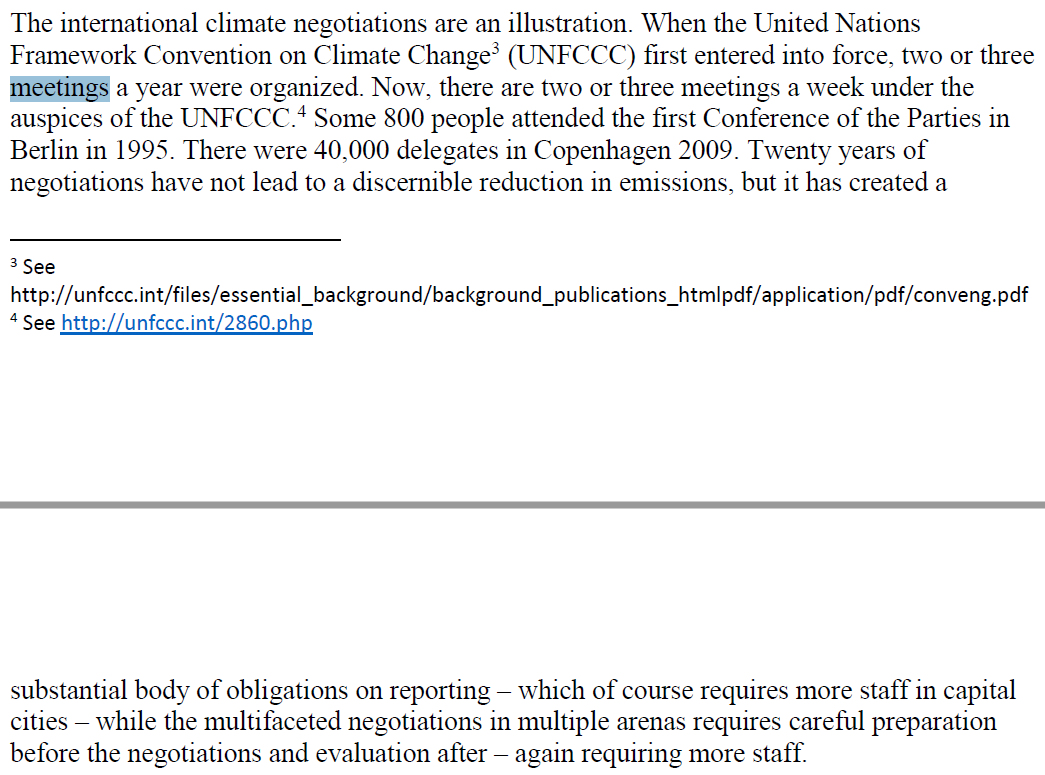
Source: Tol, Richard S J (2017) The structure of the climate debate. Energy Policy, 104. pp. 431-438.
Why the Chinese growth rate will taper down
18 Oct 2017 Leave a comment
in constitutional political economy, development economics, growth miracles, property rights, Public Choice, rentseeking
Many years ago, Mancur Olson wrote an insightful book about prosperity and dictatorships. He introduced the concept of rights intensive production. As countries become more and more developed, investment horizons lengthen and depends more and more upon the enforcement of contract and property rights in a tolerably honest way.
Instead of being the first entrepreneur to introduce the most basic technologies and profit handsomely, such as in China with the advent of capitalism, entrepreneurs are introducing a product upgrade or new product that is a minor improvement on current offerings. Such investments will take time to pay off.
Many years ago, an article was published in the Journal of Economic Perspectives about a survey of entrepreneurs in Russia and Poland. It was in the early 1990s. Each was asked whether an investment project that doubled their money in two years was worth the risk. The Russian entrepreneurs mostly said no, the Polish entrepreneur said yes. So insecure are the returns from investment in Russia at that time that the phenomenal returns were required before an investment was made. They would only invest if they could double the money in two years.
In many developing countries, China is an example, property rights are insecure. This means short payback periods are essential for investment. Entrepreneurs must make their money quickly. This means that as investment horizons inevitably lengthened, growth will slow because more and more technologies will not be profitable to introduce into China.
The reason that export based industrialisation is a common path to economic development for poor countries is it does not threaten the existing configuration of special interests. It does not involve deregulating any domestic industry. The export industries do not threaten the business interests and profits of existing rent seekers and ruling elites.
Post-war trade liberalisation and tariff cuts gave Korean and the other East Asian Tigers much greater access to major export markets. This allowed export production to expand without limit. This expansion did not threaten local special interests because they kept their privileges and barriers to entry into the domestic markets.
Institutional reforms and imported new technologies increased employment and incomes through this explosion in exporting in Japan and the newly industrialised countries in East Asia. This allowed the losers from the economic changes to be compensated directly or with new opportunities in the export sectors (Parente and Prescott 1999, 2005; Olson 1982, 1984; Acemoglu and Robinson 2005).
Incumbent suppliers and workers are less likely to be hurt by the adoption of more efficient technologies because output expands greatly through exporting. If a market is small and limited to one country, and output cannot be increased without price cuts, greater production efficiency from a new technology can lead to less employment and business closures. Industry insiders may oppose this. Exporting reduce the incentives for insiders to block more efficient technologies (Parente and Prescott 2005; Holmes and Schmitz 1995; Olson 1982). Distributional coalitions slow down a society’s capacity to adopt new technologies and to reallocate resources in response to changing conditions and thereby reduce the rate of economic growth.
Many other under-developed nations did not grow because institutional sclerosis locked them into yesterday’s technologies and industries with low growth and major declines in relative incomes (Olson 1982, 1984; Heckelman 2007; Bischoff 2007). A growing accumulation of distributional coalitions – institutional sclerosis – slowed down the capacity of these under-developed countries to adopt new technologies and reallocate resources across firms and industries in response to changing conditions and new opportunities (Olson 1982, 1984; Acemoglu and Robinson 2005).
Latin America is a good example of stagnation after initial prosperity because of the accumulation of barriers to efficient production. Latin America has many more international and domestic barriers to competition than do Western and the successful East Asian countries (Cole et al. 2005).
Growth paths of #LatAm & the Caribbean the South East Tigers: wrld.bg/NCtLt #RiseoftheSouth http://t.co/IFuUOWldox—
World Bank Pubs (@WBPubs) May 31, 2015
One of the tricks in the tail that the Chinese employed was market preserving federalism. Their local governments were not allowed to block outsiders as was the case in Russia as Olivier Blanchard & Andrei Shleifer explain:
In China, local governments have actively contributed to the growth of new firms. In Russia, local governments have typically stood in the way, be it through taxation, regulation, or corruption.
There appears to be two main reasons behind the behavior of local governments in Russia. First, capture by old firms, leading local governments to protect them from competition by new entrants. Second, competition for rents by local officials, eliminating incentives for new firms to enter. The question then is why this has not happened in China. We argue that the answer lies in the degree of political centralization present in China, but not in Russia.
Transition in China has taken place under the tight control of the communist party. As a result, the central government has been in a strong position both to reward and to punish local administrations, reducing both the risk of local capture and the scope of competition for rents.
By contrast, transition in Russia has come with the emergence of a partly dysfunctional democracy. The central government has been neither strong enough to impose its views, nor strong enough to set clear rules about the sharing of the proceeds of growth. As a result, local governments have had few incentives either to resist capture or to rein in competition for rents. Based on the experience of China, a number of researchers have argued that federalism could play a central role in development. We agree, but with an important caveat. We believe the experience of Russia indicates that another ingredient is crucial, namely political centralization.
The Chinese have also used what succeeded in Latin America for some time. You have politically connected partner; a family member of a politician.
China faces two major barriers to its growth. Firstly, insecure property rights will become more important because investment horizons get longer as a country develops. Secondly, political coalitions will emerge seeking the redistribution of wealth and blocking new competition.
 Utopia, you are standing in it!
Recent Comments