The most forgotten diagrams in the political economy of taxation-updated
30 Jul 2014 Leave a comment
in applied price theory, public economics, taxation Tags: incidence of taxes, the burden of taxes

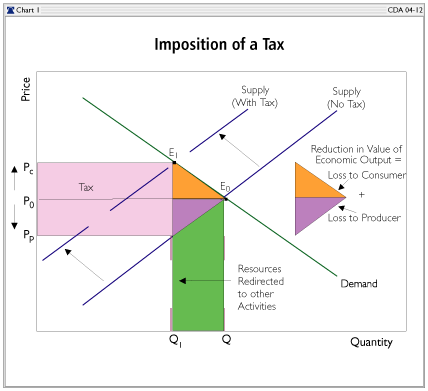
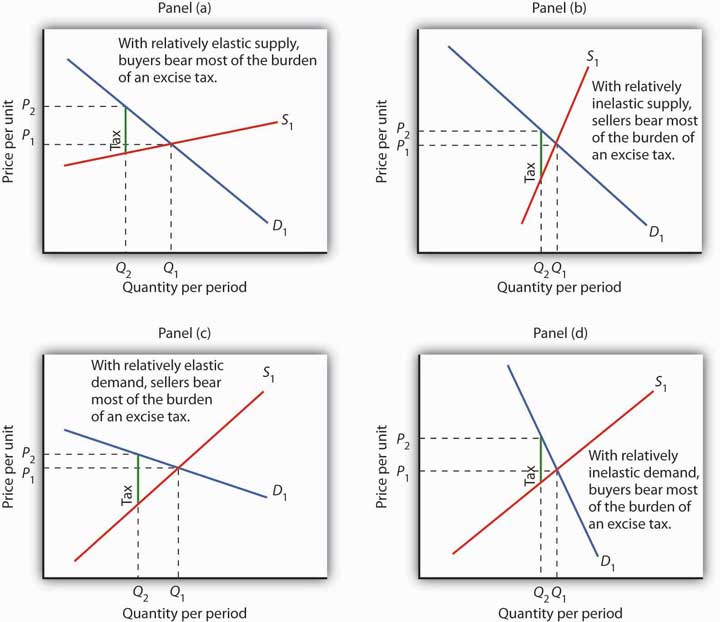
The ability to pass the burden of the tax depends on price elasticity of demand and price elasticity of supply.
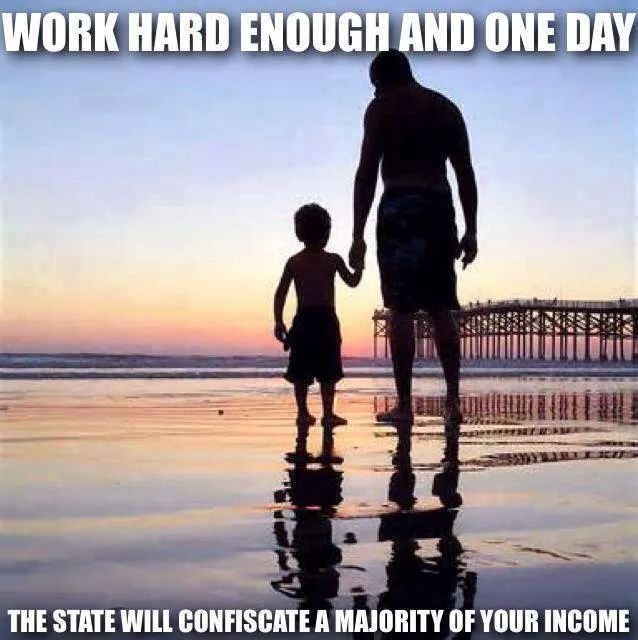
The state has no sources of money other than the money people earn themselves
28 Jul 2014 Leave a comment
in liberalism, public economics Tags: Margaret Thatcher
Tax Freedom Day
04 Jun 2014 Leave a comment
in public economics, taxation Tags: taxes

HT: Daniel Mitchell
Is Thomas Piketty a double secret supply-side economist?
03 Jun 2014 Leave a comment
in entrepreneurship, labour supply, public economics Tags: laffer curve, supply-side economics, Thomas Peketty

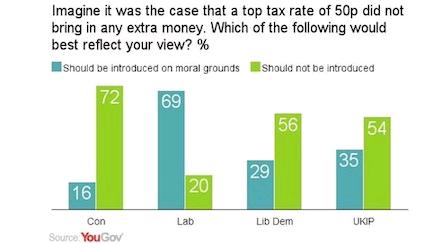
When a government taxes a certain level of income or inheritance at a rate of 70 or 80 percent, the primary goal is obviously not to raise additional revenue (because these very high brackets never yield much).
It is rather to put an end to such incomes and large estates, which lawmakers have for one reason or another come to regard as socially unacceptable and economically unproductive…
The Company Tax Laffer curve
03 Jun 2014 Leave a comment
in public economics, taxation Tags: company tax rate, laffer curve
The Australian, New Zealand and Irish company taxes raised similar amounts of revenue as a percentage of GDP. The Irish company tax rate was 12.5% in 2003.

from The U.S. Corporate Income Tax System: Once a World Leader, Now A Millstone Around the Neck of American Business by the Tax Foundation via The Solution is the problem blog
Taxing Amazon.com sales | vox
05 May 2014 Leave a comment
in public economics Tags: amazon, substitution effects, tax incidence
When several US states passed laws to require the collection of sales tax on online purchases, households living in these states reduced their Amazon expenditures by 9.5%. In practice, only Amazon was affected by the tax.

The decline in Amazon purchases is offset by a 2% increase in purchases at local brick-and-mortar retailers and a 19.8% increase in purchases through the online operations of competing retailers. The decline in sales is sharpest (23%) for purchases above $300.
Online consumers are very sensitive to total prices, taxes and options to avoid taxes.
Enough taxation can reduce legal marijuana consumption to current regulated levels, and spare us the war on drugs
09 Apr 2014 Leave a comment
in applied welfare economics, law and economics, public economics Tags: illegal goods, marijuana, prohibition
The economics of illegal goods weighs extremely heavily in favour of legalization and taxation rather than banning and enforcing, as Gary Becker, Kevin Murphy, and Michael Grossman outline in The Economic Theory of Illegal Goods: The Case of Drugs (NBER Working Paper, 1994).
….If the government seeks to regulate the quantity of marijuana consumed, it should choose to do so with a pricing mechanism such as taxation (from which it can earn revenue) rather than a ban (which is costly to enforce). The result is otherwise the same.
Opportunity for all: How to think about income inequality – AEI
02 Apr 2014 Leave a comment
in applied welfare economics, labour economics, public economics
… The conventional wisdom on inequality is built on three assumptions: (1) Income inequality is inherently unjust; (2) it is bad for the economy; and (3) government redistribution is the best way to remedy it. According to this narrative, narrowing the gap between what wealthy and working-class Americans earn should be our top political priority, and policies such as raising taxes or increasing the minimum wage are the answer.
This conventional wisdom is incorrect. A free enterprise society is not a zero-sum game in which citizens fight over resources. It should be a shared journey that empowers everyone to improve their station and earn their own success. Income differences are inevitable, and they are not inherently problematic as long as the opportunity to rise is available to everyone. Survey data show that the American people agree: narrowing the income gap is an afterthought for people who believe everyone has a shot at success, but it ranks as a top priority among those who feel the game is rigged.
While fixating on the distribution of income per se is misguided, the free enterprise movement must not neglect the reason for the debate. Mobility and opportunity are indeed falling in low-income America. And as the policy failures of the past half-decade have made painfully clear, outdated policies actually exacerbate the problematic trends they are intended to reverse.
Fighting to lift up vulnerable people is a mission with universal resonance. It is time for advocates of free enterprise to join the conversation, explain the truth about inequality and redistribution, and articulate the principles that will restore opportunity for all.
—Arthur C. Brooks, AEI President
Read the full compilation.
via Opportunity for all: How to think about income inequality – Economics – AEI.
Contents
INTRODUCTION 1
Arthur Brooks
CONSUMPTION AND THE MYTHS OF INEQUALITY 3
Kevin A. Hassett and Aparna Mathur
IF YOU REALLY CARE ABOUT ENDING POVERTY, STOP TALKING ABOUT INEQUALITY 7
W. Bradford Wilcox
THE INEQUALITY ILLUSION 12
Aparna Mathur
DEFINE INCOME INEQUALITY 18
Jonah Goldberg
MORE THAN THE MINIMUM WAGE 21
Michael R. Strain
2014’S REAL ECONOMIC CHALLENGE 24
James Pethokoukis
INCOME INEQUALITY IN THE UNITED STATES 27
Aparna Mathur
A NEW MEASURE OF CONSUMPTION INEQUALITY 45
Kevin A. Hassett and Aparna Mathur
SHOULD THE TOP MARGINAL INCOME TAX RATE BE 73 PERCENT? 82
Aparna Mathur, Sita Slavov, and Michael R. Strain


Recent Comments