Many Kiwis think housing affordability is not that bad!?

Coober Pedy is a town that is mostly underground. The YouTube clips dub it with American or British accents thus missing the marvellous Australian accent and vernacular of the local narrator

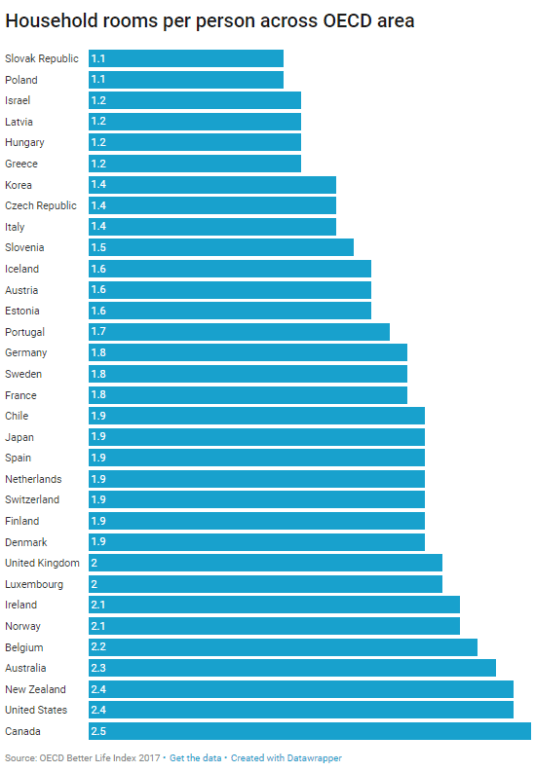
Number of rooms per person across the OECD

Image

The locations of half of the Australian Population

Build More Housing! San Francisco’s YIMBY Movement Has a Plan to Solve the City’s Housing Cris

Why we live in Wellington; cheap housing, and safer too

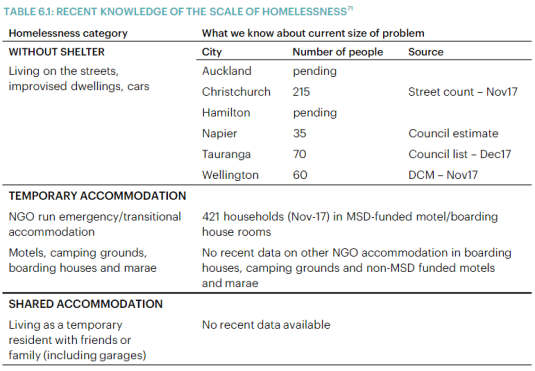
New Zealand sexes up the numbers on homelessness

Source: OECD Affordable Housing Database – http://oe.cd/ahd OECD – Social Policy Division – Directorate of Employment, Labour and Social Affairs Last updated on 24/07/2017 HC3.1 HOMELESS POPULATION

Emerging megaregions

How house prices and income have changed since 1990, by country

There is a message in here somewhere

Housing affordability analysis of @NZGreens @julieannegenter

Peak hour traffic congestion is inevitable and efficient

In 1962, Anthony Downs put forward the fundamental law of peak hour congestion on urban commuter expressways: peak-hour traffic congestion rises to meet maximum capacity. Larger bus and train networks and more cycle-ways are never the solution. Just as more highways leads to more congestion because more people drive to work, with fewer people driving to work if they fit enough to ride on the new cycle-ways, other people will start driving to work, instead of taking public transport (Downs 2005).

Downs’ law of peak hour congestion or “triple convergence” means that road will be as congested as before after any new investment in capacity because fewer people are taking public transport or postponing their trips to outside the peak hour times. More commercial driving in peak hours by trucks and delivery vans is an obvious response to more road capacity (Downs 2004). Increases in road capacity do not reduce congestion because of a triple convergence of new users from buses, trains and off-peak.

If an expressway’s capacity were doubled overnight, the next day’s traffic would flow rapidly because the same number of drivers would have twice the road space. Word will soon spread that this highway is less congested. Drivers who used that road before and after the peak hour to avoid congestion will shift into the peak hours. Other drivers using alternative routes will shift to this more convenient expressway. Bus and train passengers will start driving on the upgraded road in the peak periods. In a short time, this triple convergence of bus, train and car users onto the improved or new road in the peak hours will make that road as congested as it was before its expansion. Duranton and Turner (2011) found that vehicle kilometers travelled increases proportionately to increase road space for interstate highways and slightly less rapidly for other roads. The increased vehicle miles travelled is a mix of more driving by current residents, more commercial traffic and some migration from other types of roads.

Increases in bus or train capacity had the same triple convergence effect at peak times as new roads. Duranton and Turner (2011) found that increased provision of public transport does not relieve road congestion. The road space freed up by the motorists who switched to the additional buses or trains is filled by other motorists and commercial transport who previously planned to travel outside of the peak hours. Downs considers that peak-hour congestion is inherent to how modern societies operate:

…congestion exists because societies organize economies so most people will work during the same hours each day. This makes interaction among firms and agencies possible, thereby increasing society’s productivity, and raising overall efficiency. But it also requires most workers and students to travel to and from their places of activity at the same times. This overloads ground transportation systems during the morning and evening peaks, and often longer.

No large metropolitan areas have enough infrastructure to transport everyone who wants to move during peak hours simultaneously; nor do they have enough resources to build it. Hence some travelers must wait until others have moved. That waiting constitutes traffic congestion. (Downs 2006).

Road capacity expansions and extensions to bus and train networks do not reduce congestion. The added space means the extra traffic can be handled with still tolerable congestion. Judiciously selected road investments are still value for money because the additional road space allows more commuters to travel by the fastest, most convenient, most flexible method of urban travel, which is in a car.

The triumph of the car city

The reason most commuters drive to work across New Zealand is privately owned cars are more comfortable, faster, more private, more convenient in trip timing, and they are more flexible for multiple tasks on one trip than any bus or train can ever hope to offer. What cannot be avoided is:

As household incomes rise around the world, more and more people shift from slower, less expensive modes of movement to privately owned cars and trucks (Downs 2004).

Time is increasingly prized because of rising incomes and an explosion of consumer choice. Goods and services which are time intensive to use including buses and trains as the commuting option are just not popular. Downs argues that it is time to settle down and accept what cities are:

….peak-hour traffic congestion is inescapable in large modern metropolitan areas the world over. Business firms want most people on the job during the same hours so that workers can interact efficiently. Many firms also want to locate in low-density establishments scattered across the landscape. Households want a range of choices of where to live and work, and most want to live in low-density settlements that are separate from poorer households, use private vehicles for most travel and be able to carry out multiple errands on a single trip (Downs 2001).

The reality is most people drive in rush hours because they live in low-density areas that buses, trains and cycle-ways cannot efficiently even start to serve. Traffic congestion is the result of prosperity:

Peak-hour traffic congestion in almost all large and growing metropolitan regions around the world is here to stay. In fact, it is almost certain to get worse during at least the next few decades, mainly because of rising populations and wealth. This will be true no matter what public and private policies are adopted to combat congestion (Downs 2004).

About 97% of the benefits in benefit-cost analysis of road investments is from savings on journey times. Saving on journey times is what drives an urban transport policy that serves the interests of commuters, taxpayers and sustainable transport. Much of the remaining benefits are from reductions in accidents and fatalities. Cars are here to stay.

It is not a case of under-investment denying buses and trains their day in the sun. The overseas evidence is rail cost estimates and passenger forecasts are much more politicised than those for roads because of the political pressures to invest in more public transport no matter what (Flyvbjerg et al. 2006).

There is more organised political support for buses and trains and considerable organised (often NIMBY based) opposition to road building. A major driver of cost blow-outs in the road projects reviewed by the Ministerial Advisory Group on Roading Costs (2006) was scope changes to appease local political pressures to mitigate community and environmental impacts. Community group driven litigation under the Resource Management Act to frustrate NZTA road projects is proliferating. Their High Court loss which prevented the building of the Basin Overpass in Wellington is a recent example.

In contrast, light rail proposals such as a billion-dollar proposal in Wellington City for a few kilometers of track including a $400 million tunnel were entertained for far longer than any sensible benefit cost analysis could justify. Quite fanciful fast-rail proposals costing many hundreds of millions of dollars are floated in by-elections and from time to time by the commentariat and rent seekers. The proposed upgrade the Auckland to Northland railway line and the rail link to the port was costed by the Taxpayers’ Union (2015) at $198 million. Dreams of fast rail receives a generous hearing despite mind blowing costs and incredulous and sometimes impossible freight and passenger forecasts.

Buses and trains are not the forgotten children of urban transport policy. The Greens are passionate about massive investment in buses and trains at the expense of roads. Labour is also competing for the same urban middle-class votes so it too champions more public transport. In an MMP Parliament, all parties have an incentive respond to political pressures in a fine-tuned way when voting on budgets.

Public transport advocates do well in the scramble for taxpayers’ money. The road with the worst benefit-cost ratio of all in the post implementation reviews was the Auckland Northern Busway, which cost $182 million. It had a cost benefit ratio of a miserable 1.2 at approval and a no better 1.3 after its completion. With a benefit-cost ratio rounding down to one with ease, this bus network upgrade must have had political muscle behind it to dam the taxpayers, full steam ahead.

Supporters of public transport claim that better buses and trains and more compact city growth reduces combined housing and movement costs. The higher housing costs are offset by lower transportation costs so public policy should invest in buses and trains and limit outward urban growth (Downs 2002).

Supporters of more investment in roads claim the contrary, especially in cities where land prices are already high (Downs 2002). In addition, supporters of road funding point out that increasing urban densities in existing neighbourhoods (and the expansion of rail networks such as through light rail) will be “decisively rejected by the NIMBY-orientated residents” (Downs 2002).

There are strong national and local constituencies to use of zoning laws, district plans and the Resource Management Act for the foreseeable future to limit the supply of existing and new land for an expansion of medium density housing in inner-cities. Combining massive public transport expansions with greater urban intensification is unlikely to be a political feasible. NIMBYs enter the fray with big political boots well before politicians ask taxpayers to vote for taking twice as long to commute the same distance.

Investing in roads is the only sustainable solution to commuting dilemmas

Better value for money for the taxpayer from road investments is vital because few New Zealanders (barely 4.5%) commute to work via public transport – see figure 1. Public transport simply does not make the grade for the great majority of New Zealanders as a way of carrying out their daily lives. The policy question therefore is providing the necessary roads in a more cost-effective manner than now.

Figure 1: Modes of travel to work, New Zealand, 2013 Census

Source: Statistics New Zealand, 2013 Census.

A small minority of New Zealand adults commute by bus or train even in the big cities. Figure 2 shows that even in Auckland, for those that left home for work, only 8.3% commute via public transport. In Wellington, 14.1% commute to work from home via public transport – see figure 3.

Figure 2: Modes of travel to work, Auckland, 2013 Census

Source: Statistics New Zealand, 2013 Census

Figure 3: Modes of travel to work, Wellington, 2013 Census

Source: Statistics New Zealand, 2013 Census.

Construction is not a rising costs industry

The literatures on urban, housing and construction economics all suggest that construction is a constant costs industry (Glaeser, Gyourko and Saiz 2008). Differences in building costs in the wider construction industry arise from differences in: local topology, local regulatory environments, the extent of unionisation, and the level of local wages generally (Glaeser, Gyourko and Saiz 2008).

A constant costs industry can expand rapidly such as when a large project arises without putting pressure on costs. The construction industry everywhere developed with many small firms with prolific use of subcontractors much smaller than the head contractor. Firms in most industries including construction capture all available economies of scale at relatively small sizes. After that point where these scale economies are capture, there is a long region of production where the marginal cost of increases in production is constant (Stigler 1958, 1987; Barzel and Kochin 1992; and Shughart 1997).

As an example of constant costs in construction, recall the construction boom in New Zealand between 2001 and 2008. The Department of Labour (2011) found the construction industry found a great many additional workers to meet this rapidly rising demand without large increases in labour costs. There was a 54% increase in employment between 2001 and 2008, from 125,000 in 2001 to 194,000 in 2008; employment across all industries over the same period increased by 23% (Department of Labour 2011). The majority of these new construction workers came from other industries with the rest were from outside the labour force or from relying on welfare benefits (Department of Labour 2011).

Despite this need to find a great mass of new workers, pay increases were only marginally higher than the construction industry than those across all industries, as the Department of Labour (2011) explains:

The Labour Cost Index (LCI), which adjusts for human capital and hours of work supplied, shows that wages in construction increased by 3.0% per year over this period compared with 2.8% for all industries. In what was a strong economy of the mid-2000s, the construction industry recruited many more workers without a relatively large increase in real labour costs.

The construction cost increases during the last housing boom were not due to input cost inflation. The industry wanted to build more houses on a faster timeline. This put a different type of pressure on costs.

Costs are sensitive to the speed of output as well as the total output planned (Alchian 1959; Stigler 1987). Producing the same thing sooner rather than later increases total, marginal, incremental, and average costs (Alchian 1959). Fast-tracking raises co-ordination costs, less efficient lower quality inputs must be used to increase the rate of production, and there is less time to identify the best inputs and lowest cost production processes. Wage premiums are paid for longer hours and lost weekends. There are few opportunities to learn by doing. Learning by doing reduces the cost of future output, but with fast tracking, more is produced now and less at the lower cost in the future (Alchian 1959; Stigler 1987).

Cost overruns is just not something that happens in the construction industry because costs rise rapidly with scale when a big project is underway. The industry is a constant costs industry. Something more fundamental must be driving cost blow-outs in road construction than purported diseconomies of scale.

Previous Older Entries Next Newer Entries

Bassett, Brash & Hide

Celebrating humanity's flourishing through the spread of capitalism and the rule of law

Truth on the Market

Scholarly commentary on law, economics, and more

The Undercover Historian

Beatrice Cherrier's blog

Matua Kahurangi

Celebrating humanity's flourishing through the spread of capitalism and the rule of law

Temple of Sociology

Celebrating humanity's flourishing through the spread of capitalism and the rule of law

Velvet Glove, Iron Fist

Celebrating humanity's flourishing through the spread of capitalism and the rule of law

Why Evolution Is True

Why Evolution is True is a blog written by Jerry Coyne, centered on evolution and biology but also dealing with diverse topics like politics, culture, and cats.

Down to Earth Kiwi

Celebrating humanity's flourishing through the spread of capitalism and the rule of law

NoTricksZone

Celebrating humanity's flourishing through the spread of capitalism and the rule of law

Homepaddock

A rural perspective with a blue tint by Ele Ludemann

Kiwiblog

DPF's Kiwiblog - Fomenting Happy Mischief since 2003

The Dangerous Economist

Celebrating humanity's flourishing through the spread of capitalism and the rule of law

Watts Up With That?

The world's most viewed site on global warming and climate change

The Logical Place

Tim Harding's writings on rationality, informal logic and skepticism

Doc's Books

A window into Doc Freiberger's library

The Risk-Monger

Let's examine hard decisions!

Uneasy Money

Commentary on monetary policy in the spirit of R. G. Hawtrey

Barrie Saunders

Thoughts on public policy and the media

Liberty Scott

Celebrating humanity's flourishing through the spread of capitalism and the rule of law

Point of Order

Politics and the economy

James Bowden's Blog

A blog (primarily) on Canadian and Commonwealth political history and institutions

Science Matters

Reading between the lines, and underneath the hype.

Peter Winsley

Economics, and such stuff as dreams are made on

A Venerable Puzzle

"The British constitution has always been puzzling, and always will be." --Queen Elizabeth II

The Antiplanner

Celebrating humanity's flourishing through the spread of capitalism and the rule of law

Bet On It

Celebrating humanity's flourishing through the spread of capitalism and the rule of law

History of Sorts

WORLD WAR II, MUSIC, HISTORY, HOLOCAUST

Roger Pielke Jr.

Undisciplined scholar, recovering academic

Offsetting Behaviour

Celebrating humanity's flourishing through the spread of capitalism and the rule of law

JONATHAN TURLEY

Res ipsa loquitur - The thing itself speaks

Conversable Economist

Celebrating humanity's flourishing through the spread of capitalism and the rule of law

The Victorian Commons

Researching the House of Commons, 1832-1868

The History of Parliament

Articles and research from the History of Parliament Trust

Books & Boots

Reflections on books and art

Legal History Miscellany

Posts on the History of Law, Crime, and Justice

Sex, Drugs and Economics

Celebrating humanity's flourishing through the spread of capitalism and the rule of law

European Royal History

Exploring the Monarchs of Europe

Tallbloke's Talkshop

Cutting edge science you can dice with

Marginal REVOLUTION

Small Steps Toward A Much Better World

NOT A LOT OF PEOPLE KNOW THAT

“We do not believe any group of men adequate enough or wise enough to operate without scrutiny or without criticism. We know that the only way to avoid error is to detect it, that the only way to detect it is to be free to inquire. We know that in secrecy error undetected will flourish and subvert”. - J Robert Oppenheimer.

STOP THESE THINGS

The truth about the great wind power fraud - we're not here to debate the wind industry, we're here to destroy it.

Lindsay Mitchell

Celebrating humanity's flourishing through the spread of capitalism and the rule of law

Alt-M

Celebrating humanity's flourishing through the spread of capitalism and the rule of law

croaking cassandra

Economics, public policy, monetary policy, financial regulation, with a New Zealand perspective

The Grumpy Economist

Celebrating humanity's flourishing through the spread of capitalism and the rule of law

International Liberty

Restraining Government in America and Around the World