Housing prices across much of America have hit historic highs, while less housing is being built. If the U.S. housing stock had expanded at the same rate from 2000-2020 as it did from 1980-2000, there would be 15 million more housing units. This paper analyzes the decline of America’s new housing supply, focusing on large […]
America’s Housing Supply Problem: The Closing of the Suburban Frontier?
America’s Housing Supply Problem: The Closing of the Suburban Frontier?
08 Jun 2025 1 Comment
in economics of bureaucracy, economics of regulation, income redistribution, politics - USA, Public Choice, regulation, rentseeking, urban economics Tags: housing affordability, land supply, zoning
Life is full of tradeoffs: We can have more data centers and local tax revnue or less tourism and a dirtier environment
29 May 2025 1 Comment
in economics of regulation, politics - USA, public economics, urban economics Tags: NIMBY, zoning
See Small-Town Locals and Newcomers Unite Against a Common Foe: Data Centers: Residents in Appalachian tourist area band together to keep one of the largest data-center complexes in the world out of their no-stoplight community by Kris Maher of The WSJ. Excerpts:”residents [of DAVIS, W.Va.] are . . . determined to keep big tech out of…
Life is full of tradeoffs: We can have more data centers and local tax revnue or less tourism and a dirtier environment
The Latest Affordability Numbers
26 May 2025 Leave a comment
in economics of regulation, income redistribution, Public Choice, rentseeking, urban economics Tags: housing affordability, land supply, zoning
Housing in Canada, Hong Kong, New Zealand, and Singapore was slightly more affordable in 2024 than it had been in 2023. Wendell Cox’s latest assessment of housing affordability, when compared with last year’s assessment, shows that housing became slightly less affordable in Ireland and the United Kingdom, while affordability remained … Continue reading →
The Latest Affordability Numbers
Excusing the Government
22 May 2025 Leave a comment
in applied price theory, applied welfare economics, comparative institutional analysis, constitutional political economy, economics of bureaucracy, economics of regulation, history of economic thought, income redistribution, international economics, labour economics, law and economics, property rights, Public Choice, public economics, rentseeking, urban economics
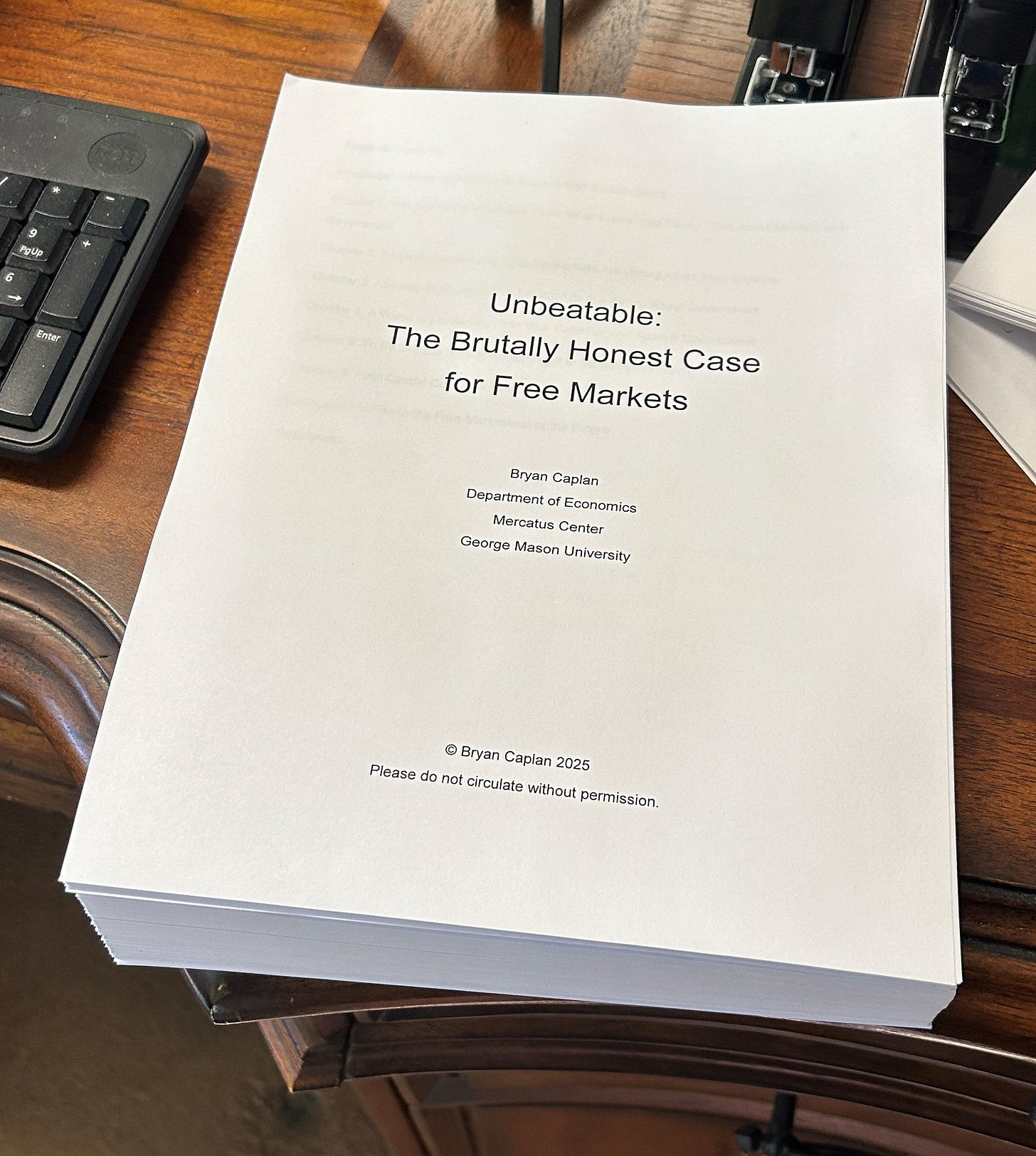
An excerpt from Chapter 3 of *Unbeatable*
Excusing the Government
Is this a gold mine? Iwi might need consulting (for a fee) before your development can be given RMA consents
16 May 2025 Leave a comment
in economics of regulation, energy economics, law and economics, politics - New Zealand, property rights, resource economics, urban economics
Bob Edlin writes – West Coast Regional Councillor Allan Birchfield has whipped up a fuss in his neck of the woods by challenging the Ngāti Waewae representative Francois Tumahai over the iwi’s role in resource consenting. The iwi – it seems – must agree to gold-mining consents in gold-mining country, presumably after appropriate consultation or engagement […]
Is this a gold mine? Iwi might need consulting (for a fee) before your development can be given RMA consents
Housing affordability
01 May 2025 Leave a comment
in applied price theory, economics of regulation, income redistribution, law and economics, politics - New Zealand, property rights, Public Choice, rentseeking, urban economics Tags: housing affordability, land supply, zoning
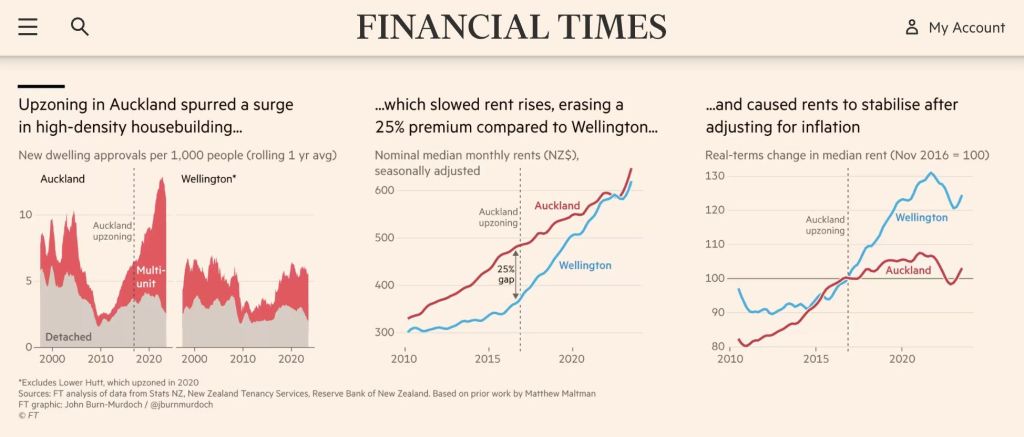
Good principles for RMA reform
05 Apr 2025 Leave a comment
in applied price theory, economics of bureaucracy, economics of regulation, environmental economics, law and economics, politics - New Zealand, property rights, Public Choice, regulation, rentseeking, resource economics, urban economics Tags: housing affordability, land supply
Chris Bishop and Simon Court announced principles for the RMA replacement, and they generally look very good (but not perfect). Some key aspects: The new system will be based on the economic concept of “externalities”. Effects that are borne solely by the party undertaking the activity will not be controlled by the new system (for […]
Good principles for RMA reform
People Barely Care About Equality
27 Mar 2025 Leave a comment
in applied price theory, economics of education, human capital, income redistribution, labour economics, labour supply, poverty and inequality, Public Choice, rentseeking, urban economics Tags: regressive left

Another simple proof.
People Barely Care About Equality
The importance of the chronometer
24 Mar 2025 1 Comment
in applied price theory, econometerics, economic history, industrial organisation, transport economics, urban economics Tags: Age of Discovery
The chronometer, one of the greatest inventions of the modern era, allowed for the first time for the precise measurement of longitude at sea. We examine the impact of this innovation on navigation and urbanization. Our identification strategy leverages the fact that the navigational benefits provided by the chronometer varied across different sea regions depending […]
The importance of the chronometer
Institutional ownership of single-family housing
16 Mar 2025 Leave a comment
in applied price theory, applied welfare economics, econometerics, urban economics Tags: housing affordability
In the last decade, large financial institutions in the United States have purchased hundreds of thousands of homes and converted them to rentals. This paper studies the welfare consequences of institutional ownership of single-family housing. We build an equilibrium model of the housing market with two sectors: rental and homeownership. The model captures two key…
Institutional ownership of single-family housing
Why the RMA must go
13 Feb 2025 Leave a comment
in economics of bureaucracy, economics of regulation, environmental economics, environmentalism, politics - New Zealand, Public Choice, urban economics
Stuff reports: The small town of Wānaka will not have a McDonald’s restaurant after a resource consent application was declined. Independent commissioners released their decision on the proposed McDonald’s restaurant on Wednesday. They said the adverse effects of the proposed restaurant on the environment would be more than minor on the approach to Wānaka, the landscape character […]
Why the RMA must go
Cordon Pricing Makes New York Congestion Worse
13 Feb 2025 Leave a comment
in applied price theory, transport economics, urban economics Tags: cordon pricing
Early reports claim that New York City’s so-called congestion pricing program is a great success, reducing the number of vehicles driving into lower Manhattan by 5 to 6 percent. However, because it really isn’t congestion pricing — that is, it doesn’t price roads by how much congestion there is but … Continue reading →
Cordon Pricing Makes New York Congestion Worse
The long road to housing affordability
11 Feb 2025 Leave a comment
in applied price theory, economics of bureaucracy, economics of regulation, income redistribution, law and economics, politics - New Zealand, property rights, Public Choice, rentseeking, transport economics, urban economics Tags: housing affordability, land supply, zoning
There is much work yet to be done in New Zealand to improve housing affordability, despite recent declines in valuations. Eric Crampton writes – It wasn’t that long ago that New Zealand’s housing market made international news because of its insanity. In 2016, The Guardian tagged Auckland as the “hottest property market in the world” […]
The long road to housing affordability
Here Lies the Systematic Racism
28 Jan 2025 Leave a comment
in discrimination, economic history, economics of education, labour economics, law and economics, liberalism, Marxist economics, politics - USA, urban economics Tags: political correctness. regressive left, racial discrimination. free speech
I pretty much hate the term “systematic racism,” which is a clever rebranding by the DEI folks of the Christian concept of “original sin.” Try to tell the Church that you have behaved ethically? Doesn’t matter, you still need us to remove the stain of your original sin. Try to tell the DEI trainer you…
Here Lies the Systematic Racism
One early report on congestion pricing in NYC
16 Jan 2025 1 Comment
in applied price theory, applied welfare economics, comparative institutional analysis, market efficiency, politics - USA, public economics, transport economics, urban economics Tags: road pricing
That is my latest Bloomberg column, here is one bit: The core version of the plan stipulates a $9 toll for drivers entering Manhattan below and including 60th Street. Implementation is by E-Z Pass, and the tolls can vary in complex ways. But if you don’t cross the line, you don’t pay. So residents below 60th Street are exempt, […]
One early report on congestion pricing in NYC
 Utopia, you are standing in it!
Recent Comments