Some advice from a green consultant
26 Nov 2014 Leave a comment
in environmental economics, environmentalism Tags: activists, consultants, do gooders, environmental movement


The New York Times announces the Death of Snow
20 Nov 2014 Leave a comment
in climate change, environmental economics, environmentalism, politics - USA Tags: climate alarmism, global warming

Why does the Left oppose higher petrol prices?
14 Nov 2014 Leave a comment
in election campaigns, energy economics, environmental economics, environmentalism, politics - Australia
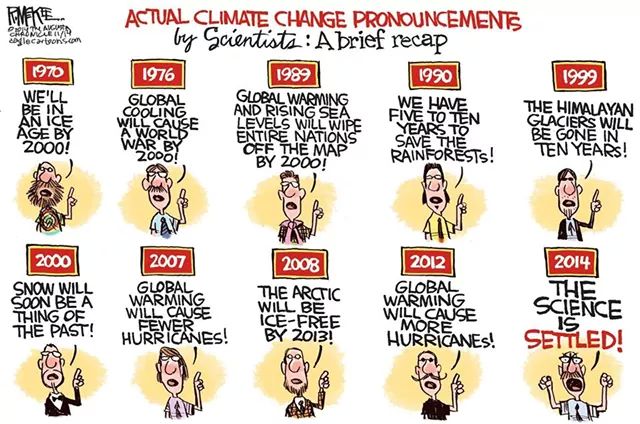
Obama is doing a Clinton on climate change agreements
12 Nov 2014 Leave a comment
in environmental economics, environmentalism, global warming, politics - USA Tags: climate alarmism, expressive politics, global warming, international law, Kyoto Protocol
Last week, I planned to write a blog about how Obama might do a Clinton: safe in the knowledge that Congress will never approve any of his climate change agreements, he will run round the world signing up to all sorts of ambitious carbon emission reduction goals.
The agreement Obama just signed today with the Chinese after the secret talks over the congressional election period is an example. This secret agreement goes to show that the Obama administration can actually keep a secret.
The agreement with China and any other futures similar agreements will win Obama brownie points with the Left of his party, but not bother anyone else in particular because they know they’ll never get through Congress.
The moment Bush took office in 2001, the Democrats started asking why wouldn’t Bush submit the Kyoto protocol to the Senate for ratification.
Bill Clinton had 801 days left in his administration after he signed the Kyoto protocol in December 1997 to submit it for Senate ratification. He did not lift a finger.
Clinton was safe in the knowledge that prior to the signing of the Kyoto protocol, the Senate voted 95 to nil in July 1997 to not ratify any treaty on climate change that did not impose mandatory obligations on Russia, China and other major developing countries.

President Clinton approved and signed into law appropriations bills for fiscal years 1999, 2000, and 2001 that included language prohibiting the Environmental Protection Agency from using its funds to “issue rules, regulations, decrees, or orders for the purpose of implementation, or in preparation for implementation, of the Kyoto Protocol” until the Protocol is ratified by the Senate and entered into force under the terms of the treaty.

The major feature of the Kyoto Protocol is that it sets binding targets for 37 industrialized countries and the European community for reducing greenhouse gas (GHG) emissions. These amount to an average of five per cent reduction against 1990 levels over the five-year period 2008-2012.

Developing countries, including China and India, weren’t mandated to reduce emissions, given that they’d contributed a relatively small share of the current century-plus build-up of CO2.
The Europeans were happy to sign the Kyoto Protocol after the Americans pulled out because the emissions trading price in any such protocol would be very low because no American companies would have to buy emission credits.
Here’s what’s not sustainable: organic farming » AEI
12 Nov 2014 1 Comment
in environmental economics, environmentalism, industrial organisation, occupational choice Tags: do gooders, organic farming, sustainability, sustainable development
Organic farming might work well for certain local environments on a small scale, but its farms produce far less food per unit of land and water than conventional ones.
The low yields of organic agriculture—typically 20%-50% less than conventional agriculture—impose various stresses on farmland and especially on water consumption.
A British meta-analysis published in the Journal of Environmental Management (2012) found that “ammonia emissions, nitrogen leaching and nitrous oxide emissions per product unit were higher from organic systems” than conventional farming systems, as were “land use, eutrophication potential and acidification potential per product unit.”
“It is entirely possible to rapidly switch our energy systems to 100 percent renewables” – Naomi Klein
09 Nov 2014 Leave a comment
in energy economics, environmental economics, environmentalism, global warming Tags: carbon free economy, energy economics, expressive voting, green rent seeking, Leftover Left, Naomi Klein, Quacks, renewable energy
Jacobson and Delucchi think we can replace all coal, oil, natural gas, and nuclear power by 2030 with wind, solar, and hydropower while fueling a fleet of electric cars.
How? By deploying 3.8 million 5-megawatt wind turbines, 5,350 100-megawatt geothermal plants, 500,000 1-megawatt tidal turbines, 720,000 0.75-megawatt wave power generators, 1.7 billion 3-kilowatt rooftop solar panels, 40,000 300-megawatt solar panel farms, and 49,000 300-megawatt concentrated solar power plants.
| Annual global investment target | Current global stock |
| 250,000 wind turbines | 225,000 wind turbines |
| 113 million rooftop solar panel systems | 11.3 million |
Delucchi and Jacobson estimate a price tag of about $100 trillion for their program.
That entails spending about $6.6 trillion per year from now until 2030, more than 11 percent of the entire world’s 2013 output of $75 trillion.
Naomi Klein cited Jacobson and Delucchi to support her proposition that 100% renewable energy systems is possible.

How urgent is ‘urgent’?
03 Nov 2014 Leave a comment
in economics of climate change, energy economics, environmental economics, environmentalism Tags: climate alarmism, global warming

by Judith Curry
I think we have a very brief window of opportunity to deal with climate change . . . no longer than a decade at most. – James Hansen 2006
We have only four more years to act on climate change. – James Hansen 2009
View original post 980 more words
Mainstream media is finally catching up with the sceptics
01 Nov 2014 Leave a comment
in applied welfare economics, energy economics, environmental economics, environmentalism Tags: global warming, green rent seeking

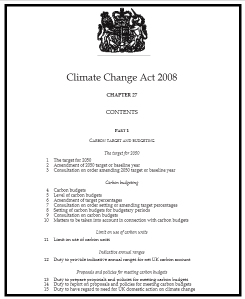 A hard hitting article appears in the Mail which slams the climate change act.
Six years ago today, an ambitious Labour politician, newly appointed climate change secretary, set Britain on a ruinous path that threatens our energy-dependent civilisation with collapse.
Such is the devastating conclusion of Owen Paterson, the Tory former Environment Secretary, who yesterday joined Lord Lawson among the highest-profile critics of the political consensus on energy policy.
For it was on October 16, 2008, that the new secretary of state – Ed Miliband, by name – set us the legally binding goal of meeting the EU’s wildly ambitious target to cut carbon emissions by 80 per cent before 2050 (and how significant that no other country has followed his lead).
View original post 89 more words
The Greens are the heirs of the 19th century Tory squires
01 Nov 2014 Leave a comment
in environmentalism, politics - Australia, politics - New Zealand, politics - USA Tags: expressive voting, green rent seeking, green voters

The Greens are no more than a reincarnation of the 19th century British Tory Radicals with their aristocratic sensibilities that combined strong support for centralised power with a paternalistic concern for the plight of the poor:
- 19th century Tory radicals opposed the middle classes and the aesthetic ugliness they associated with an industrial economy; and
- Like the 19th century Tory Radicals, today’s green gentry see the untamed middle classes as the true enemy.
Environmentalists have an aristocratic vision of a stratified, terraced society in which the knowing ones would order society for the rest of us.
Environmentalism offered the extraordinary opportunity to combine the qualities of virtue and selfishness
Many left-wingers thought they were expressing an entirely new and progressive philosophy as they mouthed the same prejudices as Trollope’s 19th century Tory squires: attacking any further expansion of industry and commerce as impossibly vulgar, because it was:
View original post 346 more words
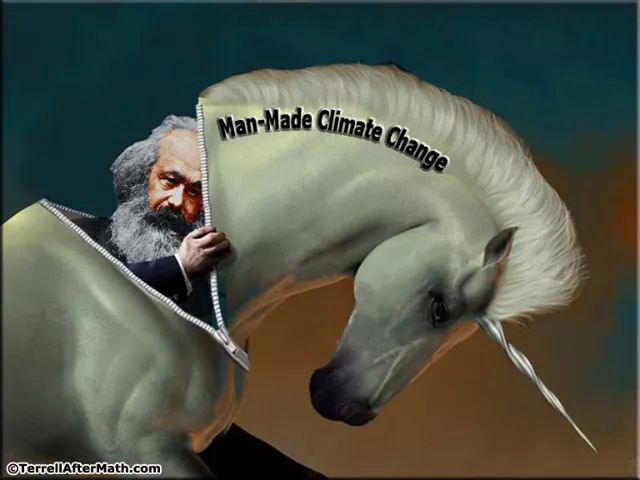
 Utopia, you are standing in it!
Recent Comments