
What is the Fatal Conceit?
31 Jan 2015 Leave a comment
in Austrian economics, F.A. Hayek Tags: The fatal conceit
Hayek on why Keynesian macroeconomics initially became popular and stayed popular despite eventual empirical failure
31 Jan 2015 8 Comments

What influence did Milton Friedman have on 1980s and 1990s Australian monetary policy?
29 Jan 2015 3 Comments
in F.A. Hayek, Milton Friedman, monetarism, politics - Australia Tags: conspiracy theorists, conspiratorial left, inflation targeting, monetary policy, vast right-wing conspiracy
The Hayek and Friedman Monday conferences on the ABC in 1976 and 1975 are still ruling the Australian policy roost, if some of the Left over Left in Australia are to be believed. Milton Friedman is said to have mesmerised several countries with a flying visit with his Svengali powers of persuasion.

When working at the next desk to a monetary policy section in the Australian Prime Minister’s Department in the late 1980s, I heard not a word of Friedman’s Svengali influence:
• The market determined interest rates, not the Reserve Bank was the mantra for several years. Joan Robinson would have been proud that her 1975 Monday conference was still holding the reins.
• Monetary policy was targeting the current account. Read Edwards’ biography of Keating and his extracts from very Keynesian Treasury briefings to Keating signed by David Morgan that reminded me of Keynesian macro101.

When as a commentator on a Treasury seminar paper in 1986, Peter Boxhall – fresh from the US and 1970s Chicago educated – suggested using monetary policy to reduce the inflation rate quickly to zero, David Morgan and Chris Higgins almost fell off their chairs. They had never heard of such radical ideas.
In their breathless protestations, neither were sufficiently in-tune with their Keynesian educations to remember the role of sticky wages or even the need for the monetary growth reductions to be gradual and, more importantly, credible as per Milton Freidman and as per Tom Sargent’s end of 4 big and two moderate inflations papers in the early 1980s.
I was far too junior to point to this gap in their analytical memories about the role of sticky wages, and I was having far too much fun watching the intellectual cream of Treasury senior management in full flight. (I read Friedman & Sargent much later).
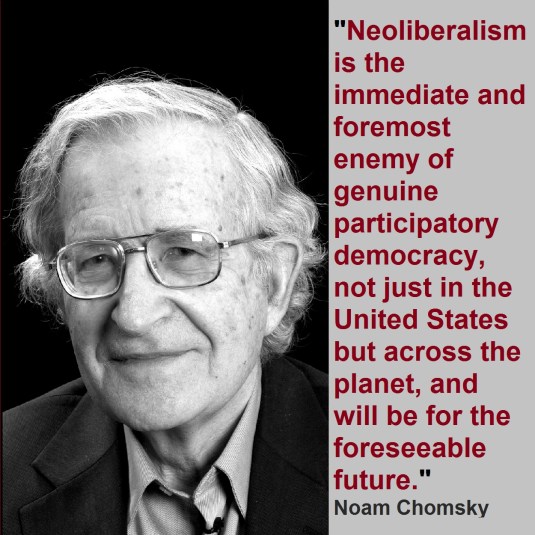
Milton Friedman on Hayek’s "Road to Serfdom" 1994
28 Jan 2015 Leave a comment
in F.A. Hayek, liberalism, Milton Friedman Tags: Road to Serfdom
Hayek vs. Keynes – Bruce Caldwell
23 Jan 2015 Leave a comment
in F.A. Hayek Tags: Bruce Caldwell, FA Hayek
Hayek on why he got his key prediction right in the Road to Serfdom
23 Jan 2015 1 Comment
in Austrian economics, constitutional political economy, F.A. Hayek, liberalism, politics - Australia, politics - New Zealand, politics - USA Tags: Australian Broadcasting Commission (ABC), Monday Conference, Road to Serfdom

This summary by Hayek of the contemporary meaning of socialism in the 1930s and 1940s was relatively accurate.
You must remember that clause 4 of the British Labour Party’s manifesto committing that party to the socialisation of the means of production, distribution and exchange was only dropped relatively recently at the impetus of Tony Blair.
The Australian Labor Party still includes the socialisation of the means of production, distribution and exchange as one of its objectives.
There were stronger divisions in the inter-war labour parties in Britain, Australia and New Zealand about whether the party should be committed to full socialism, Christian socialism or social democracy. It has been forgotten that the labour parties of Britain, Australia and New Zealand had many fall on the socialists within that party.
The Labour Party of Michael Foot in the 1983 British general election ran on a hard left manifesto, with Tony Benn and the Trotskyist entryist group Militant Tendency, which had several MPs, wanting a full socialist agenda in 1980s Britain.


Hayek and Rawls on the role of ignorance in the case for liberty
26 Dec 2014 Leave a comment
in F.A. Hayek, liberalism, Rawls and Nozick Tags: FA Hayek, John Rawls


Richard Epstein, George Soros, and Bruce Caldwell Discuss Hayek’s Constitution of Liberty
22 Dec 2014 Leave a comment
in comparative institutional analysis, constitutional political economy, F.A. Hayek, liberalism, Richard Epstein Tags: Bruce Caldwell, Constitution of Liberty, FA Hayek, Richard Epstein
Recessions as reorganisations
12 Dec 2014 Leave a comment
in business cycles, F.A. Hayek, history of economic thought, job search and matching, macroeconomics, Robert E. Lucas, unemployment Tags: FA Hayek, recessions, recoveries, Robert Lucas

Most models of the shape of recoveries draw on a learning process. A long tradition in business cycle theory holds that limited knowledge of relative price changes can temporarily disrupt labour demand and supply because of errors in wage and price perceptions (Alchian 1969; Sargent 2007; Hellwig 2008).
Pricing, investment and production plans are made on the basis of incomplete and conflicting knowledge of constantly changing aggregate, industry and local conditions. Firms and workers will over- or under-supply when they misperceive wages and prices.
With imprecise information, it takes time for employers and workers to sort out temporary from permanent shifts in demand and supply, inflation-driven changes from real changes in prices and input costs, and general changes from the local changes that may be more important to particular firms. As Hayek explained in his Nobel prize lecture:
The true, though untestable, explanation of extensive unemployment ascribes it to a discrepancy between the distribution of labour (and the other factors of production) between industries (and localities) and the distribution of demand among their products.
This discrepancy is caused by a distortion of the system of relative prices and wages. And it can be corrected only by a change in these relations, that is, by the establishment in each sector of the economy of those prices and wages at which supply will equal demand.
Recoveries are shaped by the speed of entrepreneurial learning about the new labour and product market conditions, the relative cost of adjusting capital and labour rapidly or slowly and the costs and benefits of labour market search. This new learning is necessary because the old constellation of prices and wages is no longer valid.
It was a misdirection of resources brought about by the initial inflationary firm, as Hayek explained in a visit to Australia in 1950:
During a process of expansion the direction of demand is to some extent necessarily different from what it will be after expansion has stopped.
Labour will be attracted to the particular occupations on which the extra expenditure is made in the first instance.
So long as expansion lasts, demand there will always run a step ahead of the consequential rises in demand elsewhere.
And in so far as this temporary stimulus to demand in particular sectors leads to a movement of labour, it may well become the cause of unemployment as soon as the expansion comes to an end…
If the real cause of unemployment is that the distribution of labour does not correspond with the distribution of demand, the only way to create stable conditions of high employment which is not dependent on continued inflation (or physical controls), is to bring about a distribution of labour which matches the manner in which a stable money income will be spent.
This depends of course not only on whether during the process of adaptation the distribution of demand is approximately what it will remain, but ‘also on whether conditions in general are conducive to easy and rapid movements of labour.
In a recession, employers and workers do not immediately know that demand has fallen elsewhere as well as in their own local markets and recognise the need to adjust to their poorer prospects everywhere, and it is not known how long the drop in demand will last (Alchian and Allen 1973).
The cost of learning about available opportunities restricts the speed of a recovery. Workers and entrepreneurs must gather information on the new state of demand and the location and nature of new opportunities. This information is costly and is quickly made obsolete by further changes, and the cost of acquiring information is more costly the faster the information is sought to be acquired (Alchian 1969; Alchian and Allen 1967).

The process of recovering from a recession would be a faster process if the new constellation of wages and prices that are the best alternative uses of resources was known immediately and was credible to firms and workers (Alchian and Allen 1973).
Workers and employers must first have sufficient time to discover what new knowledge they now need to know to serve their interests well, leave enough room for the unforeseeable and keep their knowledge fresh in ever-changing markets.
New wage levels must be created by workers and employers testing and retesting in the labour market the new relative scarcities of labour. Imbalances between the allocation of labour supply and demand to different firms and sectors and the new level and pattern of consumer demand are gradually remedied by changes in relative prices and wages, layoffs, business closures and job search.

Prices are a signal wrapped in an incentive. Growing demand induces higher employment and rising wages. Wages stagnate, and there are layoffs where there is an excess supply.
These changes give the unemployed an incentive to move to new uses and entrepreneurs to profitably hire the unemployed. The ensuing reorganisations are time-consuming and information-intensive because a job seeker and an employer with an apt vacancy take time to find each other.
Prices and wages must change sufficiently for firms to profitably create new jobs. New jobs require time to plan and build new job capital. This is the human, physical and organisational capital underlying a new job. There are also job creation costs when reopening existing positions that were mothballed during the downturn.
How is this to be done? Hayek explained again in 1950 in his speech in Australia:
Full employment policies as at present practised attempt the quick and easy way of giving men employment where they happen to be, while the real problem is to bring about a distribution of labour which makes continuous high employment without artificial stimulus possible.
What this distribution is we can never know beforehand. The only way to find out is to let the unhampered market act under conditions which will bring about a stable equilibrium between demand and supply.


 Utopia, you are standing in it!
Recent Comments