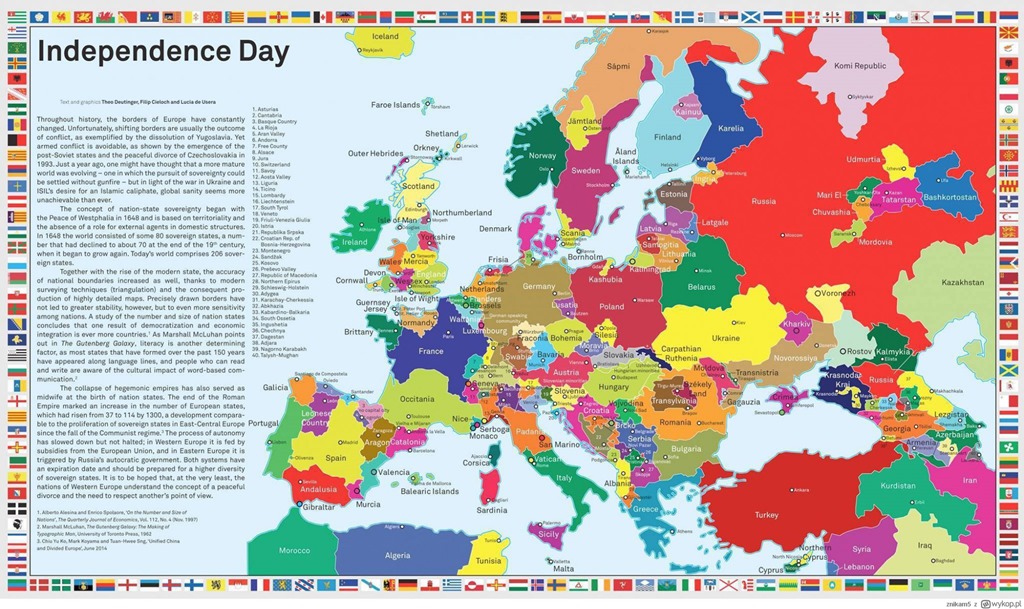
Israeli settlements, explained | Settlements Part I
29 Dec 2016 2 Comments
in constitutional political economy, defence economics, international economics, International law Tags: Gaza Strip, Israel, West Bank
Do trade and investment sanctions against a dictator work?
24 Sep 2016 Leave a comment
in constitutional political economy, international economics, International law, Public Choice
Sanctions only work at all if there is trade and investment to sanction – think of North Korea. This means the autocrat has already liberalised first for there to be trade and investment to sanction. But if the dictator, be it a tin-pot dictator or a totalitarian, has liberalised, it must build loyalty around that liberalisation quickly or risk a coup. All revolutions are palace coups.
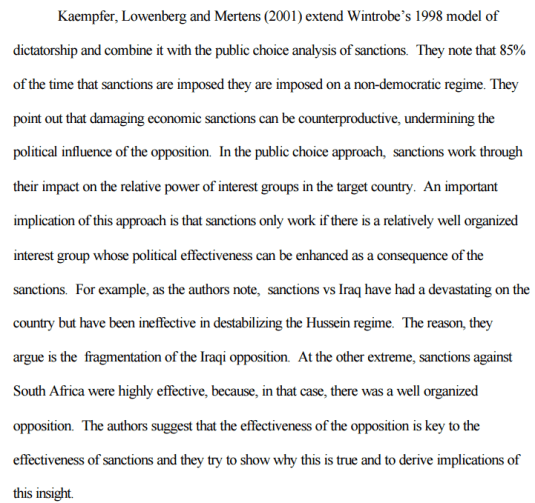
Source: Ronald Wintrobe (2002) Dictatorship.
A dictator who agrees to liberalise puts himself in danger of being deposed, and it is no surprise that dictators like Castro, Hussein and Milosevic were all reluctant to do so. The Austro-Hungarian emperor opposed the introduction of railways because he thought they would bring revolution with them.
Neither trade sanctions nor airstrikes worked against Afghanistan under the Taliban. There is nothing to destroy or degrade.
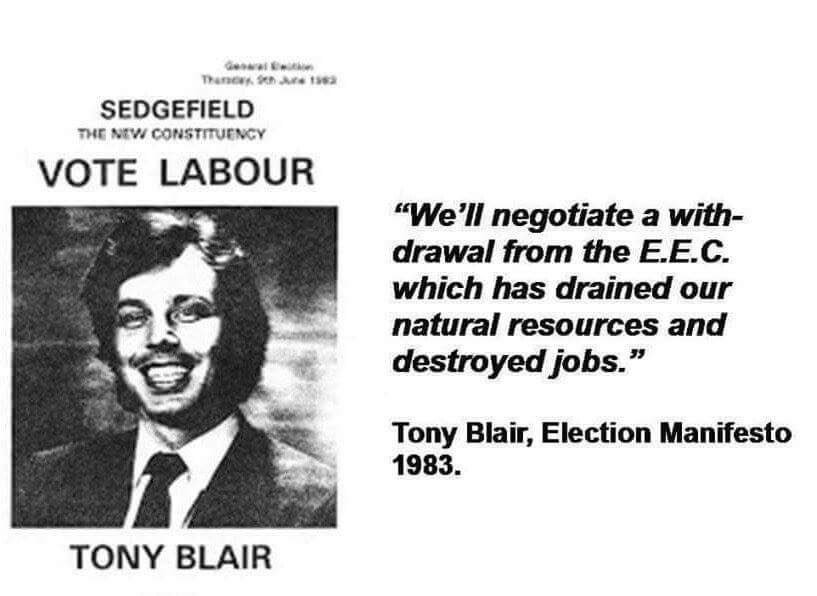
The Brexit vote is about the supremacy of Parliament
30 Jun 2016 Leave a comment
in economics, international economic law, international economics, International law Tags: British economy, British politics, Common market, European Union
Why did voters vote to Leave or Remain? @JulieAnneGenter @Income_Equality
28 Jun 2016 Leave a comment
in constitutional political economy, international economic law, international economics, International law, Public Choice Tags: British economy, British politics, Common market, European Union, pessimism bias, single market, Twitter left, voter demographics
There were few difference across the political spectrum as to why voters voted to Remain or Leave. This is according to Lord Ashcroft’s survey on referendum day of over 12,000 voters.

Source: How the United Kingdom voted on Thursday… and why – Lord Ashcroft Polls
Labour and Tory voters voted to leave to regain control over immigration and sovereignty.
Labour and Tory voters who wanted to remain thought the EU and its single market was a good deal not worth putting at risk. It is all about identity politics, not inequality.
Vote Leave voters are a grumpy lot who think things have been getting worse for 30 years:
Leavers see more threats than opportunities to their standard of living from the way the economy and society are changing, by 71% to 29% – more than twice the margin among remainers…
By large majorities, voters who saw multiculturalism, feminism, the Green movement, globalisation and immigration as forces for good voted to remain in the EU; those who saw them as a force for ill voted by even larger majorities to leave.
% difference between UK’s GDP per capita and EU founding members since 1950
25 Jun 2016 Leave a comment
in economic growth, economic history, international economics, International law
Eurosclerosis started in the 1970s while the British disease came to an end with the election of the Thatcher government so the chart paper is misleading.

Source: Britain’s EU membership: New insight from economic history | VOX, CEPR’s Policy Portal.
The ever astute @JohnCassidy nails why #Brexit occurred
25 Jun 2016 Leave a comment
in constitutional political economy, international economic law, international economics, International law
@JulieAnneGenter @NZGreens @LewisHoldenNZ @DanHannanMEP’s best single case for #Brexit
24 Jun 2016 Leave a comment
in constitutional political economy, economics, industrial organisation, international economic law, International law, liberalism Tags: Brexit, British economy, British politics, Common market, customs unions
Patrick Minford explains #Brexit
22 Jun 2016 Leave a comment
in applied welfare economics, comparative institutional analysis, economics, international economic law, international economics, International law, Public Choice Tags: Brexit, British economy, British politics, Common market, European Union
The UK in Europe
18 Jun 2016 Leave a comment

Source: The UK in Europe: a visual guide to Brexit | FT.co. Will
Winkel tripel projection
06 Jun 2016 Leave a comment
in international economics, International law Tags: maps

.
No @sarahinthesen8 this is not acceptable. Stopping the boats saved hundreds of lives
30 May 2016 Leave a comment
in Economics of international refugee law, international economic law, International law, labour economics, politics - Australia Tags: Australian Greens, avoiding difficult choices, economics of immigration, Leftover Left, rational irrationality
People who enter illegally by boat do not increase the number of refugees of Australia admits in any one year. They change who was granted asylum within the same fixed quota. Increasing the quota will not change incentives for illegal entry if illegal entry allows for settlement in Australia.


Recent Comments