John Stuart Mill on political correctness
28 May 2015 Leave a comment
in liberalism Tags: John Stuart Mel, political correctness
Popper on what is science
27 May 2015 Leave a comment
in liberalism Tags: conjecture and refutation, Karl Popper
Habeaus Corpus Act passed in England today 1679
27 May 2015 Leave a comment
Habeaus Corpus Act (strengthening person's right to challenge unlawful arrest) passes in England #OnThisday in 1679. http://t.co/MAYp7ttLg1—
✍ Bibliophilia (@Libroantiguo) May 27, 2015
There is nothing new under the sun – trigger warnings
27 May 2015 Leave a comment
in liberalism Tags: free speech, political correctness, trigger warnings
The changing meaning of equality before the law
27 May 2015 Leave a comment
in law and economics, liberalism Tags: equal protection before the law, equality, rule of law, Thomas Sowell
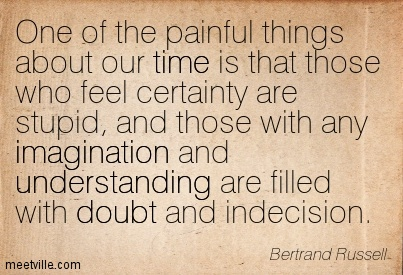
Male dominated culture is in the eyes of the beholder
21 May 2015 Leave a comment
in economics of religion, liberalism Tags: engines of liberation, women's liberation
Working-class Tories are not just turkeys voting for Christmas
14 May 2015 Leave a comment
in liberalism, Public Choice Tags: British general election, Leftover Left, working-class Tories
Suzanne Moore has written the best essay yet on the British general election. A die hard Lefty from her youth raised in a working class Tory household who argued politics with her mum to the day she died. They both gave as good as they got:
We always thought each other wrong and moved on to more pressing subjects. Years of screaming at her over the turkey that she herself was a turkey voting for Christmas did not change her voting habits. She just went out for a fag and moaned to the neighbours that I was “still against everything”.
She did herself proud by being aware of her own arrogance in retrospect:
Of course, I had diagnosed her with that everyday ailment “false consciousness”. This is still how most of the left operates. We have the truth, we know what is best and we will enlighten you, awaken you from your slumbers and you will be grateful.
Suzanne Moore is also very insightful about how shy Tories think:
If anyone wants to listen to the so-called “shy Tories”, what you will often hear is not talk of aspiration but a desire to be left alone by the state – even a deep suspicion of it.
Moore also couldn’t summarise better why her mother, who was part of a mixed-race couple, and so many others in the working-class voted for the Tory party
She believed that the Tories would enable her to do things and that Labour would stop her doing them.
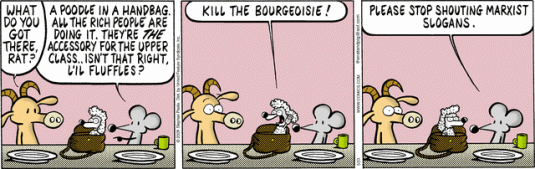
Is Marxism hate speech? Is it safe to be allowed on campus?
13 May 2015 Leave a comment
in constitutional political economy, economic history, laws of war, liberalism, Marxist economics, Public Choice, rentseeking, war and peace Tags: campus speech codes, hate speech, Leftover Left, Marxism, trigger warnings


Is David Hockney the grumpiest man in Britain?
12 May 2015 Leave a comment
in economic history, economics of regulation, economics of religion, environmental economics, global warming, liberalism Tags: climate alarmism, David Hockney old man, do gooders, economics of smoking, global warming, meddlesome preferences, nanny state


Freedom of the press in 2015
07 May 2015 Leave a comment
in law and economics, liberalism Tags: freedom house, Freedom of the press
Happy May Day
01 May 2015 Leave a comment
in liberalism, Marxist economics Tags: capitalism and freedom, fall of communism, full of Soviet Union, May Day
PETA and the height of its hypocrisy
27 Apr 2015 Leave a comment
in environmentalism, liberalism Tags: PETA


Recent Comments