The NZ Initiative has put out a great report proposing a much more efficient structure for both Cabinet and the wider Executive. NZ currently has 81 ministerial portfolios, 28 ministers and 43 executive agencies. By comparison Ireland has 15 Ministers and 18 departments. The Initiative propose a Cabinet of 15 Ministers, being: Incidentally I proposed […]
A blueprint for better Government
A blueprint for better Government
17 Sep 2025 Leave a comment
in economics of bureaucracy, politics - New Zealand, Public Choice
Bill Maher: The price of free speech (clearly “offense”)
16 Sep 2025 Leave a comment
in liberalism, Marxist economics, politics - USA, television, TV shows Tags: free speech, political correctness, regressive left
Here’s the latest “New Rules” interlude from Bill Maher’s Real Time show, called “New Rule: The price of free speech.” It’s a big hooray for the First Amendment, including Maher’s opposing (as I do) Trump’s ban on flag-burning. But he also call’s out the Left’s attempted curbs on free speech (I didn’t know that Lisa […]
Bill Maher: The price of free speech (clearly “offense”)
Ferris doubled down on his racism
16 Sep 2025 Leave a comment
in discrimination, liberalism, Marxist economics, politics - New Zealand Tags: racial discrimination
The Herald reports: Te Pāti Māori MP Tākuta Ferris has doubled down on social media comments he made last week which led to “racist” allegations and an apology from his party. In a new Instagram video, Ferris said it is “unacceptable” for people of other ethnicities to campaign to “take a Māori seat from the […]
Ferris doubled down on his racism
Short (?) review: “Sex is a spectrum”
16 Sep 2025 Leave a comment
in discrimination, economics of education, gender, law and economics, liberalism, Marxist economics, politics - USA, property rights Tags: Age of Enlightenment, free speech, gender gap, political correctness, regressive left, sex discrimination
Reading time: Whatever. . . You’ll probably guess from the title of this short (150-page) book by Agustín Fuentes (Princeton University Press) that I am not keen on its thesis, and you’d be right. In fact, the thesis is nothing new, even if you have read Fuentes’s article about it in Natural History and Scientific […]
Short (?) review: “Sex is a spectrum”
A labour law reform that works for workers
14 Sep 2025 Leave a comment
in economics of regulation, labour economics, labour supply, law and economics, personnel economics, politics - New Zealand, property rights Tags: employment law
Roger Partridge writes – Every day, New Zealand workers clock longer hours than their peers in most developed nations yet produce far less value per hour worked. This productivity paradox has haunted our economy for decades, condemning workers to lower wages and longer working days. Now, Parliament has a chance to help change this cycle. […]
A labour law reform that works for workers
When Words No Longer Matter: Nancy Pelosi and Politics of Violence
13 Sep 2025 Leave a comment
in economics of crime, law and economics, liberalism, Marxist economics, politics - USA Tags: free speech, law and order, political correctness, regressive left

It appears that words no longer matter to Nancy Pelosi. For years, Pelosi and other Democrats have blamed President Donald Trump and Republicans for their “inciteful rhetoric.” In seeking Trump’s impeachment, Pelosi bellowed that the use of “words such as a cry ‘to fight like hell’” produces violence and added, “words matter. Truth matters. Accountability […]
When Words No Longer Matter: Nancy Pelosi and Politics of Violence
Outstanding questions
13 Sep 2025 1 Comment
in economics of bureaucracy, financial economics, inflation targeting, macroeconomics, monetary economics, politics - New Zealand, Public Choice

A couple of nights ago, shortly after the Minister and Treasury finally released the suite of texts between Willis and Rennie, ZB featured interviewer Heather du Plessis-Allan talking to Herald journalist Jenee Tibshraeny (who has been over the Orr/Quigley/Willis saga issue from day one). There wasn’t anything concrete that was new in the conversation but […]
Outstanding questions
Why did Te Pati Maori sack their whip?
12 Sep 2025 Leave a comment
David Farrar writes – The Herald reports: Mariameno Kapa-Kingi says Te Pāti Māori’s leadership has removed her from the role of party whip despite her enjoying the work.
Why did Te Pati Maori sack their whip?
Coleman Hughes interviews Ben Shapiro
11 Sep 2025 Leave a comment
This is a new video interview from the “Conversations with Coleman” series at the Free Press, but I found it posted just this morning on YouTube. Before you go running to the hills when you hear and see “Ben Shapiro”, let me remind you of the salubrious effect of listening to those whose views differ […]
Coleman Hughes interviews Ben Shapiro
Vernon Smith on Donald Trump’s Protectionism
11 Sep 2025 Leave a comment
in applied price theory, development economics, economic history, economics of bureaucracy, history of economic thought, income redistribution, international economics, politics - USA, Public Choice, rentseeking Tags: free trade, tariffs
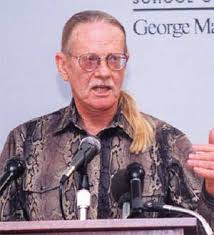
TweetMy emeritus Nobel-laureate colleague, Vernon Smith, sent the following email to me in response to this post. I share Vernon’s note with his kind permission. Don, Trump, like all businesspersons turned political, wants government favors, that is Mercantilism which is as bad today as when Adam Smith railed against such cozy relationships. Same for labor…
Vernon Smith on Donald Trump’s Protectionism
Greens say taxing supermarkets more will lower food prices!
10 Sep 2025 Leave a comment
in applied price theory, economics of regulation, industrial organisation, Marxist economics, politics - New Zealand, Public Choice, public economics Tags: competition law
Radio NZ reports: But the Greens’ commerce and consumer affairs spokesperson Ricardo Menéndez March told RNZ that was only “one part of the puzzle” and the government needed to explore all its options – including breaking up the supermarket duopoly. “While we support having new players in the market, Nicola Willis is banking on big […]
Greens say taxing supermarkets more will lower food prices!
10 great questions the Royal Commission should ask
10 Sep 2025 Leave a comment
in health economics, politics - New Zealand Tags: economics of pandemics
Two professors of economics have 10 questions they would have out to former Ministers about Covid-19. Hopefully these have been put by the Royal Commission. They are: I will be very disappointed if questions like these were not put to the former Ministers.
10 great questions the Royal Commission should ask
Why Do Americans Work So Many Hours?
10 Sep 2025 1 Comment
in health economics, labour economics, labour supply, politics - USA

Compared to workers in most other high-income countries, Americans tend to work more hours per year. Here’s a figure from the OECD, which is based on taking the total number of hours worked in an economy and dividing it by the number of workers for the most recent year available. Because different countries will measure…
Why Do Americans Work So Many Hours?
45 words the left should avoid
10 Sep 2025 Leave a comment
in liberalism, Marxist economics, politics - USA Tags: free speech, political correctness, regressive left
The left wing Third Way organisation has published a list of 45 words other than says Democrats (the left) should avoid using as they alienate people. Sadly for the, I doubt the right people will listen. Some of the words are: Someone who is bored should monitor for a few weeks how many of the […]
45 words the left should avoid
Whitewashing Zohran Mamdani’s Socialism at the New York Times
10 Sep 2025 1 Comment
in Marxist economics, politics - USA
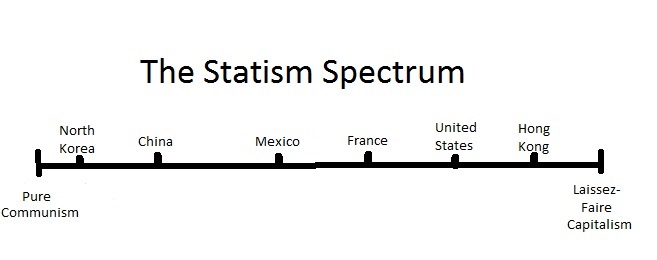
When I wrote about New York City mayoral candidate Zohran Mamdani a few months ago, here was my main takeaway. Mamdani is an AOC-style hard-core leftist who wants to travel in the wrong direction as far and as fast as Javier Milei is traveling in the right direction. When asked to elaborate, I sometimes dig into the […]
Whitewashing Zohran Mamdani’s Socialism at the New York Times
 Utopia, you are standing in it!
Recent Comments