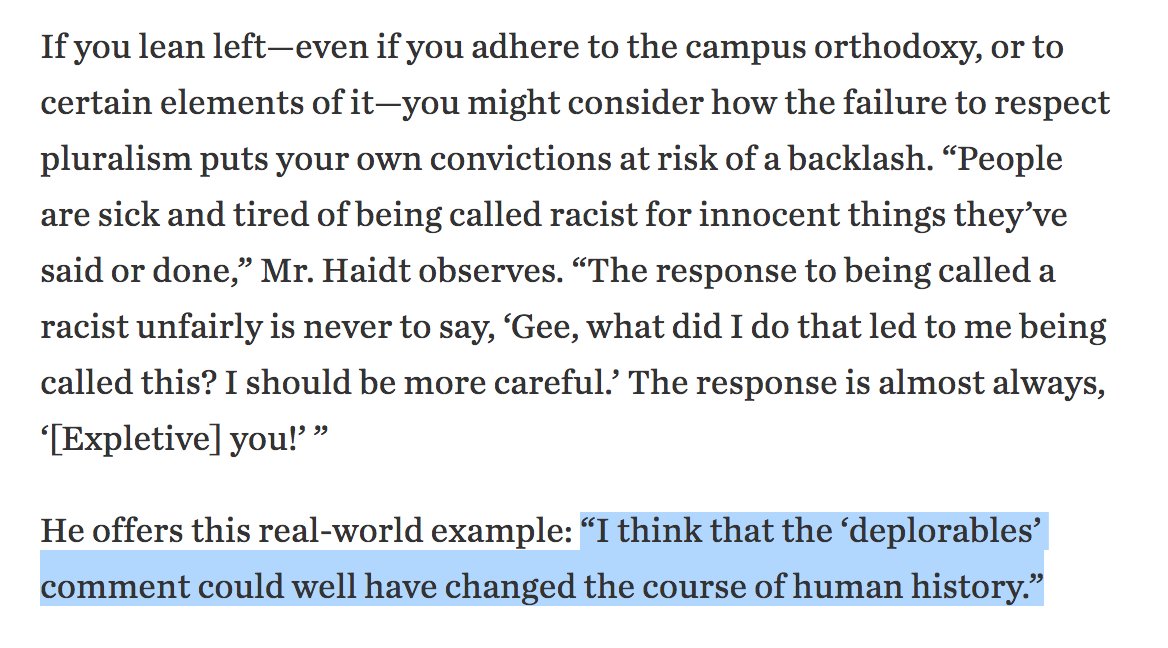
The Rise of Populism and the Backlash Against the Elites, Jonathan Haidt
12 Feb 2017 2 Comments
in economics of information, economics of media and culture, politics - Australia, politics - New Zealand, politics - USA Tags: moral psychology, political psychology, right-wing populists
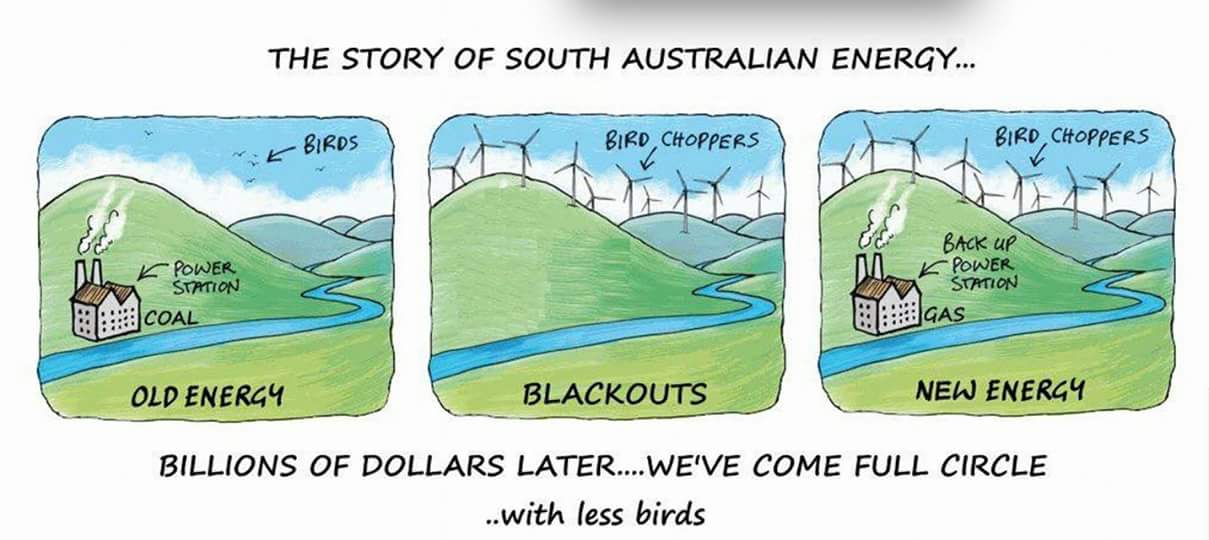
The wind just weren’t blowing in South Australia yesterday afternoon and evening
09 Feb 2017 Leave a comment
in energy economics, environmental economics, politics - Australia
Manus Island queue jumper admits he successfully jumped queue @AmnestyNZ cries torture
15 Jan 2017 Leave a comment
in Economics of international refugee law, politics - Australia Tags: do gooders, economics of immigration
Amnesty NZ thinks it is torture to go from being a faceless family in a UN refugee camp with little hope to being in the Manus Island immigration detention camp with Australia doing everything it can to get you accepted as a refugee in another country. How many refugees in UN camps have all the resources of the Australian government trying to resettle them? Burma is such a dump the resettlement anywhere in the world is an economic improvement as well.
Source: ‘The torture in my country is transparent, in Australia it is not obvious’.
Another question that must be asked is whether the refugees on Manus Island displace refugees with better claims from within another country’s refugee quota because the Australian government is lobbying for them to be accepted as a refugee.
Boat arrivals do not increase the Australian refugee quota so someone with a better claim is displaced. As arrivals by boat are no longer ever eligible to settle in Australia, this displacement dilemma is moved onto the consciences of 3rd countries.
The purpose of the UN processing of refugees is to ensure those with the most pressing claims for asylum receive refugee status first. Those pushed back in the queue may be at a greater risk of imprisonment, torture and execution than those that arrived in Australia by boat.
Who do Western Australian populist voters second preference?
16 Dec 2016 1 Comment
in politics - Australia Tags: 2016 Australian election, populism, voter demographics
Most draw support from across the spectrum when compared to the remaining small parties.
Source and notes: Antony Green’s Election Blog: One Nation and the 2017 WA Election – Lessons from the Past; remaining votes not depicted exhausted
Fossil Fuels: The Greenest Energy
20 Nov 2016 Leave a comment
in economic history, energy economics, politics - Australia, politics - New Zealand, politics - USA Tags: Fossil Fuels
US, Australian and NZ real house prices, March 1975 to June 2016
08 Nov 2016 Leave a comment
in economic history, politics - Australia, politics - New Zealand, politics - USA, urban economics Tags: Australia, housing affordability
The #fatalconceit of #daylightsaving in #Australia
05 Nov 2016 Leave a comment
in economics of media and culture, economics of religion, politics - Australia
Queensland refused to follow the southern states of Australia in adopt daylight saving. Conceited Southerners attributed that to the backward nature of those further north.
Daylight savings is not such a good idea if summer and winter day length does not vary that much and there is not much of a twilight.
The closer you get to the tropics, such as Queensland is, day length does not vary through the year and there is next to no twilight. In the tropics, you can look forward to the night because it is cooler.
Arrogant Southerners pretended to know what was good for Queensland despite knowing nothing of why daylight savings was introduced in the first place. It was to take advantage of large variations in the length of the day over the seasons. There are no such large variations in the length of the day in tropical Queensland, particularly in North Queensland.
.@4corners @amnestynz evidence standards hit new low on #Nauru refugee reporting
18 Oct 2016 Leave a comment
in Economics of international refugee law, international economics, politics - Australia Tags: economics of immigration, Nauru, refugees
The ABCs journalistic standards have dropped so low that they continued to regard as credible a witness who compared Nauru with Syria. Neistat wrote the report for Amnesty which Four Corners then built on.
Syria is a war zone. Nauru is not. This is the Australian Government’s travel advice for Syria
We strongly advise Australians not to travel to Syria because of the extremely dangerous security situation, highlighted by ongoing military conflict including aerial bombardment, kidnappings and terrorist attacks…
Australians are also warned not to travel to the northern Caucasus included Chechnya for any reason because of the threat of terrorism and kidnappings.
The Department of Foreign Affairs and Trade does not issue travel advice for Nauru at this time.
I doubt that the state of law and order in Syria or Chechnya in peacetime is any different from Nauru at its worst. Refugees seek asylum from persecution. That does not guarantee them asylum in a country that is materially wealthier than the one they fled.
Many people engage in considerable hubris to avoid making difficult decisions about immigration and refugees. Tullock talked about how people avoid difficult decisions. They do not want to face up to the fact resources are scarce and they face limits on their powers.
To reduce the personal distress of making these tragic choices, Tullock observed that people often allocate and distribute resources in a different way so as to better conceal from themselves the unhappy choices they had to make. This even if this means the recipients of these choices are worse off and more lives are lost than if more open and honest choices were made up about there only being so much that can be done.
The Australian Greens, for example, call for a doubling of the refugee quota. A drop in the ocean when there is 59 million refugees out there. This allows them to feel righteous when they go to sleep at night
When it is pointed out that their policies will encourage more people to get on a boat, some of whom will drown, the Greens suggest people should be free to fly to Australia without documentation and then be released after a short security check.
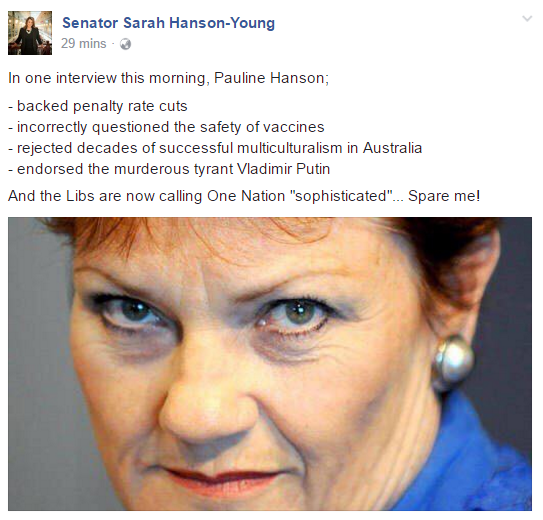
#LetThemStay https://t.co/n1hA7W3q3Q—
Sarah Hanson-Young (@sarahinthesen8) February 04, 2016
Naturally, no government will ever adopt this suggestion. It shows that the Greens are not serious participants in managing refugee flows across borders. They prefer to feel righteous rather than actually systematically help people to the maximum available.
Arriving by boat in Australia does not increase the size of the refugee quota. It just changes who gets to the head of the queue and how many died trying to get to the head of the queue.
Fact checking @leerhiannon on John Howard and @PaulineHansonOz
15 Oct 2016 Leave a comment
in discrimination, politics - Australia
Leading up to the 1996 election, Hanson advocated the abolition of special government assistance for Aborigines, and she was disendorsed by the Liberal Party. Ballot papers had already been printed listing Hanson as the Liberal candidate, and the Australian Electoral Commission had closed nominations for the seat.
Hanson was still listed as the Liberal candidate when votes were cast, even though Liberal leader John Howard had declared she would not be allowed to sit with the Liberals if elected.
On election night, Hanson took a large lead on the first count and picked up enough Democrat preferences to defeat Scott on the sixth count. She won 54 percent of the two-candidate preferred vote. Had she still been running as a Liberal, the 19.3 percent swing would have been the largest two-party swing of the election. Hanson won the safest Labour Party seat in Queensland.
The rise of a working rich in Australia
12 Oct 2016 Leave a comment
in economic history, human capital, industrial organisation, labour economics, labour supply, politics - Australia, poverty and inequality, survivor principle Tags: superstar wages, superstars, top 1%, top incomes
Source: The World Wealth and Income Database.
Lazy Australian top 0.1% only increased their income under @AustralianLabour
09 Oct 2016 Leave a comment
in economic history, industrial organisation, politics - Australia, poverty and inequality, survivor principle Tags: antimarket bias, entrepreneurial alertness, superstar wages, superstars, top 1%, top incomes
Australia’s top income earners are a lazy lot. The top 0.1% only ever had a rising income share under a Labor government in the 1980s. Even the top 1% had a pretty lean time until the 1990s.
Source: The World Wealth and Income Database.
Australian @Greens vote share & Green 2nd preferences to @AustralianLabor
07 Oct 2016 Leave a comment
in politics - Australia Tags: 2013 Australian federal election, 2016 Australian federal election, Australian Greens, The Australian Labour Party, Watermelons
Although the Australian Greens took a blow in 2013 in their vote after their coalition with the Australian Labour Party in 2010, their 2nd preferences to Labour been pretty stable for 10 years. About one in 6 Green voters 2nd preference the Liberals.

Recent Comments