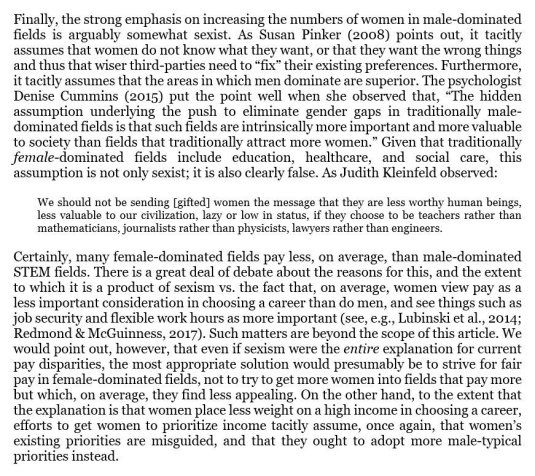
Efforts to eliminate occupational gender gaps tacitly treat male-typical choices as superior. https://t.co/BxzCkmU9sT pic.twitter.com/fxTsVVSUHz
— Steve Stewart-Williams (@SteveStuWill) October 27, 2018
Celebrating humanity's flourishing through the spread of capitalism and the rule of law
28 Oct 2018 Leave a comment
in discrimination, economics of education, gender, human capital, labour economics, labour supply, occupational choice, politics - New Zealand Tags: gender wage gap
25 Oct 2018 Leave a comment
in politics - New Zealand, poverty and inequality
My rejoinder is TVNZ is so sloppy with the facts that it is spent most of its reply on the exemption in cases of where paternity is uncertain or disputed. That has nothing to do with my complaint about their failure to mention in their broadcast the exemption in the case of threats of violence.
To support their reply, TVNZ attached a rambling paper from Auckland action against poverty and a Herald op-ed about the need to have a lawyer’s letter. TVNZ misread the rambling Auckland action for poverty document with talks about needing a lawyer to get the exemption lifted. This is different to when first applying for the benefit. The New Zealand Herald op-ed is unclear about which exemption is under discussion: for threats of violence or for disputed paternity.
TVNZ interviewed the minister about the exemption but put none of the activist allegations to her according to the attached official information response of TVNZ. An opportunity lost for balance.
I put the allegation that a lawyer is required to apply for the exemption in case of threats of violence through official information requests to the Minister and her ministry. Both the Minister and the ministry said that was not so: a lawyer is not required to apply for the exemption. The Ministry also explained that benefit applicants are interviewed by the case manager and briefed on their options.
TVNZ included the link https://www.workandincome.govt.nz/map/income-support/core-policy/child-support/carer-unable-to-provide-written-proof-of-the-risk-of-violence.html

I clicked on the link Exempting section 70A reductions https://www.workandincome.govt.nz/map/income-support/core-policy/child-support/exempting-section-70a-reductions.html and then clicked on Risk of Violence link https://www.workandincome.govt.nz/map/income-support/core-policy/child-support/risk-of-violence-01.html and then clicked on Carer required to provide proof of risk of violence link https://www.workandincome.govt.nz/map/income-support/core-policy/child-support/carer-required-to-provide-proof-of-the-risk-of-violence.html

The above screenshot lists all the 3rd parties who are credible witnesses. TVNZ had to go through these links to find the link Carer unable to provide written proof of the risk of violence at https://www.workandincome.govt.nz/map/income-support/core-policy/child-support/carer-unable-to-provide-written-proof-of-the-risk-of-violence.html

Sole parent beneficiary applicants are not asked for a letter from a lawyer as claimed by TVNZ. The link supplied in the TVNZ reply says applicants are advised to speak to a family violence coordinator or a service centre manager at WINZ. TVNZ is convicted by the information it supplied to the BSA.
In summary, TVNZ never mentioned the exemption on air. When I complained, it relied on allegations from activists that were never put to the Minister or her ministry despite opportunities to do so in an interview with the Minister. In the reply to the complaint, TVNZ provided written proof to the BSA from WINZ that applicants are advised to speak a family violence coordinator or a WINZ service centre manager if they are having trouble documenting the threats or abuse. The link provided by TVNZ shows there is no requirement for a letter from a lawyer. The exemption was never mentioned on air nor its purported shortcomings. The claim that TVNZ did not need to mention the exemption because it was unworkable because of the need to hire a lawyer has no foundation in fact and was never put to the minister or WINZ for comment and balance.
21 Oct 2018 Leave a comment
in discrimination, economics of education, gender, human capital, industrial organisation, labour economics, labour supply, occupational choice, politics - New Zealand
This submission is made up of 6 attachments because that is the maximum I could load.

Attachments 1 and 2 are the main part of submission and argue that pay equity is unfair to fair employers. An employer can hire and promote on merit, pay the going wage and still be successfully sued. Their name blackened forever. As a question of social justice, it is wrong to sue someone as a discriminating employer, when there is nothing they could do to right the supposedly wrong they were successfully sued. Barnardo’s can no longer compete with social workers because of the pay equity settlement in the public sector. It relies on donations and tendering for public contracts. It has no capacity to raise wages but could be successfully sued and driven out of business.
Attachments 3 to 5 explains that the gender pay gap is the result of the work-life balance choices of women interacting with some professions penalising an inability to work specific hours or long hours much more than. Pay equity will address none of these issues.
Attachment 6 explains how more than 40 years ago Solomon Polachek found that the gender pay gap was driven by factors such as the number and spacing of children. Employers cannot discriminate against women because they do not know this information and it is now unlawful to ask. It is a strange misogyny that employers hire single women on merit but have a bias against mothers who have several children whose birthdates on widely spaced apart.
To conclude this overview, as attachment 3 shows in a graphic, the gender pay gap for women at the bottom and middle of the labour market is barely 3-5%. It is rather odd to be offering 30% pay rises for a group of women whose pay gap with men at the bottom and middle of the labour market is not more than 5%. Clearly the comparable worth methodology misses something.
21 Oct 2018 Leave a comment
in economic history, politics - New Zealand

20 Oct 2018 Leave a comment
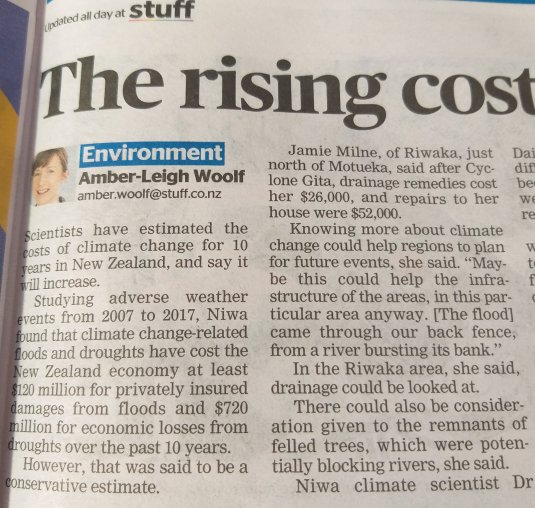
in applied price theory, applied welfare economics, environmental economics, global warming, politics - New Zealand Tags: climate alarmists

20 Oct 2018 Leave a comment
in politics - Australia, politics - New Zealand, politics - USA Tags: voter demographics
15 Oct 2018 Leave a comment
in economics of crime, politics - New Zealand, poverty and inequality
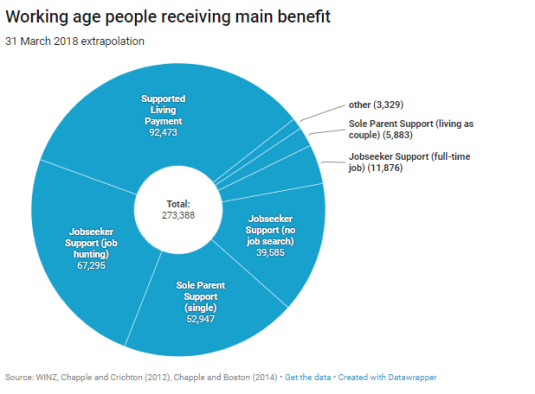
The estimates are based on the self-reported benefit fraud in the 2012 Chapple and Crichton paper which must be a minimum bound because you would expect at least some benefit fraudsters to be discreet in their dealings with government and the statistics bureau.
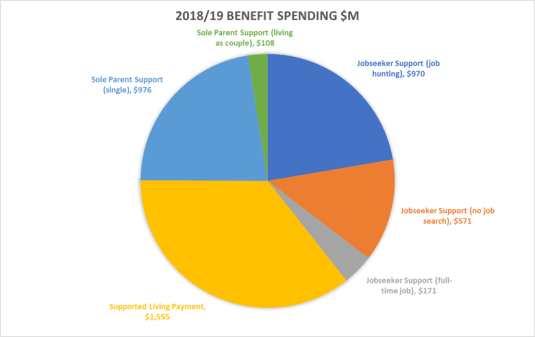
Computed from 2018 Budget papers, WINZ benefit data, Chapple and Crichton (2012), Chapple and Boston (2014). See too https://www.taxpayers.org.nz/benefit_sanctions
14 Oct 2018 Leave a comment
in economics of crime, politics - New Zealand, poverty and inequality, public economics
11 Oct 2018 Leave a comment
in economics of crime, politics - New Zealand
.
10 Oct 2018 Leave a comment
in defence economics, economics of crime, law and economics, politics - New Zealand, politics - USA, Rawls and Nozick, war and peace
08 Oct 2018 Leave a comment
in applied welfare economics, environmental economics, global warming, politics - New Zealand
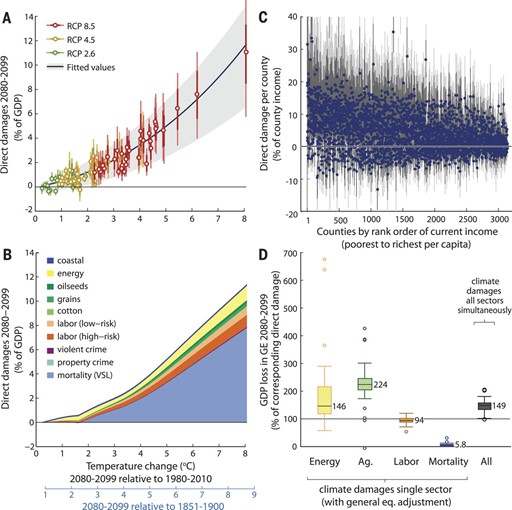
From S. Hsiang el al., “Estimating economic damage from climate change in the United States,” Science (2017). science.sciencemag.org/cgi/doi … 1126/science.aal4369 Read more at: https://phys.org/news/2017-06-climate-economy-inequality.html#jCp
Even runaway climate change of 6 to 8°C reduces GDP by by 2100! less than 10%
08 Oct 2018 Leave a comment
in applied welfare economics, environmental economics, global warming, politics - New Zealand
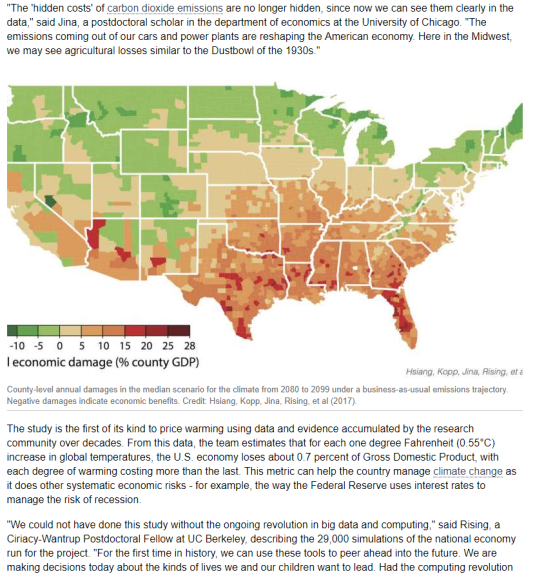
S. Hsiang el al., “Estimating economic damage from climate change in the United States,” Science (2017). science.sciencemag.org/cgi/doi … 1126/science.aal4369 Read more at: https://phys.org/news/2017-06-climate-economy-inequality.html#jCp
Celebrating humanity's flourishing through the spread of capitalism and the rule of law
Celebrating humanity's flourishing through the spread of capitalism and the rule of law
Celebrating humanity's flourishing through the spread of capitalism and the rule of law
Celebrating humanity's flourishing through the spread of capitalism and the rule of law
Celebrating humanity's flourishing through the spread of capitalism and the rule of law
A History of the Alt-Right
Econ Prof at George Mason University, Economic Historian, Québécois
Celebrating humanity's flourishing through the spread of capitalism and the rule of law
Scholarly commentary on law, economics, and more
Beatrice Cherrier's blog
Celebrating humanity's flourishing through the spread of capitalism and the rule of law
Celebrating humanity's flourishing through the spread of capitalism and the rule of law
Celebrating humanity's flourishing through the spread of capitalism and the rule of law
Why Evolution is True is a blog written by Jerry Coyne, centered on evolution and biology but also dealing with diverse topics like politics, culture, and cats.
Celebrating humanity's flourishing through the spread of capitalism and the rule of law
A rural perspective with a blue tint by Ele Ludemann
DPF's Kiwiblog - Fomenting Happy Mischief since 2003
Celebrating humanity's flourishing through the spread of capitalism and the rule of law
The world's most viewed site on global warming and climate change
Tim Harding's writings on rationality, informal logic and skepticism
A window into Doc Freiberger's library
Let's examine hard decisions!
Commentary on monetary policy in the spirit of R. G. Hawtrey
Thoughts on public policy and the media
Celebrating humanity's flourishing through the spread of capitalism and the rule of law
Politics and the economy
A blog (primarily) on Canadian and Commonwealth political history and institutions
Reading between the lines, and underneath the hype.
Economics, and such stuff as dreams are made on
"The British constitution has always been puzzling, and always will be." --Queen Elizabeth II
Celebrating humanity's flourishing through the spread of capitalism and the rule of law
Celebrating humanity's flourishing through the spread of capitalism and the rule of law
WORLD WAR II, MUSIC, HISTORY, HOLOCAUST
Undisciplined scholar, recovering academic
Celebrating humanity's flourishing through the spread of capitalism and the rule of law
Res ipsa loquitur - The thing itself speaks
In Hume’s spirit, I will attempt to serve as an ambassador from my world of economics, and help in “finding topics of conversation fit for the entertainment of rational creatures.”
Researching the House of Commons, 1832-1868
Articles and research from the History of Parliament Trust
Reflections on books and art
Posts on the History of Law, Crime, and Justice
Celebrating humanity's flourishing through the spread of capitalism and the rule of law
Exploring the Monarchs of Europe
Cutting edge science you can dice with
Small Steps Toward A Much Better World
“We do not believe any group of men adequate enough or wise enough to operate without scrutiny or without criticism. We know that the only way to avoid error is to detect it, that the only way to detect it is to be free to inquire. We know that in secrecy error undetected will flourish and subvert”. - J Robert Oppenheimer.



Recent Comments