35 years ago today, 6 Americans escaped from Iran, as dramatized in Argo

Image

ISIS sympathizer’s road to jihad — from Canada to Syria to Iraq — tracked one Tweet at a time

You must read the maps showing with his tweets.

Illustration by Jonathon Rivait/National Post

This gives you hope when idiots like this can be recruited by the Jihadists. This tosser is not the first moron recruited into their ranks with their locator button on in their twitter account.

Scientist & the public differ on science-related issues

Image

Happy 60th Birthday Ruby Bridges

Image

Link to share: Blasphemous artwork removed from Paris exhibition (due to Islamist threats)

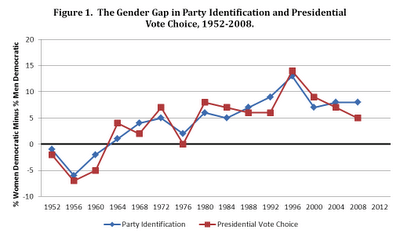
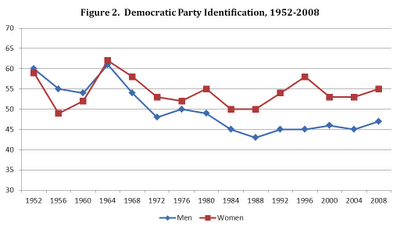
Democrats See Large Distinctions Between Parties | Pew Research Center for the People and the Press

Democrats See Large Distinctions Between Parties

HT: http://www.people-press.org/2015/01/14/obama-job-rating-ticks-higher-views-of-nations-economy-turn-more-positive/1-14-2015-parties_8/

The success of monetarism and the death of the correlation between monetary growth and inflation

The Velocity of Money

Monetarists blame fluctuations in inflation on excessively volatile growth in monetary aggregates. In 1982, Friedman defined monetarism in an essay on defining monetarism as follows:

Like many other monetarists, I have concluded that the most important thing is to keep monetary policy from doing harm.

We believe that a steady rate of monetary growth would promote economic stability and that a moderate rate of monetary growth would prevent inflation

The U.S. data supported this hypothesis about the volatility of monetary growth and inflationuntil 1982, but since 1983 monetary aggregates have been essentially uncorrelated with subsequent inflation in the U.S.

Levis Kochin pointed out in 1979 that a well designed monetary policy would lead to zero correlation between any measure of monetary policy and subsequent inflation. The reason for this is the correlation between any variable and a constant is zero.

If monetary growth is stable, say, a constant growth rate of 4% per year, as advocated by Milton Friedman, monetary growth will have no correlations with any variable:

Poole (1993, 1994) and Tanner (1993) also argue that one predictable consequence of optimal monetary policy is that the correlation between monetary policy instruments and policy goals will be driven to zero.

Poole further contends that it is obvious to any careful reader of Theil (1964) that optimally variable policy will give rise to a zero correlation between policy and goal variable…

In 1966 Alan Walters, a U.K. monetarist, observed:

If the [monetary] authority was perfectly successful then we should observe variations in the rate of change of the stock of money but not variations in the rate of change of income… [a]ssuming that the authority’s objective is to stabilize the growth of income.

Milton Friedman in 2003, wrote about how the Fed acquired a good thermostat:

The contrast between the periods before and after the middle of the 1980s is remarkable.

Before, it is like a chart of the temperature in a room without a thermostat in a location with very variable climate; after, it is like the temperature in the same room but with a reasonably good though not perfect thermostat, and one that is set to a gradually declining temperature.

Sometime around 1985, the Fed appears to have acquired the thermostat that it had been seeking the whole of its life…

Prior to the 1980s, the Fed got into trouble because it generated wide fluctuations in monetary growth per unit of output. Far from promoting price stability, it was itself a major source of instability as Chart 1 illustrates.

Yet since the mid ’80s, it has managed to control the money supply in such a way as to offset changes not only in output but also in velocity.

Nick Rowe explained the difficulty of causation and correlation under different policy regimes and Milton Friedman’s thermostat superbly as an econometric problem Nick Rowe:

If a house has a good thermostat, we should observe a strong negative correlation between the amount of oil burned in the furnace (M), and the outside temperature (V).

But we should observe no correlation between the amount of oil burned in the furnace (M) and the inside temperature (P). And we should observe no correlation between the outside temperature (V) and the inside temperature (P).

An econometrician, observing the data, concludes that the amount of oil burned had no effect on the inside temperature. Neither did the outside temperature. The only effect of burning oil seemed to be that it reduced the outside temperature. An increase in M will cause a decline in V, and have no effect on P.

A second econometrician, observing the same data, concludes that causality runs in the opposite direction. The only effect of an increase in outside temperature is to reduce the amount of oil burned. An increase in V will cause a decline in M, and have no effect on P.

But both agree that M and V are irrelevant for P. They switch off the furnace, and stop wasting their money on oil.

Subsequent work of Levis Kochin showed that if the effects of fluctuations in monetary aggregates were not precisely known then the optimal policy would produce negative correlations between monetary aggregates and inflation:

The negative correlation results from coefficient uncertainty because the less certain we are about the size of a multiplier, the more cautious we should be in the application of the associated policy instrument.

Therefore, although optimal policy leads to lack of correlation between the goal and control variables if the coefficient is known, it will lead to a negative relationship if there is coefficient uncertainty. The higher the uncertainty, the more cautious will be the optimal policy response. Also, if the control variable can’t be controlled perfectly then the correlation between the goal and the control variable becomes positive i.e., the control errors are random…

Uncertainty about the impact of a policy  will stay the hand of any bureaucrat , much less a central banker, as Kochin and his co-author explain:

Uncertainty should lead to less policy action by the policymakers. The less policymakers are informed about the relevant parameters, the less activist the policy should be. With poor information about the effects of policy, very active policy runs a higher danger of introducing unnecessary fluctuations in the economy.

Antiscience scientists on vaccination

Image

History of cultural bias has led to a lack of diversity in green and left-wing groups

Minorities represent nearly 40 percent of Americans, yet account for fewer than 16 percent of workers at the government agencies, nongovernmental organizations called NGOs and foundations that were studied.

…Taylor wrote that an “unconscious bias” exists within the liberal and progressive culture of the groups, preserving a racially homogenous workplace. “Recruitment for new staff frequently occurs through word-of-mouth and informal networks,” the study said. “This makes it difficult for ethnic minorities, the working class, or anyone outside of traditional environmental networks to find out about job openings and apply for those jobs.”

HT: http://wapo.st/VdOjqT

Spending of Taxes– Perceptions vs Reality (UK 2014)

https://twitter.com/MaxCRoser/status/559988446107009024

Image

Richest queue in India (world perhaps) and cronyism at its best..

Whose Line is it Anyway? That's More Than 70 Billion Dollars

Amol Agrawal's avatarMostly Economics

This picture is quite an interesting one. It shows India’s richest businessmen queuing to wait to meet US President Barack Obama patiently. It is ironical in many ways to see the rich and mighty queue like school children waiting for their score card or something. In many ways it is a score card of future where the chosen guys would either get to invest in US or be a partner of US money into India.

It clearly shows the power of politics. Those who keep talking of free markets and so on should see how politics dominates the game. At the end of the day, you have to get closer to the politique to see your empire grow.

But this is also an example of cronyism where business and politics get real close. Deals are signed amidst favorites and it is dubbed as competition. Most of cronyism happens behind the scenes and this is all…

View original post 55 more words

Postwar vs. New Gilded Age: How did the middle class do?

Noahpinion: Postwar vs. New Gilded Age: How did the middle class do?.

The Public Has Lightened Up on Weed

Embedded image permalink

HT: https://twitter.com/David_Boaz/status/493382382507278336?s=09

Image

Saving Civilization: 2009 vs 2015

An absolutely excellent collection of climate alarmist statements by hacks whose jobs depended on fermenting confusion and moral panic

Donna Laframboise's avatarBig Picture News, Informed Analysis

Five years ago, we were told that the 2009 Copenhagen climate summit was the last chance to save civilization. As the 2015 Paris summit approaches, the same sort of fear mongering is ramping up.

Earlier this week, a climate declaration published as a full-page ad in the international edition of New York Times tried to frighten us. It told us that:

the UN Climate Summit in Paris in December 2015 may be the last chance to agree a treaty capable of saving civilization; [bold added]

The declaration insisted that global warming may “cause the very fabric of civilization to crash.” It said charitable foundations should therefore divert resources away from other projects – presumably building hospitals and schools, preventing blindness and malaria, ensuring basic sanitation – in order to “save civilization” from the climate scourge.

Problem is, we’ve heard this before. Not so very long ago, the British Prime…

View original post 86 more words

Every 20 years we worry about losing jobs to technology

Embedded image permalink

Every generation has its moral panic about technological change in creative destruction.

For young people, it’s that overweening conceit about the problems they are attempting to solve are new.

For the middle-aged and older, rather than suggest that they are policy hustlers, it’s more like you they simply forgot that these debates were had 20 years ago and the scaremongers lost the same reason they lost 20 years before that, and so on.

HT: https://twitter.com/JamesBessen/status/498435714322014208

Previous Older Entries Next Newer Entries

Arin’s Substack

Celebrating humanity's flourishing through the spread of capitalism and the rule of law

David Andolfatto

Celebrating humanity's flourishing through the spread of capitalism and the rule of law

Monetary Non-Neutrality

Celebrating humanity's flourishing through the spread of capitalism and the rule of law

Reason Magazine

Celebrating humanity's flourishing through the spread of capitalism and the rule of law

Coyote Blog

Celebrating humanity's flourishing through the spread of capitalism and the rule of law

Thoughts from the North

Celebrating humanity's flourishing through the spread of capitalism and the rule of law

Fardels Bear

A History of the Alt-Right

Vincent Geloso

Econ Prof at George Mason University, Economic Historian, Québécois

Bassett, Brash & Hide

Celebrating humanity's flourishing through the spread of capitalism and the rule of law

Truth on the Market

Scholarly commentary on law, economics, and more

The Undercover Historian

Beatrice Cherrier's blog

Matua Kahurangi

Celebrating humanity's flourishing through the spread of capitalism and the rule of law

Temple of Sociology

Celebrating humanity's flourishing through the spread of capitalism and the rule of law

Velvet Glove, Iron Fist

Celebrating humanity's flourishing through the spread of capitalism and the rule of law

Why Evolution Is True

Why Evolution is True is a blog written by Jerry Coyne, centered on evolution and biology but also dealing with diverse topics like politics, culture, and cats.

NoTricksZone

Celebrating humanity's flourishing through the spread of capitalism and the rule of law

Homepaddock

A rural perspective with a blue tint by Ele Ludemann

Kiwiblog

DPF's Kiwiblog - Fomenting Happy Mischief since 2003

The Dangerous Economist

Celebrating humanity's flourishing through the spread of capitalism and the rule of law

Watts Up With That?

The world's most viewed site on global warming and climate change

The Logical Place

Tim Harding's writings on rationality, informal logic and skepticism

Doc's Books

A window into Doc Freiberger's library

The Risk-Monger

Let's examine hard decisions!

Uneasy Money

Commentary on monetary policy in the spirit of R. G. Hawtrey

Barrie Saunders

Thoughts on public policy and the media

Liberty Scott

Celebrating humanity's flourishing through the spread of capitalism and the rule of law

Point of Order

Politics and the economy

James Bowden's Blog

A blog (primarily) on Canadian and Commonwealth political history and institutions

Science Matters

Reading between the lines, and underneath the hype.

Peter Winsley

Economics, and such stuff as dreams are made on

A Venerable Puzzle

"The British constitution has always been puzzling, and always will be." --Queen Elizabeth II

The Antiplanner

Celebrating humanity's flourishing through the spread of capitalism and the rule of law

Bet On It

Celebrating humanity's flourishing through the spread of capitalism and the rule of law

History of Sorts

WORLD WAR II, MUSIC, HISTORY, HOLOCAUST

Roger Pielke Jr.

Undisciplined scholar, recovering academic

Offsetting Behaviour

Celebrating humanity's flourishing through the spread of capitalism and the rule of law

JONATHAN TURLEY

Res ipsa loquitur - The thing itself speaks

Conversable Economist

In Hume’s spirit, I will attempt to serve as an ambassador from my world of economics, and help in “finding topics of conversation fit for the entertainment of rational creatures.”

The Victorian Commons

Researching the House of Commons, 1832-1868

The History of Parliament

Articles and research from the History of Parliament Trust

Books & Boots

Reflections on books and art

Legal History Miscellany

Posts on the History of Law, Crime, and Justice

Sex, Drugs and Economics

Celebrating humanity's flourishing through the spread of capitalism and the rule of law

European Royal History

Exploring the Monarchs of Europe

Tallbloke's Talkshop

Cutting edge science you can dice with

Marginal REVOLUTION

Small Steps Toward A Much Better World