Is the Blogosphere an Infotopia or an Echo Chamber – the Daily Me?

Cass Sunstein made some astute observations in Republic.com 2.0 about how the blogosphere forms into information cocoons and echo chambers. People can avoid the news and opinions they don’t want to hear.

This is not all that surprising. Many do not read the newspaper, or read those newspapers that fuel their initial beliefs. London is famous for its partisan newspapers each pandering to their own slice of the political spectrum.

The standard J.S. Mill view of deliberation is that group discussion is likely to lead to better outcomes, if only because competing views are stated and exchanged.

Sunstein has argued that there are limitless news and information options and, more significantly, there are limitless options for avoiding what you do not want to hear:

  • Those in search of affirmation will find it in abundance on the Internet in those newspapers, blogs, podcasts and other media that reinforce their views.
  • People can filter out opposing or alternative viewpoints to create a "Daily Me."
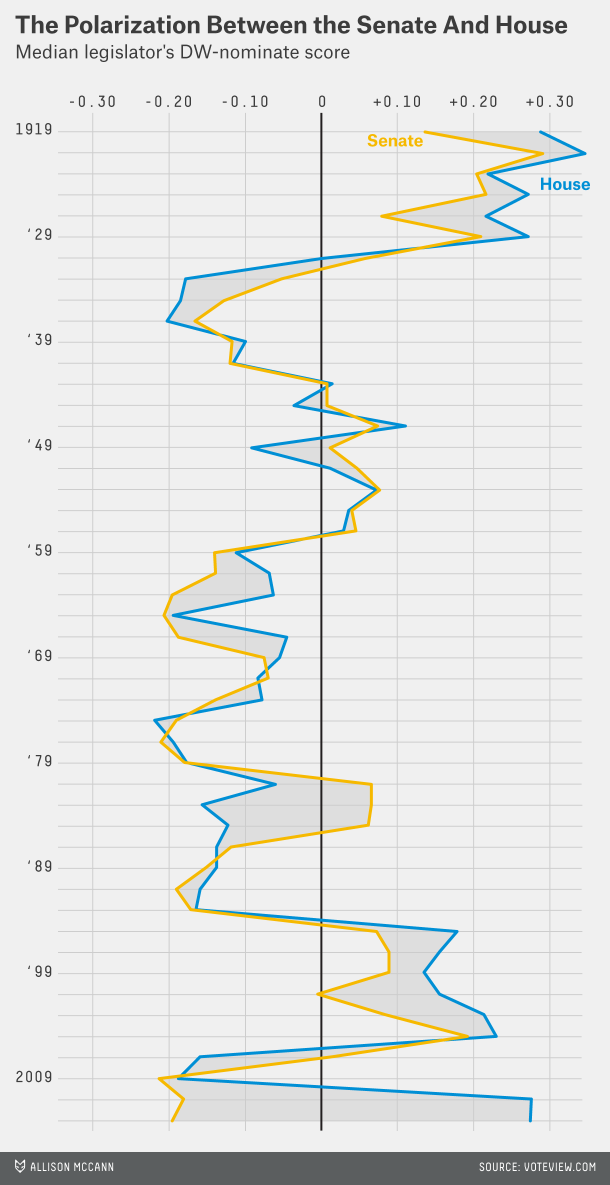
  • The sense of personal empowerment that consumers gain from filtering out news to create their Daily Me creates an echo chamber effect and accelerates political polarisation.

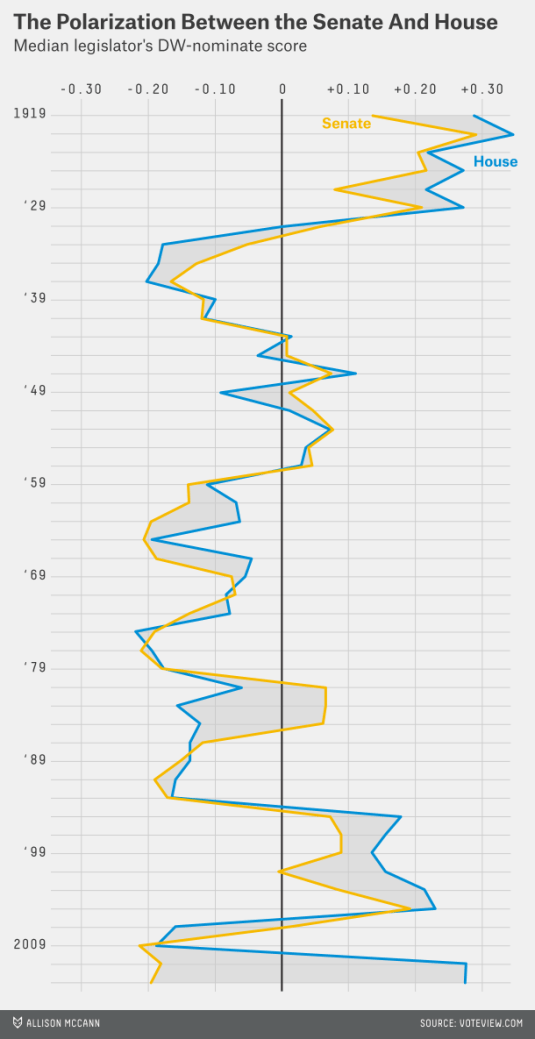
A common risk of debate is group polarisation. Members of the deliberating group move toward a more extreme position relative to their initial tendencies!

How many blogs are populated by those that denounce those who disagree? This is the role of the mind guard in group-think.

Debate is over-rated as compared to brute experience. Milton Friedman said this in his Nobel price lecture:

Government policy about inflation and unemployment has been at the centre of political controversy. Ideological war has raged over these matters.

Yet the drastic  change that has occurred in economic theory has not been a result of ideological warfare.

It has not resulted from divergent political beliefs or aims.

It has responded almost  entirely to the force of events: brute experience proved far more potent than the  strongest of political or ideological preferences

The market process succeeds because it relies on a bare minimum of knowledge and hardly any deliberation but a lot of learning from experience.

A purpose of voting through secret ballots is both to bring the debate to a close and to clip the wings of those that shout the loudest and longest.

Sunstein in Infotopia wrote about how people use the Internet to spend too much time talking to those that agree with them and not enough time looking to be challenged:

In an age of information overload, it is easy to fall back on our own prejudices and insulate ourselves with comforting opinions that reaffirm our core beliefs. Crowds quickly become mobs.

The justification for the Iraq war, the collapse of Enron, the explosion of the space shuttle Columbia–all of these resulted from decisions made by leaders and groups trapped in "information cocoons," shielded from information at odds with their preconceptions. How can leaders and ordinary people challenge insular decision making and gain access to the sum of human knowledge?

Conspiracy theories had enough momentum of their own before the information cocoons and echo chambers of the blogosphere gained ground.

Must everything be the result of a grand plan? As Karl Popper explains:

…a theory which is widely held but which assumes what I consider the very opposite of the true aim of the social sciences; I call it the "conspiracy theory of society."

It is the view that an explanation of a social phenomenon consists in the discovery of the men or groups who are interested in the occurrence of this phenomenon (sometimes it is a hidden interest which has first to be revealed), and who have planned and conspired to bring it about.

This view of the aims of the social sciences arises, of course, from the mistaken theory that, whatever happens in society – especially happenings such as war, unemployment, poverty, shortages, which people as a rule dislike – is the result of direct design by some powerful individuals and groups.

Cass Sunstein in another book defines a conspiracy theory as:

An effort to explain some event or practice by reference to the machinations of powerful people, who have also managed to conceal their role.

He goes on to argue that millions hold conspiracy theories – that powerful people work together to withhold the truth about some important practice or terrible event.

Conspiracy theories attribute extraordinary powers to political leaders and bureaucracies to plan, to control others, and to maintain secrets. Conspiracy theories overestimate the competence and discretion of these political leaders and bureaucracies, who are assumed to be able to make and carry out sophisticated secret plans, despite ample evidence that most government actions do not remain secret for long.

Conspiracy theories also assume that these nefarious secret plans are easily detected by members of the public without the need for special access to the key information or any investigative resources.

Sunstein also argued that a distinctive feature of conspiracy theories is their self-sealing quality. Conspiracy theorists are not persuaded by an attempt to dispel their theories and look at these attempts as further proof of the conspiracy.

Karl Popper argued that conspiracy theories overlook the pervasive unintended consequences of political and social action; they assume that all consequences must have been intended by someone.

Most people lack direct or personal information about the explanations for terrible events, and they are often tempted to attribute such events to some nefarious actor as a way of coping with an uncertain world. More than a few blogs help them round-up the usual suspects.

The Greatest Speech Ever – Robert F Kennedy Announcing The Death Of Martin Luther King

This speech will take your breath away.

HT: Mohammad Azzam


Video

The Household Demand for Low Carbon Public Policies

Matt Kahn at Environmental and Urban Economics: Carbon Politics and Economic Research.

One of the greatest moments in TV – The Wire – Major Colvins speech: A paper bag for drugs

the best single case made for ending the war on drugs from the greatest TV show of them all. A bit over 3 minutes long.

Years ago, I remember reading a short news note about a Rand study of occupational hazards facing drug gangs in Washington, DC in the 1970s.

In a typical career of a few years, the annual risks were these:

  1. The chances of being caught by the police was 22% – usually 18 months in prison;
  2. the chances of serious injury 7%;
  3. The chances of being murdered by a business associate or market rival was 1.4%;
  4. the pay for street dealers is rather poor and not much better than their next best job opening.

Gave up on the war on drugs right there and then. Death and injury are the main occupational hazards of a drug dealer.

Murder was the leading cause of death of young black Americans.

Another paper pointed out that one reason the death penalty did no work so well was because people spent so long on death row due to appeals that taking them out of the drug trade increased their life expectancy.

The execution rate on death row is about twice the death rate from accidents and violence for all American men, and only slightly greater than the rate of accidental and violent death for all black males aged 15 to 34.

Bad prison conditions—well known, pervasive and immediate—have a more significant deterrent role against crime. Death row is a rather safe place to be?

Video

The withering away of the union wage premium

The union wage premium is supposed to be 10-15%. There is evidence that it may be close to zero and has been close to zero for some time at least in the USA.


In this paper (QJE 2004), John DiNardo and David Lee compared business establishments from 1984 to 1999 where US unions barely won the union certification election (e. g., by one vote) with workplaces where the unions barely lost.

If 50% plus 1 workers vote in favour of the union proposing to organise them, management has to bargain for a collective agreement in good faith with the certified union, if the union loses, management can ignore that union.

Most winning union certification elections resulted in the signing of a collective agreement not long after. Unions who barely win have as good a chance of securing a collective agreement as those unions that win these elections by wide margins. Few firms subsequently bargained with a union that just lost the certification election. Employers can choose to recognise a union.

Because the vote is so close, a particular workplace becoming unionised was close to a random event.

  • This closeness of the union certification election may disentangle unionisation from just being coincident with well-paid workplaces, more skilled workers and well-paid industries.
  • Unions could be organising at highly profitable firms that are more likely to grow and pay higher wages independent of any collective bargaining. The unions are claiming credit for wage rises that would have happened anyway.

DiNardo and Lee found only small impacts of unionisation on all outcomes that they examined:

  • The estimated changes for wages are close to zero.
  • Impacts on survival rates of the unionised business and their profitability were equally tiny.
  • This evidence suggests that in recent decades, requiring an employer to bargain with a certified union has had little impact because unions have been unsuccessful in winning significant wage gains.

This means that there may not be a union wage premium at all since the early 1980s in the USA.

Private sector union membership is about 7% in the USA. Private sector union membership is barely in the teens in Australia and New Zealand. Fewer people are joining unions because they are not of any value to them.

The transferability of these results to Australia are in doubt, to the extent that there is the option for compulsory arbitration, which there is. The union wage premium may be the product of the ability to lobby for wage regulation.

New Zealand and U.S. unions are more similar in that both are on their own in bargaining with employers for a wage rise. The U.S. result sends a message to New Zealand that unions are a bit of a relic in terms of wage bargaining.

Regulated industries are a little different because it is wise for employers to share the rents from the higher prices with their employees as higher wages. They then unite in a political coalition to support continued regulation and tariffs. There are far fewer industries these days where entry is regulated and prices are higher because of such anti-competitive regulation.

These results about the small size of the union wage premium, of course, would come as no surprise to Milton Friedman. He said in 1950 that most unions could not overcome market forces that would tend to keep wages aligned with competitive rates.

Expressive voting – three case studies

Obama won nearly 80% of the Jewish vote. He and the Democratic Party are rather divided on support for Israel. The Republicans are more in favour of Israel.

Now see Expressive voting and identity: evidence from a case study of a group of U.S. voters, A review of Norman Podhoretz, Why are Jews Liberals? by Arye L. Hillman, Public Choice (2011).

Podhoretz describes behaviour that backs up the hypothesis that people vote expressively to affirm their identity. Podhoretz was concerned that liberal Jews vote against their self-interest.

Most of the Jews who voted for Obama did care about Israel but downplayed his anti-Israel associations; they voted for him anyway. The expressive behaviour hypothesis explains why many Jews do this. As a single vote is not decisive in most elections, the main benefit from voting is its expressive value:

  • Liberal Jews, manifesting a rational behaviour, choose the expressive utility from voting against the “Right”, which is identified with past prejudice against Jews and contemporary privilege.
  • The identity of a person who opposes privilege and cares about social justice is confirmed through the act of voting for the “Left”.

Liberal Jews support liberal principles through the low-cost actions of voting and rhetoric, so as to place themselves at the centre of society despite their higher-than-average incomes.

People also vote for parties that will never win elections for expressive reasons. Since maybe 1945, up to a quarter of UK voters knowingly vote for the Liberals and now the LDP knowing that it is usually a wasted vote. But is it?

  • Voting for a third party that will not win is a way of being a middle-of-the-road voter without voting for the socialists or the Tory party.
  • Third party votes change the identity of the median voter. The swinging voter in the UK is often an LDP voter.

To win this LDP vote, the major parties must change their policies or these voters will park their vote somewhere else while still signalling their vote is up for grabs to both sides. These voters affirm themselves as sensible middle-of-the-road voters without voting for either Labour or the Tory party.

The same happens for third-party candidates in America. They are protest votes. The major parties spend a lot of time wooing back these voters at the next election. A protest vote is very affirming to an expressive voter.

Expressive voting also offers much insight into why some democratically elected governments continued to pursue terrible wars of attrition. The unwillingness to discuss peace terms in World War I is an example. A voter might prefer peace to war but showing patriotism might outweigh this. One candidate offers a policy of appeasement, recognising the enormous cost in lives that further fighting might involve. The other candidate stands for national pride, not surrendering to bullies, and avenging past losses. A careful reflection on the costs and benefits of war or peace is what the voter does not do. What is relevant is showing patriotism and strength of purpose.

The main point is that expressive voters are not disciplined by outcomes, and that democratic choice is suspect for this reason even on the biggest of issues.

What is neoliberalism? Please tell me – show me one.

I want to meet someone who believes neoliberalism was the leading light of the economic reforms since 1980. They can then tell me what neoliberalism is. Please, tell me.

The prefix “neo-” makes “neoliberalism” sound like something that morphed into something bad. Is neoliberalism something more than a sustained sneer – a personal attack as a way of avoiding debate?

Not only is there no single definition of neoliberalism, there is no one who identifies himself or herself as a neoliberal. At least communists and socialists were proud to be called so.

In Neoliberalism: From New Liberal Philosophy to Anti-Liberal Slogan, Taylor Boas & Jordan Gans-Morse went in search of anyone who identifies one’s self as a neoliberal:

  • They did not uncover a single contemporary instance in which an author used the term self-descriptively, and only one – an article by New York Times columnist Thomas Friedman (1999) – in which neoliberal was applied to the author’s own policy recommendations.
  • Digging into the archives, they did find that while Milton Friedman (1951) embraced the neoliberal label and philosophy in one of his earliest political writings, he soon distanced himself from the term, trumpeting “old-style liberalism” in later manifestoes (Friedman 1955). See “Neo-liberalism and its Prospects”, Milton Friedman Papers, Box 42, Folder 8, Hoover Institution Archives. 1951. Hardly a smoking gun?

What Boas and Gans-Morse found, based on a content analysis of 148 journal articles published from 1990 to 2004, was that the term is often undefined. It is employed unevenly across ideological divides; it is used to characterise an excessively broad variety of phenomena.

That is academic speak for neoliberalism is an empty slogan.

Neoliberalism was supposed to rule the roost under Reagan, Thatcher, Hawke and Lange-Douglas. The local branches of neoliberalism were Thatchernomics, Rogernomics, and Reaganomics.

Milton Friedman is said to have mesmerised several countries with a flying visit. The Friedman Monday Conference on ABC in 1975 and by Hayek in 1976 are still ruling the Australian policy roost, if some serious public commentators are to be believed.

In the 1980s and up to the mid-1990s, despite all the neo-liberal deregulation and Milton Friedman taking over monetary policy, mentioning Friedman’s name at job interviews would have been extremely career limiting, and that was at the Australian Treasury.

Back then, the much less radical Friedman was just graduating from being a wild man in the wings to just a suspicious character.

If you name dropped Hayek in the early 1990s, any sign of name recognition would have indicated that you were being interviewed by educated people.

When the Left gets on its high horse and goes on about Hayek and Friedman running neoliberalism, with Hayek as Friedman’s mentor, it is refreshing to remind all how little they had in common on macroeconomics. The University of Chicago Department of Economics did not offer Hayek a job in the late 1940s despite his outstanding record at LSE as Keynes’ principal critic in the 1930s.

While working at the next desk to a monetary policy section in the late 1980s, when mortgage rates were 18%, I heard not a word of Friedman’s Svengali influence:

  • The mantra for several years was that the market determined interest rates, not the Reserve Bank. Joan Robinson would have been proud that her 1975 Monday conference was still holding the reins.
  • Monetary policy was targeting the current account. Read Edwards’ biography of Paul Keating’s time as Treasurer and Prime Minister and his extracts from very Keynesian treasury briefings to Keating signed by David Morgan that reminded me of Keynesian Macro 101.

As a commentator on an Australian Treasury seminar paper in 1986, Peter Boxhall – freshly educated from the 1970s Chicago School – suggested using monetary policy to reduce the inflation rate quickly to zero. David Morgan and Chris Higgins almost fell off their chairs. These Treasury Deputy CEOs had never heard of such radical ideas.

In their breathless protestations, neither Morgan nor Higgins were sufficiently in tune with their Keynesian education to remember the role of sticky wages or even the need for monetary growth reductions to be gradual and, more importantly, credible, as per Milton Friedman.

By the way, Friedman’s presidential address to the AEA in 1967 is now recognised as perhaps the single most influential journal article of the 20th century. That article is the essence of good communication and empirical testing of competing hypotheses as was his 1976 Noble Prize lecture. No wonder both were hidden from impressionable undergraduates such as me a few years after.

Why only Nixon could go to China and Clinton finish the Reagan Revolution

The secret of winning the swing vote is having policies slightly different from your opponent. Recall Tyler Cowen and Daniel Sutter’s Why Only Nixon Could Go to China in Public Choice.


File:Nixon Mao 1972-02-29.png

Cowen and Sutter say that a policy could depend on information – on which policies or values everyone could potentially agree, or on which agreement is impossible.

Politicians, who value both re-election and policy outcomes, realise the nature of the issue better through inside and secret information and superior analytical skills (or access to those skills), whereas voters do not have access to such information base or skills.

Only a right-wing president can credibly signal the desirability of a left-wing course of action. A left-wing president’s rapprochement with China would be dismissed as a dovish sell-out. The Nixon paradox held because citizens could vote retrospectively on the issue.

Left-wing parties adopt right-wing policies because they are good ideas that will get them re-elected. Bob Hawke, Tony Blair, and Bill Clinton were firmly camped over the middle-ground.

Only centre-left economic reformers can credibly signal the desirability of their economic reforms because of the brand name capital they invested in distributional concerns and protecting the poor.

Because of their proven record and brand name, they do not jeopardise their support or credibility by seemingly departing from their core values. They must have done so because it was the right thing to do given events and the long-term interests of the lower-income groups they represent.

Bill Clinton balanced the budget and introduced sweeping welfare reforms in 1996 after vetoing two earlier bills because this finally fulfilled his 1992 campaign promise to “end welfare as we have come to know it”. As he signed the bill on August 22, 1996, Clinton stated that the act:

gives us a chance we haven’t had before to break the cycle of dependency that has existed for millions and millions of our fellow citizens, exiling them from the world of work. It gives structure, meaning and dignity to most of our lives.

Jimmy Carter was a bigger deregulator than Reagan. Obama uses drones far more often than Bush did.

Major labour law reforms were passed in Germany under a left-wing government after decades of 10% unemployment rates and average German unemployment spells for about a year. The key part of these reforms came into play just before the global financial crisis hit and was a major reason for the unemployment rate in Germany falling despite the onset of GFC.

Why Only Nixon Could Go to China also explains why hawks such as Reagan and Begin and other right wing party leaders were able to negotiate peace treaties that eluded more dovish politicians who ran on ‘peace now’ slogans.

Reagan signed the Intermediate-Range Nuclear Forces treaty, walked with Gorbachev in Red Square and seriously offered complete mutual nuclear disarmament in Reykjavik in 1986. Any other American President who offered complete mutual nuclear disarmament would have been impeached.

https://i0.wp.com/www.reagan.utexas.edu/archives/photographs/large/c47345-10.jpg

Hawks also have the right negotiating stance. Robert Aumann argues that:

If you are ready for war, you will not need to fight. If you cry ‘peace, peace,’ you will end up fighting… What brings war is that you signal weakness and concessions.

Only then will both sides negotiate because they know that the other side is willing to walk away and perhaps not come back for a long time. Unless it gets reasonable offers that will be binding on both sides for a long time because both win more for honouring their promises rather than threatening war again soon.

Left-wing politicians can deliver economic reforms because they can deliver new voting blocs to the realignment of political coalitions. This new bloc of centre-left voters and some members of existing political and special interest groupings benefit from regrouping and joining new political coalitions that push through the reforms. An ageing society, budget deficits, technological innovations and shifts in production cost structures and in consumer demand can all make the existing political coalitions less rewarding than in the past.

Attack Ads uplift democracy

I love attack ads. About the only time you find out anything about the downside of opposing parties and rival candidates is through these attacks ads.

attack ad

A favourite web site is the Attack Ads Hall of Fame where John Geer rightly argues that when candidates attack each other, raising doubts about their respective views and qualifications, we voters benefit. Positive ads are fluff.

Geer collected clips of the best, worse and boomerang attack ads in the post-war presidential elections from his Hall of Fame at his book site In Defense of Negativity Attack Ads in Presidential Campaigns

Both web sites are a must view for political junkies. Most of the Attack Ads are based on the truth and they are highly creative and focussed messaging.

The economics of the Dallas Buyers Club

Deciding if a new drug is safe is a serious issue. Separate to this is whether the drug is better than existing drugs.

In 1962, an amended law gave the FDA authority to judge if a new drug produced the results for which it had been developed. Formerly, the FDA monitored only drug safety. It previously had only sixty days to decide this. Drug trials can now take up to 10 years.

Who cares if a safe drug works or not? If a new drug does not work or is no better than the existing drugs on the market, the investors in the development of the new drug bear the (unrecoverable) development costs. Capitalism is a profit AND loss system. Losses are a signal that you should try something else.

Sam Peltzman showed in a famous paper in 1973 that these 1962 amendments reduced the introduction of effective new drugs in the USA from an average of forty-three annually in the decade before the 1962 amendments to sixteen annually in the ten years afterwards. No increase in drug safety was identified.

Drugs became available years after they were on the market outside the USA. To quote David Friedman:

“In 1981… the FDA published a press release confessing to mass murder. That was not, of course, the way in which the release was worded; it was simply an announcement that the FDA had approved the use of timolol, a ß-blocker, to prevent recurrences of heart attacks.

At the time timolol was approved, ß-blockers had been widely used outside the U.S. for over ten years.

It was estimated that the use of timolol would save from seven thousand to ten thousand lives a year in the U.S. So the FDA, by forbidding the use of ß-blockers before 1981, was responsible for something close to a hundred thousand unnecessary deaths.”

AZT double-blind trials collapsed in the mid-1980s in the USA because participants sold the drug in the black market.

If memory serves right, Australian drug regulators planned to duplicate these double-blind trials in Australia before approving the drug. Last time I checked, the physiology of Australians was the same as any other human being. What did they plan to find that justified the delay in approving AZT?

The duplicate double-blind AZT trials in Australia were abandoned not because they were mad and evil, but because again the participants sold the drug in the black market. That was to be expected too so the duplicate double-blind AZT trials in Australia in the 1980s were a double evil.

Next Newer Entries

Arin’s Substack

Celebrating humanity's flourishing through the spread of capitalism and the rule of law

David Andolfatto

Celebrating humanity's flourishing through the spread of capitalism and the rule of law

Monetary Non-Neutrality

Celebrating humanity's flourishing through the spread of capitalism and the rule of law

Reason Magazine

Celebrating humanity's flourishing through the spread of capitalism and the rule of law

Coyote Blog

Celebrating humanity's flourishing through the spread of capitalism and the rule of law

Thoughts from the North

Celebrating humanity's flourishing through the spread of capitalism and the rule of law

Fardels Bear

A History of the Alt-Right

Vincent Geloso

Econ Prof at George Mason University, Economic Historian, Québécois

Bassett, Brash & Hide

Celebrating humanity's flourishing through the spread of capitalism and the rule of law

Truth on the Market

Scholarly commentary on law, economics, and more

The Undercover Historian

Beatrice Cherrier's blog

Matua Kahurangi

Celebrating humanity's flourishing through the spread of capitalism and the rule of law

Temple of Sociology

Celebrating humanity's flourishing through the spread of capitalism and the rule of law

Velvet Glove, Iron Fist

Celebrating humanity's flourishing through the spread of capitalism and the rule of law

Why Evolution Is True

Why Evolution is True is a blog written by Jerry Coyne, centered on evolution and biology but also dealing with diverse topics like politics, culture, and cats.

NoTricksZone

Celebrating humanity's flourishing through the spread of capitalism and the rule of law

Homepaddock

A rural perspective with a blue tint by Ele Ludemann

Kiwiblog

DPF's Kiwiblog - Fomenting Happy Mischief since 2003

The Dangerous Economist

Celebrating humanity's flourishing through the spread of capitalism and the rule of law

Watts Up With That?

The world's most viewed site on global warming and climate change

The Logical Place

Tim Harding's writings on rationality, informal logic and skepticism

Doc's Books

A window into Doc Freiberger's library

The Risk-Monger

Let's examine hard decisions!

Uneasy Money

Commentary on monetary policy in the spirit of R. G. Hawtrey

Barrie Saunders

Thoughts on public policy and the media

Liberty Scott

Celebrating humanity's flourishing through the spread of capitalism and the rule of law

Point of Order

Politics and the economy

James Bowden's Blog

A blog (primarily) on Canadian and Commonwealth political history and institutions

Science Matters

Reading between the lines, and underneath the hype.

Peter Winsley

Economics, and such stuff as dreams are made on

A Venerable Puzzle

"The British constitution has always been puzzling, and always will be." --Queen Elizabeth II

The Antiplanner

Celebrating humanity's flourishing through the spread of capitalism and the rule of law

Bet On It

Celebrating humanity's flourishing through the spread of capitalism and the rule of law

History of Sorts

WORLD WAR II, MUSIC, HISTORY, HOLOCAUST

Roger Pielke Jr.

Undisciplined scholar, recovering academic

Offsetting Behaviour

Celebrating humanity's flourishing through the spread of capitalism and the rule of law

JONATHAN TURLEY

Res ipsa loquitur - The thing itself speaks

Conversable Economist

In Hume’s spirit, I will attempt to serve as an ambassador from my world of economics, and help in “finding topics of conversation fit for the entertainment of rational creatures.”

The Victorian Commons

Researching the House of Commons, 1832-1868

The History of Parliament

Articles and research from the History of Parliament Trust

Books & Boots

Reflections on books and art

Legal History Miscellany

Posts on the History of Law, Crime, and Justice

Sex, Drugs and Economics

Celebrating humanity's flourishing through the spread of capitalism and the rule of law

European Royal History

Exploring the Monarchs of Europe

Tallbloke's Talkshop

Cutting edge science you can dice with

Marginal REVOLUTION

Small Steps Toward A Much Better World