The robots are coming, the robots are coming to property values
16 May 2015 Leave a comment
in applied price theory, economics of media and culture, entrepreneurship, industrial organisation, survivor principle, technological progress, transport economics, urban economics Tags: agglomeration, compensating differentials, creative destruction, driverless cars, drones, entrepreneurial alertness, land prices, land supply
A few years ago, Casey Mulligan wrote a fascinating little op-ed about the impact of drones on land prices and urban living.

As drones and driverless cars make it cheaper to move people around cities, the value of inner-city land will fall simply because their proximity to the action has diminished.
With drones and driverless cars, it will be easier to bring something in on the just-in-time basis rather than have it on hand as inventory or within walking distance because traffic congestion makes it too slow to call it up from the suburbs through the conventional commercial transport.
But we live in a world of trade-offs. More people may want to move into the city because it’s so much easier to move around and call things up by drone, driverless car and the share economy, so this may intensify agglomeration effects and increased land prices. Another big day out for the two handed economist.
The price of 1GB Hard Drive since 1950
14 May 2015 Leave a comment
From 10 Million Dollar to 9 cents!
The price of 1GB Hard Drive since 1950(Source: bit.ly/1E4xzDD) http://t.co/vGjX6NJylM—
Max Roser (@MaxCRoser) April 23, 2015
The Great Escape = a big increase in life expectancy inequality
13 May 2015 Leave a comment
In 1800 the global average life expectancy was 32.
Global health inequality was low – no country had over 40 years! http://t.co/BRpzvw9XJA—
Max Roser (@MaxCRoser) May 11, 2015
@MaxCRoser Now over the last decades many caught up – and inequality is declining. While average is now much higher. http://t.co/NDmWzivrhs—
Max Roser (@MaxCRoser) May 11, 2015
The killer air pollution that the Greens never mention
12 May 2015 Leave a comment
4.3 million die every year. Indoor air pollution is the least reported problem of the world. bit.ly/1BfMiZg http://t.co/CDhafWSbj8—
Max Roser (@MaxCRoser) May 07, 2015
Would you step into a time machine to go back to the 70s glory days?
11 May 2015 2 Comments
in applied welfare economics, economic history, population economics, technological progress Tags: good old days, middle class stagnation, The Great Enrichment, time machine, wage stagnation
Apparently, we are not a cent better off compared to the 70s because all the income gains, every single cent, went into the pockets of the top 10%, if Senator Warren is to be believed in her recent Washington post op-ed.


If you’re willing to put your money where your grumpy socialist mouth is, you would step into a time machine to go back to the 70s because that would make you wealthier.
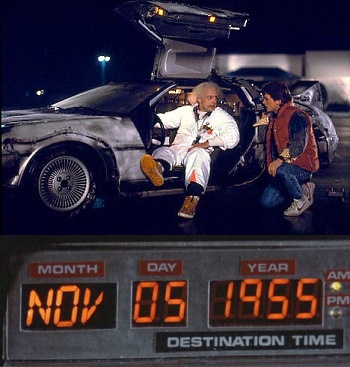
A way to grasp the conceptual difficulties of measuring changes in living standards and life expectancies across the decades is to step into Brad De Long’s time machine.
In this thought experiment, De Long asks how much you would want in additional income to agree to go back in time to a specific year. De Long was an economic historian examining the differences in American living standards since 1900.
Of course, to work how much you would want be paid (or were willing to pay to go back to the Senator Warren’s better times in the 1970), if you used a less biased estimate of price inflation, the answer is steady increases in incomes for the last 25 years so you would want to be paid.

Senator Warren’s linked article actually confirms the same results. For after-tax incomes, everybody is noticeably richer than 30 years ago, especially if you’re a woman.
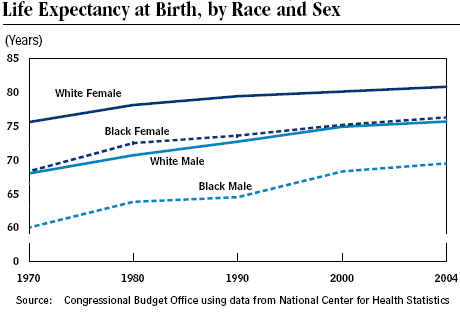
Senior citizen socialists should take care and think deeply about entering that time machine. It might mean instant death for them because of higher life expectancy is now as compared to the 1970s.
When you do step into that time machine be very picky about what part of the USA you go to if you like air conditioning. There wasn’t as much air conditioning in homes in the 1970s as compared to day, especially if you were poor.

Another thing is, don’t expect to take that many trips. Air travel was not as common in the 70s. Airline deregulation was at the very end of the 1970s.

To add to your boredom in your spare time, your chances of owning a car was a lot less back then than now despite Senator Warren’s assurance that there has been no income growth for the bottom 90% in the last 30 to 40 years. She said that, not me.

As for lifting yourself up in life, and living the American dream, which was the title of Senator Warren’s op-ed? You were much more likely to not go to college back in the glory days of the 70s than now, especially if you were poor.

The most curious anomaly in Senator Warren’s arguments is that many consumer goods are fallen rapidly in price over the last 40 years, but people are somehow unable to buy them from the same fixed income.
via America’s Growing Income Gap, by the Numbers – ProPublica and U.S. Wages Are Historically Great, Or They’re Awful. It Depends on Your Preferred Inflation Measure – Real Time Economics – WSJ.
Organic farming is a rebranding of pre-industrial revolution agriculture
09 May 2015 Leave a comment
in economics of information, economics of media and culture, economics of regulation, health economics, technological progress Tags: agricultural economics, consumer fraud, industrial revolution, organic farming, quackery, The Great Enrichment, The Great Escape
Delivering a computer – 1957 and now
09 May 2015 Leave a comment
1957: 13 men delivering a computer.
2017: a person may wear 13 computing devices http://t.co/ORE45mw5x0—
Vala Afshar (@ValaAfshar) January 11, 2015
How does the consumer price index cope with the Great Enrichment?
08 May 2015 1 Comment
in entrepreneurship, technological progress Tags: creative destruction, entrepreneurial alertness, living standards, mismeasurement of prosperity, Moore's law, The Great Enrichment, The Great Fact


The essence of the Twitter Left
08 May 2015 Leave a comment
in economics of media and culture, technological progress Tags: Anti-Science left, Greens, Leftover Left, organic farming, sustainability, Twitter left
The price of air conditioning in the good old days
08 May 2015 Leave a comment
in economic history, technological progress Tags: good old days, living standards, The Great Enrichment
A great selfie in space
07 May 2015 Leave a comment
in technological progress Tags: space
Legendary Selfie, with the Earth as the background. http://t.co/1bcb612zOt—
Classic Pics (@classicepics) May 07, 2015
Creative destruction in microchips
06 May 2015 Leave a comment
in technological progress Tags: creative destruction in, Moore's law
Creative destruction in PCs – how powerful was the first PC in 1980?
06 May 2015 Leave a comment
in economics of media and culture, entrepreneurship, industrial organisation, survivor principle, technological progress Tags: creative destruction, entrepreneurial alertness, PCs
"The march of technology"-Abrash
1980 4MHz computer: $6000
2015 TitanX: $1000
30 years & 1,000,000,000X more powerful http://t.co/zTexe8d259—
Darshan Shankar (@DShankar) March 26, 2015
Abrash demonstrating how quickly tech has evolved over time #f8 #VR http://t.co/TymEpfyHwv—
Mashable (@mashable) March 26, 2015
 Utopia, you are standing in it!
Recent Comments