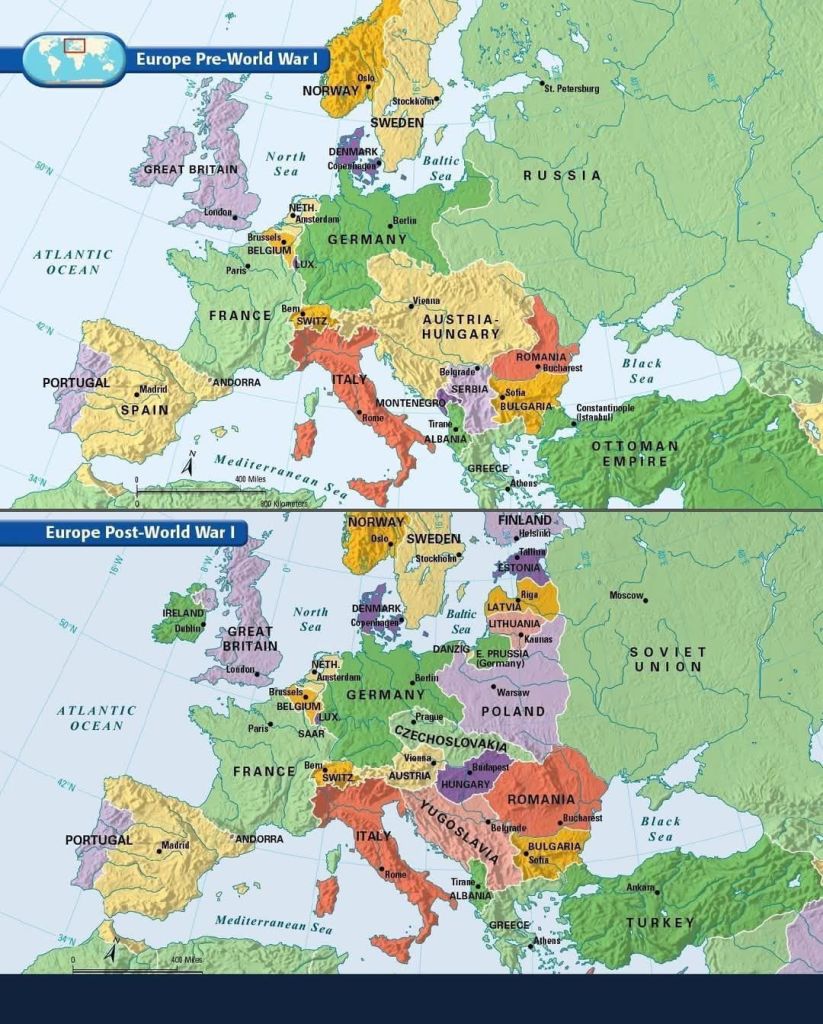
I like maps
24 Jun 2025 Leave a comment
in defence economics, economic history, war and peace Tags: economics of borders, maps, World War I
The Claude Rains School of Constitutional Law: Democrats Denounce Iranian Attack as Unconstitutional
23 Jun 2025 Leave a comment
in defence economics, politics - USA, war and peace Tags: constitutional law, Middle-East politics, regressive left, war against terror

Yesterday, I wrote a column in the Hill discussing how Trump is unlikely to go to Congress in launching an attack on Iran and how he has history on his side in acting unilaterally. The column noted that many Democratic politicians and pundits who were supportive of such unilateral actions by Democratic presidents such as […]
The Claude Rains School of Constitutional Law: Democrats Denounce Iranian Attack as Unconstitutional
Second Battle of the Piave River I THE GREAT WAR Week 204
21 Jun 2025 Leave a comment
in defence economics, war and peace Tags: World War I
Omissions in BBC report about strike on Iran state TV building
19 Jun 2025 Leave a comment
in defence economics, industrial organisation, war and peace Tags: Iran, Israel, media bias, Middle-East politics, war against terror

In the early hours of June 17th the BBC News website published a report by David Gritten headlined “Israel bombs Iran state TV during live broadcast” which opens as follows: [emphasis added] “Israeli aircraft have struck the headquarters of Iran’s state broadcaster in Tehran, after the Israeli military told residents of the area of the […]
Omissions in BBC report about strike on Iran state TV building
Markets are forward-looking
18 Jun 2025 1 Comment
in applied price theory, defence economics, econometerics, economic growth, economic history, financial economics, macroeconomics, market efficiency, politics - USA, war and peace Tags: efficient markets hypothesis, World War II
LPL Financial analyzed 25 major geopolitical episodes, dating back to Japan’s 1941 attack on Pearl Harbor. “Total drawdowns around these events have been fairly limited,” Jeff Buchbinder, LPL’s chief equity strategist, wrote in a research note on Monday. (Full recoveries often “take only a few weeks to a couple of months,” he added.) Deutsche Bank analysts […]
Markets are forward-looking
BBC can’t verify a Hamas tunnel visited by international journalists
15 Jun 2025 1 Comment
in defence economics, International law, laws of war, war and peace Tags: Gaza Strip, Israel, media bias, Middle-East politics, regressive left, war against terror

Previously we discussed BBC coverage of the May 13th strikes adjacent to – rather than ‘on’ – the EU founded and Hamas ministry of health run European Hospital in Khan Younis, including two items produced by BBC Verify: BBC NEWS WEBSITE REPORTING ON STRIKES AROUND THE EUROPEAN HOSPITAL BBC VERIFY’S AGENDA-DRIVEN RETURN TO THE EUROPEAN […]
BBC can’t verify a Hamas tunnel visited by international journalists
Initial BBC News website coverage of events in Iran and Israel
15 Jun 2025 1 Comment
in defence economics, economics of media and culture, war and peace Tags: Atomic bomb, Iran, Israel, media bias, Middle-East politics, regressive left, war against terror

On the morning of June 13th the BBC News website’s ‘Middle East’ page had little to offer its visitors in the way of reporting on the strikes that Israel had carried out in Iran in the early hours of that day. Coverage on that page itself was limited to a live page: In the ‘updates’ […]
Initial BBC News website coverage of events in Iran and Israel
The French Counter Attack At Matz I THE GREAT WAR Week 203
15 Jun 2025 Leave a comment
in defence economics, war and peace Tags: World War I
The Unprecedented Nature of Israel’s Strikes on Iran
13 Jun 2025 Leave a comment
in defence economics, International law, laws of war, war and peace Tags: Atomic bomb, Iran, Israel, Middle-East politics, regressive left, war against terror
War vs Genocide
13 Jun 2025 1 Comment
in defence economics, International law, laws of war, war and peace
War and genocide differ fundamentally in intent, target, and the methods used. Here are the main distinctions: 1. Definition and Intent 2. Targets 3. Scale and Methods 4. Legal Classification 5. International Response 6. Historical Examples Thus, while wars can be tragic and devastating, genocide specifically targets a group’s existence and identity, constituting one of the gravest crimes in international law. […]
War vs Genocide
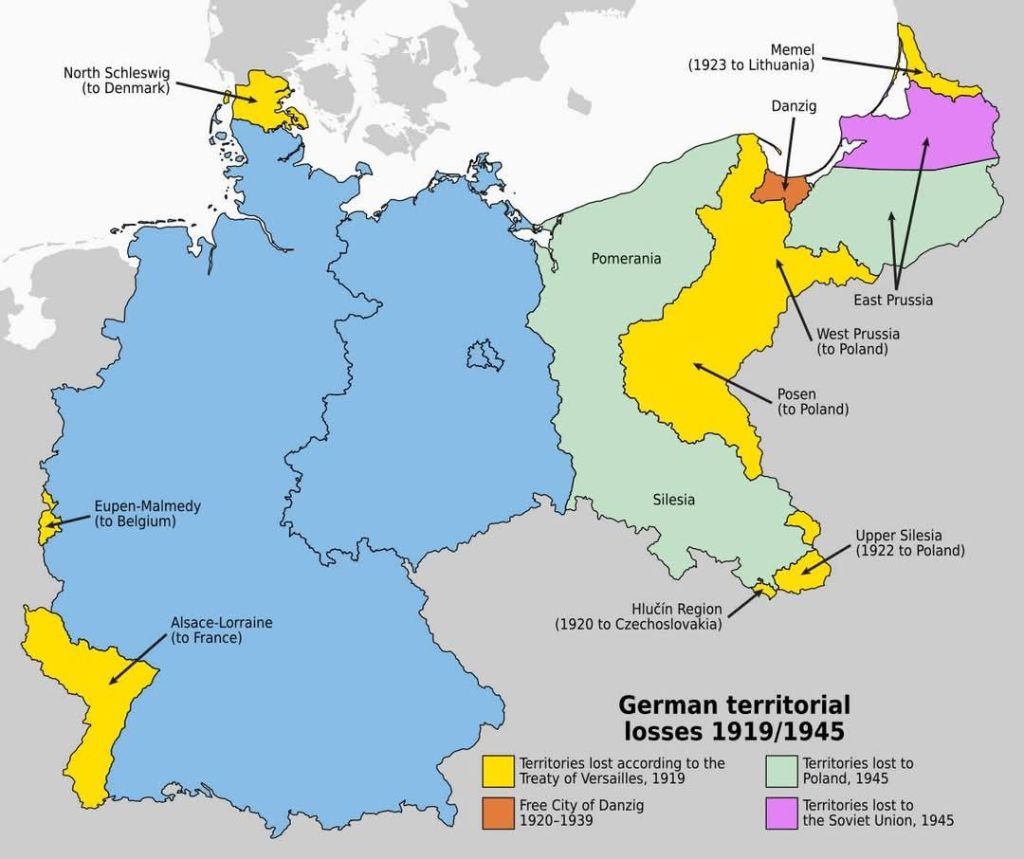
Map of German Territorial Losses 1919-1945
12 Jun 2025 Leave a comment
in defence economics, International law, war and peace Tags: Nazi Germany, World War I, World War II
BBC News prioritises ‘aid yacht’ propaganda over factual information
11 Jun 2025 1 Comment
in defence economics, International law, laws of war, war and peace Tags: Gaza Strip, Israel, Middle-East politics, regressive left, useful idiots, war against terror

Visitors to the BBC News website on the morning of June 9th found no fewer than three items relating to the topic of the UK flagged one-boat agitprop which had set off from Italy nine days earlier. Two reports appeared in the ‘updates’ section, both of which originally described the vessel using the word “aid”. […]
BBC News prioritises ‘aid yacht’ propaganda over factual information
BBC News framing of Israeli strikes on Hizballah assets in Beirut
11 Jun 2025 1 Comment
in defence economics, International law, laws of war, war and peace Tags: Israel, Lebanon, Middle-East politics, regressive left, useful idiots, war against terror

On the eve of the 2025 Pessach holiday a rocket was fired from the Gaza Strip, triggering alarms in towns in southern Israel. The following afternoon – the first day of that holiday – a missile was launched from Yemen, triggering sirens in central Israel and that was followed by another rocket attack from the […]
BBC News framing of Israeli strikes on Hizballah assets in Beirut
Should Israel let Greta get to Gaza?
09 Jun 2025 1 Comment
in defence economics, International law, laws of war, war and peace Tags: Gaza Strip, Israel, Middle-East politics, useful idiots, war against terror
As you surely know, the “Freedom Flotilla,” which is a boat called the Madleen carrying a bunch of activists (most notably Greta Thunberg), is heading to Gaza with a bit of aid for civilians. (I heard it was enough aid for about a dozen Gazans, but I don’t know for sure.). Israel has vowed to […]
Should Israel let Greta get to Gaza?


Recent Comments