
The opening lines of “English History 1914-1945″ by A. J. P. Taylor
Celebrating humanity's flourishing through the spread of capitalism and the rule of law
25 Apr 2015 Leave a comment
in economic history, war and peace Tags: AJ P Taylor, Anzac Day, World War I
The opening lines of “English History 1914-1945″ by A. J. P. Taylor
25 Apr 2015 Leave a comment
in economics of natural disasters, movies, war and peace Tags: Anzac Day, Armistice Day, World War I, World War II
A Century of Movies About World War: reddit.com/r/dataisbeauti… #dataviz http://t.co/sGsb0d0s3J—
Randy Olson (@randal_olson) February 24, 2015
25 Apr 2015 Leave a comment
in war and peace Tags: Anzac Day, World War I
25 Apr 2015 Leave a comment
in politics - USA, war and peace Tags: Atomic bomb, Truman, World War II
Secy. of War Henry Stimson 70 years ago today asks Pres. Truman to brief him on “highly secret matter”—atomic bomb: http://t.co/xCvYCB4DvI—
Michael Beschloss (@BeschlossDC) April 24, 2015
25 Apr 2015 Leave a comment
in war and peace Tags: Anzac Day
In addition to its normal garrison use to signal the end of day when the duty officer returns from the tour of the camp and quarters, the Last Post call had another function at the close of a day of battle.
It signalled to those who were still out and wounded or separated that the fighting was done, and to follow the sound of the call to find safety and rest.
Its use in Remembrance Day and Anzac Day ceremonies in Commonwealth nations as an implied summoning of the spirits of the Fallen to the cenotaph. The UU military uses Taps the similar purposes.
25 Apr 2015 Leave a comment
in laws of war, politics - Australia, politics - New Zealand, war and peace Tags: Anzac Day, Armenian genocide, Gallipoli campaign, Ottoman Empire, war crimes, World War I
On May 24, 1915, the Allied Powers jointly issued a statement explicitly charging for the first time ever another government of committing `a crime against humanity’.
Today is marked by Armenians worldwide as the 100th anniversary of the Armenian genocide. vox.com/2015/4/22/8465… http://t.co/7pqqSowW3O—
Vox Maps (@VoxMaps) April 24, 2015
The Allied Governments announce publicly that they will hold personally responsible all members of the Ottoman Government, as well as those of their agents who are implicated in the Armenian massacres.

Article 230 of the 1920 Treaty of Sèvres required the defeated Ottoman Empire to
…hand over to the Allied Powers the persons whose surrender may be required by the latter as being responsible for the massacres committed during the continuance of the state of war on territory which formed part of the Ottoman Empire on August 1, 1914.
Ottoman military and high-ranking politicians were transferred to the Crown Colony of Malta on board of the SS Princess Ena and the SS HMS Benbow by the British forces, starting in 1919. These war criminals were eventually returned to Constantinople in 1921 in exchange for 22 British hostages held by the government in Ankara.
But for victory at Gallipoli, the Anzacs would have been the first Sergeant at Arms of a war crimes trial. By marching into Constantinople, the Anzacs may have been able to prevent the purging of the Ottoman archives of evidence of complicity of specific individuals.
#GallipoliFlashback: Real time sequence of events during the first day of the Anzac landing nzh.nu/M2jbf http://t.co/8Em54XZxtH—
(@nzherald) April 24, 2015
via 40 maps that explain World War I | vox.com and 1915 – Allies Condemn Turkish Genocide of Armenians – Joint declaration Condemning Turkish Genocide of Armenians as Crimes Against Humanity.
25 Apr 2015 Leave a comment
in Public Choice, war and peace Tags: Anzac Day, Civil War, Vietnam war
There have been studies of both elections affecting the fighting wars, and how troop deployments and furloughs are manipulated to affect elections. Regular Army and reservists from states and electorates that are hotly contested at the next election are kept away from the firing line.
Goff and Tollison (1987) studied how assignments to combat or non-combat positions wan influenced by political considerations during the Vietnam war. Casualties across U.S. states were a function of the political influence, especially in military affairs, of a state’s House and Senate delegations to Congress and the Senate.
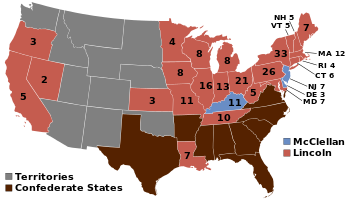
Political influence on which troops were put into combat positions was not new as shown by Anderson and Tollison’s 1991 study of the electoral college is a battlefield during the American civil war. Their primary empirical finding was that electoral votes per capita are a strong explainer of casualties across Union states, all else equal. Lincoln would dispatch and withdraw troops from the frontline on the basis of electoral considerations, including who was needed back home to vote in the 1864 presidential election:
Northern causalities [during the Civil War] were partly determined by electoral votes in 1864… Given that the Northern troops were organized by states and that President Lincoln sought to be re-elected, . . . [t]roops from close states were much less likely to suffer causalities . . . [based on the logic that] . . . dead men cannot vote
25 Apr 2015 Leave a comment
in war and peace Tags: Anzac Day, World War I
Shocking! –> The fraction of various country’s population that died in #WWII. #dataviz http://t.co/SlNtvEj8BT—
Randy Olson (@randal_olson) March 28, 2015
25 Apr 2015 Leave a comment
25 Apr 2015 Leave a comment
in economic history, politics - New Zealand, war and peace Tags: World War I
25 Apr 2015 Leave a comment
in politics - Australia, politics - New Zealand, war and peace Tags: Anzac Day, Gallipoli campaign, World War I
24 Apr 2015 Leave a comment
in transport economics, war and peace Tags: maps
Map showing the British Government's travel advice http://t.co/MRJX6oLv7b—
Amazing Maps (@Amazing_Maps) April 23, 2015
Celebrating humanity's flourishing through the spread of capitalism and the rule of law
Celebrating humanity's flourishing through the spread of capitalism and the rule of law
Celebrating humanity's flourishing through the spread of capitalism and the rule of law
Celebrating humanity's flourishing through the spread of capitalism and the rule of law
Celebrating humanity's flourishing through the spread of capitalism and the rule of law
Celebrating humanity's flourishing through the spread of capitalism and the rule of law
Celebrating humanity's flourishing through the spread of capitalism and the rule of law
Celebrating humanity's flourishing through the spread of capitalism and the rule of law
Celebrating humanity's flourishing through the spread of capitalism and the rule of law
A History of the Alt-Right
Econ Prof at George Mason University, Economic Historian, Québécois
Celebrating humanity's flourishing through the spread of capitalism and the rule of law
Scholarly commentary on law, economics, and more
Beatrice Cherrier's blog
Celebrating humanity's flourishing through the spread of capitalism and the rule of law
Celebrating humanity's flourishing through the spread of capitalism and the rule of law
Celebrating humanity's flourishing through the spread of capitalism and the rule of law
Why Evolution is True is a blog written by Jerry Coyne, centered on evolution and biology but also dealing with diverse topics like politics, culture, and cats.
Celebrating humanity's flourishing through the spread of capitalism and the rule of law
A rural perspective with a blue tint by Ele Ludemann
DPF's Kiwiblog - Fomenting Happy Mischief since 2003
Celebrating humanity's flourishing through the spread of capitalism and the rule of law
The world's most viewed site on global warming and climate change
Tim Harding's writings on rationality, informal logic and skepticism
A window into Doc Freiberger's library
Let's examine hard decisions!
Commentary on monetary policy in the spirit of R. G. Hawtrey
Thoughts on public policy and the media
Celebrating humanity's flourishing through the spread of capitalism and the rule of law
Politics and the economy
A blog (primarily) on Canadian and Commonwealth political history and institutions
Reading between the lines, and underneath the hype.
Economics, and such stuff as dreams are made on
"The British constitution has always been puzzling, and always will be." --Queen Elizabeth II
Celebrating humanity's flourishing through the spread of capitalism and the rule of law
Celebrating humanity's flourishing through the spread of capitalism and the rule of law
WORLD WAR II, MUSIC, HISTORY, HOLOCAUST
Undisciplined scholar, recovering academic
Celebrating humanity's flourishing through the spread of capitalism and the rule of law
Res ipsa loquitur - The thing itself speaks
In Hume’s spirit, I will attempt to serve as an ambassador from my world of economics, and help in “finding topics of conversation fit for the entertainment of rational creatures.”
Researching the House of Commons, 1832-1868
Reflections on books and art
Posts on the History of Law, Crime, and Justice
Celebrating humanity's flourishing through the spread of capitalism and the rule of law
Exploring the Monarchs of Europe
![The people of the two nations [French and English] must be brought into mutual dependence by the supply of each other's wants. There is no other way of counteracting the antagonism of language and race. It is God's own method of producing an entente cordiale, and no other plan is worth a farthing. - Richard Cobden](https://i0.wp.com/izquotes.com/quotes-pictures/quote-the-people-of-the-two-nations-french-and-english-must-be-brought-into-mutual-dependence-by-the-richard-cobden-370001.jpg)


Recent Comments