And now Andrew Sullivan goes. . .
15 Jul 2020 Leave a comment

This series of tweets was just emitted by Andrew Sullivan. Since his venue, New York Magazine, didn’t (“wouldn’t” is probably a better word) publish one of his columns a few weeks ago—probably because they didn’t like the subject, which was presumably the demonstrations following the death of George Floyd—I am guessing he’s been at odds with them, and has been looking for a new home. According to the stuff below, he’s found one.
He implies the reasons is not “his editors,” but what else could it be?
All the unwoke are being purged, or resigning. What will journalism be like without contrarian voices?

THE CU CHI TUNNELS
15 Jul 2020 Leave a comment


VIET CONG’S SECRET SUBTERRANEAN BASE VIETNAM, 1 NOVEMBER 1955 – 30 APRIL 1975
During the Vietnam War, the USA had the most advanced military in the world. Boasting technology and resources other nations could only dream of, their entrance to the conflict on the side of South Vietnam against the communist North Vietnam looked certain to turn the tide of the war.
But the Viet Cong, a guerrilla force on the side of the communists who were stationed in the South, had other ideas. Beneath the Cu Chi district near Saigon (now Ho Chi Minh City), communist forces had been digging tunnels here and there since the 1940s during their war of independence with the French. By the Sixties, however, this tunnel network spanned 250 kilometres (155 miles).
The Americans had expected a war above ground, but what they found instead was a determined Viet Cong force that, despite the…
View original post 455 more words
July 14, 1789: The Storming of the Bastille
15 Jul 2020 Leave a comment

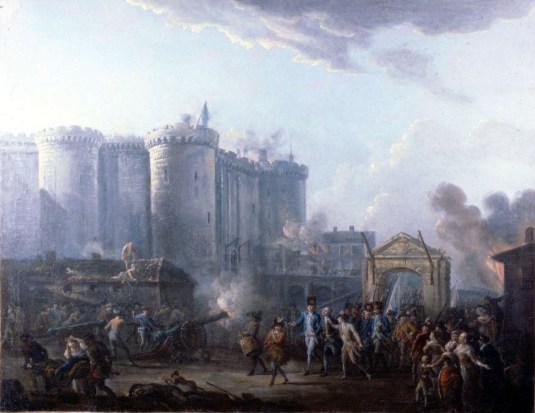
The Storming of the Bastille occurred in Paris, France, on the afternoon of July 14, 1789.
The medieval armory, fortress, and political prison known as the Bastille represented royal authority in the centre of Paris. The prison contained only seven inmates at the time of its storming but was seen by the revolutionaries as a symbol of the monarchy’s abuse of power; its fall was the flashpoint of the French Revolution.
Background
During the reign of Louis XVI of France and Navarre, France faced a major economic crisis. This crisis was caused in part by the cost of intervening in the American Revolution and exacerbated by a regressive system of taxation. On May 5, 1789, the Estates General of 1789 convened to deal with this issue, but were held back by archaic protocols and the conservatism of the second estate: representing the nobility who made up less than 2% of…
View original post 1,453 more words
WWII PHOTOGRAPHIC INTERPRETATION UNIT FILM “PHOTOGRAPHY FIGHTS”
15 Jul 2020 Leave a comment
in defence economics, movies, war and peace Tags: World War II
How Did Ancient Philosophers Make Money?
15 Jul 2020 Leave a comment
in economic history, economics of education, human capital, labour economics, labour supply, occupational choice, poverty and inequality
mormons, the kibbutz, and egalitarianism in a voluntary society
15 Jul 2020 Leave a comment

When I debated Amy Wax a few years back, I noted that one issue with conservative demands to return to a different family regime is that most people don’t want to do it. I noted that in American society, you can definitely join a group with strong norms against pre-marital sex and strong against divorce. It’s called the Church of Later Day Saints – the Mormons. Even though people are free to join this religion, it remains small. According to this Pew report, it’s only 1.7% of the population. And it’s no mystery – the LDS requires a lot of investment in terms of time and money.
I was reminded of the left wing version of this point: socialists will often argue that kibbutz, or communally organized farms and residences in Israel, show that an egalitarian society is possible and it works. My response is similar: there is…
View original post 336 more words
the sociology of austrian economics
15 Jul 2020 Leave a comment
I recently had the pleasure of attending a workshop on Austrian economics at Texas Tech University. The conveners have asked people to reflect on Austrianism and how that tradition addresses sociality. Some of us offered criticisms while others explored and expanded Austrian ideas. In addition to writing my own piece, which uses spontaneous order theory to think about autonomy, I spent a lot of time thinking about the social position of Austrianism within the economics profession.
Classic Austrianism (1800s-1940s): There was a time when Austrianism was a Big Deal in economics. The early figures were extremely influential and their ideas were assimilated into the mainstream. For example, Carl Menger was a big proponent of marginal utility theory, which is now econ 101. Another example is FA Hayek. In polls of economists, his article, The Use of Information in Society,remains one of the most mentioned and it provides the standard…
View original post 606 more words
will the real intersectionality theory please stand up?
15 Jul 2020 Leave a comment
I thought that I was done discussing the debate on intersectionality theory between Jacob Levy, Phil Magness and myself. Well, 200 Proof Liberals (a new successor blog to Bleeding Heart Libertarians) has a post by Jess Flanigan. She argues that there are multiple version of intersectionality theory and that it’s easy for libertarians to accept the mellow version, which they never opposed anyway, but there’s a serious issue with the more hard core version:
Rojas’s point is that it’s a mistake to equivocate between these two conceptions of intersectionality. If the theory (T) refers to the first definition (T1), then it doesn’t seem like classical liberals should oppose it, but it’s also not clear how many classical liberals do oppose it. If it’s the second definition (T2), then they should clearly oppose it because T2 is directly opposed to classical liberalism. Levy doesn’t make the case that T2 is…
View original post 348 more words
Boston Review: We Don’t Need No Education
15 Jul 2020 Leave a comment

Unless you have some sort of rabid anti-cfl bias like Clark you may still be debating the education topic. The Boston Review had a special group of education articles that you may find helpful from topic notables like Giroux.
I copy/pasted this from the email so it looks a tad ugly but it kept the pics/summaries/links working (at least for me in preview mode)
| ||||||||||||||||||||
|




View original post 231 more words
Legal Systems Very Different From Ours with David Friedman 2020
14 Jul 2020 Leave a comment
in comparative institutional analysis, constitutional political economy, David Friedman, economic history, economics of crime, law and economics, property rights Tags: rule of law
Where Did All the Toilet Paper Go? A Game Theory 101 Investigation
14 Jul 2020 Leave a comment
in health economics Tags: economics of pandemics, game theory


Recent Comments