What Pre-American Alaska Was Really Like
30 Jun 2020 Leave a comment
in economics of media and culture
How to Get Angrier at People You Disagree With
29 Jun 2020 Leave a comment
in economics of media and culture, politics - Australia, politics - New Zealand, politics - USA Tags: free speech, political correctness, political psychology, regressive left, virtue signaling
#COVID19 Is A Reallocation Shock: Barrero, Bloom and Davis 25 June
29 Jun 2020 Leave a comment
in health economics, industrial organisation, macroeconomics

From “COVID-19 Is Also A Reallocation Shock” with Jose Maria Barrero and Nick Bloom, 5 May 2020. Updated and expanded on 25 June 2020. Prepared for the Brookings Papers on Economic Activity. Slides | CNBC Interview | Chicago Booth Review | Free Exchange (The Economist) | Brookings | Webinar
Electromagnetic Weapons, Biochemical Effects
29 Jun 2020 Leave a comment


Electromagnetic weapons-also known as E-bombs-are designed to release a high-power flash of radio waves or microwaves. Depending on the energy of the electromagnetic pulse, effects can range from the disabling of electronic circuitry to physiological effects in those exposed to the electromagnetic pulse.
The pulse released by an electromagnetic weapon lasts for an extremely short time, around 100 picoseconds (one ten-billionth of a second). The absorption of this blast of high energy by anything capable of conducting electricity, including nerves and neurons, overwhelms the recipient.
Research and development into the effects of electromagnetic weapons on human beings and animals was underway in the 1940s. The Japanese spent considerable sums of money on the development of a “Death Ray” between 1940 and 1945. A review of these studies by the United States military concluded that it was possible to develop a weapon that would produce an electromagnetic ray capable of killing…
View original post 619 more words
$8b hole in @NZGreens 21/22 wealth tax! No tax returns before 7/7/22; no revenue banked before 7/2/23 @TaxpayersUnion
29 Jun 2020 1 Comment
in politics - New Zealand, public economics


The progress of the COVID-19 epidemic in Sweden: an analysis
29 Jun 2020 Leave a comment

By Nic Lewis
The course of the COVID-19 pandemic in Sweden is of great interest, as it is one of very few advanced nations where no lockdown order that heavily restricted people’s movements and other basic freedoms was imposed. As there has been much comment, some of it ill-informed, on how the COVID-19 epidemic has developed in Sweden, but relatively little detailed analysis published in English, it is worth exploring what their excellent publicly-available data reveal.
View original post 3,140 more words
Wokeness escalates at the University of Chicago: the school ignores its own “foundational principle” of not publicly espousing political or ideological views, and student activists occupy campus police headquarters
29 Jun 2020 Leave a comment

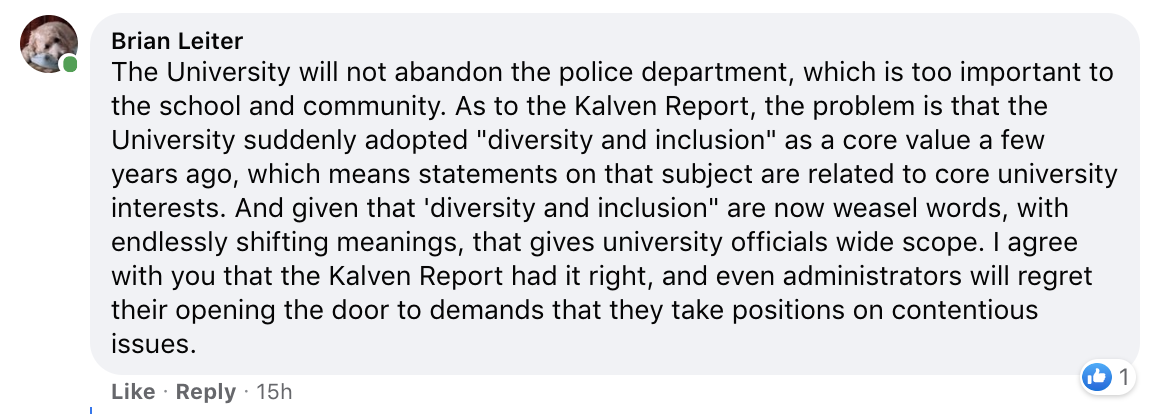
UPDATE: Professor Brian Leiter of the Law School (he’s the director of the Center for Law, Philosophy, and Human Values) added this comment to my public Facebook notice about this whole post:
_________________________
I’m deeply saddened at how woke The University of Chicago is becoming. The students, of course, are far woker than the faculty, but I always expected the faculty and administration would hold the line by adhering to two of the great “foundational principles” of our University: the Report on the Committee on Freedom of Expression (the famous “Chicago Principles” mandating pretty unrestricted free speech), and the Kalven Report on the University’s Role in Political and Social Action. These principles are among several that make The University of Chicago unique among other schools. The free-speech principles have been adopted by 55 universities, and I wrote about the Kalven Report here, explaining how…
View original post 1,461 more words
Ireland’s Most Expensive Suicide Letter
29 Jun 2020 Leave a comment
would see Ireland’s emissions cut by 51% by 2030
New Soviet Era: Australian Businesses Paid to Shut Down When Wind & Solar Output Drops
29 Jun 2020 Leave a comment

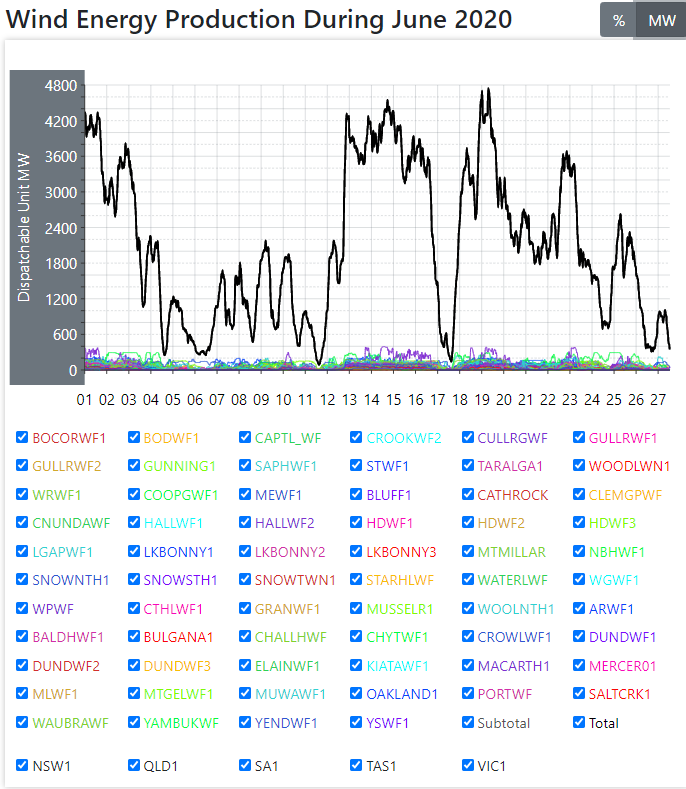
To call Australia’s energy debacle a ‘crisis’ is mastery in understatement: its obsession with wind and solar means its economy now operates around the vagaries of mother nature. The availability of sunshine and suitably beneficial breezes dictates when and where electricity gets delivered to power consumers.
The cause of Australia’s power pricing and supply calamity is so simple and obvious it can be laid out in a handful of pictures.
Depicted above – courtesy of Aneroid Energy – is the output delivered by Australian wind power outfits to the Eastern Grid so far this month.
Spread from Far North Queensland, across the ranges of NSW, all over Victoria, Northern Tasmania and across South Australia its entire capacity routinely delivers just a trickle of its combined notional capacity of 7,728MW.
Collapses of over 3,000 MW or more that occur over the space of a couple of hours are routine, as are…
View original post 1,171 more words
June 28, 1491: Birth of Henry VIII, King of England and Ireland.
29 Jun 2020 Leave a comment

Henry VIII (June 28, 1491 – January 28, 1547) was King of England from 1509 until his death in 1547. Henry was the third child and second son of Henry VII and Elizabeth of York, the eldest child of King Edward IV and his wife, Elizabeth Woodville.
Henry is best known for his six marriages, and, in particular, his efforts to have his first marriage (to Catherine of Aragon) annulled. His disagreement with Pope Clement VII on the question of such an annulment led Henry to initiate the English Reformation, separating the Church of England from papal authority. He appointed himself the Supreme Head of the Church of England and dissolved convents and monasteries, for which he was excommunicated. Henry is also known as “the father of the Royal Navy,” as he invested heavily in the navy, increasing its size from a few to more than 50 ships, and established…
View original post 346 more words
academic free speech: blm dissent edition
29 Jun 2020 Leave a comment

At Inside Higher Education, Jonathan Zimmerman has a great essay on why professors should support other professors who voice unpopular views. He focuses on the case of Harald Uhlig, the Chicago economics professor who, quite simply, thinks Black Lives Matter is lame. In summary, Uhlig thinks BLM has completely unrealistic goals, he implies that BLM protesters are childish, and he compared them to flat earthers. Soon thereafter, there were calls by many prominent economists to have him removed from his position as the editor of the Journal of Political Economy and some alumni accused him of racist actions in the class room.
Zimmerman thinks people should lay off:
What I cannot accept is the way they called for his head, which is different from criticizing his comments. The Federal Reserve Bank of Chicago cut ties with Uhlig, who had been a consultant in its research department. And economists…
View original post 241 more words


Recent Comments