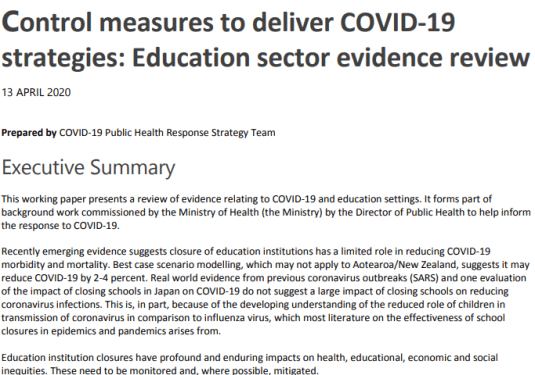
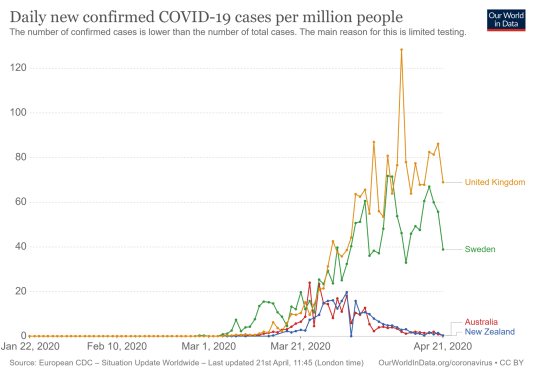
From https://www.health.govt.nz/system/files/documents/publications/covid-19_control_measures_to_deliver_covid-19_strategies_education_sector_evidence_review-21apr20.pdf and https://www.nzherald.co.nz/nz/news/article.cfm?c_id=1&objectid=12326496
Celebrating humanity's flourishing through the spread of capitalism and the rule of law
22 Apr 2020 Leave a comment
in economics of bureaucracy, economics of education, health economics
From https://www.health.govt.nz/system/files/documents/publications/covid-19_control_measures_to_deliver_covid-19_strategies_education_sector_evidence_review-21apr20.pdf and https://www.nzherald.co.nz/nz/news/article.cfm?c_id=1&objectid=12326496
22 Apr 2020 Leave a comment
Edward Prescott is sceptical about the cost of financial crises. He points out that although there were plenty of them over the course of the 19th century, America seem to still become the industrial leader.
A couple of days ago I looked at how one might best classify countries, as to whether or not they had experienced a “financial crisis” since 2007. But this chart is one reason why I’ve become increasingly sceptical that “financial crises”, however one defines them, have large or enduring adverse real economic effects. I think I first saw it in a sets of slides by Nobel laureate Robert Lucas, and every so often I would use it to try to stir up a bit of debate at the Reserve Bank.
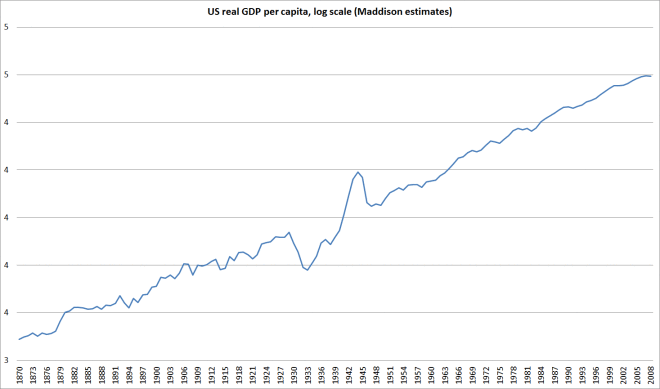
It is a quite simple chart of real per capita GDP for the United States, back as far as 1870. These are Angus Maddison’s estimates, the most widely used set of (estimated) historical data, and as Maddison died a few years ago they only come as far forward as 2008. The simple observation is that a linear trend drawn through this…
View original post 775 more words
22 Apr 2020 Leave a comment
in applied price theory, Armen Alchian, comparative institutional analysis, economic history, economics of bureaucracy, economics of information, economics of regulation, entrepreneurship, environmental economics, financial economics, George Stigler, health economics, history of economic thought, industrial organisation, law and economics, property rights, Public Choice, resource economics, Richard Posner, Ronald Coase, Ronald Coase, Ronald Coase, survivor principle, theory of the firm, transport economics, urban economics
22 Apr 2020 Leave a comment
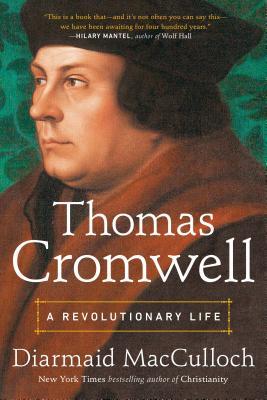 The stories of King Henry VIII and the men around him have fascinated generations of historians, but there was one man who has received a negative reputation for his actions. He was the supposed son of a butcher who rose to be Henry VIII’s right-hand man, until his dramatic fall in July 1540. Thomas Cromwell was credited for helping Henry with his Great Matter, the fall of Anne Boleyn, the establishment of the Church of England, and the disastrous marriage between Henry and Anna of Cleves. Diarmaid MacCulloch has taken on the challenge to figure out who Thomas Cromwell really was by sifting through all remaining archival records that we have from this extraordinary man. It is in this book, “Thomas Cromwell: A Revolutionary Life” that MacCulloch masterfully explores the story of this man who changed English and European history forever.
Personally, I have never read a book about Thomas…
View original post 495 more words
22 Apr 2020 Leave a comment
 Brentan Alexander writes at Forbes $40 Oil Will Return: This Isn’t The End Of Fossil Fuels. Excerpts in italics with my bolds and images.
Yesterday, May futures for WTI crude, a benchmark often used for U.S.-sourced oil, crashed into negative territory for the first time ever. It was the last day to trade a May contract, and with storage space filling up as oil demand craters, contract holders with nowhere to put the oil they were obligated to physically accept were forced to pay to have somebody take contracts off their hands. This moment represents a stunning new chapter in the ongoing oil crisis that has seen record drops for oil consumption and prices globally. Spot prices in May will remain depressed, and the June market is likely to be painful as well. It may seem like the days of $40 oil are behind us, and that we’re…
View original post 643 more words
22 Apr 2020 Leave a comment
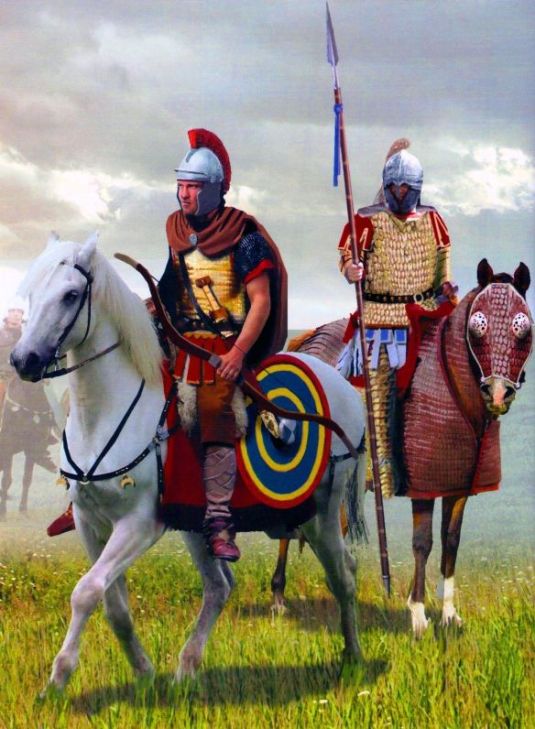
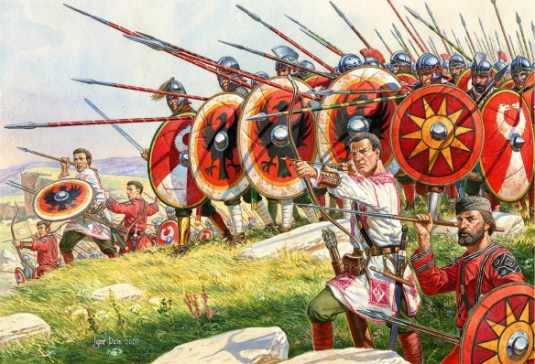
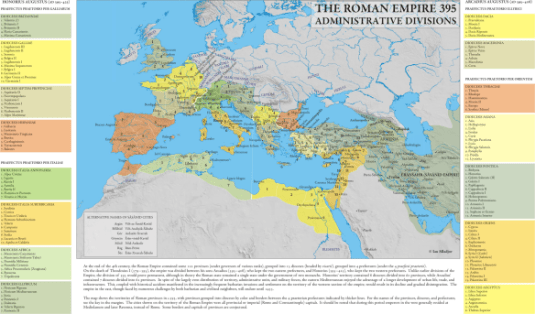
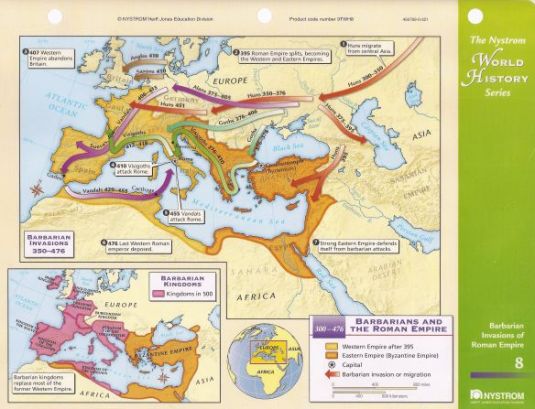
The Roman Empire did not end overnight, in fact its decline, like its rise, was a very prolonged affair. One can understand Gibbon’s decision to continue the story all the way down to the Turkish occupation of Constantinople in 1453, though it also seems a great mistake, since the Roman-Byzantine state can scarcely be called an empire at any time between the late seventh and the early eleventh century. What is not rational is the decision to write as if the Roman Empire ended as early as the sixth or even the fourth century ad.
There are also those who think that the word `decline’ should be considered taboo in this context, but no thinking historian of political power will hesitate over that issue. The power of the Roman state contracted dramatically, and, though it is a commonplace that all empires end, this particular contraction merits an explanation – or…
View original post 1,940 more words
22 Apr 2020 Leave a comment
in financial economics, health economics Tags: economics of pandemics
22 Apr 2020 Leave a comment
in health economics, politics - Australia, politics - New Zealand, politics - USA Tags: economics of pandemics

22 Apr 2020 Leave a comment
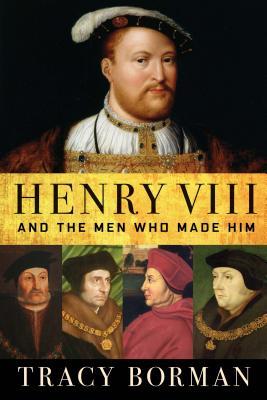 The story of the reign of King Henry VIII has been told mainly through his numerous marriages and through the lives of his children. Although his immediate family was a big part of his legacy, there is much more to his story than his tempestuous relationships. There were also his legal, religious, and military exploits. The ones who were with Henry when he made these decisions were the men who were loyal to him, his counselors and companions. Their tales are often told separately, until now. Tracy Borman has decided to masterfully combine their tales to explore the life of their infamous king in her latest biography, “Henry VIII and the Men Who Made Him”.
I have read plenty of books about Henry VIII’s wives and his children, but I haven’t read many books about the legendary man himself. I wanted a biography that explored the decisions he made in…
View original post 390 more words
22 Apr 2020 Leave a comment
Helen Pluckrose and James Lindsay are two of the three “grievance studies” hoaxers (Peter Boghossian was the other); all have devoted considerable time and valuable effort to debunking the postmodernistic debasement of woke academia. Now Pluckrose and Lindsay have collaborated on an upcoming book, called to my attention by Paul Topping. It goes on sale June 16, and is only $20 for a 348-page hardback. The Amazon summary is below, along with a cover image (click screenshot to go to Amazon page) and three endorsements.
Have you heard that language is violence and that science is sexist? Have you read that you shouldn’t practice yoga or cook Chinese food? Are you confused by these ideas and wonder how they have managed to challenge so quickly the very logic of Western society? In this probing and intrepid volume, Helen Pluckrose and James A. Lindsay document the evolution of this…
View original post 328 more words
22 Apr 2020 Leave a comment
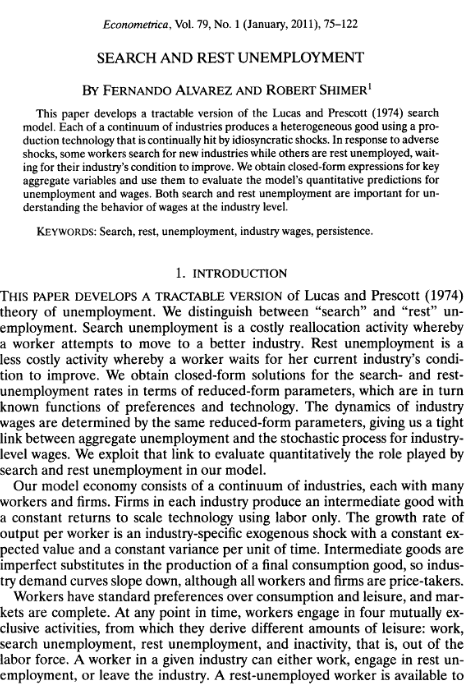
in business cycles, job search and matching, labour economics, labour supply, macroeconomics, monetary economics, unemployment
22 Apr 2020 Leave a comment
Today is the Anniversary of the death of King Henry VII of England, Lord of Ireland. Today I am examining Henry’s claims to the English throne.
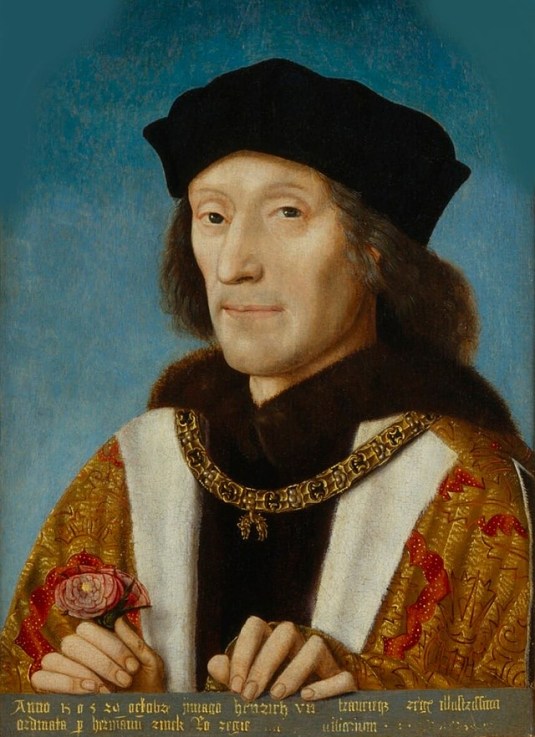
Henry VII (January 28, 1457 – April 21, 1509) was the King of England and Lord of Ireland from his seizure of the crown on August 22, 1485 to his death. He was the first monarch of the House of Tudor.
Henry attained the throne when his forces defeated King Richard III at the Battle of Bosworth Field, the culmination of the Wars of the Roses. He was the last king of England to win his throne on the field of battle. He cemented his claim by marrying Elizabeth of York, daughter of Richard’s brother Edward IV.
Henry’s main claim to the English throne derived from his mother through the House of Beaufort. Henry’s mother, Lady Margaret Beaufort, was a great-granddaughter of John of…
View original post 690 more words
Celebrating humanity's flourishing through the spread of capitalism and the rule of law
Celebrating humanity's flourishing through the spread of capitalism and the rule of law
Celebrating humanity's flourishing through the spread of capitalism and the rule of law
Celebrating humanity's flourishing through the spread of capitalism and the rule of law
Celebrating humanity's flourishing through the spread of capitalism and the rule of law
Celebrating humanity's flourishing through the spread of capitalism and the rule of law
Celebrating humanity's flourishing through the spread of capitalism and the rule of law
Celebrating humanity's flourishing through the spread of capitalism and the rule of law
A History of the Alt-Right
Econ Prof at George Mason University, Economic Historian, Québécois
Celebrating humanity's flourishing through the spread of capitalism and the rule of law
Scholarly commentary on law, economics, and more
Beatrice Cherrier's blog
Celebrating humanity's flourishing through the spread of capitalism and the rule of law
Celebrating humanity's flourishing through the spread of capitalism and the rule of law
Celebrating humanity's flourishing through the spread of capitalism and the rule of law
Why Evolution is True is a blog written by Jerry Coyne, centered on evolution and biology but also dealing with diverse topics like politics, culture, and cats.
Celebrating humanity's flourishing through the spread of capitalism and the rule of law
A rural perspective with a blue tint by Ele Ludemann
DPF's Kiwiblog - Fomenting Happy Mischief since 2003
Celebrating humanity's flourishing through the spread of capitalism and the rule of law
The world's most viewed site on global warming and climate change
Tim Harding's writings on rationality, informal logic and skepticism
A window into Doc Freiberger's library
Let's examine hard decisions!
Commentary on monetary policy in the spirit of R. G. Hawtrey
Thoughts on public policy and the media
Celebrating humanity's flourishing through the spread of capitalism and the rule of law
Politics and the economy
A blog (primarily) on Canadian and Commonwealth political history and institutions
Reading between the lines, and underneath the hype.
Economics, and such stuff as dreams are made on
"The British constitution has always been puzzling, and always will be." --Queen Elizabeth II
Celebrating humanity's flourishing through the spread of capitalism and the rule of law
Celebrating humanity's flourishing through the spread of capitalism and the rule of law
WORLD WAR II, MUSIC, HISTORY, HOLOCAUST
Undisciplined scholar, recovering academic
Celebrating humanity's flourishing through the spread of capitalism and the rule of law
Res ipsa loquitur - The thing itself speaks
In Hume’s spirit, I will attempt to serve as an ambassador from my world of economics, and help in “finding topics of conversation fit for the entertainment of rational creatures.”
Researching the House of Commons, 1832-1868
Reflections on books and art
Posts on the History of Law, Crime, and Justice
Celebrating humanity's flourishing through the spread of capitalism and the rule of law
Exploring the Monarchs of Europe
Cutting edge science you can dice with





Recent Comments