This week’s Taxpayers Union/Curia poll attracted far more attention than a single poll should. This was principally because it recorded support for Labour now being below what it was at the time of its defeat at the last election. However, at their best, polls are but a snapshot in time, with the long-term trends they […]
Hipkins’ uphill battle
Hipkins’ uphill battle
15 Sep 2026 Leave a comment
in politics - New Zealand Tags: 2026 general election
Our New Amicus Brief in the Section 301 Tariff Case
15 Sep 2026 Leave a comment
in international economics, law and economics, politics - USA, Public Choice Tags: child labour, free trade, tarrifs
The Cato Institute, Michael McConnell, and I filed an amicus brief in litigation challenging Trump’s massive Section 301 tariffs, which use “forced labor” as a pretext for sweeping protectionism.
Our New Amicus Brief in the Section 301 Tariff Case
The Abolitionist Movement: Professor Argues for “Care and Accountability Circles” as an Alternative to Prisons
15 Sep 2026 Leave a comment
in economics of crime, law and economics, politics - USA
The prison abolitionist movement has been gaining steam across the country with the rise of radical left candidates such as…
The Abolitionist Movement: Professor Argues for “Care and Accountability Circles” as an Alternative to Prisons
Richard Epstein on property rights, and anticipatory wars too
15 Sep 2026 Leave a comment
in defence economics, economic history, International law, law and economics, laws of war, Richard Epstein, war and peace Tags: Israel
Fawlty Towers
14 Sep 2026 Leave a comment
in television, TV shows
The key to good comedy is timing, someone once said. If that is the case John Cleese and Connie Booth must have the best sense of timing ever. As the title suggests I am talking about ‘Fawlty Towers’ although it may seem there were hundreds of episodes, there were in fact only 12, spread over […]
Fawlty Towers
When driving is (almost) free
14 Sep 2026 Leave a comment
in energy economics, environmental economics, environmentalism, transport economics Tags: solar power
While I am pet-sitting for my sister in California, she is letting me use her beach-community house and electric car. It has been nice driving past gas stations with prices so high. She also has residential solar panels to charge her car (and run her other devices). The panels generate enough power that she is almost…
When driving is (almost) free
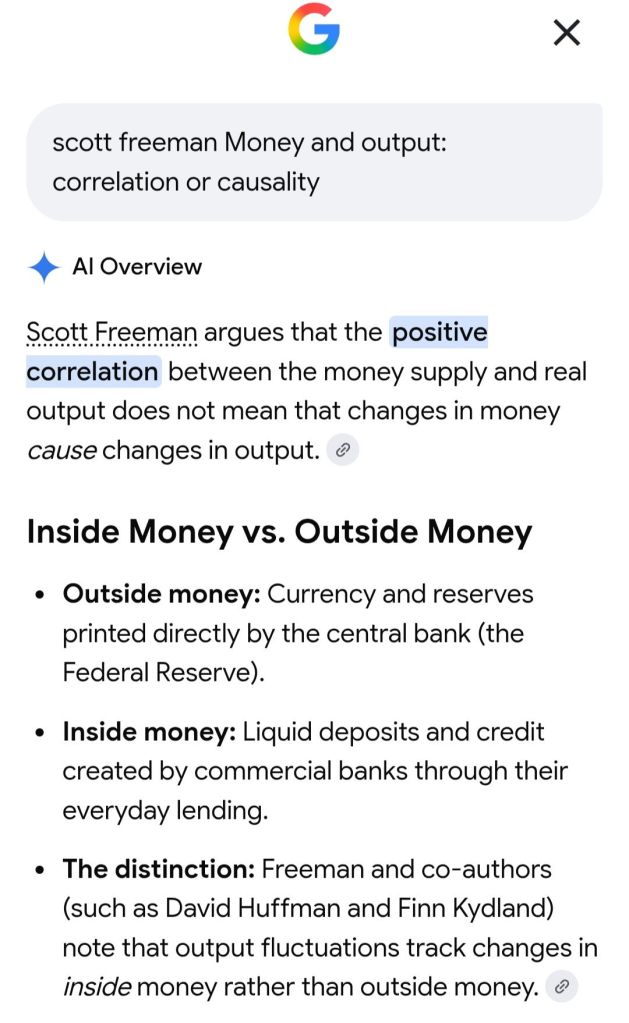
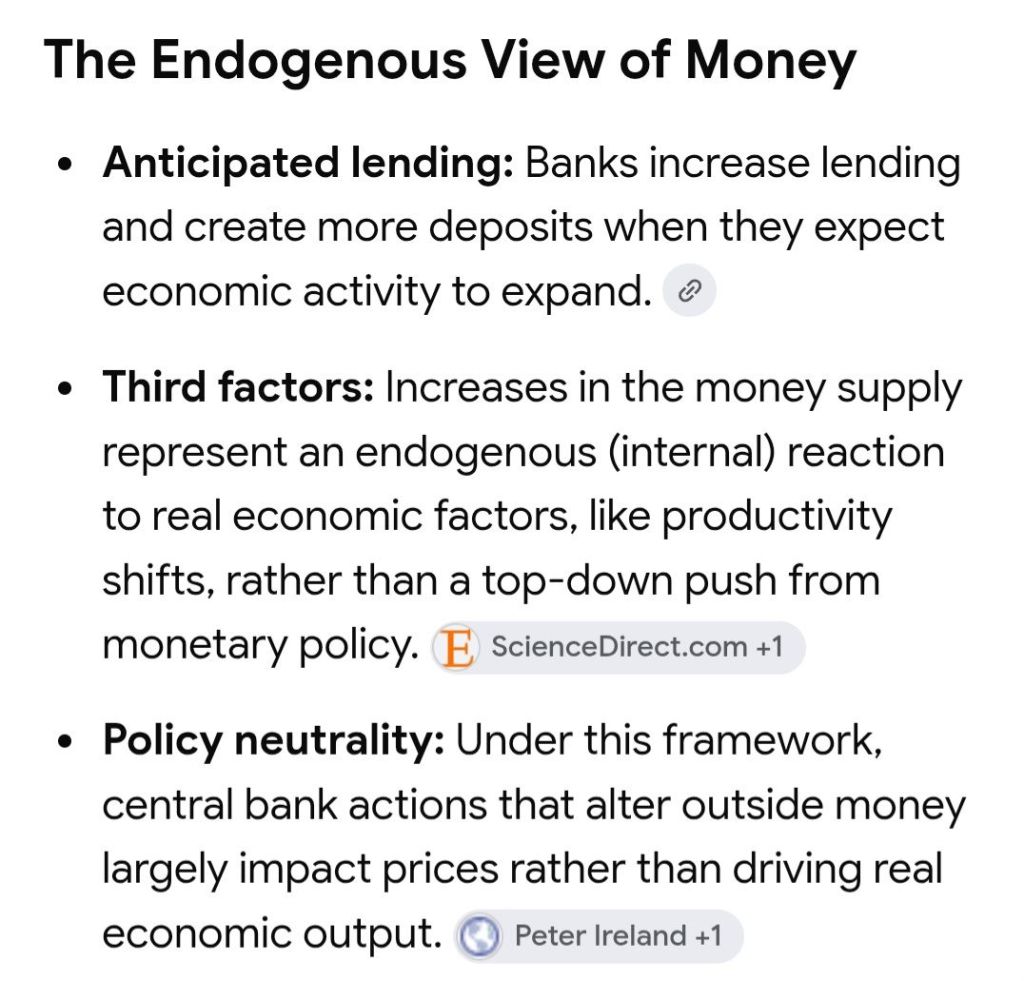
Money and output: correlation or causality
14 Sep 2026 Leave a comment
in applied price theory, business cycles, economic history, financial economics, history of economic thought, macroeconomics, Milton Friedman, monetarism, monetary economics Tags: quantity theory of money
How to Make Life Better for the Middle Class (and Everyone Else)
14 Sep 2026 Leave a comment
in applied price theory, economic growth, economic history, macroeconomics, politics - USA Tags: The Great Enrichment
I have a four-part series (here, here, here, and here) documenting that Americans are getting richer over time, yet many people feel pessimism and dissatisfaction. This Kite & Key video helps to explain this seeming contradiction. If you don’t want to watch a 10-minute video, here are two charts that summarize the message. This first […]
How to Make Life Better for the Middle Class (and Everyone Else)
Interview with Christiane Baumeister: Oil Price Shocks
14 Sep 2026 Leave a comment
Tim Sablik acts as interlocutor in “Interview with Christiane Baumeister,” subtitled “On measuring the effects of oil shocks, changes in global energy markets, and forecasting tail risks” (Econ Focus: Federal Reserve Bank of Richmond, Third Quarter 2026). Here are some of the comments that caught my eye: On her career choice: My father was a…
Interview with Christiane Baumeister: Oil Price Shocks
Bill Maher schools the young and the anti-Israel Democrats
14 Sep 2026 Leave a comment
in television, TV shows
At the end of September I posted about the BBC’s refusal to use the word “terrorist” when referring to Hamas. They could use it when quoting other people, but you can’t call a terrorist a terrorist when it applies to Palestinians who kill civilians for political, ideological, or religious aims. This also applies to other…
Bill Maher schools the young and the anti-Israel Democrats
The gender wage gap is fading away
13 Sep 2026 Leave a comment
in applied price theory, discrimination, economic history, economics of education, gender, human capital, labour economics, labour supply, occupational choice, politics - New Zealand, poverty and inequality Tags: feminism, gender, gender wage gap, history, politics, sex discrimination, women
The gender wage gap has dropped by two-thirds in the last 30 years. It has halved since the first pay equity claim was filed 14 years ago. The gender wage gap is now barely 5.5% in June 2026 according to the recently released Statistics New Zealand data. It is a stretch to file pay equity claims asking for 30% more when the gender wage gap struggles to stay above 5%.
The gender wage gap data released by Statistics New Zealand recently is the raw data. There are no adjustments to that pay gap for differences in educational backgrounds, continuity of employment and dedication to demanding careers, unsocial hours, risk of injury, and the greater desire of women for work-life balance and jobs with more working from home options.
It is not mischievous to say that the gender wage gap may round down to zero once these factors are considered.
From time-to-time, detailed datasets become available on male and female workers that show that the gender wage gap goes down or close to zero. There are even detailed datasets where hiring and job assignments are made without any management intervention or possible bias.
There is a large gender wage gap driven by work-life balance under a bus and train drivers’ collective agreement in Massachusetts. The work-force was one-third female with hiring via a lottery among applicants with a clean record. Shifts are chosen by drivers strictly according to their seniority at each depot.
There was still a 11% gender wage gap because women drivers elected to work less overtime, they avoided overtime shifts on short notice, and they worked fewer shifts at nights and weekends. This gender wage gap among bus and train drivers cannot be the fault of their sexist employer because work was allocated by an exceptionally detailed union contract.
A 7% gender wage gap emerged even when a computer algorithm is allocating the work first come, first served.
A study of Uber drivers found a gender pay gap of zero once account is taken for male Uber drivers driving more at nights, weekends and in the more dodgy neighbourhoods with drinking establishments. Male Uber drivers also worked more hours per year which meant they had much more work experience than female Uber drivers. These additional hours meant men became more skilled in deciding when and where to best cruise for the best paying jobs. The fact that men drive faster explained the last two percentage points of the gender pay gap at Uber. Speed meant men were available for the next Uber job quicker.
The gender wage gap is just into the double digits for the top 10% of female earners in New Zealand in 2025 (see OECD graphic). This is because their chosen careers are often not family friendly. But even at the top end of town the gender pay gap has halved in the last 20 years.
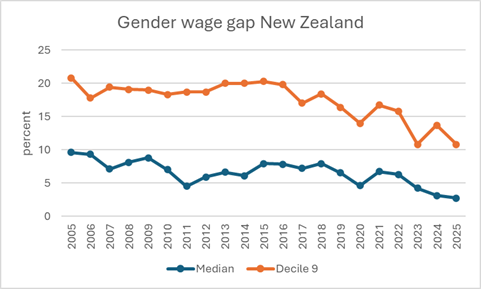
OECD data explorer
Women’s willingness to trade work-life balance for lower wages and fewer promotions is a big driver of the gender wage gap and the channelling of women into family friendly occupations. The wages of men and women at all levels are similar in the years leading up to motherhood then everything changes.
Top American labour economist Claudia Goldin found that some careers severely penalise any time off such as for motherhood or working less than punishingly long or rigid hours. Goldin refers to these jobs as greedy jobs. Women’s preference for family friendly occupations that can pay less and a tendency to avoid greedy jobs will mean that the gender wage gap may always be with us at least at the big end of town.
Surging demand
13 Sep 2026 Leave a comment
in energy economics, entrepreneurship, industrial organisation
The Allocative Cost of War
13 Sep 2026 Leave a comment
in applied price theory, defence economics, war and peace Tags: Ukraine
Why is war so economically costly? Our answer is that modern war lowers output not only by destroying productive factors, but also by making the surviving economy work less efficiently. Using uniquely comprehensive firm-level data collected during Russia’s full-scale invasion of Ukraine in 2022, we document a dramatic collapse in allocative productivity in Ukraine. To…
The Allocative Cost of War
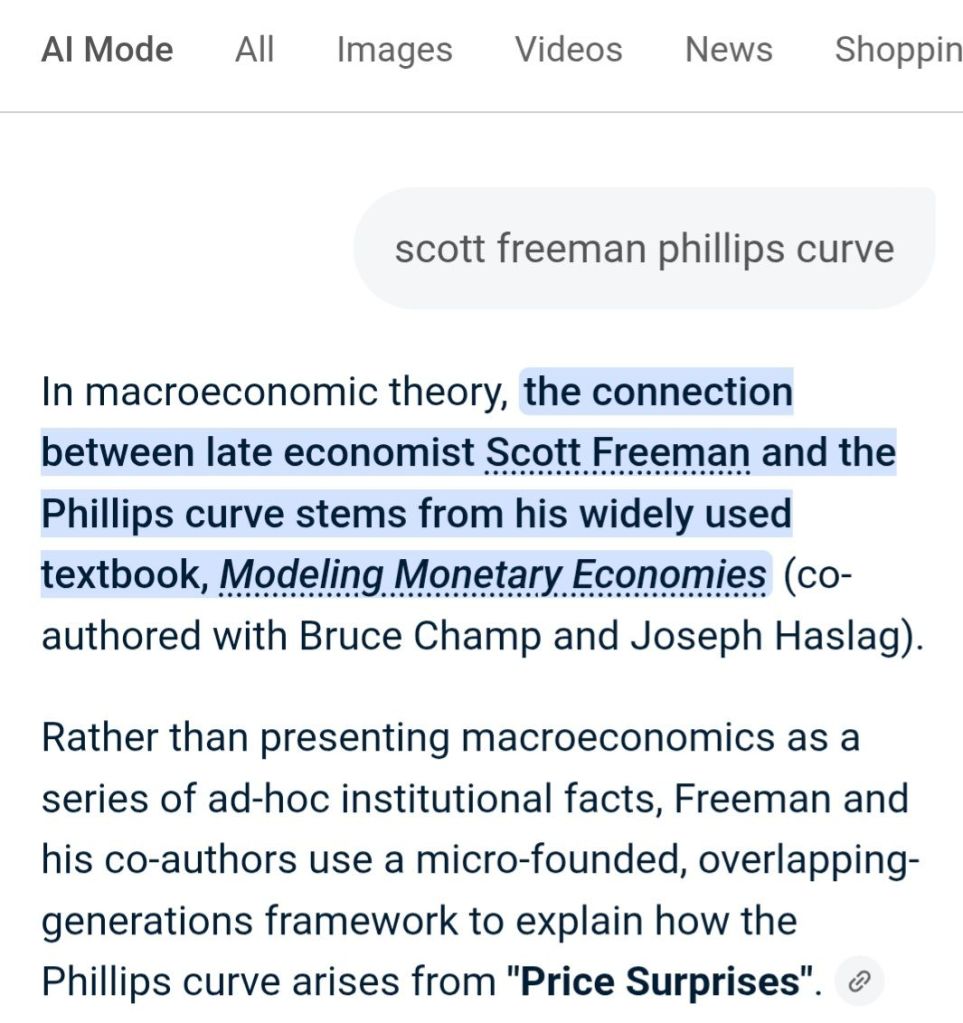
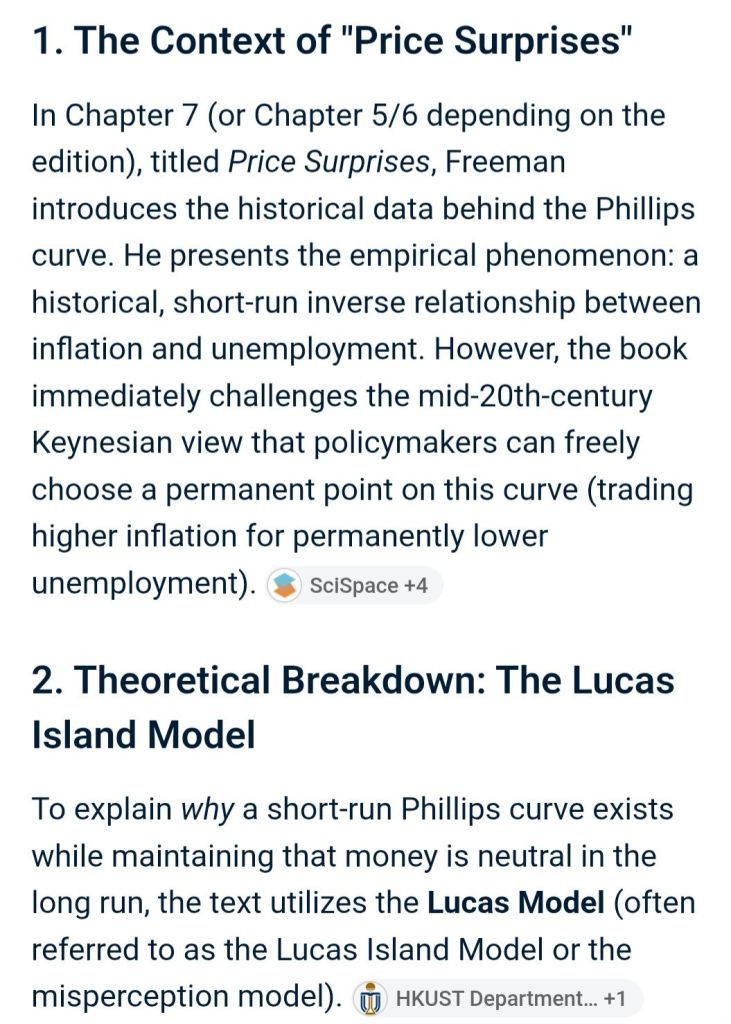
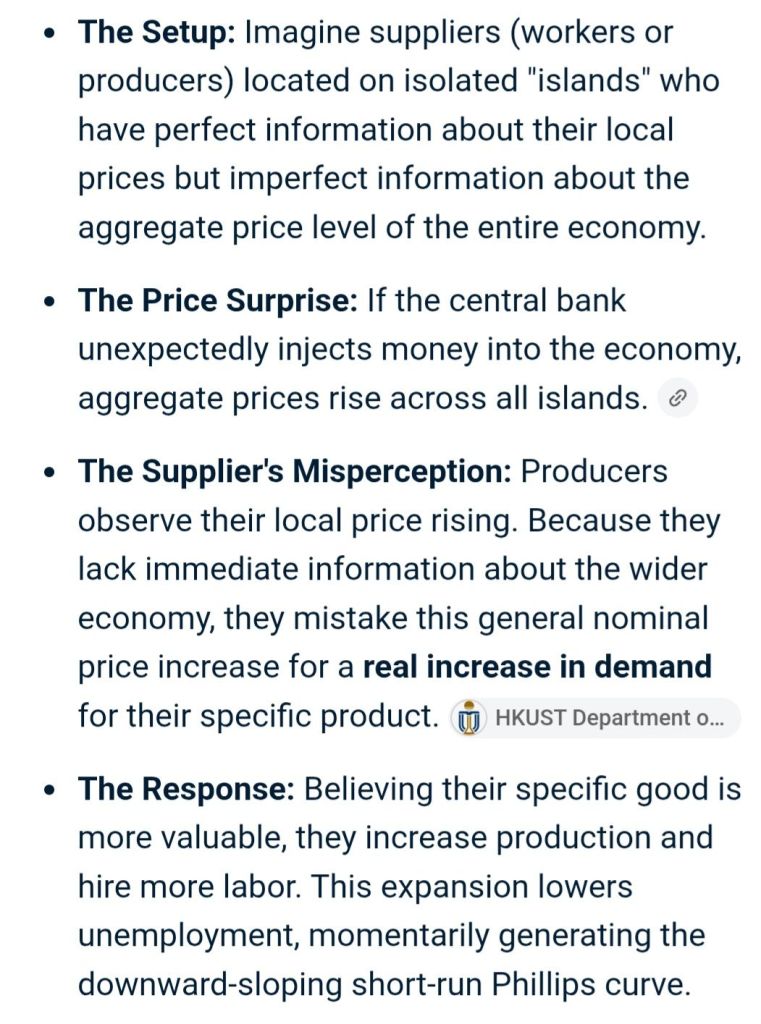
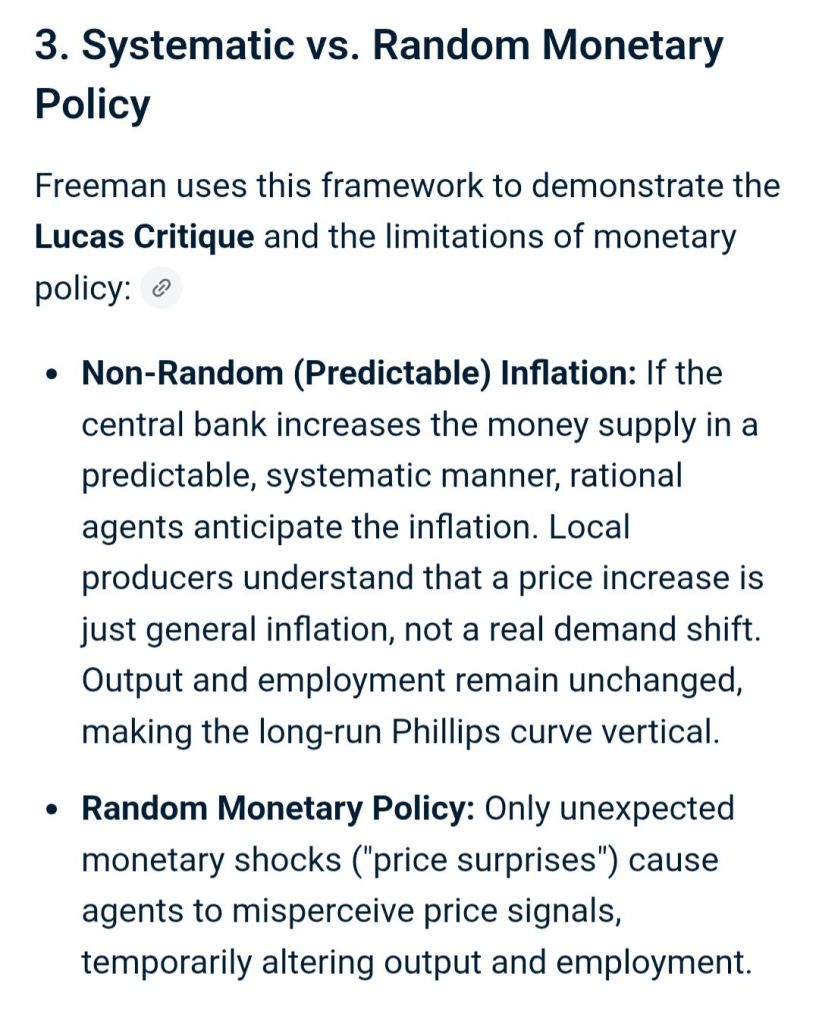
Scott Freeman on the Phillips Curve
13 Sep 2026 Leave a comment
in applied price theory, business cycles, economics of information, history of economic thought, labour economics, labour supply, macroeconomics, Milton Friedman, monetarism, monetary economics, Robert E. Lucas, unemployment
Growth Effects of AI: Modest for a Decade or Two, At Least
13 Sep 2026 Leave a comment
in entrepreneurship Tags: creative destruction
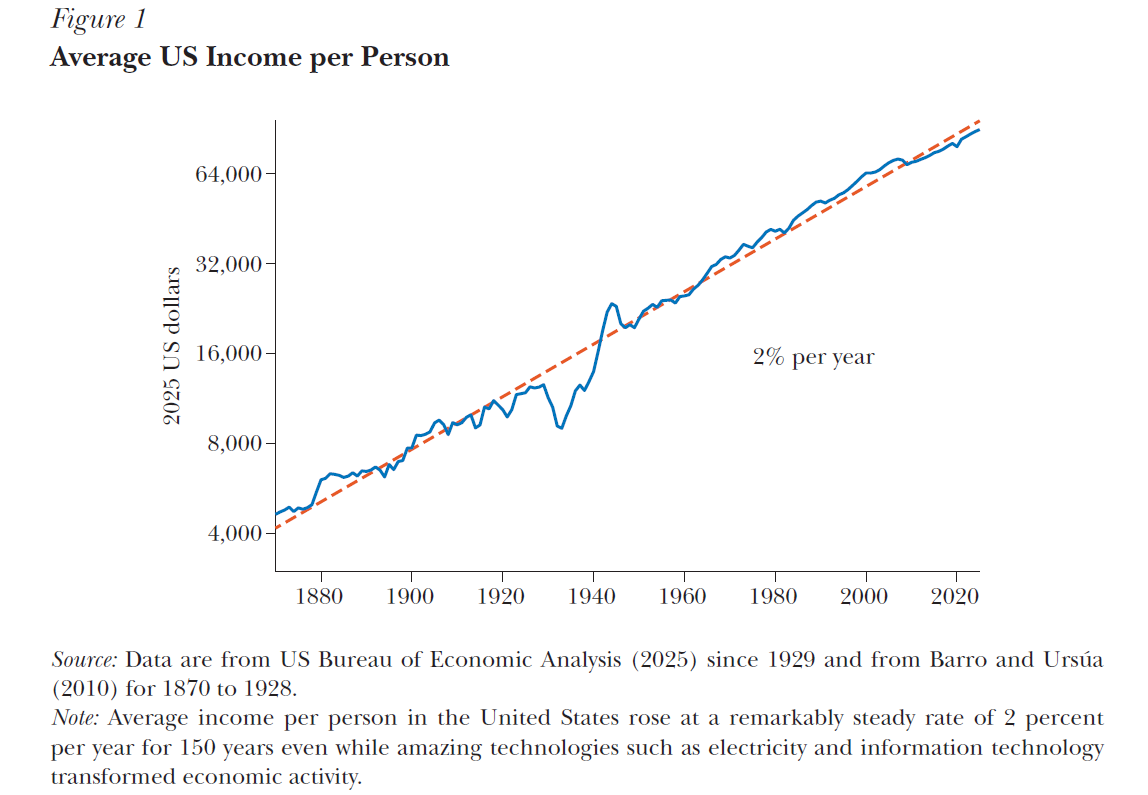
It is of course impossible to predict the effects of new AI technologies on total economic growth in a precise way, but there are strong reasons to believe that the effect will be modest for a decade or two, anyway. Charles Jones Jones explores some of the reasons in “AI and Our Economic Future,” in…
Growth Effects of AI: Modest for a Decade or Two, At Least


Recent Comments