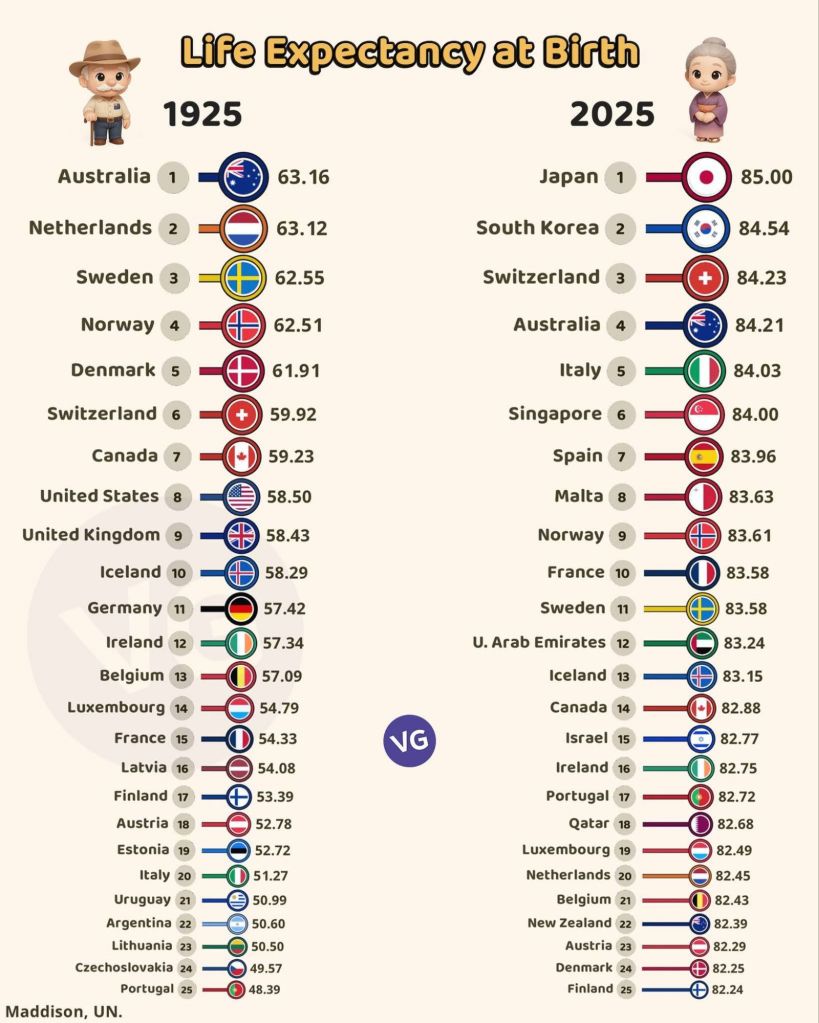
John Cochrane recommends the Economist article Aid cannot make poor countries rich. From 2004 to 2014, foreign aid increased by 75%, but it didn’t help: 2004, William Easterly: aid was just as likely to shrink the world’s poorest economies as to help them grow. 2005, World Bank: grants and loans did not move the needle…
The Grumpy Economist on Foreign aid: “send a person a fish every day, and he forgets how to fish.”
20 Mar 2025 Leave a comment
in applied price theory, comparative institutional analysis, development economics, economic history, growth disasters, growth miracles Tags: overseas aid
The Trans-Saharan Railway: A Forgotten Chapter of Vichy Oppression
20 Mar 2025 Leave a comment
in defence economics, economics of crime, International law, law and economics, laws of war, war and peace Tags: France, Nazi Germany, The Holocaust, World War II

The phrase “From hero to zero” is perhaps the most fitting way to describe the trajectory of Philippe Pétain’s legacy. Once hailed as a national savior and military genius, his descent into infamy was marked by his collaboration with Nazi Germany and his betrayal of France’s republican values. Pétain: From World War I Hero to […]
The Trans-Saharan Railway: A Forgotten Chapter of Vichy Oppression
Bowel cancer screening should be based on clinical need, not ancestry
20 Mar 2025 Leave a comment
in discrimination, health economics, politics - New Zealand Tags: cancer rates
Simeon Brown announced: The Government has agreed to progressively lower the age of eligibility for bowel cancer screening tests to align with Australia. “Today, I am pleased to announce that we are taking the first step by lowering the age to 58, with redirected funding of $36 million over four years. “This means free bowel […]
Bowel cancer screening should be based on clinical need, not ancestry
University of Chicago updates equal-opportunity statement for job ads
20 Mar 2025 Leave a comment
in discrimination, economics of education, gender, human capital, labour economics, labour supply, occupational choice, politics - USA Tags: 2024 presidential election, affirmative action, free speech, political correctness, racial discrimination, regressive left, sex discrimination
This announcement came from our Provost’s office, but apparently hasn’t been sent to all parts of the University. Nevertheless, it surely applies to all job ads for the University of Chicago. What it shows is that the University has updated its Equal Employment Opportunity statement, a statement that must be included in all ads for […]
University of Chicago updates equal-opportunity statement for job ads
A bizarre decision by the Imperial War Museum
19 Mar 2025 Leave a comment
in defence economics, war and peace Tags: World War I, World War II
Lord Ashcroft writes: My disappointment at learning about the planned closure of the Lord Ashcroft Gallery at the Imperial War Museum has been tempered by the touching reaction to the imminent loss of my medal collection from public viewing. I remain hugely disappointed at the decision of the IWM to shut the gallery, which displays…
A bizarre decision by the Imperial War Museum
Greens think prisoners are the victims!
19 Mar 2025 Leave a comment
in economics of crime, labour economics, law and economics, occupational choice, politics - New Zealand Tags: crime and punishment, criminal deterrence, law and order, regressive left
David Farrar writes – The Herald reported: The Greens’ Tamatha Paul has expressed “regret” about a claim she made on social media that the “vast majority” of people in prison are there for non-violent offences that they’ve “had to do as a response to poverty”. Police and Corrections Minister Mark Mitchell has described comments in her video as “total nonsense” and an […]
Greens think prisoners are the victims!
Quotation of the Day…
19 Mar 2025 Leave a comment
in economic history, labour economics, poverty and inequality Tags: The Great Enrichment
Tweet… is from page 172 of the 2012 revised edition of Steven Landsburg’s great 1993 book, The Armchair Economist: [I]ncome statistics don’t account for everything we value. For one thing, we care about the quantity and quality of our leisure time. Here it’s by and large the poor who have made great strides, while the…
Quotation of the Day…
Nigel Lawson would have been delighted with Kemi Badenoch’s ‘Net Zero Scepticism’
19 Mar 2025 Leave a comment
in economics of climate change, energy economics, environmental economics, environmentalism, global warming Tags: British politics
By Paul Homewood We will have to wait and see if this is just window dressing from Kemi, or the first chink in the Net Zero armour. The real problem though is that Miliband will have done so much damage by 2030 that it will prove impossible to reverse in our lifetimes. […]
Nigel Lawson would have been delighted with Kemi Badenoch’s ‘Net Zero Scepticism’
Professor: We Need a “Me Too” Movement to Expose Climate Liars
19 Mar 2025 1 Comment
in economics of climate change, economics of education, energy economics, environmental economics, environmentalism, global warming, politics - USA Tags: climate activists

Would a society where climate dishonesty is unacceptable deter climate skeptics?
Professor: We Need a “Me Too” Movement to Expose Climate Liars
Germany’s First Offshore Wind Farm To Be Dismantled After Just 15 Years Of Operation
18 Mar 2025 Leave a comment
in economics of climate change, energy economics, environmental economics, environmentalism, global warming Tags: Germany, wind power
The Alpha Ventus offshore wind farm near German North Sea island of Borkum is set to be dismantled after being in operation for only 15 years.
Germany’s First Offshore Wind Farm To Be Dismantled After Just 15 Years Of Operation
It has become too unprofitable to operate without massive subsidies.
Auckland Uni Law School teacher: we must decolonize the universities and undo the damage of the “colonial project”
18 Mar 2025 Leave a comment
in discrimination, economic history, economics of bureaucracy, law and economics, liberalism, Marxist economics, politics - New Zealand, property rights, Public Choice, rentseeking Tags: Age of Enlightenment, free speech, political correctness, racial discrimination, regressive left

It’s not so surprising that Auckland University harbors a Māori activist like Eru Kapa-Kingi; what is surprising is that Auckland University has publicized his words and activities, amd they seem proud of them! For Kapa-Kingi’s goal is apparently to decolonize not just Auckland University (once the best university in New Zealand, now a hotpot of identity […]
Auckland Uni Law School teacher: we must decolonize the universities and undo the damage of the “colonial project”
EPA questions 31 major energy regulations
17 Mar 2025 Leave a comment
in economics of bureaucracy, economics of climate change, economics of regulation, energy economics, environmental economics, environmentalism, global warming, law and economics, politics - USA, property rights, Public Choice Tags: 2024 presidential election
What is certain is that 31 big fights lie ahead making this EPA combined action a truly breathtaking event. Stay tuned to CFACT as this supreme battle unfolds.
EPA questions 31 major energy regulations
Arctic Instincts? The Late Pleistocene Arctic Origins of East Asian Psychology
17 Mar 2025 Leave a comment
in applied price theory, behavioural economics, economic history Tags: cognitive psychology, evolutionary biology, evolutionary psychology
Highly speculative, but I found this of interest: This article explores the hypothesis that modern East Asian populations inherited and maintained extensive psychosocial adaptations to arctic environments from ancestral Ancient Northern East Asian populations, which inhabited arctic and subarctic Northeast Eurasia around the Last Glacial Maximum period of the Late Pleistocene, prior to back migrating southwards into East Asia in […]
Arctic Instincts? The Late Pleistocene Arctic Origins of East Asian Psychology
Cranks, crackpots and conspiracy theorists
17 Mar 2025 Leave a comment
in economics of education, economics of media and culture Tags: conspiracy theorists, cranks
The terms “crank” and “crackpot” are often used interchangeably to describe someone who holds eccentric or unorthodox views, especially in science or other intellectual disciplines. However, there can be subtle differences in their connotations: Both terms are pejorative and used to express disapproval or skepticism towards the individual’s ideas or behaviors. The distinction, while subtle, […]
Cranks, crackpots and conspiracy theorists
Recent Comments