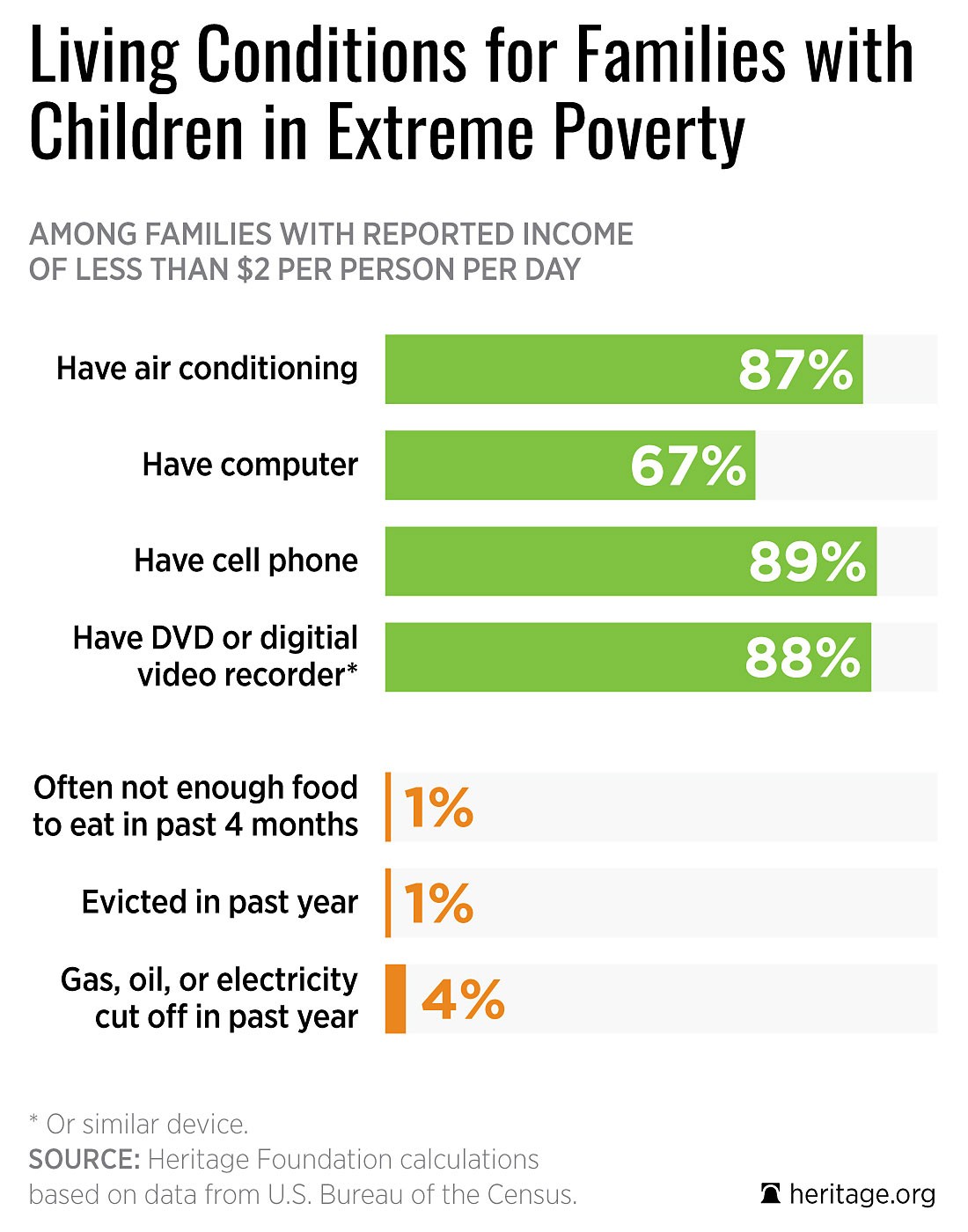
Down and out in America after 20 years of welfare reform
28 Aug 2016 Leave a comment
in applied welfare economics, economic history, labour economics, welfare reform Tags: 1996 U.S. welfare reforms, child poverty, family poverty
#itsnotchoice @povertymonitor @PlunketNZ % Australian, NZ and US sole parents who do not work
13 Dec 2015 Leave a comment
in gender, labour economics, labour supply, politics - Australia, politics - New Zealand, politics - USA, welfare reform Tags: 1996 U.S. welfare reforms, child poverty, single parents, sole parents
The only major success in reducing sole parent beneficiary numbers anywhere has been time limits introduced as part of the 1996 US federal welfare reforms. Time limits on welfare for single parents reduced caseloads by two thirds, 90% in some states.
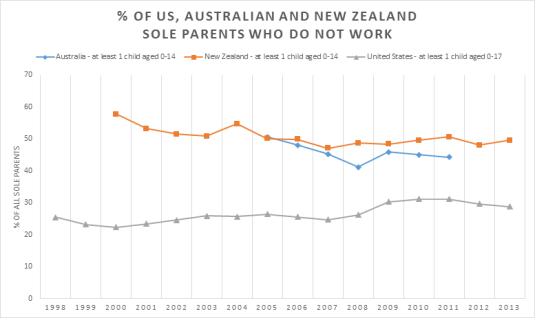
Source and Notes: OECD Family Database; Australian data are available only from 2005.
The subsequent declines in welfare participation rates and gains in employment were largest among the single mothers previously thought to be most disadvantaged: young (ages 18-29), mothers with children aged under seven, high school drop-outs, and black and Hispanic mothers. These low-skilled single mothers were thought to face the greatest barriers to employment. Blank (2002) found that
nobody of any political persuasion predicted or would have believed possible the magnitude of change that occurred in the behaviour of low-income single-parent families.
With the enactment of welfare reform in 1996, black child poverty fell by more than a quarter to 30% in 2001. Over a six-year period after welfare reform, 1.2 million black children were lifted out of poverty. In 2001, despite a recession, the poverty rate for black children was at the lowest point in national history. Employment are never married mothers increased by 50% after the US reforms; employment a single mothers with less than a high school education increased by two thirds; employment of single mothers aged of 18 in 24 approximately doubled.
This great success of US welfare reforms was that after decades of no progress in their war on poverty, poverty among both single mothers and black children declined dramatically.
Poverty in America
22 Aug 2015 Leave a comment
in economic history, labour economics, politics - USA, poverty and inequality, welfare reform Tags: 1996 U.S. welfare reforms, child poverty, family poverty
Half as many blacks in the U.S. today are living in poverty as in 1960. buff.ly/1KTT5Sz http://t.co/PKK5REXr0P—
HumanProgress.org (@humanprogress) August 07, 2015
Did the 1996 federal welfare reforms increase child poverty in America?
25 Jul 2015 Leave a comment
in applied welfare economics, economic history, labour economics, poverty and inequality, welfare reform Tags: 1996 U.S. welfare reforms, child poverty, family poverty
Number of black children in poverty may have eclipsed whites for the first time on record pewrsr.ch/1M7La40 http://t.co/wnb9sLo9Fv—
PewResearch FactTank (@FactTank) July 18, 2015
 Utopia, you are standing in it!
Recent Comments