Dr. Ioannidis on Why We Don’t Have Reliable Data Surrounding COVID-19
26 Apr 2020 Leave a comment
in econometerics, economics of bureaucracy, economics of information, health economics, politics - Australia, politics - New Zealand, politics - USA, Public Choice Tags: action bias, economics of pandemics, pessimism bias, The fatal conceit
A challenge for @GarethMorgannz on disagreement in public policy making
21 Apr 2016 Leave a comment
in applied price theory, comparative institutional analysis, constitutional political economy, politics - New Zealand, Public Choice, rentseeking Tags: action bias, conjecture refutation, motivated reasoning, The fatal conceit, The pretense to knowledge
John Cowperthwaite, Hong Kong and the dangers of collecting statistics
15 Apr 2014 Leave a comment
in development economics, growth miracles, Milton Friedman, Murray Rothbard Tags: action bias, Hong Kong, illusion of competence, John Cowperthwaite, Milton Friedman
The Colonial Office sent John Cowperthwaite to Hong Kong in 1945 to serve eventually as its financial secretary from 1961.
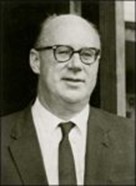
This Scotsman was very much a disciple of Adam Smith. In his first budget speech, in 1961, he said:
In the long run, the aggregate of decisions of individual businessmen, exercising individual judgment in a free economy, even if often mistaken, is less likely to do harm than the centralised decisions of a government, and certainly the harm is likely to be counteracted faster.
In his decade as financial secretary, real wages rose by 50 % and the share of the population in acute poverty fell from 50% to 15%. Milton Friedman met Cowperthwaite in 1963 and asked about the lack of economic statistics. Cowperthwaite answered:
“If I let them compute those statistics, they’ll want to use them for planning.” Friedman thought “How wise”.
Murray Rothbard got into a debate with George Stigler in the early 1960s about the dangers of collecting statistics. Rothbard argued that:
The individual consumer, in his daily rounds, has little need of statistics; through advertising, through the information of friends, and through his own experience, he finds out what is going on in the markets around him. The same is true of the business firm.
The businessman must also size up his particular market, determine the prices he has to pay for what he buys and charge for what he sells, engage in cost accounting to estimate his costs, and so on.
But none of this activity is really dependent upon the omnium gatherum of statistical facts about the economy ingested by the federal government. The businessman, like the consumer, knows and learns about his particular market through his daily experience.
… Statistics are the eyes and ears of the bureaucrat, the politician, the socialistic reformer. Only by statistics can they know, or at least have any idea about, what is going on in the economy.
… Cut off those eyes and ears, destroy those crucial guidelines to knowledge, and the whole threat of government intervention is almost completely eliminated
Cowperthwaite refused to collect economic statistics
for fear that I might be forced to do something about them
This action bias is a common bias of bureaucracies. Peter Lilley in the UK said:
…when there is a problem – a perceived political problem – officials come up with a range of options which excludes one option. I observed this when I was a humble PPS at the Department of Environment and suggested that we always ought to include this option on the list and it became known as “Lilley’s option” and that was do nothing.
Other psychological biases of bureaucracies are motivated reasoning, the focusing illusion, the affect heuristic and the illusion of competence. When Friedman asked him in 1963 to explain the mechanism which kept the Hong Kong dollar pegged to the pound, Cowperthwaite said that the Hong Kong & Shanghai Bank (through which the currency peg was operated) did not understand it:
Better they shouldn’t. They would mess it up.
His 2008 Guardian obituary noted that when asked what was the key thing that poor countries should do, Cowperthwaite once remarked:
They should abolish the office of national statistics.
The ideal faceless bureaucrat, Cowperthwaite said of his record:
I did very little. All I did was to try to prevent some of the things that might undo it.
.
 Utopia, you are standing in it!
Recent Comments