How Interpreters Helped Topple the Aztec Empire
14 Jul 2018 Leave a comment
in applied price theory Tags: age of empires
The History of Southeast Asia: Every Year
03 Jul 2018 Leave a comment
in economic history Tags: age of empires, economics of borders, maps
Who discovered what
17 Jun 2018 Leave a comment
in economic history Tags: age of empires, Age of exploration

Many more Maori living to their 1st birthday is the key legacy of 175 years of colonisation
16 Jun 2018 Leave a comment
in economic history, health economics, politics - New Zealand Tags: age of empires, economics of colonialism, Maori economic development, political correctness, regressive left

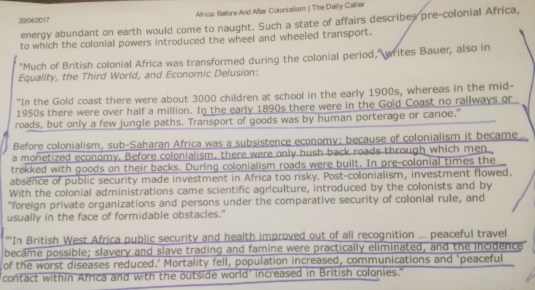
So Liberia and Abyssina must be most prosperous because they escaped colonialism
13 Apr 2018 Leave a comment
in development economics, growth disasters, growth miracles Tags: Africa, age of empires, economics of colonialism

Ten Minute History – The Early British Empire
26 Feb 2018 Leave a comment
in economic history Tags: Age of Discovery, age of empires, Age of exploration, British empire
Imperialism: Crash Course World History #35
14 Jan 2018 Leave a comment
in defence economics, development economics, economic history, economics of bureaucracy, Public Choice, rentseeking Tags: Age of Discovery, age of empires, economics of colonialism
Interesting but flawed. The age of empires was prior to the industrial revolution.
Christopher Columbus Was a Murderous Moron
30 Oct 2017 Leave a comment
in economic history Tags: age of empires, Age of exploration
The Disillusionment of Lawrence of Arabia I THE GREAT WAR Week 152
28 Jun 2017 Leave a comment
in defence economics, war and peace Tags: age of empires, World War I
Why the Romans profited from their empire but the British did not from India
19 Jun 2017 Leave a comment
in applied price theory, comparative institutional analysis, constitutional political economy, defence economics, development economics, economic history, international economics, movies, Public Choice Tags: age of empires, British empire, colonialism, India. Monty Python, Roman empire
The British did not develop India because that would made it a worthwhile prize for another to steal. Rome face no serious rivals so we could take a long-term view on investing in colonies.
A prosperous colony is an attractive colony to conquer so imperial army and navy resources would have deployed to defending it. Prosperous locals and locally recruited troops can switch loyalties.
An empire full of prosperous colonies makes you an attractive target for other European powers to gang up on and divide the spoils. This may explain why some colonial powers had mixed feelings about developing their colonies. Robert Lucas observed that:
Stagnation at income levels slightly above subsistence is the state of traditional agricultural societies anywhere and any time. But neither did the modern imperialisms—the British included—alter or improve incomes for more than small elites and some European settlers and administrators…
The main economic event of the late 20th century was this diffusion of the Industrial Revolution to non-European societies (begun in Japan half a century earlier), a diffusion that will surely continue throughout the 21st century. A central question is why it did not begin much earlier, during the colonial period, at the same time that the Industrial Revolution was spreading throughout Europe.
France lost its once vast North American colonies through wars. Many colonies changed hands after the countless European wars as part of peace settlements.
Australia was first colonised in 1788 as a penal colony. Very expensive to do, but the British did fill-up the only valuable part – Sydney harbour – with 60,000 mainly riffraff and low life.
This penal colony for a number of decades made the only valuable part of Australia more unattractive to other European powers to conquer. Doug Allen explains:
In the case of Australia, the hypothesis might appear silly. How much reduction in the first-best value to a continent can come from 60,000 convicts?
However, one must keep in mind that the only value of Australia at the end of the eighteenth century was from Sydney Harbour, Norfolk Island, and a few other strategic locations.
On these margins, the convicts could lower the value considerably … After the War of 1812 Britain realized the strategic significance of Bermuda and subsequently established a penal colony there.
Deirdre McCloskey pointed out that by the middle of the 19th century, British traded with India with few opportunities for exploitation. What was the price of that?
The cost of protecting the Empire devolved almost entirely on the British people. (A century earlier the British had likewise paid for the defense of the first empire, in what is now the United States; the colonials refused to pay as little as a small tax on tea for imperial defense.)
British taxpayers 1877-1948 paid for the half of naval expenditure that was for imperial defense, a by no means negligible part of total British national income each year. They paid for the Boer War. They paid for the imperial portions of World Wars I and especially II. They paid for protection of Jamaican sugar in the 18th century and protection for British engineering firms in India in the 19th. They paid and paid and paid.
What were the vaunted benefits to the British people? Essentially nothing of material worth. Bananas on their kitchen tables that they would have got anyway by free trade. Employment for unemployable twits from minor public schools. The joy of seeing a quarter of the land area on world maps and globes printed in red. Economically, it did not matter. Public education mattered a great deal more to British economic growth, as did a tradition of industrial and financial innovation, and a free society in which to prosper…
Rich countries are rich mainly because of what they do at home, not because of foreign trade, foreign investment, foreign empire, past or present.
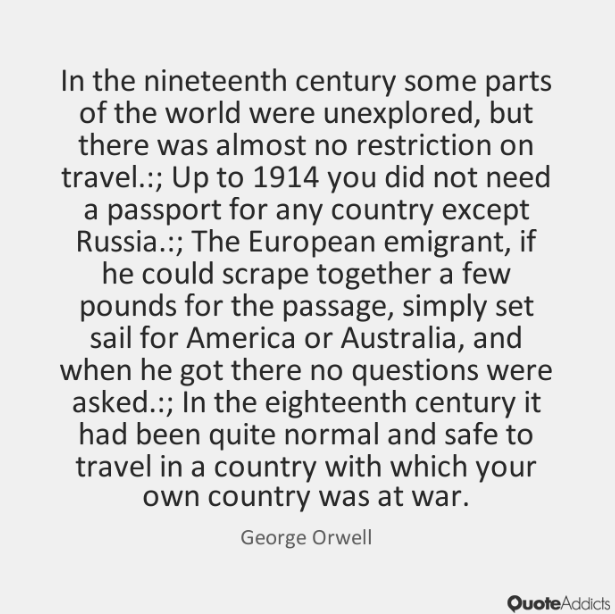
A.J.P. Taylor said something similar
15 Oct 2016 Leave a comment
in economic history, international economic law, international economics, labour economics, labour supply Tags: age of empires, age of migration, economics of immigration, George Orwell, great migrations
The history of colonization, 1492 – 2008
24 Sep 2016 Leave a comment
in development economics, economic history Tags: age of empires, Age of exploration
Rise and Fall of the Ottoman Empire 1300 – 1923
14 Sep 2016 Leave a comment
in economic history Tags: age of empires, maps
 Utopia, you are standing in it!
Recent Comments