https://www.facebook.com/share/p/3661V7jv3MsS7ukE/?mibextid=xfxF2i
Celebrating humanity's flourishing through the spread of capitalism and the rule of law
18 Apr 2024 Leave a comment
in economics of crime, economics of information, economics of media and culture, labour economics, labour supply, law and economics, managerial economics, organisational economics, personnel economics Tags: agency costs, asymmetric information, moral hazard, screening
27 Mar 2016 1 Comment
in applied price theory, financial economics, industrial organisation, managerial economics, organisational economics, survivor principle Tags: agency costs, agent principal problem, asymmetric information, dividends, entrepreneurial alertness, managerial slack
It is obvious that businesses find dividends sensible to pay because otherwise they will face disquiet from investors. Managers believe that higher dividends mean higher share prices.
Economists finds dividends to be a mysterious (Easterbrook 1984). Miller and Modigliani (1958) declared dividends to be irrelevant because investors can homebrew their own dividends by selling shares or borrowing against their share portfolios.
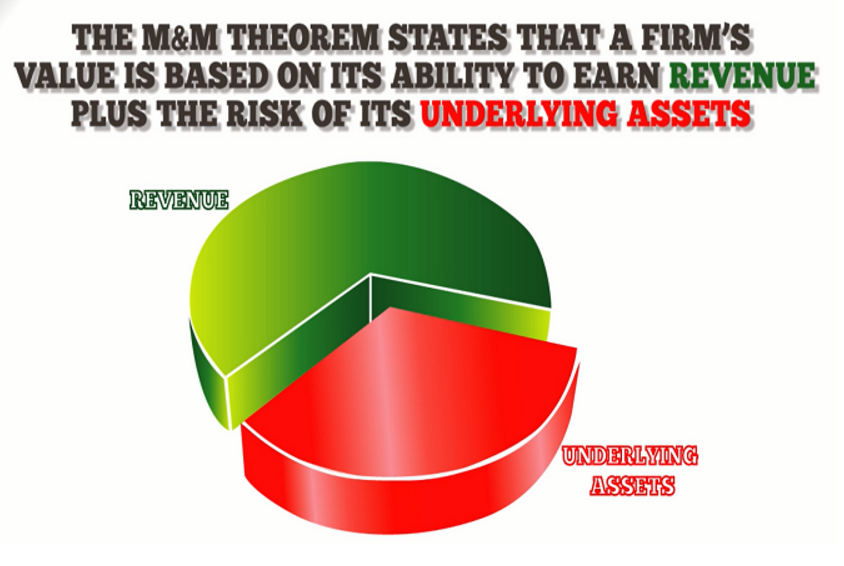
Modigliani (1980, p. xiii) explains the Miller and Modigliani Theorem as follows:
… with well-functioning markets (and neutral taxes) and rational investors, who can ‘undo’ the corporate financial structure by holding positive or negative amounts of debt, the market value of the firm – debt plus equity – depends only on the income stream generated by its assets.
It follows, in particular, that the value of the firm should not be affected by the share of debt in its financial structure or by what will be done with the returns – paid out as dividends or reinvested (profitably).
Warren Buffett has never paid a dividend. He only agreed to a stock split. Shareholders pressed him to do so. They wanted to bequeath their shares to children without having to sell them.
What is even more mysterious is a simultaneous existence of dividends and the raising of new capital, either through the share market or from borrowing (Easterbrook 1984).
Dividends are costly and ubiquitous so something causes them. Even if investors were irrational, dividends would go away if there cost exceeds their benefits.
If dividends were a bad idea, firms that pay few dividends would prosper relative to others; investors who figure out the truth would also prosper relative to others and before long dividends will be features of failing firms (Easterbrook 1984).

Dividends exist because they influence the firms financing policies. Dividends dissipate free cash and thereby induce the firm to float new shares and borrow. If the firm is constantly in the market for new capital, it must constantly prove the value of the investment to the market (Easterbrook 1984).
The interests and incentives of managers and shareholders frequently conflict over the optimal size of the firm and paying free cash flows as dividends. Jensen (1986) defines free cash flow as follows:
Free cash flow is cash flow in excess of that required to fund all of a firm’s projects that have positive net present values when discounted at the relevant cost of capital. Such free cash flow must be paid out to shareholders if the firm is to be efficient and to maximize value for shareholders (Jensen 1986, p. 323).
The problem is how to motivate managers to pay out this cash rather than invested at below the cost of the capital. By issuing debt, managers bind themselves to pay out future cash flows in a way that a future dividend policy cannot.
Creditors can take the firm into bankruptcy court if they do not repay. Investors and bankers play an important role in monitoring the firm and its proposed projects.
The control function of debt is more important in organisations with large cash flows but low growth prospects. Investors in the share market are alert to the control function of debt. Most leverage increasing transactions result in positive increases in share prices while most transactions that reduce leverage results in share price falls (Jensen 1986).
There is nothing new about using high debt leverage ratios to create greater business value through limiting managerial discretion in focusing entrepreneurial attention on the bottom line.
One of the driving forces behind management leverage buyouts in the 1980s was that they borrowed to take over a company to run it better. The high levels of debt in management buyouts made sure that there was no incentives to tolerate waste or inefficiency or underperforming divisions or product lines of the firm. Any slack with the organisation would very quickly be punished perhaps in bankruptcy. Heavy debt ratios focused the attention of managers and boards of directors.

New debt puts managers under additional scrutiny of a range of bankers and the share market, which is the principal reason for keeping firms constantly in the market for capital. Managers of firms that do not have to go into the market repeatedly and regularly for new capital have more discretion to behave in their own interest rather than those of investors (Easterbrook 1984). The function of dividends is to keep firms in the capital market.
Managers of firms with unused borrowing power and large free cash flows are more like to undertake expansions that are less profitable. The burst of takeovers and leverage buyouts in the 1980s were very much driven by opportunities to profit from reducing corporate slack and downsizing flabby corporate headquarters of large publicly listed companies (Jensen 1986).
Dividends reduce the resources under managers’ control and subjecting them to the monitoring by the capital markets that occurs when a firm must obtain new capital. Financing projects internally avoids this monitoring and the possibility that funds will be unavailable or available only at high explicit prices. Project finance replicates the disciplinary effect of paying regular dividends by borrowing a huge amount at the start of the project. High debt prevents management wasting resources on low return projects.
Dividends are paid by companies to tie the hands of management. Dividends make sure that there is less free cash about for them to spend on projects at their own discretion. When a major expansion must be undertaken, the management of a company must either go to the share market or banks for it to go forward. This means multiple set of decision-makers agree that it is a worthwhile project and provide funding.
The art of business is identifying assets in low-valued uses and devising ways to profitably move them into higher values uses (Froeb and McCann 2008). Wealth is created when entrepreneurs move assets to higher-valued uses.
Froeb and McCann (2008) argued that mistakes are made – business opportunities are missed – for one of two reasons:
1. A lack of information; or
2. Bad incentives.
Rational, self-interested actors err because either they do not have enough information to make better decisions, or they lack incentives to make the best use of information they already have.
Froeb and McCann (2008) argued that three questions arise about all business problems:
1. Who is making the bad decision?
2. Does the decision maker have enough information to make a good decision?
3. Does the decision maker have the incentives to make a good decision?
For Froeb and McCann (2008), the answers to these questions immediately suggest ways to fix them:
1. Let someone else make the decision;
2. Give more information to the decision maker; or
3. Change the decision makers’ incentives.
Dividends follow all three points in this matrix. Dividends include others in investment and expansion decisions of the company. These bankers or new share investors must be given more information on the merits of the new or enlarged project.
The project will not go ahead and any benefits to the careers of the executives championing it will not be forthcoming unless they can persuade these outside parties with plenty of other investment options of the merits of the project.
Dividend show that the market process as well alert to the risks of separating ownership from control. Counter strategies are developed to channel the efforts and align the interests of management teams towards those of investors and owners.
The ownership structure and dividend policies of firms arise out of the search for the capital structure that maximises profits. Different divisions of risk between creditors and shareholders and decision-making rights between owners, boards of directors and managers all affect the value and profitability of a firm. Dividends contribute to that search more profitable forms of organisation by restricting free cash flows in the hands of management.
Celebrating humanity's flourishing through the spread of capitalism and the rule of law
Scholarly commentary on law, economics, and more
Beatrice Cherrier's blog
Celebrating humanity's flourishing through the spread of capitalism and the rule of law
Celebrating humanity's flourishing through the spread of capitalism and the rule of law
Celebrating humanity's flourishing through the spread of capitalism and the rule of law
Why Evolution is True is a blog written by Jerry Coyne, centered on evolution and biology but also dealing with diverse topics like politics, culture, and cats.
Celebrating humanity's flourishing through the spread of capitalism and the rule of law
Celebrating humanity's flourishing through the spread of capitalism and the rule of law
A rural perspective with a blue tint by Ele Ludemann
DPF's Kiwiblog - Fomenting Happy Mischief since 2003
Celebrating humanity's flourishing through the spread of capitalism and the rule of law
The world's most viewed site on global warming and climate change
Tim Harding's writings on rationality, informal logic and skepticism
A window into Doc Freiberger's library
Let's examine hard decisions!
Commentary on monetary policy in the spirit of R. G. Hawtrey
Thoughts on public policy and the media
Celebrating humanity's flourishing through the spread of capitalism and the rule of law
Politics and the economy
A blog (primarily) on Canadian and Commonwealth political history and institutions
Reading between the lines, and underneath the hype.
Economics, and such stuff as dreams are made on
"The British constitution has always been puzzling, and always will be." --Queen Elizabeth II
Celebrating humanity's flourishing through the spread of capitalism and the rule of law
Celebrating humanity's flourishing through the spread of capitalism and the rule of law
WORLD WAR II, MUSIC, HISTORY, HOLOCAUST
Undisciplined scholar, recovering academic
Celebrating humanity's flourishing through the spread of capitalism and the rule of law
Res ipsa loquitur - The thing itself speaks
Celebrating humanity's flourishing through the spread of capitalism and the rule of law
Researching the House of Commons, 1832-1868
Articles and research from the History of Parliament Trust
Reflections on books and art
Posts on the History of Law, Crime, and Justice
Celebrating humanity's flourishing through the spread of capitalism and the rule of law
Exploring the Monarchs of Europe
Cutting edge science you can dice with
Small Steps Toward A Much Better World
“We do not believe any group of men adequate enough or wise enough to operate without scrutiny or without criticism. We know that the only way to avoid error is to detect it, that the only way to detect it is to be free to inquire. We know that in secrecy error undetected will flourish and subvert”. - J Robert Oppenheimer.
The truth about the great wind power fraud - we're not here to debate the wind industry, we're here to destroy it.
Celebrating humanity's flourishing through the spread of capitalism and the rule of law
Celebrating humanity's flourishing through the spread of capitalism and the rule of law
Economics, public policy, monetary policy, financial regulation, with a New Zealand perspective
Celebrating humanity's flourishing through the spread of capitalism and the rule of law
Restraining Government in America and Around the World
 Utopia, you are standing in it!
Recent Comments