Europe is greener now than it was 100 years ago
28 Apr 2017 Leave a comment
in economic history, environmental economics Tags: agricultural economics, Europe
Scott Pruitt is right about CO2
11 Mar 2017 1 Comment
in economics, environmental economics, global warming Tags: 2016 presidential election, agricultural economics, climate alarmism, climate alarmists
The tractors are coming, the tractors are coming for all the horses
16 Feb 2017 Leave a comment
in economic history, industrial organisation, labour economics, labour supply Tags: agricultural economics, creative destruction, technological unemployment, technology diffusion
Many new technologies display long adoption lags, and this is often interpeted as evidence of frictions inconsistent with the standard neoclassical model. We study the diffusion of the tractor in American agriculture between 1910 and 1960 — a well known case of slow diffusion — and show that the speed of adoption was consistent with the predictions of a simple neoclassical growth model.
The reason for the slow rate of diffusion was that tractor quality kept improving over this period and, more importantly, that only when wages increased did it become relatively unprofitable to operate the alternative, labor-intensive, horse technology
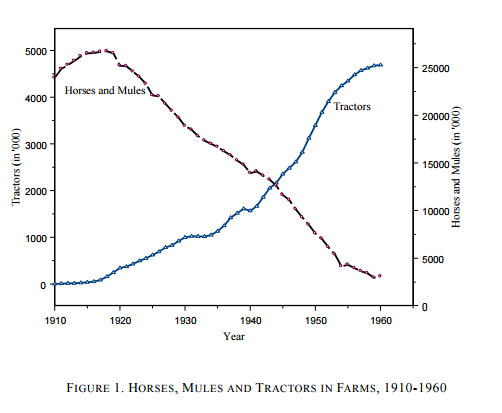
Source: Frictionless Technology Diffusion: The Case of Tractors By RODOLFO E. MANUELLI AND ANANTH SESHADRI
Trailblazers: The New Zealand Story – Empowering Normal People
20 Jan 2017 Leave a comment
in economic history, entrepreneurship, industrial organisation Tags: agricultural economics
Dilbart on organic farming
09 Dec 2016 Leave a comment
in economics of media and culture, health economics Tags: agricultural economics, consumer fraud, economics of advertising, food snobs, organic farming
Speaking of #GMO dangers @GreenpeaceNZ @NZGreens
21 Oct 2016 Leave a comment
in economics of regulation, environmental economics, health economics Tags: agricultural economics, antiscience left, creative destruction, GMOs, Greenpeace, New Zealand Greens
The spread of #GMO crops in the USA
02 Sep 2016 Leave a comment
in health economics, politics - USA Tags: agricultural economics, antiscience left, cranks, GMOs, Quacks
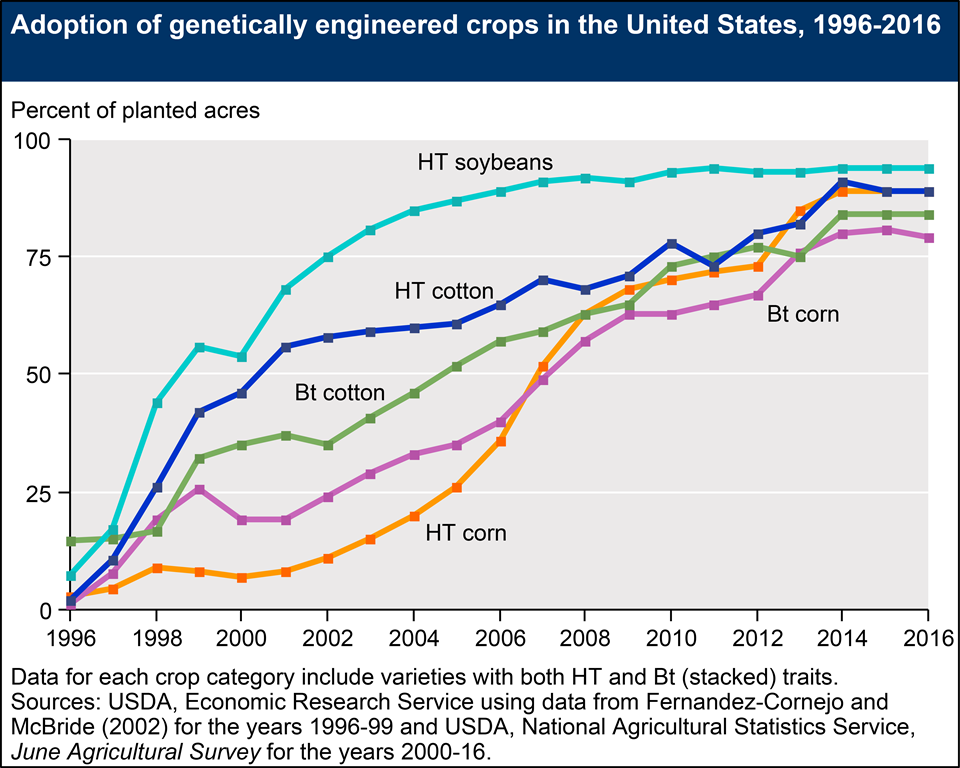
Source: USDA ERS – Adoption of Genetically Engineered Crops in the U.S.: Recent Trends in GE Adoption.
.@GreenpeaceNZ picks & chooses its scientific consensus #GMOs #globalwarming
02 Jul 2016 Leave a comment
in development economics, environmental economics, global warming, health economics, politics - New Zealand, Public Choice, rentseeking Tags: activists, agricultural economics, antimarket bias, climate alarmism, do gooders, expressive voting, GMOs, green rent seeking, Greenpeace, Twitter left
For a generation, a campaign by the green movement against the growing of genetically modified crops has held sway across Europe. These foodstuffs are a threat to health, the environment and the small independent farmer, NGOs have argued.
As result, virtually no GM crops have been grown on Europe’s farms for the past 25 years. Yet hard evidence to support what is, in all but name, a ban on these vilified forms of plant life is thin on the ground. In fact, most scientific reports have indicated that they are generally safe, both to humans and the environment.
This point was endorsed last week when a 20-strong committee of experts from the US National Academies of Science announced the results of its trawl of three decades of scientific studies for “persuasive evidence of adverse health effects directly attributable to consumption of foods derived from genetically engineered crops”. It found none.
Instead the group uncovered evidence that GM crops have the potential to bestow considerable health benefits. An example is provided by golden rice, a genetically modified rice that contains beta carotene, a source of vitamin A. Its use could save the lives of hundreds of thousands of children who suffer from vitamin A deficiency in the third world, say scientists.
Source: The Observer view on the GM crops debate | Opinion | The Guardian
Scientists and governments around the world overwhelmingly agree that climate change is real, is largely human-induced and needs urgent action to prevent.
There is, in fact, a broad and overwhelming scientific consensus that climate change is occurring, is caused in large part by human activities (such as burning fossil fuels), and if left un-checked will likely have disastrous consequences.
Furthermore, there is solid scientific evidence that we should act now on climate change – and this is reflected in the statements by these definitive scientific authorities.
Where did all the farmers go when the tractors came from their jobs?
17 May 2016 1 Comment
in industrial organisation, labour economics, labour supply, survivor principle Tags: agricultural economics, creative destruction
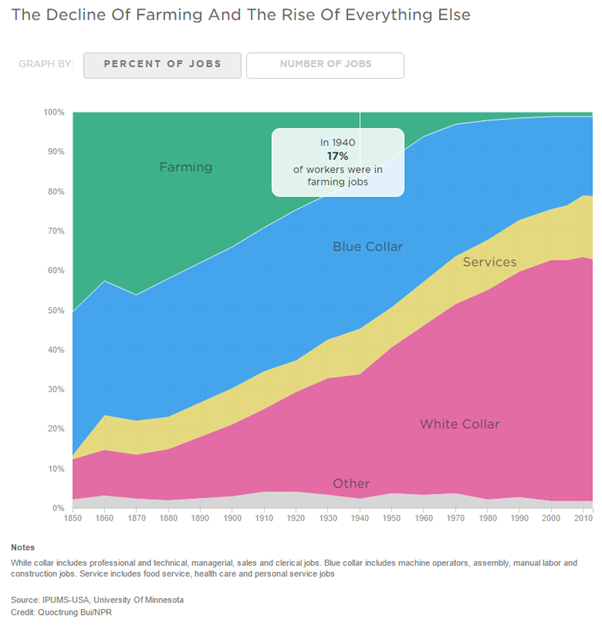
More reasons to loathe anti-GMO activists
25 Mar 2016 Leave a comment
in development economics, growth disasters, growth miracles, health economics Tags: agricultural economics, antiscience left, GMOs

Fruits and vegetables, wild vs. domesticated
12 Mar 2016 Leave a comment
in economic history, economics of information, economics of media and culture, economics of regulation, environmental economics, health economics Tags: agricultural economics, antiscience left, food snobs, GMOs, organic food
Landcorp dividends and capital injections, 2007 – 2015 @dbseymour @JordNZ
27 Feb 2016 1 Comment
in environmental economics, financial economics, industrial organisation, politics - New Zealand, public economics, survivor principle Tags: agricultural economics, privatisation, state owned enterprises
As cash cows go, Landcorp has had $2.25 million more in capital injections from taxpayers than it returned to them in dividends since 2007.
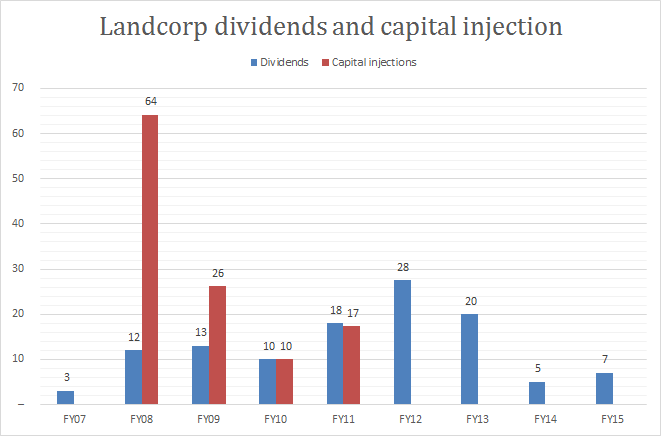
Source: data released by the New Zealand Treasury under the Official Information Act.
Those $1.5 billion in assets in Landcorp do not appear to be worth a cent in net cash to the long-suffering taxpayer.
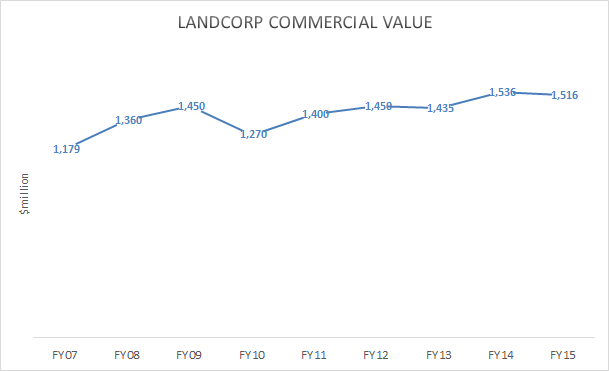
Source: data released by the New Zealand Treasury under the Official Information Act.
Landcorp is a state-owned enterprise of the New Zealand government. Its core business is pastoral farming including dairy, sheep, beef and deer. In January 2012, Landcorp managed 137 properties carrying 1.5 million stock units on 376,156 hectares of land.
 Utopia, you are standing in it!
Recent Comments