Breweries in the US http://t.co/rcYlpmJspa—
Charts and Maps (@ChartsandMaps) April 11, 2015
The rising gales of creative destruction in brewing
09 Jun 2015 Leave a comment
in economic history, economics of regulation, entrepreneurship, health economics, industrial organisation, survivor principle Tags: alcohol regulation, beer brewing, creative destruction, entrepreneurial alertness, innovation
Where is alcohol consumption highest?
04 Jun 2015 Leave a comment
in economics of regulation, health economics Tags: alcohol regulation, economics of prohibition
#Dailychart: Where is alcohol consumption highest? It's not where you might think econ.st/1gIERk4 http://t.co/RBwfGwKgAn—
The Economist (@ECONdailycharts) May 15, 2014
The average pub must stay open late in Washington State
01 May 2015 Leave a comment
in economics of media and culture Tags: alcohol regulation, UFOs
#Dailychart: Happy World UFO day! See here econ.st/1yQUYHs for best time and locations to spot flying saucers http://t.co/CxcUOT6OIJ—
The Economist (@ECONdailycharts) July 02, 2014
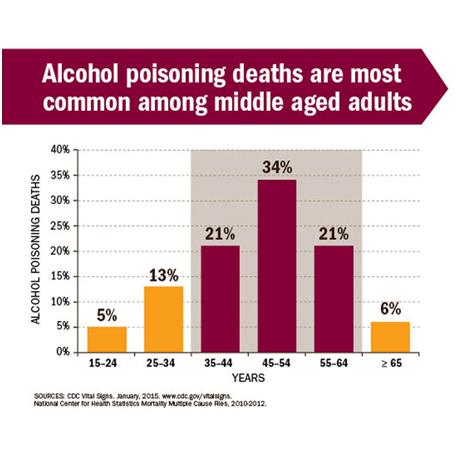
Middle-Aged Men and Alcohol
27 Mar 2015 Leave a comment
An ice-cold whisky dispenser, 1950s.
18 Feb 2015 Leave a comment
BEER HISTORIES: The ‘six o’clock swill’
13 Nov 2014 Leave a comment
in applied price theory, applied welfare economics, economics of regulation Tags: alcohol regulation, drinking and driving, economics of regulation, offsetting behaviour
Legal bar closing times in England and Wales have historically been early and uniform.
Recent legislation liberalised closing times with the object of reducing social problems thought associated with drinking to “beat the clock.”
Colin P. Green, John S. Heywood and Maria Navarro (2013) showed that one consequence of this liberalization was a decrease in traffic accidents. This decrease was concentrated heavily among younger drivers. The effect was most pronounced in the hours of the week directly affected by the liberalization; late nights and early mornings on weekends.
On May 1, 1996, Ontario, Canada, amended the Liquor Licence Act to extend the hours of alcohol sales and service in licensed establishments from 1 AM to 2 AM.

Guest Blogger: Stephanie Gibson, Curator Contemporary Life & Culture Museum of New Zealand Te Papa Tongarewa
Many New Zealanders will remember the years of six o’clock closing of pubs. Urban pubs were often overcrowded, charmless places, where binge drinking took place in a race against the clock, resulting in the infamous ‘six o’clock swill’. Until the 1960s, alcohol could only be sold and consumed publicly in licensed places that provided accommodation. These were known as public hotels or ‘pubs’ for short.
In October 1917 New Zealand became the only country in the world to impose a nation-wide ban on the sale of liquor after six o’clock. Many believed that restricted access would result in less drinking. The ban lasted for 50 years until October 1967, when closing was brought forward to 10 o’clock by public vote.
 Glassware, mid-1960s, by Crown Crystal Glass, New Zealand
(GH021024-25, GH023164, GH024221, Te Papa)
Standardised…
View original post 541 more words
 Utopia, you are standing in it!
Recent Comments