
Are Republicans or Democrats More Anti-Science?
16 Jul 2016 Leave a comment
in economics of information, economics of media and culture, economics of regulation, environmental economics, health economics, politics - USA Tags: Anti-Science left, rational irrationality
@Greenpeace thugs vandalise golden rice trial in #Pinas
02 Jul 2016 Leave a comment
in development economics, economics, environmental economics, environmentalism, health economics Tags: Anti-Science left, GMOs, Greenpeace, Philippines, terrorism
“GMO’s are Dangerous!” – Not
28 May 2016 Leave a comment
in economics of regulation, environmental economics, health economics, politics - New Zealand, politics - USA Tags: Anti-Science left, GMOs
Organic milk simply costs more – there are no other differences
13 Dec 2015 Leave a comment
in economics of information, economics of media and culture, health economics Tags: Anti-Science left, consumer fraud, food snobs, organic farming, organic milk, quackery
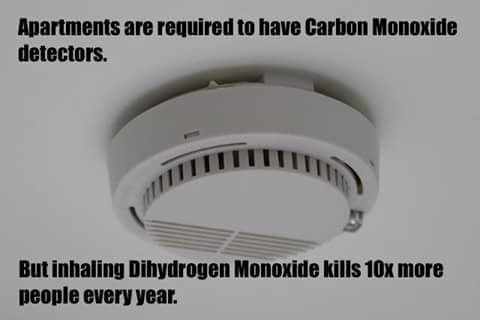
Five characteristics of science denial
21 Oct 2015 Leave a comment
in economics of regulation, environmental economics, health economics Tags: Anti-Science left, climate alarmists, conjecture and reputation, cranks, philosophy of science, Quacks
The herd immunity role of #vaccinations explained
16 Sep 2015 Leave a comment
in applied price theory, applied welfare economics, health economics, politics - New Zealand, public economics Tags: Anti-Science left, anti-vaccination movement, best shot public goods, cheap riders, common law, free-riders, good shot public goods, herd immunity, measles, New Zealand Greens, public goods, quackery, tort law, vaccinations, vaccines
Some public goods can be not provided much at all if even a few do not contribute – free ride. These are called weakest shot public goods. The link in the chain is only as strong as the weakest link for some public goods. The fighting against communicable diseases is an example of that.

The classic example given by that brilliant applied price theorist Jack Hirschleifer is a dyke or a levee wall around a town. It is only as good as the laziest person contributing to its maintenance on their part of the levee wall. Vicary (1990, p. 376) lists other examples:
Similar examples would be the protection of a military front, taking a convoy across the ocean going at the speed of the slowest ship, or maintaining an attractive village/landscape (one eyesore spoils the view).
Many instances of teamwork involve weak-link elements, for example moving a pile of bricks by hand along a chain or providing a theatrical or orchestral performance (one bad individual effort spoils the whole effect.)
Another example of weakest shot public goods is community cooperation after disasters. The quality of the public good provided is equal to the contribution of the weakest person who may start a criminal rampage despite the good efforts of everyone else.
 People tend to be more cooperative after natural disasters. They realise their contribution is more important than normal to the maintaining of the social fabric which is currently hanging by a thread.

Vaccinations are example of a weakest shot public good. The quality of herd immunity depends fundamentally on just about everybody contributing by getting vaccinated. Not all public goods depend on the some of those contributions made. In some cases just a few people choosing to free ride can greatly undermine the public interest.
The reverse of a weakest shot public good is best shot public goods. Example of this is the development of vaccines themselves. The public good is only as good as the best effort at developing the new vaccine with all the others efforts pointless because the best of the vaccines is chosen.
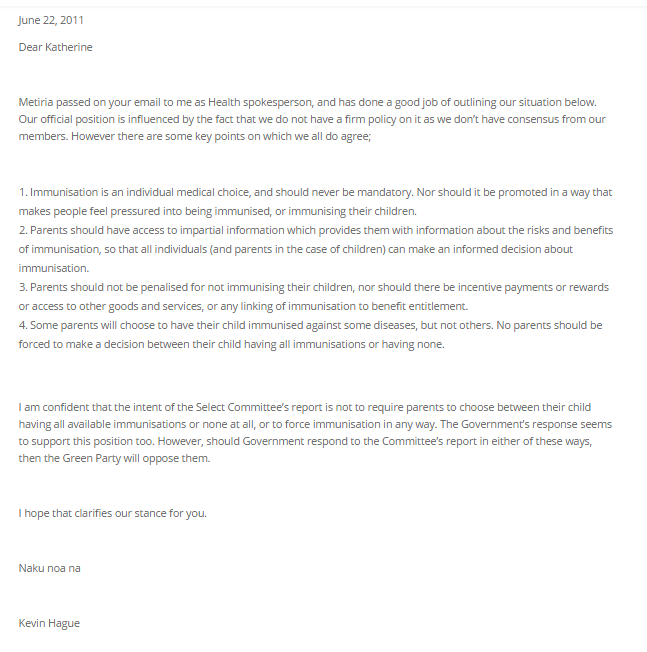
The most curious people in New Zealand to oppose measures to address the under provision of weakest shot public goods are the New Zealand Greens.
https://twitter.com/KevinHague/status/642505850360213505
The Greens are usually the 1st to stress the importance of communities working together for the common good.
https://twitter.com/KevinHague/status/642530277177192448
Herd immunity protects those who cannot be safely vaccinated including new babies, those for whom the vaccine fails, which occasionally happens, and those with compromised immunity such as adults receiving chemotherapy.
Deliriously hot @guardian sim shows why anti-measles jabs help protect your whole community gu.com/p/45f7e/stw http://t.co/H31ZKbXkqg—
Info=Beautiful (@infobeautiful) February 05, 2015
We are all in this together. It is time for the New Zealand Greens to stop pandering to those are only think of themselves and what a free ride on others including the very sick and new babies.

Source: NOVA | What is Herd Immunity?
Herd immunity requires vaccination rates of about 94%. The near universal vaccination rates required for herd immunity are to smaller margin to pander to an awkward squad who do not want to vaccinate despite the harm they do to others.
Harm to others is grounds and has always been grounds for public policy and public health interventions. Instead, the Greens are anti-science, anti-public health.
Measles is the most contagious disease known to man. Seven children died in New Zealand in the last measles outbreak in 1991. The dead are already too many from the anti-vaccination quacks and cranks.
@NZGreens these are the faces of #vaccine denialism
02 Sep 2015 Leave a comment
in economics of regulation, environmental economics, health economics Tags: Anti-Science left, anti-vaccination movement, conjecture and refutation, New Zealand Greens, political psychology, quackery, vaccines
The essence of science for the Anti-science Left @NZGreens @GreenpeaceNZ #GMOs
30 Aug 2015 Leave a comment
in economics of regulation, environmental economics, global warming, health economics Tags: Anti-Science left, climate alarmism, economics of agriculture, global warming, GMOs, Greenpeace, New Zealand Greens, precautionary principle
@NZGreens @GreenpeaceNZ Senator Leyonhjelm on the blood on the hands of the modern Luddites
19 Aug 2015 Leave a comment
in applied price theory, development economics, economic history, economics of information, economics of media and culture, economics of regulation, environmental economics, environmentalism, growth disasters, growth miracles, health economics, liberalism Tags: Anti-Science left, expressive voting, GMOs, golden rice, Greenpeace, Luddites, New Zealand Greens, precautionary principle, rational ignorance, rational irrationality, The Great Escape
Good as Gold: Can Golden Rice and Other Biofortified Crops Prevent Malnutrition? ow.ly/QQ1VT #Harvard http://t.co/O3SwpGhsXD—
Golden Rice (@Golden_Rice) August 13, 2015
INFOGRAPHICS: The Impacts of #Biotechnology: A Close Look at the Latest Study ow.ly/GUi4U @FoodInsight http://t.co/JQsmrm2Lv1—
Golden Rice (@Golden_Rice) January 07, 2015
Anti-Golden Rice keyboard
Used by opponent to debate against supporters of #goldenrice
@EcoSenseNow @Golden_Rice http://t.co/q6xt5j7hb1—
Golden Rice Now (@paulevans18) August 21, 2015
.@gpph If this girl could have eaten #goldenrice for lunch, she would not be blind today. ALLOW GOLDEN RICE NOW http://t.co/3UlwHAdWdZ—
Golden Rice Now (@paulevans18) July 29, 2015
RT if you think PETA members and other animal rights activists should sign this medical release now
26 May 2015 Leave a comment
in health economics Tags: animal liberation, animal rights, Anti-Science left, Left-wing hypocrisy, PETA
Americans and scientists agree more on vaccines than on other hot button issues
11 May 2015 Leave a comment
in economics of media and culture, environmental economics, global warming, health economics Tags: Anti-Science left, anti-vaccination movement, climate alarmism, global warming, vaccinations, vaccines
Americans and scientists agree more on vaccines than on other hot button issues. 53eig.ht/1CWsmPq http://t.co/M7eeDWgQoL—
(@FiveThirtyEight) February 07, 2015
 Utopia, you are standing in it!
Recent Comments