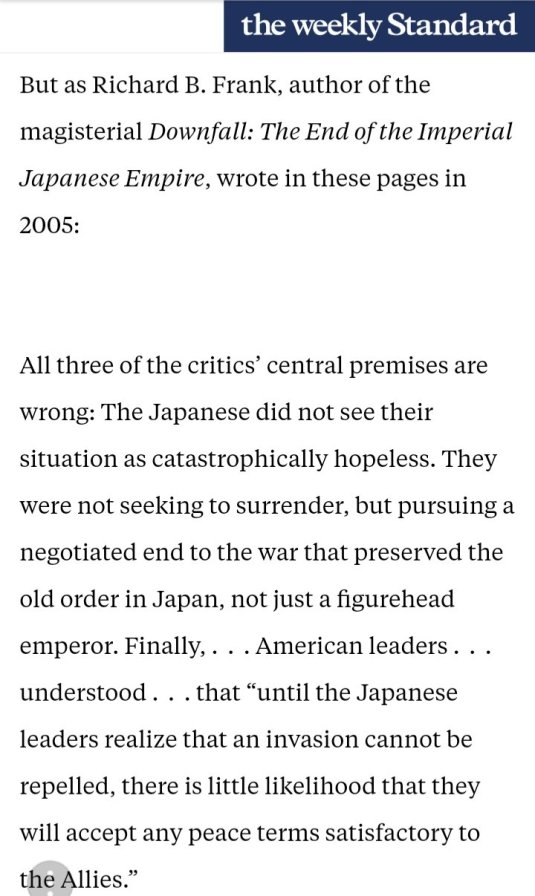
Hiroshima: After the Bomb
06 Aug 2020 Leave a comment
in defence economics, war and peace Tags: atomic bombings, World War II
Hiroshima conspiracy theories are surprising weak despite their longevity
05 Nov 2019 Leave a comment
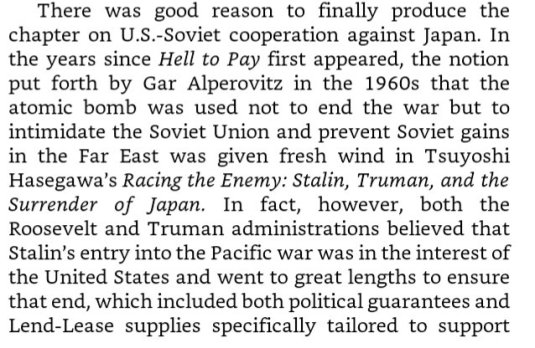
Why the Japanese Military wanted to fight on after(!) the 2nd Nuke (feat. D.M. Giangreco)
09 Aug 2019 Leave a comment
in defence economics, war and peace Tags: atomic bombings, World War II
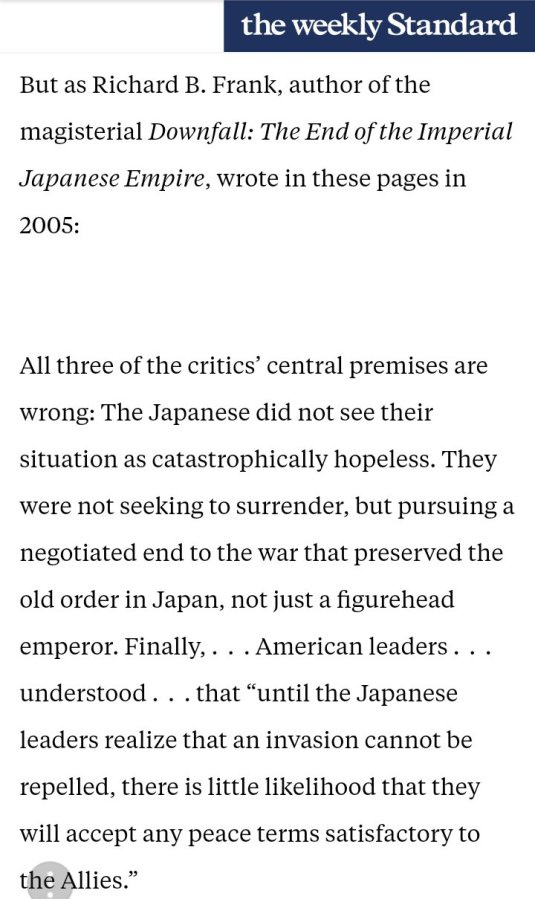
In @ScoopNZ on Japan fighting on after Nagasaki
10 Aug 2018 Leave a comment
in defence economics, laws of war, war and peace Tags: atomic bombings, World War II

Why the Japanese Military wanted to fight on after(!) the 2nd Nuke (feat. D.M. Giangreco)
09 Aug 2018 1 Comment
in defence economics, laws of war, war and peace Tags: atomic bombings, Japan, World War II
Why the Japanese Military wanted to fight on after(!) the 2nd Nuke (feat. D.M. Giangreco)
09 Aug 2018 Leave a comment
in defence economics, laws of war, war and peace Tags: atomic bombings, World War II
The Atomic Bombing of Hiroshima | The Daily 360 | The New York Times
06 Aug 2018 Leave a comment
in defence economics, laws of war, war and peace Tags: atomic bombings, World War II
Hitchens and Hanson – Did the Allies Commit War Crimes in WWII?
28 Mar 2018 Leave a comment
in defence economics, laws of war, war and peace Tags: atomic bombings, bombing of Germany, World War II
The Men Who Dropped the Bombs on Hiroshima and Nagasaki
31 Oct 2017 Leave a comment
in defence economics, war and peace Tags: atomic bombings
The Power of Propaganda and the Japanese Empire
09 Aug 2015 Leave a comment
in laws of war, Public Choice, war and peace Tags: atomic bombings, credible commitments, game theory, Japan, World War II
The quote of Schuler is an excellent summary of the difficulty of bringing a war to an end rather than give time to regroup and attack again.

Economist Kurt Schuler has a fascinating post on the various currencies that were used in mainland East Asia during World War II over at the Free Banking group blog.
Unfortunately, there are three paragraphs in the post that attempt to take libertarians to task for daring to challenge both the narrative of the state and the narrative of the nation regarding that horrific reminder of humanity’s shortcomings. He is writing of the certainty of the US’s moral clarity when it came to fighting Japan (the post was published around Pearl Harbor remembrance day):
The 1940 U.S embargo of certain materials frequently used for military purposes was intended to pressure Japan to stop its campaign of invasion and murder in China. The embargo was a peaceful response to violent actions. Japan could have stopped; it would have been the libertarian thing to do. For libertarians to claim that the embargo was…
View original post 1,475 more words
Nagasaki, 20 minutes after the atomic bombing
09 Aug 2015 Leave a comment
in laws of war, war and peace Tags: atomic bombings, Japan, Nagasaki, World War II
Nagasaki, 20 minutes after the atomic bombing in 1945. http://t.co/aqtpAyoUG2—
ClassicPics (@History_Pics) June 19, 2015
Squeamishness kills alert: were the atomic bombings unnecessary? Would have Japan surrendered anyway?
06 Aug 2015 Leave a comment
in defence economics, laws of war, war and peace Tags: atomic bombings, Hiroshima, Japan
https://twitter.com/makingdayscount/status/629162313879154688
8.15 am, 6 August 1945 bit.ly/1IrpJoA
#Hiroshima http://t.co/rtP26Q3qHm—
The Conversation (@ConversationUK) August 06, 2015#ThisDayInHistory 1945 – Atomic bombs were dropped on Hiroshima killing at least 129,000 people. http://t.co/4LmdcoJ034—
Paul Henry (@PaulHenryShow) August 06, 2015https://twitter.com/historyfacts247/status/629304405024763904
The atomic bomb is dropped on Hiroshima on this day 70 years ago. nyti.ms/1MPqwTn http://t.co/GAiWFzQcvV—
NYT Archives (@NYTArchives) August 06, 2015How The Japan Times reported the atomic bombings of Hiroshima and Nagasaki jtim.es/QvTPC http://t.co/xYwL62C16Z—
The Japan Times (@japantimes) August 06, 2015

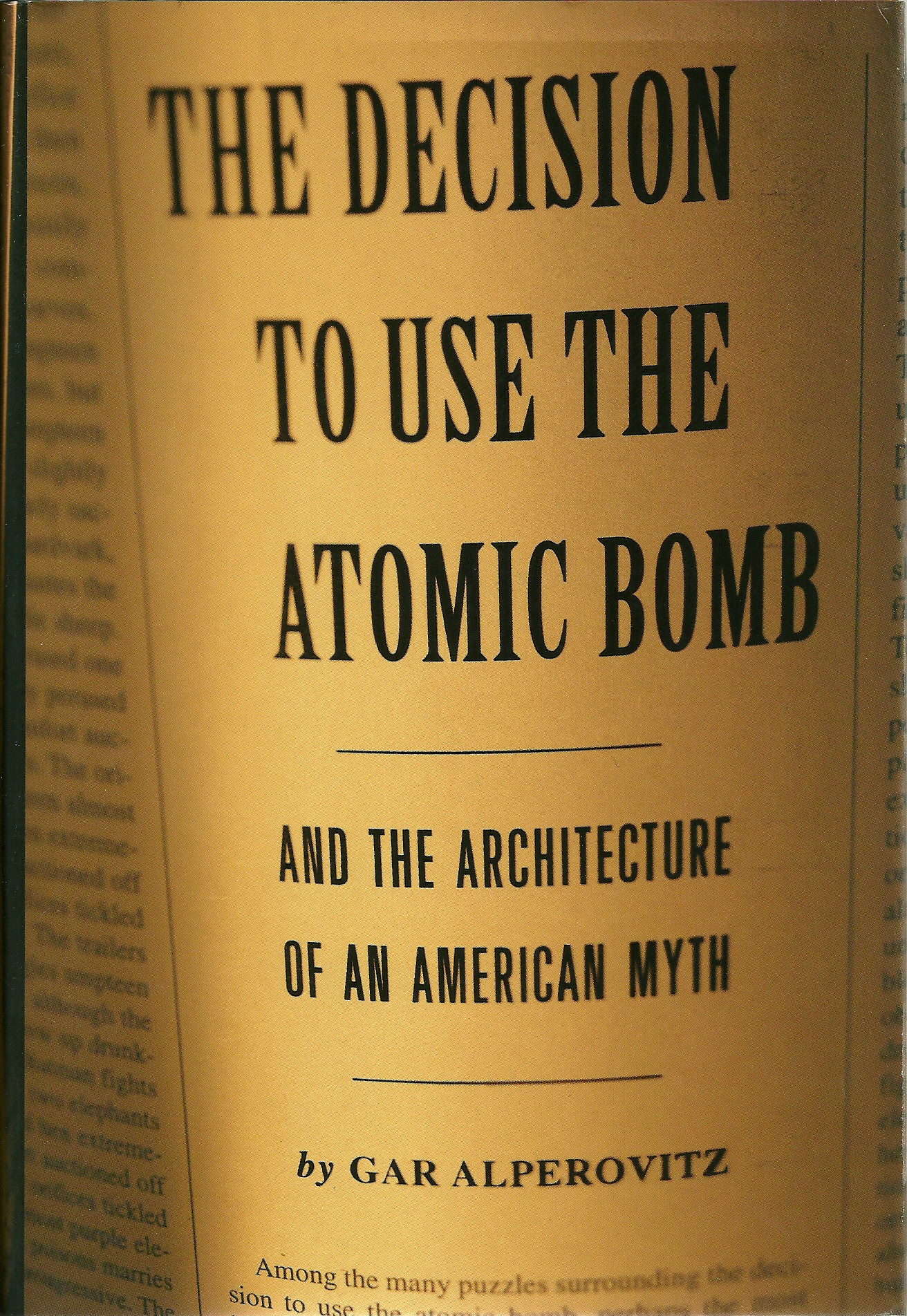
Those that argue that Japan surrendered for reasons other than the atomic bomb put forward contradictory arguments.
The first is the Japan was already seeking terms for surrender. That is true, but among those terms was avoiding occupation.
The Japanese leadership had already interpreted the terms of the Potsdam declaration was a sign of weakness. They hoped that by making the invasion of Japan as bloody as possible, they could extract even better terms in light of this sign of weakness at Potsdam. Kyushu, the obvious initial invasion site in southern Japan, was being heavily reinforced by the middle of 1945.
Japan no longer had a realistic prospect of winning the war by the end of 1994 and they knew it.
Japan’s leaders believed they could make the cost of conquering Japan too high for the Allies to accept, leading to some sort of armistice rather than total defeat. The Japanese…
View original post 529 more words
How The Japan Times reported the atomic bombings
06 Aug 2015 Leave a comment
in laws of war, war and peace Tags: atomic bombings, Hiroshima, Japan, Nagasaki, World War II
How The Japan Times reported the atomic bombings of Hiroshima and Nagasaki jtim.es/QvTPC http://t.co/xYwL62C16Z—
The Japan Times (@japantimes) August 06, 2015
via How The Japan Times reported the atomic bombings of Hiroshima and Nagasaki | The Japan Times.
 Utopia, you are standing in it!
Recent Comments