Morning in America: Political Ads That Changed the Game
10 May 2020 Leave a comment
in politics - USA, television Tags: Attack Ads, economics of advertising
Sleepy Joe’s master class in attack ads
09 Feb 2020 Leave a comment
in politics - USA, television Tags: 2020 presidential election, Attack Ads
60 Years of Presidential Attack Ads, in One Video
16 Jun 2019 Leave a comment
in economics of information, politics - USA, Public Choice, television Tags: Attack Ads
Attack Ads, Circa 1800
26 May 2019 Leave a comment
in economics of information, politics - USA, Public Choice Tags: Attack Ads, economics of advertising, pessimism bias
Top 10 Political Ads of 2016
08 Jan 2019 Leave a comment
in economics of information, politics - USA Tags: 2016 presidential election, Attack Ads
60 Years of Presidential Attack Ads, in One Video
27 Nov 2018 Leave a comment
in economics of information, politics - USA, Public Choice, television Tags: Attack Ads
Don’t Let Hillary Clinton Leave You Defenseless. Best negative Republican ad from the National Rifle Assn. A gripping mini-drama of a woman hearing an intruder in her house
01 Jul 2018 Leave a comment
in economics of information, economics of media and culture, economics of regulation, politics - USA Tags: 2016 presidential election, Attack Ads, gun control
60 Years of Presidential Attack Ads, in One Video
22 May 2018 Leave a comment
in economic history, economics of information, politics - USA, Public Choice Tags: Attack Ads, economics of advertising
Attack Ads, Circa 1800
20 May 2018 Leave a comment
in economic history, economics of information, politics - USA, Public Choice Tags: Attack Ads, economics of advertising
Déjà vu all over again for @NZLabour @NZGreens
07 Jun 2016 Leave a comment
in economics, economics of media and culture, politics - New Zealand Tags: 2014 New Zealand election, 2017 New Zealand election, Attack Ads, New Zealand Greens, New Zealand Labour Party
How the “Daisy” Ad Changed Everything About Political Advertising
14 Apr 2016 Leave a comment
in politics - USA, Public Choice Tags: Attack Ads, economics of advertising, political advertising
I love attack ads. They actually tell you something and bring the contrasts between the candidates into sharp focus.
Put another way, the firm believed that viewers should not be given too much information to put their minds and emotions to work. And Daisy Girl’s DNA has continued to provide instructions for today’s political advertising: Ronald Reagan’s famous 1984 “Bear” spot used the animal to symbolize the Soviet Union without explicitly making the association. In 2004, Bush’s campaign skillfully employed the same technique with a spot that used wolves to symbolize al Qaeda.
Voting is not a purely rational act. As the late journalist Joe McGinnis observed, it’s a “psychological purchase” of a candidate. It’s often no less rational than buying a car or a house. DDB understood that arguing with voters would be a losing proposition. To persuade someone, especially in the political realm, a campaign must target emotions. Voters don’t oppose a candidate because they dislike his or her policies; they often oppose the policies because they dislike the candidate.
Reagan’s optimistic 1984 “Morning in America” spot was a good example of this kind of appeal. So was George H.W. Bush’s dark, fear-inducing “Revolving Door” spot in 1988 that exploited the controversy over a prison furlough program of his Democratic opponent, Michael Dukakis. Bernie Sanders’ “America” spot is a current example. They are all very different ads, but are aimed at generating a non-rational, emotional response.
DDB also believed that giving data and facts was less persuasive than telling a story. The best spots provide an experience. In addition to evoking emotions and not repeating what the viewer already knew, many of the DDB spots from 1964 had a narrative arc to them. A good example in 1964 was a Johnson spot reminding viewers of the many harsh attacks on Goldwater by his former GOP opponents. The gold standard for subsequent spots in this genre may be Bill Clinton’s 60-second “Journey” spot from 1992, in which he touted his small-town American values by recounting his childhood in Hope, Arkansas.
Source: How the “Daisy” Ad Changed Everything About Political Advertising | History | Smithsonian
@TheDailyBlogNZ just does not understand why @JohnKeypm is popular and beats them
16 Mar 2016 Leave a comment
in economics of media and culture, politics - New Zealand Tags: Attack Ads, Key derangement syndrome, media bias, Ronald Reagan
The latest example of Key derangement syndrome, a photo essay, reminded me of a story about some prime time TV network current affairs coverage of Ronald Reagan early in his first term. It was a long piece arguing that he was not a very good president.
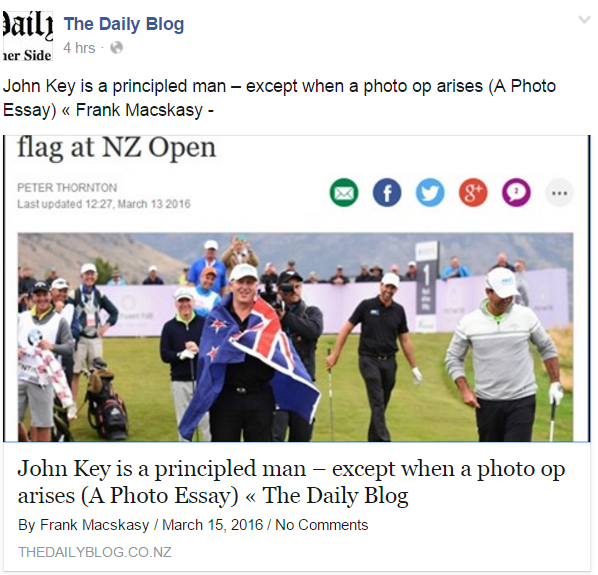
The White House communications director Mike Dever rung up the journalist and thanked him for the coverage. The journalist did not understand why did not understand why.
Dever said that collection of TV clips they put together were excellent – some of the best they have seen. They showed Reagan meeting congressional leaders, business, the public and foreign leaders. Dever said the only thing that the public will remember is the images of Reagan as a hard-working world leader but still a man of the people.
Most accurate attack ad ever from 1933
29 Apr 2015 Leave a comment
Prescient 1932 Hindenburg campaign poster showing Commies as Moscow stooges & Nazis as aspiring mass murderers. Yup. http://t.co/5IIYsaYwDy—
Mark Tooley (@markdtooley) April 28, 2015
In Defence of Negativity in Politics – John G. Geer
24 Mar 2015 Leave a comment
in economics of information, economics of media and culture, politics - Australia, politics - New Zealand, politics - USA, Public Choice Tags: Attack Ads, expressive voting, John G. Geer, political psychology, rational ignorance, rational irrationality
John G. Geer, author of In Defense of Negativity: Attack Ads in Presidential Campaigns, argues that negative ads are positive. They focus on important political issues and give voters critical information about differences between candidates. Attack ads do not degrade, but rather enrich the democratic process. When political candidates attack each other, they raise doubts about each other’s views and qualifications. Voters—and the democratic process—benefit from this clash of opinions.
 Utopia, you are standing in it!
Recent Comments