
China’s richest lawmakers make America’s look straight up poor
14 Mar 2015 Leave a comment
in income redistribution, politics - USA, Public Choice, rentseeking Tags: China
Obama’s climate deal with China is a solar and wind energy fantasy
03 Mar 2015 Leave a comment
in energy economics, entrepreneurship, environmental economics, environmentalism, global warming Tags: carbon neutral economy, China, climate alarmism, global warming, solar energy


How the Chinese Zodiac Affects National Birth Rates
25 Feb 2015 1 Comment
in applied price theory, economic history, economics of media and culture Tags: China, superstition


The shifting sources of greenhouse gas emissions
24 Feb 2015 Leave a comment
in development economics, environmental economics, global warming, growth miracles, politics - Australia, politics - New Zealand, politics - USA Tags: China, climate alarmism, free riding, game theory, global public goods, global warming

Words used in Chinese books illuminate how a nation’s values changed during economic reforms | UCLA
19 Feb 2015 Leave a comment
in Austrian economics, development economics, economic history, economics of media and culture, growth miracles, industrial organisation Tags: China, transitional economies

Use of the word “communal” rose sharply during the Cultural Revolution, especially from 1970 to 1976; it decreased during the 1980s. (China launched economic reforms in 1978, and they continue to this day.)
The word “autonomy” was used just one-third as frequently as “obedience” in 1970. In 2008, the ratio had flipped and “autonomy” appeared three times as much as “obedience.”
The increase in use of words like “choose,” “compete,” “private,” “autonomy” and “innovation” demonstrated a growing prevalence of individualistic values coinciding with sharp rises in urban population, household consumption and education levels.
Words reflecting communal values, such as “help” and “sacrifice,” declined in frequency.
via Words used in Chinese books illuminate how a nation’s values changed during economic reforms | UCLA.
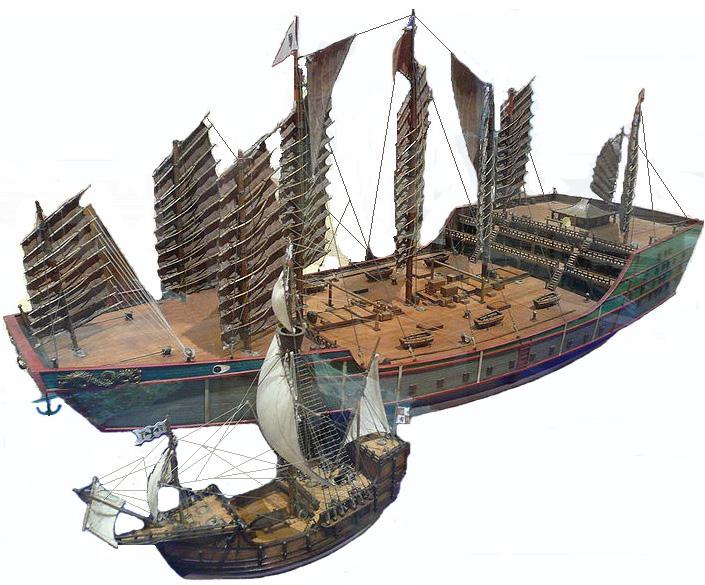
In 1420, China operated ships 10x the size of Columbus’ vessels
15 Feb 2015 1 Comment
in economic history Tags: China

Chinese electricity production is based on fossil fuels
08 Dec 2014 Leave a comment
in development economics, growth disasters, growth miracles, politics - USA, population economics Tags: China

Ideas: When Mao died, The Economist wrote
06 Sep 2014 Leave a comment
in comparative institutional analysis, constitutional political economy, growth disasters, liberalism, Public Choice Tags: China, communism, How China Became Capitalist, mao, useful idiots
In the final reckoning, Mao must be accepted as one of history’s great achievers: for devising a peasant-centered revolutionary strategy which enabled China’s Communist Party to seize power, against Marx’s prescriptions, from bases in the countryside; for directing the transformation of China from a feudal society, wracked by war and bled by corruption, into a unified, egalitarian state where nobody starves; and for reviving national pride and confidence so that China could, in Mao’s words, ‘stand up’ among the great powers.


via Ideas and http://www.scottmanning.com/content/visualizing-the-great-leap-forward/


Recent Comments