Washington Times Editorial: Passion for climate change cools http://t.co/37qvjb349a pic.twitter.com/bIiw8CfE6J
— Climate Realist (@ClimateRealists) February 3, 2015
Infographic: The Anti-Science Climate Denier Caucus, 114th Congress Edition | ThinkProgress
03 Feb 2015 Leave a comment
in environmental economics, global warming, politics - USA Tags: 2014 congressional elections, climate alarmism, climate scepticism
Irrespective of whether you look upon climate sceptics as sceptics or heretics to be driven from the temple, this is a great graph of Who’s Who in Congress on climate alarmism.
Via Infographic: The Anti-Science Climate Denier Caucus, 114th Congress Edition | ThinkProgress.
There are different ways of measuring global warming
03 Feb 2015 Leave a comment
in environmental economics, global warming Tags: climate alarmism, theory and measurement
Saving Civilization: 2009 vs 2015
27 Jan 2015 Leave a comment
in environmental economics, politics - Australia, politics - New Zealand, politics - USA Tags: activists, climate ala, climate alarmism, do gooders, expressive voting, green rent seeking, rational ignorance, rational irrationality
An absolutely excellent collection of climate alarmist statements by hacks whose jobs depended on fermenting confusion and moral panic


Five years ago, we were told that the 2009 Copenhagen climate summit was the last chance to save civilization. As the 2015 Paris summit approaches, the same sort of fear mongering is ramping up.
Earlier this week, a climate declaration published as a full-page ad in the international edition of New York Times tried to frighten us. It told us that:
the UN Climate Summit in Paris in December 2015 may be the last chance to agree a treaty capable of saving civilization; [bold added]
The declaration insisted that global warming may “cause the very fabric of civilization to crash.” It said charitable foundations should therefore divert resources away from other projects – presumably building hospitals and schools, preventing blindness and malaria, ensuring basic sanitation – in order to “save civilization” from the climate scourge.
Problem is, we’ve heard this before. Not so very long ago, the British Prime…
View original post 86 more words
American public concern about global warming is recovering with the economy
26 Jan 2015 Leave a comment
in environmental economics, global warming, politics - USA Tags: climate alarmism, expressive voting

It was the Democrats and and independents who lost interest in global warning as the economy weakened.

Global warming is second bottom is a major political priority in the USA at this time

The Doomsday Clock is seriously awry
24 Jan 2015 Leave a comment
Things are worse than in the 1980s. What nonsense.
Overcoming Bias : Exposing Scientist Liberality
24 Jan 2015 Leave a comment
in economics of media and culture, environmental economics, global warming, occupational choice, personnel economics Tags: academic bias, activists, climate alarmism, expressive 13, rational ignorance, rational irrationality

If the public knew the truth, I expect two effects:
- The public would consider scientists to be less authoritative as a neutral source on policy questions, and
- Since scientists are respected, the public would become less conservative and more liberal.
What do climate alarmists do when the facts change
24 Jan 2015 1 Comment
in environmental economics, global warming Tags: climate alarmism, conjecture and refutation, global warming, political psychology, sociology of science, structure of scientific revolutions
Climate change and nuclear bombs set ‘doomsday clock’ on verge of midnight | The Guardian
23 Jan 2015 Leave a comment
in defence economics, environmental economics, global warming Tags: climate alarmism, The Guardian
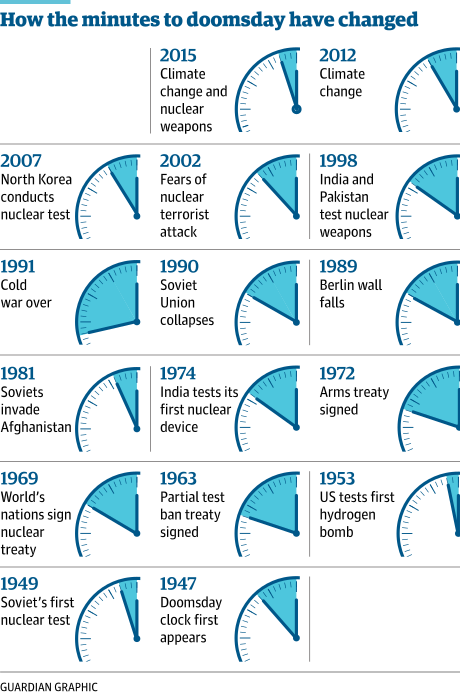
Whoever is equating global warming with the risk of thermonuclear war and the Cold War either wasn’t around or wasn’t paying attention to world politics prior to 1989 and the fall of the Berlin Wall.
Richard Lindzen on the consensus in global warming science
23 Jan 2015 Leave a comment
in environmental economics, global warming Tags: climate alarmism, conjecture and refutation, Richard Lindzen

I looked up his 2011 House of Lords testimony:
- The global mean surface temperature is always changing. Over the past 60 years, it has both decreased and increased.
- For the past century, it has probably increased by about 0.6 degrees Centigrade (C). That is to say, we have had some global mean warming.
- CO2 is a greenhouse gas and its increase should contribute to warming. It is, in fact, increasing, and a doubling would increase the radiative forcing of the earth (mainly due to water vapour and clouds) by about 2 per cent.
- There is good evidence that man has been responsible for the recent increase in CO2, though climate itself (as well as other natural phenomena) can also cause changes in CO2.
To this extent, and no further, Linden was it is legitimate to speak of a scientific consensus. He later ended noting a disconnect where:
• The fact that there is widespread and even rigorous scientific agreement that complete adherence to the Kyoto Agreement would have no discernible impact on climate.
• This clearly is of no importance to the thousands of negotiators, diplomats, regulators, general purpose bureaucrats and advocates attached to this issue.
There are a lot of stunts in environmental politics:
• Clinton signed the Kyoto protocol in 1997 but never submitted it to the Senate. Does that 801 days of inaction on the great moral issue of our time leave him steeped in moral turpitude?
• Did Obama ever submit the Kyoto protocol to the senate? Does that leave him steeped in moral turpitude?
Global warming has little impact on agricultural production, even in the 2080s
23 Jan 2015 Leave a comment
in experimental economics, politics - USA Tags: climate alarmism, global warming

HT: https://twitter.com/BjornLomborg/status/514432333756514305?s=09
The response of biologists to creation theory as compared to climate alarmism
20 Jan 2015 Leave a comment
in economics of education, environmental economics, global warming, movies Tags: climate alarmism, conjecture and refutation, Inherit the Wind, JS Mill, persuasion, Socratic questions
Biologists spent great effort over many decades to rebut creation science is a cold methodical manner designed to change minds through facts and reasoned arguments. Insults and conceit give peoples excuses to not listen.
Labels like denier and alarmist are not conducive for scientists to change their minds or decide they were right in the first place, and that such unpleasantness encourages many to choose other careers or fields of study.
It is better to ask your interlocutor to think more deeply about this or that point that is in debate. Look for common ground that already exists and for a growing number of important anomalies and puzzles their current way of thinking cannot explain. Knowledge grows through critical discussion, not by consensus and agreement.
J.S. Mill pointed out that critics who are totally wrong still add value because they keep you on your toes and sharpened both your argument and the communication of your message.
If the righteous majority silences or ignores its opponents, it will never have to defend its belief and over time will forget the arguments for it.
As well as losing its grasp of the arguments for its belief, J.S. Mill adds that the majority will in due course even lose a sense of the real meaning and substance of its belief.
What earlier may have been a vital belief will be reduced in time to a series of phrases retained by rote. The belief will be held as a dead dogma rather than as a living truth.
Beliefs held like this are extremely vulnerable to serious opposition when it is eventually encountered. They are more likely to collapse because their supporters do not know how to defend them or even what they really mean.
J.S. Mill’s scenarios involves both parties of opinion, majority and minority, having a portion of the truth but not the whole of it. He regards this as the most common of the three scenarios, and his argument here is very simple.
To enlarge its grasp of the truth the majority must encourage the minority to express its partially truthful view.
Three scenarios – the majority is wrong, partly wrong, or totally right – exhaust for Mill the possible permutations on the distribution of truth, and he holds that in each case the search for truth is best served by allowing free discussion.
Mill thinks history repeatedly demonstrates this process at work and offered Christianity as an illustrative example. By suppressing opposition to it over the centuries Christians ironically weakened rather than strengthened Christian belief, and Mill thinks this explains the decline of Christianity in the modern world. They forgot why they were Christians.
Going on about how climate science is settled and the debate is over is bad tactics for the climate alarmists.
Attempts to close the debate this way provokes suspicion among those who expect some attempt to persuade them rather than to instruct them from on high.
Presumptuousness is never a good influencing strategy nor is dismissiveness. Listen here you stupid dupe of corrupt corporate lackeys converts few.
Most know that the defining feature of the growth of knowledge is knowledge grows and that is often by displacing the received wisdom. These instincts come well before any knowledge is required by the philosophy and sociology of science.

Darrow’s polite and careful cross-examination of Bryan in that great movie Inherit the Wind persuaded many to reject religious-based opposition to the theory of evolution. He asked questions and was very polite. The movie was Spencer Tracy at his finest and in black and white.

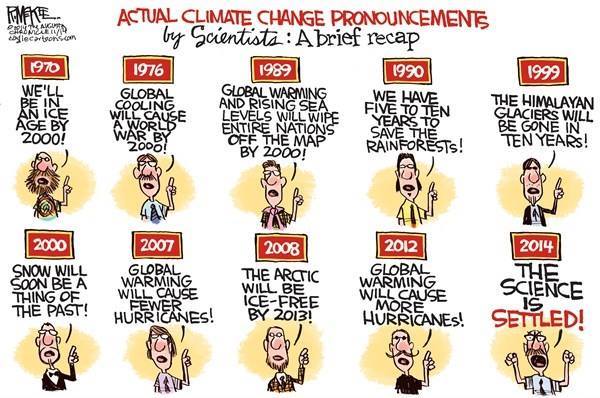
 Utopia, you are standing in it!
Recent Comments