Your driving future
20 Oct 2021 Leave a comment
in law and economics, property rights, transport economics Tags: common law, driverless cars, tort law
John Hudson, “F.W. Maitland, Common Law and Civil Law”
03 Aug 2018 Leave a comment
in economic history, law and economics, property rights Tags: common law
The herd immunity role of #vaccinations explained
16 Sep 2015 Leave a comment
in applied price theory, applied welfare economics, health economics, politics - New Zealand, public economics Tags: Anti-Science left, anti-vaccination movement, best shot public goods, cheap riders, common law, free-riders, good shot public goods, herd immunity, measles, New Zealand Greens, public goods, quackery, tort law, vaccinations, vaccines
Some public goods can be not provided much at all if even a few do not contribute – free ride. These are called weakest shot public goods. The link in the chain is only as strong as the weakest link for some public goods. The fighting against communicable diseases is an example of that.

The classic example given by that brilliant applied price theorist Jack Hirschleifer is a dyke or a levee wall around a town. It is only as good as the laziest person contributing to its maintenance on their part of the levee wall. Vicary (1990, p. 376) lists other examples:
Similar examples would be the protection of a military front, taking a convoy across the ocean going at the speed of the slowest ship, or maintaining an attractive village/landscape (one eyesore spoils the view).
Many instances of teamwork involve weak-link elements, for example moving a pile of bricks by hand along a chain or providing a theatrical or orchestral performance (one bad individual effort spoils the whole effect.)
Another example of weakest shot public goods is community cooperation after disasters. The quality of the public good provided is equal to the contribution of the weakest person who may start a criminal rampage despite the good efforts of everyone else.
 People tend to be more cooperative after natural disasters. They realise their contribution is more important than normal to the maintaining of the social fabric which is currently hanging by a thread.
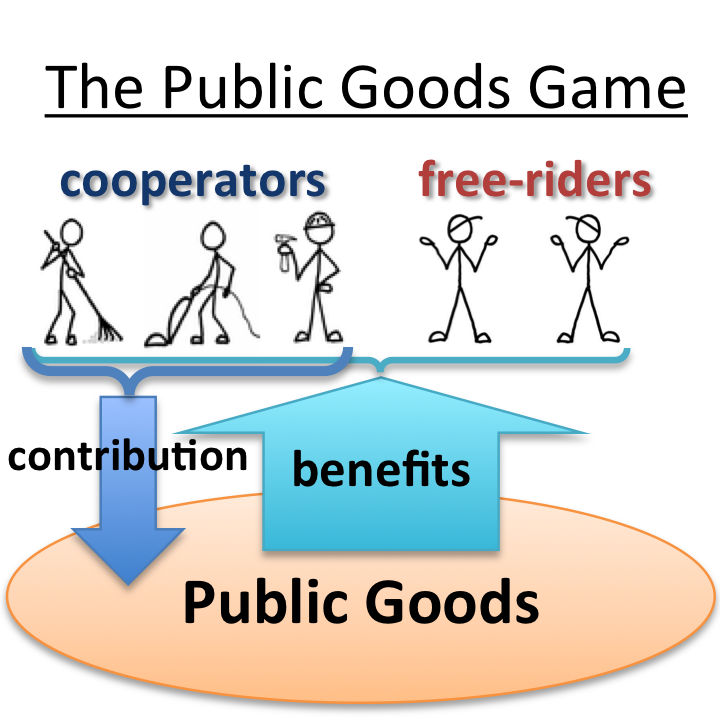
Vaccinations are example of a weakest shot public good. The quality of herd immunity depends fundamentally on just about everybody contributing by getting vaccinated. Not all public goods depend on the some of those contributions made. In some cases just a few people choosing to free ride can greatly undermine the public interest.
The reverse of a weakest shot public good is best shot public goods. Example of this is the development of vaccines themselves. The public good is only as good as the best effort at developing the new vaccine with all the others efforts pointless because the best of the vaccines is chosen.
The most curious people in New Zealand to oppose measures to address the under provision of weakest shot public goods are the New Zealand Greens.
https://twitter.com/KevinHague/status/642505850360213505
The Greens are usually the 1st to stress the importance of communities working together for the common good.
https://twitter.com/KevinHague/status/642530277177192448
Herd immunity protects those who cannot be safely vaccinated including new babies, those for whom the vaccine fails, which occasionally happens, and those with compromised immunity such as adults receiving chemotherapy.
Deliriously hot @guardian sim shows why anti-measles jabs help protect your whole community gu.com/p/45f7e/stw http://t.co/H31ZKbXkqg—
Info=Beautiful (@infobeautiful) February 05, 2015
We are all in this together. It is time for the New Zealand Greens to stop pandering to those are only think of themselves and what a free ride on others including the very sick and new babies.

Source: NOVA | What is Herd Immunity?
Herd immunity requires vaccination rates of about 94%. The near universal vaccination rates required for herd immunity are to smaller margin to pander to an awkward squad who do not want to vaccinate despite the harm they do to others.
Harm to others is grounds and has always been grounds for public policy and public health interventions. Instead, the Greens are anti-science, anti-public health.
Measles is the most contagious disease known to man. Seven children died in New Zealand in the last measles outbreak in 1991. The dead are already too many from the anti-vaccination quacks and cranks.
@radleybalko @thecounted 156 killed by police 1 July-11 August. How did they die?
13 Aug 2015 2 Comments
in economics of crime, law and economics, politics - USA Tags: common law, crime and punishment, criminal deterrence, law enforcement, police

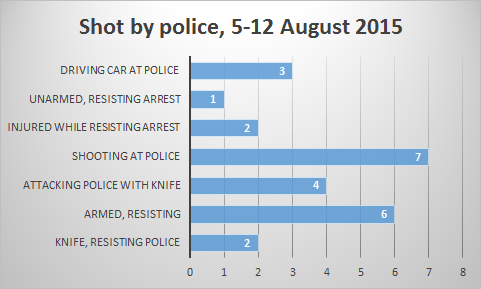
@radleybalko @thecounted 25 killed by police 5-12 August. How did they die? @PoliticalLine
12 Aug 2015 Leave a comment
in economics of crime, law and economics, politics - USA Tags: common law, crime and punishment, criminal deterrence, law enforcement, police
I’m worried! I’m sympathising with organic farmers over a land use conflict!
06 Aug 2015 1 Comment
in applied price theory, applied welfare economics, economics of regulation, industrial organisation, law and economics, politics - New Zealand, property rights, Public Choice, rentseeking, Richard Epstein, survivor principle Tags: common law, economics of agriculture, food snobs, green rent seeking, land use conflicts, land use planning, law of nuisance, noise pollution, nuisance, old common law, organic farming, Richard Epstein, William Blackstone, zoning
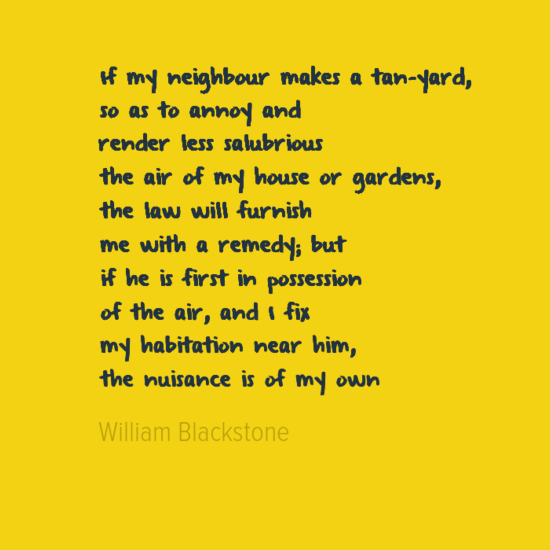
Writing this blog of sound mind and sober disposition, I still have considerable sympathy with two organic farmers over a land use conflict they have with the neighbouring gun range.
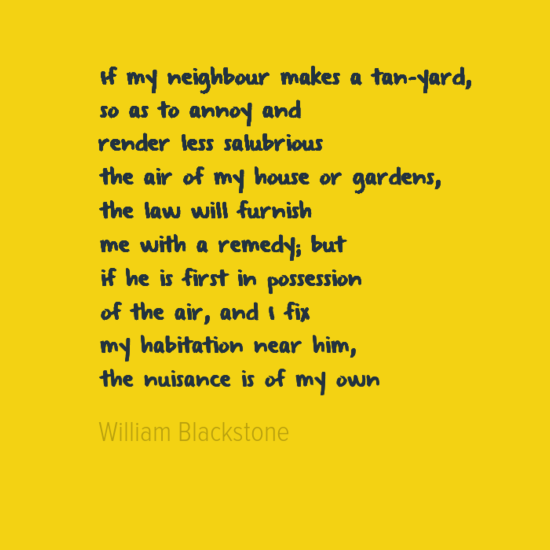
Local land use regulations allows a gun club to set up 600 m away with competitive shooting days all day for 88 days a year. That is a voluntary self restraint. They could hold shooting competitions every day of the year. The local land use regulations allow the use of guns on rural land. The gun club used this absence of a prohibition on the use of guns in the frequency of use to set up a gun range to fire guns all day long on rural land.

Now here is the rub. There something wrong with the concept of quiet enjoyment of your land if a neighbour can fire off a large amount of noises continuously. The occasional noise, the occasional gunshot yes, but all day? I live near the airport, but I knew it was there when we bought the property and the lands was a little cheaper because of that.
The organic farmers are unusually pristine and prissy about what they want by neighbours to protect the sacredness of their more expensive snob food. I’m not too sure whether they would want to grant their neighbours an equal right to unusual land uses such as opening a gun range. That said, the organic farmers do have a point about a very noisy neighbouring land use that can be heard some distance away.
The organic farmers, of course, could have negotiated with their neighbours for covenants to restrict land use that undermine there are unusually pristine requirements for quiet enjoyment of their land and their neighbours land too. Easy to do when the land is first unused, but once economic activity accumulates, not so easy in terms of transaction costs and hold-outs.

How to make the case for arming British police when attacking American police shootings
26 Jul 2015 Leave a comment
in economics of crime, health and safety, labour economics, law and economics, politics - USA Tags: common law, crime and punishment, law enforcement, occupational health and safety, police, rule of law
More British English, Scottish and Welsh police (68) have been murdered by gunfire than British police have shot people dead (52) in over a century.

Source: Number of police officers shot dead in the UK by decade | John Graham-Cumming.
This suggests to me that the ledger is in the wrong direction. This list does not include British police stabbed or beaten to death nor are Northern Ireland deaths.
According to the FBI, from 1980–2014, an average of 55 law enforcement officers are feloniously killed per year in the USA. Those killed in accidents in the line of duty are not included in this number.
More law enforcement officers are murdered every year in the USA than ever murdered by gunfire in Britain. Police have the same common law right as any other to defend their own lives and the lives of others.
/cdn0.vox-cdn.com/uploads/chorus_asset/file/2849636/Screen_Shot_2014-12-21_at_1.42.15_PM.0.png)




 Utopia, you are standing in it!
Recent Comments