Bringing back national service faces a few hurdles
12 Jun 2020 Leave a comment
in defence economics, health economics, labour economics, labour supply Tags: conscription
Why don’t Countries Formally Declare War Anymore?
09 May 2020 1 Comment
in defence economics, international economic law, International law, law and economics, Public Choice Tags: conscription, Falklands war, Vietnam war
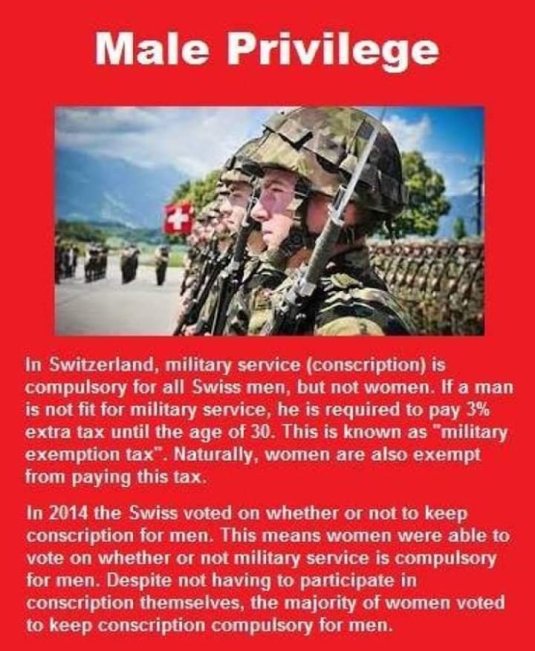
Interesting referendum
04 Aug 2019 Leave a comment
in defence economics, discrimination, gender, labour economics, labour supply, occupational choice, Public Choice, war and peace Tags: conscription, Switzerland
The Ultra Orthodox vs. The IDF: Israel’s Other Religious War
27 Apr 2018 Leave a comment
in defence economics, economics of religion Tags: conscription, Israel
Richard Nixon’s public choice economics of the Vietnam anti-war movement
30 Apr 2015 Leave a comment
in labour economics, labour supply, occupational choice, politics - USA Tags: conscription, peace movements, Richard Nixon, Vietnam war
The Vietnam anti-war movement were primarily the result of the draft: hell no, we won’t go and the burning of draft cards. Richard Nixon was as cunning a rat who ever occupied the Oval Office. He was elected in 1968 to end the Vietnam war and to end the draft.
Nixon had an intuitive economic understanding that the anti-war movement’s rioting in the streets and campuses was very much motivated by private gain. In particular, the threat of being drafted. The notion that revolutions and political movements are motivated by private gain is not new.
Vietnamisation changed everything. In 1969, Nixon started the process of phasing down the sending of further combat troops to Vietnam and the phasing down of the draft. US troop withdrawal started on July 1st 1969 with completion dates – December 1970, June 1971 and December 1972.
By the beginning of 1972, over 400,000 U.S. military personnel had been withdrawn, virtually all combat troops. The protests were against ending up in the jungle – not up the rear with the gear. There were 24,000 US troops in Vietnam in 1972. This compares to 560,000+ in 1969.
A Vietnam vet told me that when he returned to his U.S. campus in 1971 for graduate studies, it was very quite compared to 1969 because the spectre of the draft had gone in their minds.

The anti-war movement was really motivated by hell no, we won’t go. As soon as the prospect of going to Vietnam faded away, so did the anti-war movement.
 Utopia, you are standing in it!
Recent Comments