An internal inconsistency in certain leading conspiracy theories
05 Aug 2015 Leave a comment
in applied price theory, comparative institutional analysis, economics of bureaucracy, economics of media and culture, health economics, Public Choice, rentseeking Tags: antiscience left, climate alarmism, conspiracy theories, conspiracy theorists, GMOs, political psychology
The alternative to orchestrating a vast conspiracy
02 Aug 2015 1 Comment
in applied price theory, economic history, health economics Tags: conspiracy theories, GMOs, moon landing
The impact of neoliberalism on labour market freedom in Argentina, Brazil, Chile and Venezuela
22 Jul 2015 Leave a comment
in development economics, economic history, economics of regulation, growth disasters, growth miracles, labour economics, labour supply, minimum wage, unions Tags: Argentina, Brazil, Chile, conspiracy theories, employment law, employment regulation, Index of Economic Freedom, Leftover Left, Mont Pelerin Society, neoliberalism, Twitter left, Venezuela
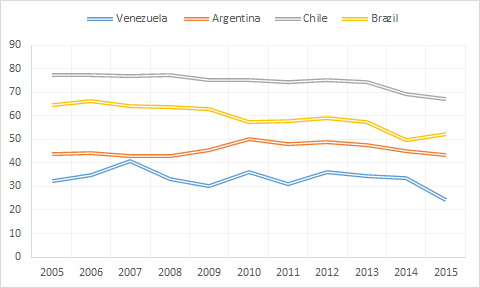
All was quiet on the neoliberalism front in Latin America for the last 20 years. In yet another defeat for the Mont Pelerin Society led transnational conspiracy, labour market freedom has declined in the four countries in figure 1. I’ve always had my doubts about the ability of a transnational conspiracy to be led by a society with such a crappy website.
Figure 1: Index of Economic Freedom, Argentina, Brazil, Chile and Venezuela, 95 – 2015
Source: Index of Economic Freedom 2015.
The impact of neoliberalism on economic freedom in Argentina, Brazil, Chile and Venezuela since 1995
20 Jul 2015 Leave a comment
in applied price theory, applied welfare economics, comparative institutional analysis, development economics, economic history, economics of regulation, growth disasters, growth miracles Tags: Argentina, Brazil, Chile, conspiracy theories, Index of Economic Freedom, Leftover Left, Mont Pelerin Society, neoliberalism, Twitter left, Venezuela
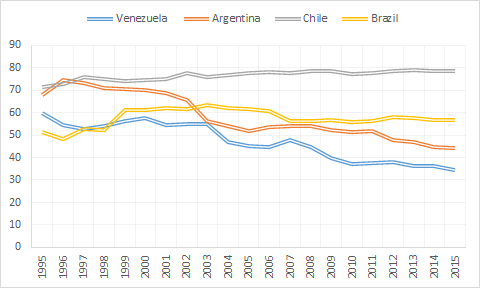
All was quiet on the neoliberalism front in Latin America for the last 20 years. In yet another defeat for the Mont Pelerin Society led transnational conspiracy, economic freedom has been pretty stable in Chile for 20 years and in the serious decline in Venezuela and Argentina – see figure 1. Not much happening in Brazil either on the neoliberalism front – see figure 1. I’ve always had my doubts about the ability of a transnational conspiracy to be led by a society with such a crappy website.
Figure 1: Index of Economic Freedom, Argentina, Brazil, Chile and Venezuela, 95 – 2015
Source: Index of Economic Freedom 2015.

A taxonomy of the Moon Landing hoax
28 Jun 2015 Leave a comment
in health economics, politics - USA Tags: conspiracy theories, conspiracy theorists, moon landing, moon landing hoax, political psychology, space
The secret behind chemtrails?
24 Jun 2015 Leave a comment
in transport economics Tags: conjecture and refutation, conspiracy theories
Green parties score 2/3 on this test?
21 Jun 2015 Leave a comment
in economics of regulation, health economics, politics - Australia, politics - New Zealand, politics - USA, technological progress Tags: 9/11, anti-vaccination movement, antiscience left, conspiracy theories, expressive voting, GMOs, inspiriting theorists, rational ignorance, rational irrationality, risk risk trade-offs, vaccines
Improvements in life expectancy since 1900
15 Jun 2015 Leave a comment
in economic history, environmental economics, health economics Tags: anti-vaccination movement, antiscience left, conspiracy theories, conspiracy theorists, life expectancy, Quacks, The Great Escape
Irrational nonsense mapped
12 Jun 2015 Leave a comment
in health economics, liberalism, politics - Australia, politics - New Zealand, politics - USA Tags: anti-vaccination movement, antifluoridation movement, antiscience left, BlackBerry, conjecture and refutation, conspiracy theories, conspiracy theorists, expressive voting, infotopia, rational ignorance, rational irrationality
Conspiracy theories versus the supply and demand for scientists who are approachable about their findings
11 Jun 2015 5 Comments
in environmental economics, health economics Tags: anti-vaccination movement, bribery and corruption, climate alarmists, conjecture and refutation, conspiracy theories, conspiracy theorists
Big Pharma versus Big Placebo
09 Jun 2015 Leave a comment
in health economics Tags: anti-vaccination movement, antiscience left, conspiracy theories, conspiracy theorists
Deranged conspiracy theories versus the domestic political reality of the Indonesian resumption of executions
05 Jun 2015 Leave a comment
in development economics, economics of crime, law and economics, politics - Australia Tags: Australia, capital punishment, conspiracy theories, crime and punishment, expressive voting, Indonesia, left-wing condescension, Left-wing hypocrisy, Leftover Left, rational ignorance, rational irrationality
The Australian human rights commissioner has put forward a bizarre conspiracy theory linking the recent execution of two drug traffickers in Indonesia to the Australian policy of turning back refugee boats.

Ignorance and condescension of Indonesian domestic politics is prevalent among the left wing elite in Australia.
Indonesia started executions again under the new president after a long hiatus and in particular for death sentences for narcotics drug trafficking. Indonesia had an unofficial moratorium on the death penalty between 2008 and 2012 but resumed executions in 2013. Executions were infrequent.
The new president was recently elected on a platform of being tough on crime and in particular on drug trafficking and the 64 drug traffickers currently on death row:
[The clemency requests] are not on my table yet. But I guarantee that there will be no clemency for convicts who committed narcotics-related crimes
Secondly, making concessions to Australia does not win votes in Indonesia which is a democracy. Thirdly, a range of foreigners are on death row in Indonesia. The best way to have kept those two Australians alive was to say nothing so hopefully they are not moved up in the queue to spite Australia to win domestic political points.
Fourthly, someone of her legal training should be better at spinning conspiratorially yarns than this particularly weak work of imagination.
The science news cycle
02 May 2015 Leave a comment
in economics of information, economics of media and culture Tags: conjecture and refutation, conspiracy theories, infotainment, infotopia, media buyers
In another neoliberal victory, income taxes became more progressive in recent decades
28 Apr 2015 Leave a comment
in economic history, politics - USA, Public Choice, public economics Tags: conspiracy theories, Leftover Left, neoliberalism, taxation in the labour supply, top 1%
How much does each income group pay in taxes? bit.ly/1JHSCik by @aplundeen http://t.co/B66ynsUrkc—
Tax Foundation (@taxfoundation) April 14, 2015
The U.S. Income Tax system is progressive bit.ly/1FG9Usm by @aplundeen http://t.co/HXDWbvv1xy—
Tax Foundation (@taxfoundation) April 15, 2015
 Utopia, you are standing in it!
Recent Comments