Piers Seed writes about the current definition of taonga: According to the Waitangi Tribunal the definition of taonga is: “Treasures’: ‘taonga’. As submissions to the Waitangi Tribunal concerning the Māori language have made clear, ‘taonga’ refers to all dimensions of a tribal group’s estate, material and non-material – heirlooms and wahi tapu (sacred places), ancestral lore…
Does Parliament also need to define taonga?
Does Parliament also need to define taonga?
14 Jun 2024 Leave a comment
in economics of crime, law and economics, politics - New Zealand Tags: constitutional law
Leftists Against Growth: Honest, but Wrong
10 Jun 2024 Leave a comment
in comparative institutional analysis, constitutional political economy, development economics, economic growth, economic history, macroeconomics Tags: constitutional law
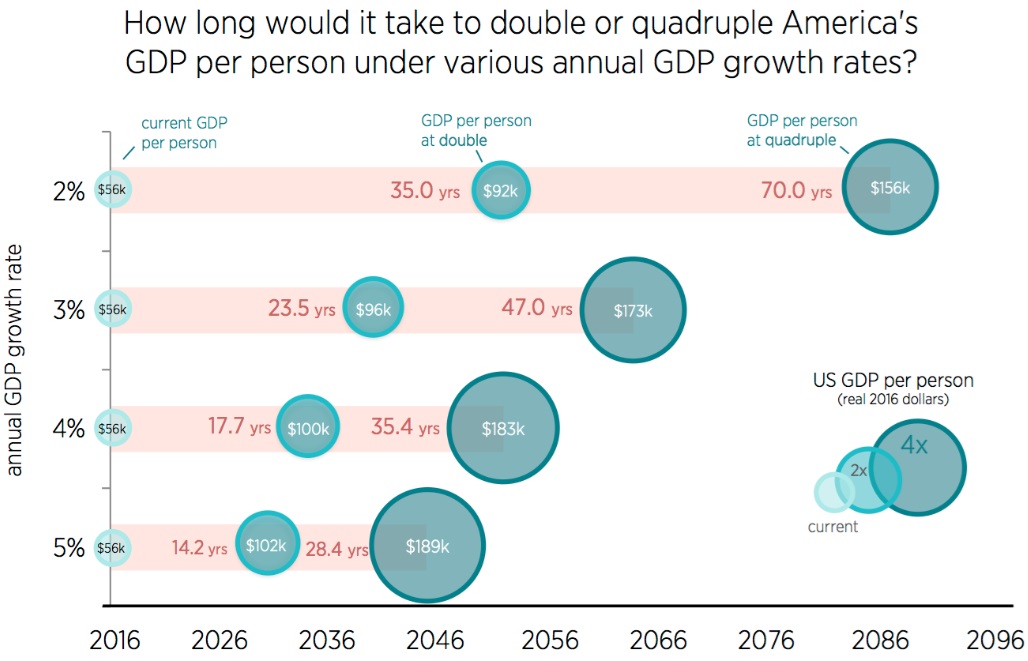
Just as trend lines are important for fiscal policy, they are perhaps even more important when looking at economic performance. Even small difference in annual growth rates, for instance, can lead to big changes in prosperity within a couple of decades. And enormous changes over longer periods of time. All of which explains why I’m […]
Leftists Against Growth: Honest, but Wrong
“Democracy is on the Ballot”: California Democrats Seek to Prevent Voters from Approving New Taxes
01 Jun 2024 Leave a comment
in constitutional political economy, income redistribution, law and economics, Public Choice, public economics Tags: constitutional law

“Democracy is on the ballot.” That mantra of President Joe Biden and other democrats has suggested that “this may be our last election” if the Republicans win in 2024. A few of us have noted that the Democrats seem more keen on claiming the mantle of the defenders of democracy than actually practicing. Democrats have […]
“Democracy is on the Ballot”: California Democrats Seek to Prevent Voters from Approving New Taxes
The Waitangi Tribunal Summons; or the more things stay the same
23 Apr 2024 Leave a comment
in law and economics, politics - New Zealand Tags: constitutional law
Graeme Edgeler writes – This morning [April 21], the Wellington High Court is hearing a judicial review brought by Hon. Karen Chhour, the Minister for Children, against a decision of the Waitangi Tribunal. This is unusual, judicial reviews are much more likely to brought against ministers, rather than by them. Chhour is challenging a decision […]
The Waitangi Tribunal Summons; or the more things stay the same
MICHAEL BASSETT: MAORI PUSH FOR PARALLEL GOVERNMENT STRUCTURES
21 Apr 2024 Leave a comment
in comparative institutional analysis, constitutional political economy, economics of bureaucracy, income redistribution, law and economics, liberalism, Marxist economics, politics - New Zealand, property rights, Public Choice, public economics Tags: constitutional law
If you think there is a move afoot by the radical Maori fringe of New Zealand society to create a parallel system of government to the one that we elect at our triennial elections, you aren’t wrong. Over the last few days we have seen calls from one or two Iwi for prior consultation with…
MICHAEL BASSETT: MAORI PUSH FOR PARALLEL GOVERNMENT STRUCTURES
Coastal court action flies under the radar
05 Apr 2024 Leave a comment
in income redistribution, law and economics, politics - New Zealand, property rights, Public Choice Tags: constitutional law, native title
Graham Adams says NZ’s coastline may end up under iwi control. Former Attorney-General and Minister for Treaty of Waitangi Negotiations Chris Finlayson is known for his forthright and sometimes combative language. In 2022, in discussing opposition to co-governance, he referred to “the sour right” and “the KKK brigade”. Last week, in “Te Ao with Moana” broadcast […]
Coastal court action flies under the radar
Anthony Willy on the SOE case and partnership fiction
01 Apr 2024 Leave a comment
in comparative institutional analysis, constitutional political economy, economic history, International law, law and economics, politics - New Zealand, property rights, Public Choice, public economics Tags: constitutional law
Former Judge and barrister Anthony Willy has an excellent post on the famous SOE case which is held up to have decided that the Treaty of Waitangi was a partnership. He demolishes this argument by quoting, well the actual judgment. The case was about acting in good faith. Well worth a read.
Anthony Willy on the SOE case and partnership fiction
Spotlight on the Courts
01 Apr 2024 Leave a comment
in economics of bureaucracy, income redistribution, law and economics, politics - New Zealand, property rights, Public Choice, public economics, rentseeking Tags: constitutional law
Muriel Newman writes – “Houston, we have a problem!” New Zealand’s Supreme Court – the highest court in our land – has been captured by activist judges. What is heartening, is the emergence of a wide range of eminent legal voices all openly criticising the Court and calling for this problem to be addressed. But […]
Spotlight on the Courts
ROGER PARTRIDGE: HOW TO REIN IN AN ACTIVIST SUPREME COURT
22 Mar 2024 Leave a comment
in comparative institutional analysis, constitutional political economy, economic history, economics of bureaucracy, law and economics, liberalism, Marxist economics, politics - New Zealand, property rights, Public Choice Tags: constitutional law, rule of law
My earlier column this month, New Zealand’s highest court could be facing a turning point, prompted a flood of feedback from business readers and lawyers alike. A common query was what Parliament can do to restrain an overreaching judiciary. This week I discuss two steps Parliament should not hesitate to take. But first a quick recap. The…
ROGER PARTRIDGE: HOW TO REIN IN AN ACTIVIST SUPREME COURT
RODNEY HIDE interviews PROF PAUL MOON
19 Feb 2024 Leave a comment
in economic history, economics of crime, economics of education, International law, law and economics, liberalism, Marxist economics, politics - New Zealand, property rights Tags: constitutional law
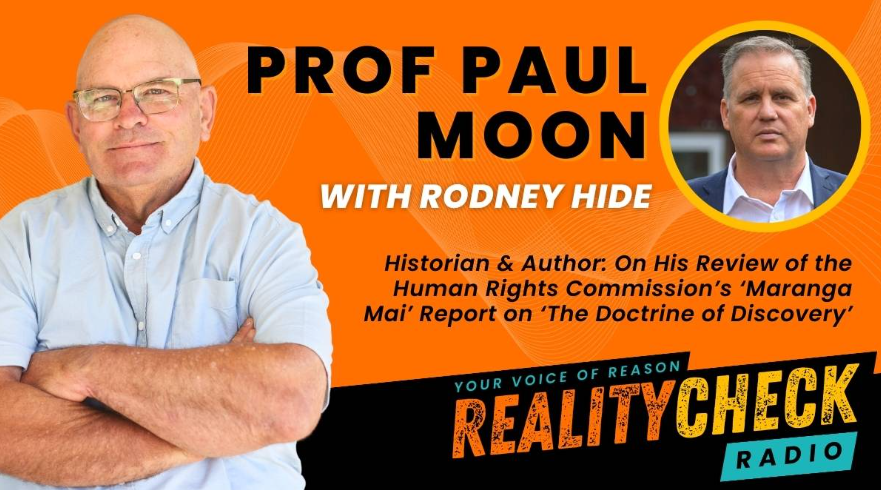
PROF PAUL MOON: Historian and Author: On His Review of The Human Rights Commission’s ‘Maranga Mai’ Report on ‘The Doctrine of Discovery’ Paul Moon joins Rodney to discuss his review of the Human Rights Commission’s ‘Maranga Mai’ report on ‘The Doctrine of Discovery’. Listen here You can read Paul’s review on ‘The Doctrine of Discovery’…
RODNEY HIDE interviews PROF PAUL MOON
Congress and Courts enable Energy and Climate Fantasy and Tyranny
15 Feb 2024 Leave a comment
in comparative institutional analysis, economics of bureaucracy, economics of climate change, economics of regulation, energy economics, environmental economics, environmentalism, global warming, law and economics, politics - USA, property rights, Public Choice Tags: constitutional law
Supreme Court should end “Chevron deference” to restore checks, balances and reality
Congress and Courts enable Energy and Climate Fantasy and Tyranny
BRIAN EASTON: Te Tiriti as a social contract
12 Feb 2024 Leave a comment
in comparative institutional analysis, constitutional political economy, economics of bureaucracy, income redistribution, law and economics, liberalism, Marxist economics, politics - New Zealand, property rights, Public Choice, rentseeking Tags: Age of Enlightenment, constitutional law, regressive left
Interpreting the agreement made at Waitangi as a social contract is a way to move forward on treaty issues (This column follows ‘Our Understandings Of Te Tiriti Has Evolved Organically’.) Brian Easton writes – Te Tiriti is in the form of a social contract of the sort that political theorists have discussed since the seventeenth […]
BRIAN EASTON: Te Tiriti as a social contract
The “Unassailable” Theory Faces a Potential Unanimous Rejection
10 Feb 2024 Leave a comment
in comparative institutional analysis, constitutional political economy, economics of media and culture, law and economics, liberalism, Marxist economics, politics - USA, Public Choice Tags: 2024 presidential election, constitutional law, regressive left

This week, the argument before the Supreme Court in Trump v. Anderson captivated the nation as the justices considered the disqualification of former President Donald Trump from the 2024 presidential ballot. For some of us, the argument brought back vivid memories of covering Bush v. Gore almost 25 years ago. While one justice (Clarence Thomas) […]
The “Unassailable” Theory Faces a Potential Unanimous Rejection
The highly inconvenient Sir Apirana Ngata
10 Feb 2024 Leave a comment
in comparative institutional analysis, constitutional political economy, economic history, income redistribution, law and economics, liberalism, Marxist economics, politics - New Zealand, property rights, Public Choice, rentseeking Tags: constitutional law
Graham Adams writes — Sir Apirana Ngata has a pre-eminent place in the pantheon of Māori luminaries. He is widely regarded as a visionary leader who, in an illustrious political career, championed biculturalism when assimilationist policies were the norm. He energetically promoted Māori language and culture, and land reform. He was an MP for nearly […]
The highly inconvenient Sir Apirana Ngata
“The Spirit of Aloha”: The Hawaii Supreme Court Challenges the U.S. Supreme Court Over Gun Rights
10 Feb 2024 Leave a comment
in comparative institutional analysis, constitutional political economy, economic history, economics of crime, law and economics, liberalism, politics - USA, property rights Tags: constitutional law, gun control

It has been 65 years since Hawaii became a state, but the Hawaiian Supreme Court appears to be having second thoughts. In an extraordinary ruling, the unanimous Supreme Court rejected the holdings of the United States Supreme Court on the Second Amendment as inapplicable to the 50th states. Hawaii apparently is controlled not by the…
“The Spirit of Aloha”: The Hawaii Supreme Court Challenges the U.S. Supreme Court Over Gun Rights
 Utopia, you are standing in it!
Recent Comments