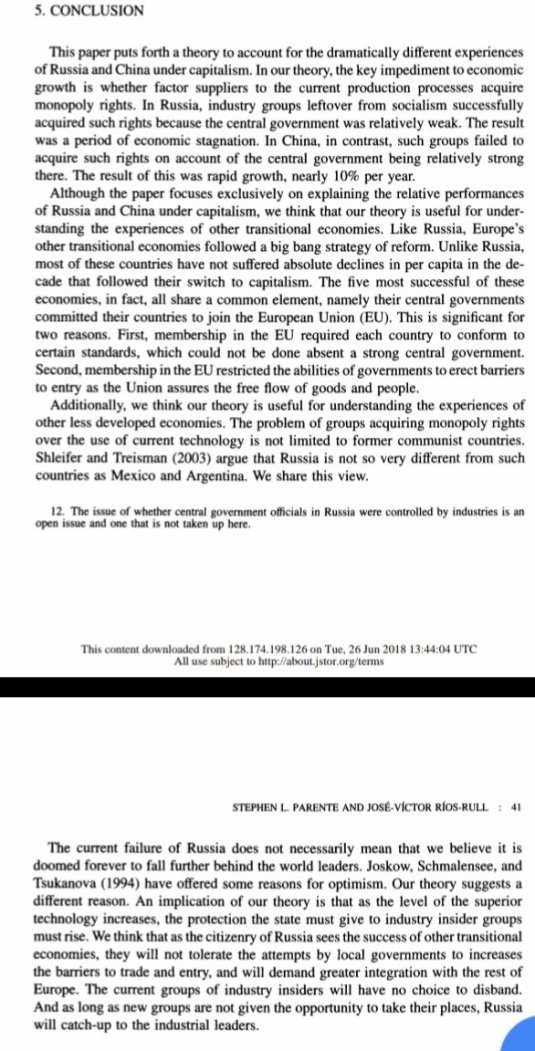
The Chinese and Russian transitions explained
24 Aug 2019 Leave a comment
in comparative institutional analysis, constitutional political economy, development economics, economic history, economics of bureaucracy, growth disasters, growth miracles, income redistribution, industrial organisation, Marxist economics, Public Choice, rentseeking Tags: China, economics of federalism, fall of communism, Russia
Epstein on Segregation and Exploitation in the Old South
18 Jul 2019 Leave a comment
in applied price theory, comparative institutional analysis, economic history, economics of information, economics of regulation, labour economics, labour supply, law and economics, politics - USA, Public Choice, public economics Tags: economics of federalism, racial discrimination

Spain Is Not A Federation: Autonomous Communities of Spain Explained
22 Mar 2017 Leave a comment
in constitutional political economy Tags: economics of federalism, Spain
Hayek on Interstate Federalism and Free Trade
08 Jun 2016 Leave a comment
in applied price theory, constitutional political economy Tags: Common market, economics of federalism
How state borders evolved over time in the USA
23 May 2016 Leave a comment
in economic history Tags: American history, economics of federalism
@EricCrampton @KhyaatiA should New Zealand divide into Cantons?
22 Oct 2015 Leave a comment
in comparative institutional analysis, constitutional political economy, economics of bureaucracy, politics - New Zealand, Public Choice Tags: economics of federalism, Switzerland
Suggestions by the New Zealand Initiative for regions to be able to ask to be exempt from some national policies was against a background that New Zealand is too small to be a federal state. The New Zealand provinces were abolished in 1876. Switzerland seems to still put bread in the shops despite having many tiny Cantons and half-Cantons.
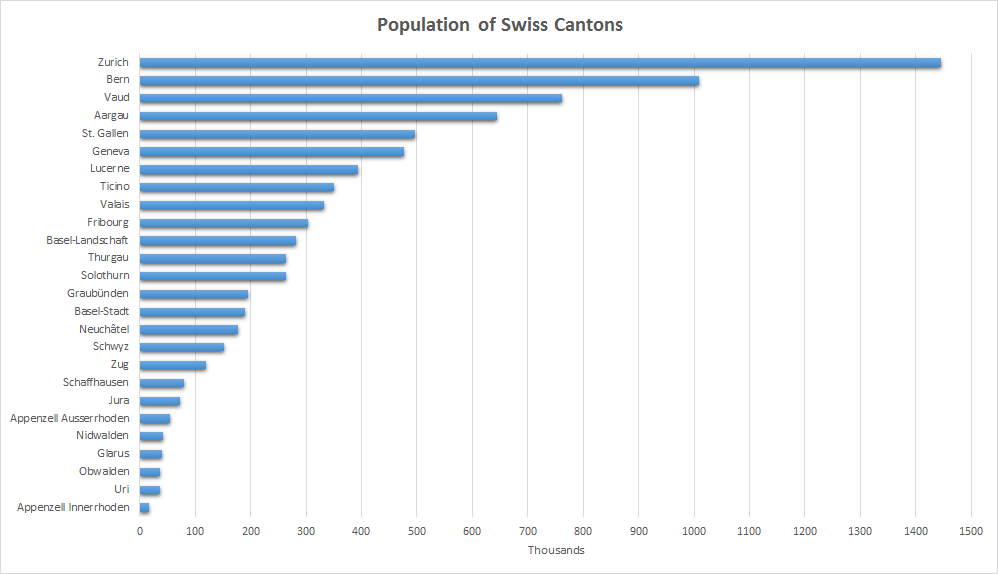
Source: Swiss Statistics – Cantons, communes.
So many American states have smaller populations are New Zealand, half in all, that is difficult to present them on a chart. All managed to be richer the New Zealand despite the horrors of federalism or because of it. These small state populations are before considering how much local government legislative power there is, including taxing and spending powers, city income taxes and city sales taxes, and county and local police forces.
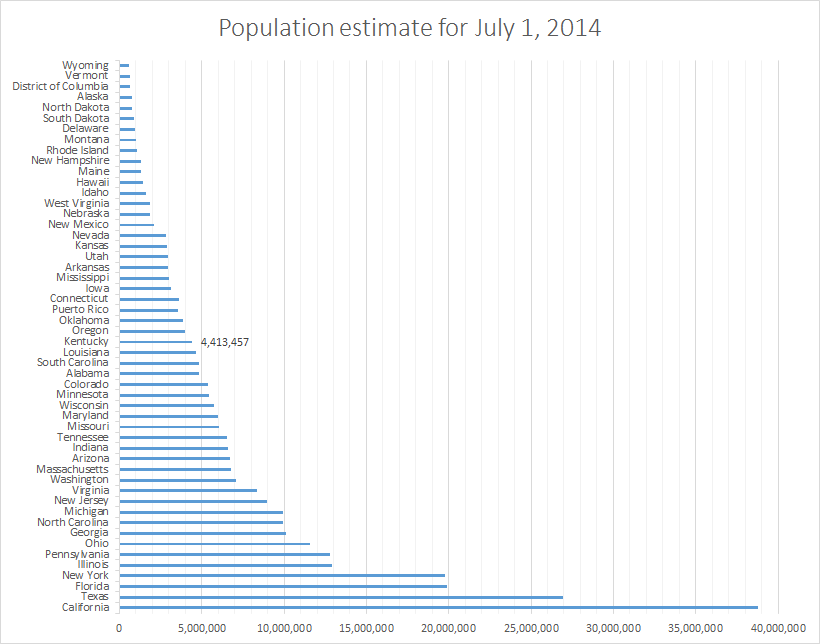
Source: List of U.S. states and territories by population – Wikipedia, the free encyclopedia.
The median national population size of countries is not much more than New Zealand’s current population.
- Controlling for location, Easterly and Kraay (2002) found that smaller states were richer than other states in per capita real GDP.
- Rose (2006) reviewed the impact of size on the level of income, inflation, material well-being, health, education, and the quality of a country’s institutions and found that small countries are more open to trade than large countries, but are not systematically different otherwise.
As I argued in my previous post on distance, New Zealand were prosperous from the time of European settlement despite a small population and their great distance from the main markets of the world on each side of the Atlantic.
Half the world's population lives inside this circle. http://t.co/XlTeEsTZkn—
Weird Science (@weird_sci) October 17, 2015
Of the ten richest countries in terms of GDP per capita, only four have populations above one million people (Alesina 2003). These countries are the USA (290 million people), Switzerland (7 million people), Norway (4 million people) and Singapore (3 million people). Of these four nations, two are below the global national population median of six million (Alesina 2003).
The politics of marijuana in the USA
30 Sep 2015 Leave a comment
in comparative institutional analysis, constitutional political economy, economics of crime, law and economics, politics - Australia, politics - New Zealand, politics - USA, Public Choice Tags: economics of federalism, laboratory federalism, marijuana decriminalisation, meddlesome preferences, medical marijuana, nanny state
In representative democracy that is a unitary state such as New Zealand, the issue on marijuana decriminalisation is who will change their vote to vote against a party who advocates marijuana decriminalisation under a MMP system where all elections are close.
A plurality of Americans back marijuana reform. Another 20% don't care. Only 3 in 10 oppose.
msnbcmedia.msn.com/i/MSNBC/Sectio… http://t.co/UlvBT1D0ms—
Christopher Ingraham (@_cingraham) September 29, 2015
In a strong federal state, where some states allow citizen initiated referendums to change the law, it is possible to pioneer reform without that backlash. Then laboratory federalism takes over. Subsequent to the decriminalisation of marijuana or medical marijuana by various state governments, the Congress defunded federal marijuana drug law enforcement in states who had decriminalised marijuana. That major reform was underreported.


 Utopia, you are standing in it!
Recent Comments