The value of learning English
10 May 2016 Leave a comment
in development economics, economics of media and culture, human capital, labour economics Tags: economics of language
Twitter and the fraying of civilisation
16 Oct 2015 Leave a comment
in economics of education, economics of media and culture Tags: economics of language, network goods, Twitter
The original definition of egregious
15 Sep 2015 Leave a comment
in economic history, economics of media and culture Tags: economics of language, network goods
The original definition of "egregious" was "remarkably good." Literally. http://t.co/r8lUkG7NAs—
Lisa Wade, PhD (@lisawade) April 16, 2015
Grammar pedants don’t know when to stop
04 Aug 2015 Leave a comment
in economics of crime, health economics, law and economics Tags: economics of language
China’s languages mapped
06 May 2015 Leave a comment
in economics of information, economics of media and culture Tags: China, economics of language

How many words did Shakespeare coin?
30 Apr 2015 Leave a comment
in economic history Tags: economics of language, English, Shakespeare
The history of English mapped
21 Apr 2015 Leave a comment
in economics of education, economics of information Tags: economics of language, English

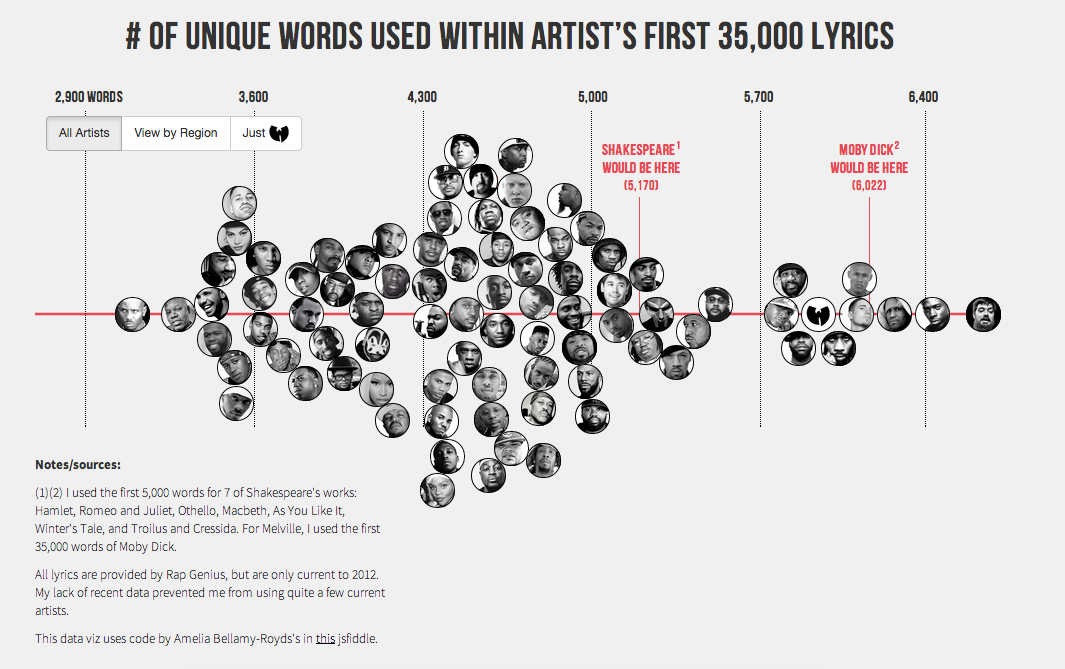
Vocabulary of Shakespeare vs. rappers
01 Apr 2015 Leave a comment
in economic history, economics of media and culture, Music Tags: economics of language, Rap music, Shakespeare
The History of the English Language, Animated in 10 minutes
28 Jan 2015 Leave a comment
in economic history, population economics Tags: economics of language, History of English
via http://www.brainpickings.org/2013/11/13/open-university-history-of-the-english-language-animated/
Academics push to revive forgotten words – World – NZ Herald News
14 Jan 2015 Leave a comment
in liberalism Tags: economics of language

Caterwaul: A shrill howling or wailing noise.
Concinnity: The skillful and harmonious arrangement or fitting together of the different parts of something.
Flapdoodle: Nonsense.
Knavery: A roguish or mischievous act.
Melange: A mixture of different things.
Obambulate: To walk about.
Opsimath: A person who begins to learn or study only late in life.
Philistine: A person who is hostile or indifferent to culture and the arts, or who has no understanding of them.
Rapscallion: A mischievous person.
April Fools’ Day was better than Christmas for the young rapscallion.
Subtopia: Monotonous urban sprawl of standardised buildings.
via Academics push to revive forgotten words – World – NZ Herald News.

New Study Reveals Most Influential Languages | IFLScience
17 Dec 2014 Leave a comment
in economics of media and culture Tags: economics of language, network economics

An interactive version of this map is available on MIT’s website.
 Utopia, you are standing in it!
Recent Comments