Susan Hornsby-Geluk writes: Among the most controversial aspects of the recently enacted Employment Relations Amendment Act 2026 is the introduction of a high-income threshold for personal grievance claims. Under the new provisions, employees earning $200,000 or more in annual remuneration will lose the right to bring a personal grievance for unjustified dismissal, or an unjustified…
A worthwhile trade off
A worthwhile trade off
25 Mar 2026 Leave a comment
in applied price theory, economics of regulation, human capital, labour economics, labour supply, law and economics, occupational choice, politics - New Zealand, property rights Tags: employment law, offsetting behavior, unintended consequences
The Hidden Cost of Hard-to-Fire Labor Laws: Why European Firms Don’t Take Risks
08 Mar 2026 Leave a comment
in applied price theory, economics of bureaucracy, economics of regulation, entrepreneurship, labour economics, law and economics, managerial economics, organisational economics, personnel economics, property rights, Public Choice, theory of the firm, unemployment Tags: creative destruction, employment law, European Union, Germany
In our textbook, Modern Principles, Tyler and I write: Imagine how difficult it would be to get a date if every date required marriage? In the same way, it’s more difficult to find a job when every job requires a long-term commitment from the employer. In two new excellent pieces, Brian Albrecht and Pieter Garicano…
The Hidden Cost of Hard-to-Fire Labor Laws: Why European Firms Don’t Take Risks
The terrible Supreme Court decision on Uber
28 Nov 2025 Leave a comment
in applied price theory, economics of regulation, industrial organisation, labour economics, labour supply, occupational choice, politics - New Zealand, transport economics, urban economics Tags: employment law
The Supreme Court has ruled that four Uber drivers are employees of Uber, despite written agreements they are contractors, not employees. The practical effect of this decision is terrible. Uber has been great for passengers. Not only can we hold drivers to account through ratings, we save a lot of money. An Uber to the…
The terrible Supreme Court decision on Uber
The Flaw at the Core of the Supreme Court’s Uber Decision
25 Nov 2025 Leave a comment
in economics of regulation, industrial organisation, labour economics, labour supply, law and economics, occupational choice, politics - New Zealand, Public Choice, rentseeking, transport economics, urban economics Tags: creative destruction, employment law
Roger Partridge writes – The Supreme Court’s Uber judgment (Rasier Operations BV v E Tū Inc [2025] NZSC 162) has delivered clarity of a sort. The Court dismissed Uber’s appeal, upholding the finding that the drivers involved in the proceedings are employees when logged into the Uber app. Yet the decision is deeply flawed. The Court […]
The Flaw at the Core of the Supreme Court’s Uber Decision
If this is employment law, the law needs to change
22 Nov 2025 Leave a comment
in economics of regulation, industrial organisation, labour economics, labour supply, law and economics, managerial economics, occupational choice, organisational economics, personnel economics, politics - New Zealand, property rights, Public Choice, transport economics, urban economics Tags: employment law
Eric Crampton writes – Yesterday [November 17], the Supreme Court ruled that Uber did not merely facilitate connections between four drivers and their various passengers – as Uber has maintained. And that the four drivers were not contractors for Uber either. Instead, those drivers were Uber employees while logged into the app.
If this is employment law, the law needs to change
A labour law reform that works for workers
14 Sep 2025 Leave a comment
in economics of regulation, labour economics, labour supply, law and economics, personnel economics, politics - New Zealand, property rights Tags: employment law
Roger Partridge writes – Every day, New Zealand workers clock longer hours than their peers in most developed nations yet produce far less value per hour worked. This productivity paradox has haunted our economy for decades, condemning workers to lower wages and longer working days. Now, Parliament has a chance to help change this cycle. […]
A labour law reform that works for workers
Expanding the Milei Miracle: Labor Market Deregulation
12 Jul 2025 1 Comment
in development economics, economics of bureaucracy, economics of regulation, growth disasters, labour economics, labour supply, Public Choice Tags: Argentina, employment law

Part I of this video series gave a brief summary of how Javier Milei’s free market policies have rejuvenated Argentina’s economy. But more reform is needed and this second video makes the case for labor market deregulation. Politicians impose so-called employment protection laws because of “public choice.” To be more specific, they understand that the […]
Expanding the Milei Miracle: Labor Market Deregulation
Unfettered: Fishback 25 Years Later
25 Jun 2025 Leave a comment
in applied price theory, economic history, history of economic thought, human capital, labour economics, labour supply, politics - USA, poverty and inequality Tags: economics of immigration, employment law, monopsony
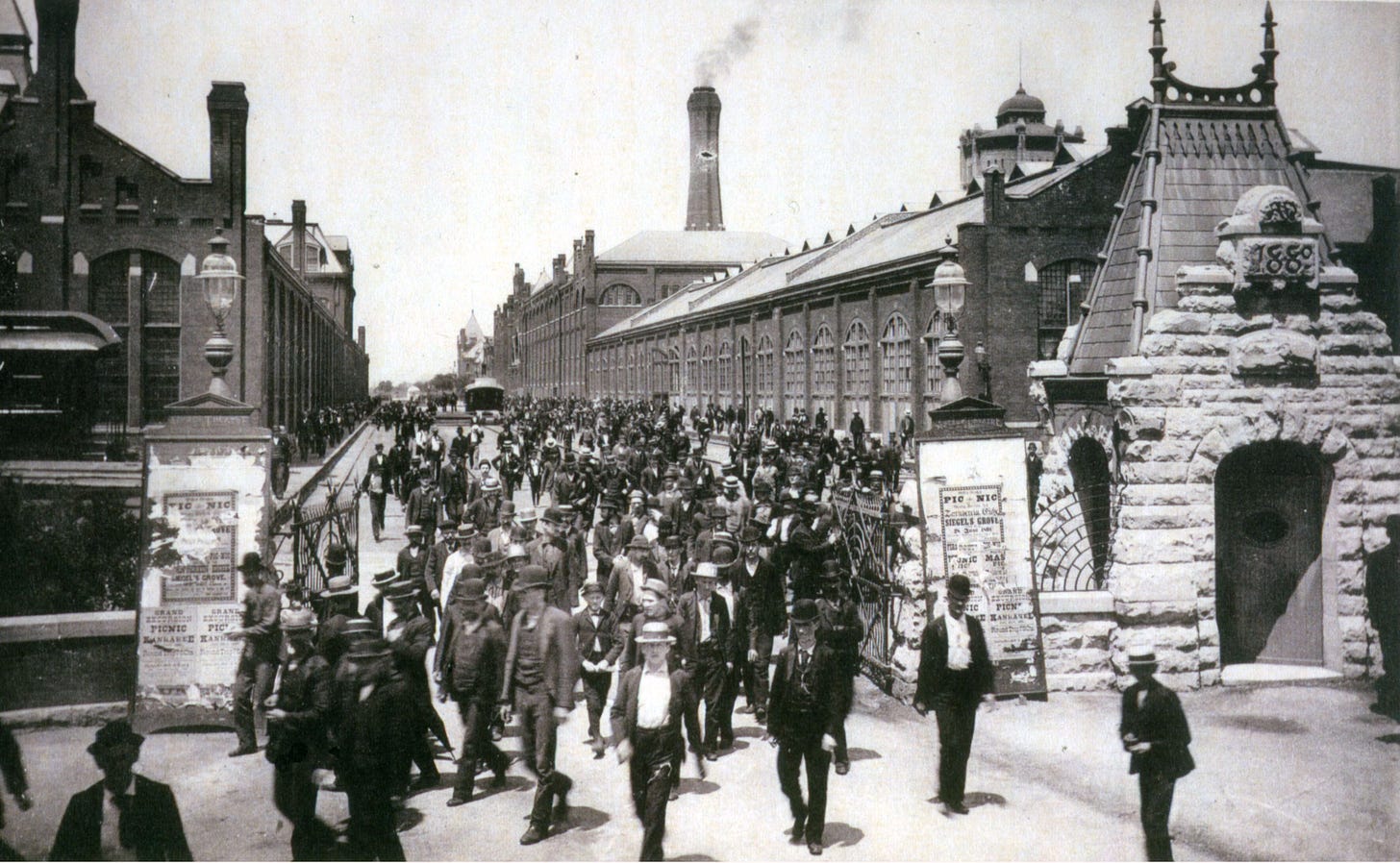
A quarter century ago, economist Price Fishback published “Operations of ‘Unfettered’ Labor Markets: Exit and Voice in American Labor Markets at the Turn of the Century” 1,762 more words
Unfettered: Fishback 25 Years Later
No Exit, No Entry
05 Jun 2025 Leave a comment
in applied price theory, development economics, economics of bureaucracy, economics of regulation, growth disasters, growth miracles, industrial organisation, labour economics, labour supply, law and economics, property rights, Public Choice, survivor principle Tags: employment law, India
In our textbook, Modern Principles, Tyler and I contrast basic U.S. labor law, at-will employment—where employers may terminate workers for any reason not explicitly illegal (e.g., racial or sexual discrimination), without notice or severance—with Portugal’s “just cause” regime, which requires employers to prove a valid reason, give advance notice, pay severance, and endure extensive regulatory […]
No Exit, No Entry
The Accumulation of Regulation
21 Feb 2025 1 Comment
in applied price theory, economics of bureaucracy, economics of regulation, labour economics, labour supply, law and economics, politics - USA, property rights, Public Choice, regulation Tags: employment law
Like many who do business in California, I often complain about the regulatory burden (free at last!) People will ask, “So what one regulation would you get rid of?” The problem is that this is a really hard question to answer because in most cases it is not any one regulation in particular, but the…
The Accumulation of Regulation
Mocking European Statism
04 Feb 2025 1 Comment
in applied price theory, Austrian economics, comparative institutional analysis, economic growth, economics of bureaucracy, economics of regulation, entrepreneurship, environmental economics, financial economics, industrial organisation, international economics, labour economics, labour supply, law and economics, liberalism, macroeconomics, Marxist economics, property rights, Public Choice, public economics, rentseeking, survivor principle, theory of the firm Tags: employment law, European Union

I have a special page for humor involving Europe, but I have not added to it since sharing some Brexit humor in 2016. Let’s being the process of catching up with some amusing cartoons and memes mocking our government-loving cousins on the other side of the Atlantic Ocean. I’ve made the serious point that bureaucrats […]
Mocking European Statism
More on Business Dynamism
11 Dec 2024 Leave a comment
in applied price theory, economic history, economics of bureaucracy, economics of regulation, entrepreneurship, financial economics, income redistribution, industrial organisation, labour economics, labour supply, managerial economics, organisational economics, personnel economics, Public Choice, rentseeking, survivor principle, theory of the firm Tags: creative destruction, employment law

Over at the Geek Way, Andrew McAfee has created a startling visualization related to entrepreneurship in the US and EU. The Draghi Report on EU competitiveness is generating a small buzz among economists. One startling claim is thatthere is no EU company with a market capitalisation over EUR 100 billion that has been set up…
More on Business Dynamism
Why are no trillion dollar companies being created in Europe?
07 Dec 2024 1 Comment
in applied price theory, comparative institutional analysis, economics of regulation, entrepreneurship, human capital, industrial organisation, labour economics, labour supply, law and economics, occupational choice, poverty and inequality Tags: employment law
That is the theme of a new Substack by Pieter Garicano, here is one excerpt: These answers, according to a recent paper by Olivier Coste and Yann Coatanlem, two French investors, miss the point: the reason more capital doesn’t flow towards high-leverage ideas in Europe is because the price of failure is too high. Coste estimates that, […]
Why are no trillion dollar companies being created in Europe?
Uber messy
11 Sep 2024 Leave a comment
in applied price theory, comparative institutional analysis, economics of regulation, entrepreneurship, industrial organisation, labour economics, labour supply, law and economics, occupational choice, politics - New Zealand, property rights, Public Choice, transport economics, urban economics Tags: employment law, Uber
Caught a fun phone call from an accountant after this week’s column over at the Dom Post (and Christchurch Press, etc) on the court’s decision in the Uber case.If Uber drivers are employees, rather than contractors, as the Court sees things, how will depreciation on their cars be handled? Contractors can count all those expenses…
Uber messy
Uber ruling – driving in the wrong direction
09 Sep 2024 Leave a comment
in applied price theory, economics of regulation, labour economics, labour supply, law and economics, occupational choice, occupational regulation, property rights, Public Choice, rentseeking, transport economics, urban economics Tags: employment law, Uber
Dr Oliver Hartwich writes – Last week, an Uber driver surprised me in a conversation about the recent Court of Appeal decision classifying four Uber drivers as employees rather than contractors. My driver was blunt. He has no desire to be an employee. He values his flexibility to take breaks and drive when and where […]
Uber ruling – driving in the wrong direction
 Utopia, you are standing in it!
Recent Comments