Socially responsible investments are getting smoked by socially irresponsible investments read.bi/1DOjOdK http://t.co/naKnnje6sY—
BI Markets (@themoneygame) February 23, 2015

This admission has much wider application than Anarcho-communism
27 Mar 2015 Leave a comment
in applied price theory, Marxist economics Tags: expressive politics, expressive voting, Leftover Left, rational ignorance, rational irrationality
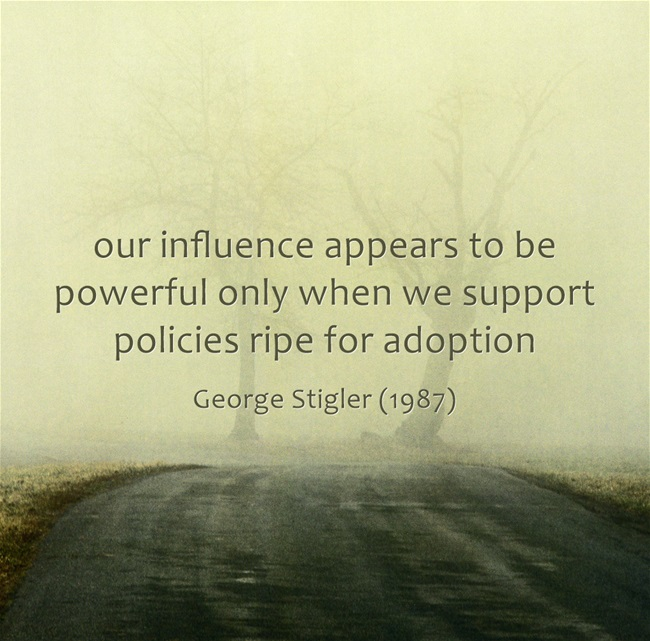
George Stigler on the extensive influence of economists on public policy
20 Mar 2015 Leave a comment
in George Stigler, history of economic thought, Public Choice, rentseeking Tags: evidence-based policy, expressive politics, expressive voting, intellectuals, politics of reform, rational ignorance, rational irrationality
.
Bias in the bias against inheriting riches
14 Mar 2015 Leave a comment
in income redistribution, sports economics Tags: expressive politics, expressive voting, top 1%


Is fossil fuels disinvestment a cheap or expensive futile gesture?
15 Feb 2015 Leave a comment
in environmentalism, financial economics, Public Choice Tags: expressive politics, Fossil Fuels, futile gestures, Global disinvestment day

It is actually expensive to divest from fossil fuels both from the trading costs of selling, and more particularly, continuously monitoring your portfolio to make sure that fossil fuel companies have not entered surreptitiously in the course of companies in your portfolio buying shares in other companies that have subsidiaries in the fossil fuel industry.
Fischel’s study bases its conclusions on a historical comparison of two hypothetical, diversified, value-weighted stock indices for the period 1965-2014. One index included typical fossil fuel stocks, the other did not. The result: The fund that excluded the fossil fuel investments performed worse than the one that included them. Adding in a variety of other factors — attitudes toward risk, compliance and transaction costs — the analysis suggests that the climate-friendly fund would have earned 23 percent less over the last 50 years.
The Guardian quotes studies that argue the following:
Here are some studies, not funded by the oil industry, which indicate recent divestment would, if anything, have had a positive impact on returns and can reduce investment risk
That actually makes their arguments a wee suspicious. Too good to be true. It’s too much of a happy coincidence that moral choices such as disinvestments are also profitable.
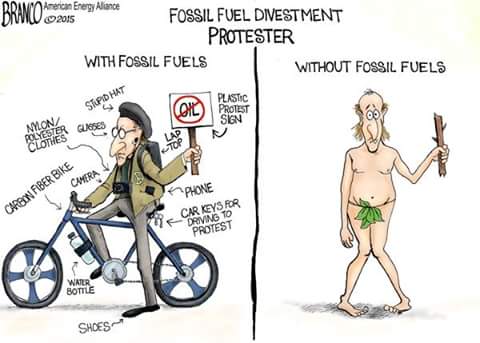
Indeed, if disinvestment was profitable, actively managed portfolios would already have disinvested or marked down the returns and exposure from those shares already to account for the risks of fossil fuel and the temporary profits of peak oil.
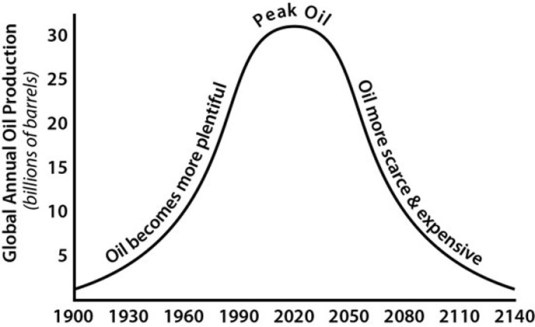
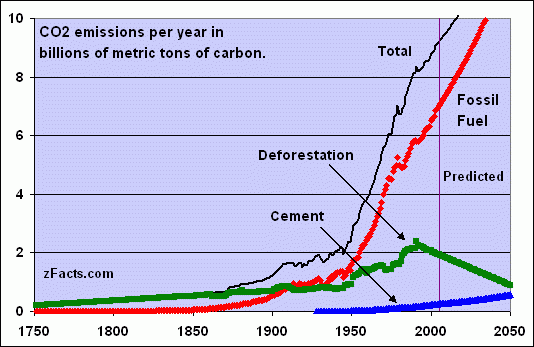
The environmental movement manages to believe in both peak oil – oil will run out in the next two decades or so – and global warming based on runaway carbon emissions for the rest of the century burning the increasingly expensive and increasingly scarce crude oil that had ran out a long time ago previously. Global warming will solve itself as long as we are willing to accept that the environmental movement is genuine in its predictions about peak oil.
At bottom, the Guardian is trying to argue that an actively managed portfolio offers superior returns to an index linked passive portfolio that minimises trading costs. Furthermore, that form of active management requires detailed monitoring of the entire portfolio to ensure that fossil fuel investments do not inadvertently re-enter through the investment decisions of each company in that portfolio.

I can’t remember whether its 70% or 80% of actively managed share portfolios fail to beat the market in any one year. The Guardian’s previously warned in its business pages about actively managed share portfolios swallowing up to 1/3rd of investment returns as management fees.
Figure 1: Who Routinely Trounces the Stock Market?
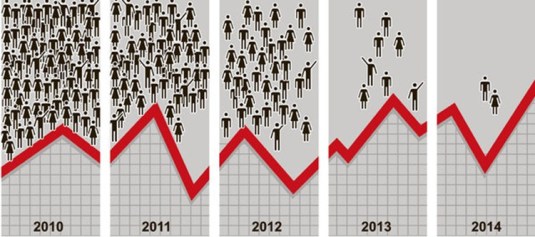
Actively managed portfolios fail to beat a passively managed portfolio with the same composition and diversification as the whole share market itself which trades in shares only for liquidity and to rebalance the portfolio to match new compositions of the share market. Just 2 out of 2,862 actively managed funds managed to beat the market five years a row in the US stock market.
Divestiture from fossil fuels is not a one-off act. There are continual compliance costs and an investment strategy that forecloses using a whole range of low-cost index linked passive investment share portfolio managers. That cannot be denied. . American University said that divesting from these companies would require that AU investments be withdrawn from index funds and commingled funds in favour of more actively managed funds [and] estimated this withdrawal would cause management fees to double.
Does global warming denial and the anti-vaccination movement march to the same anti-science step?
03 Feb 2015 Leave a comment
in climate change, economics of information, economics of media and culture, environmental economics, global warming, health economics, politics - Australia, politics - New Zealand, politics - USA, Public Choice Tags: anti-vaccination movement, climate alarmists, expressive politics, expressive voting, psychology of persuasion

In the last post, I presented evidence, collected as part of the CCP Vaccine Risk Perception study, that showed that the trope has no meaningful connection to fact.
Those who accept and reject human evolution, those who believe in and those who are skeptical about climate change, all overwhelmingly agree that vaccine risks are low and vaccine benefits high.
The idea that either climate change skepticism or disbelief in evolution denotes hostility to science or lack of comprehension of science is false, too. That’s something that a large number of social science studies show. The CCP Vaccine Risk study doesn’t add anything to that body of evidence.
Vaccination rates are a serious issue. Do those that are trying to lift vaccination rates think they going to get anywhere by calling people stupid, corrupt and in the pay of a multinational.
Of course not. This matter is serious. It’s a real public health risk.
People are persuaded to vaccinate through gentle messages providing facts in a way they can understand that also respects their knowledge, their intellect, and their concerns for the safety of the children. You don’t win people over by insulting them.
The climate alarmists are so insulting because they have no interest in persuading the people that are actually talking to. They are reaching out to members on the audience were are on the margin, and appealing to their political base, including the fundraising base by showing how staunch they are in slaying the Dragon.
Obama is doing a Clinton on climate change agreements
12 Nov 2014 Leave a comment
in environmental economics, environmentalism, global warming, politics - USA Tags: climate alarmism, expressive politics, global warming, international law, Kyoto Protocol
Last week, I planned to write a blog about how Obama might do a Clinton: safe in the knowledge that Congress will never approve any of his climate change agreements, he will run round the world signing up to all sorts of ambitious carbon emission reduction goals.
The agreement Obama just signed today with the Chinese after the secret talks over the congressional election period is an example. This secret agreement goes to show that the Obama administration can actually keep a secret.
The agreement with China and any other futures similar agreements will win Obama brownie points with the Left of his party, but not bother anyone else in particular because they know they’ll never get through Congress.
The moment Bush took office in 2001, the Democrats started asking why wouldn’t Bush submit the Kyoto protocol to the Senate for ratification.
Bill Clinton had 801 days left in his administration after he signed the Kyoto protocol in December 1997 to submit it for Senate ratification. He did not lift a finger.
Clinton was safe in the knowledge that prior to the signing of the Kyoto protocol, the Senate voted 95 to nil in July 1997 to not ratify any treaty on climate change that did not impose mandatory obligations on Russia, China and other major developing countries.

President Clinton approved and signed into law appropriations bills for fiscal years 1999, 2000, and 2001 that included language prohibiting the Environmental Protection Agency from using its funds to “issue rules, regulations, decrees, or orders for the purpose of implementation, or in preparation for implementation, of the Kyoto Protocol” until the Protocol is ratified by the Senate and entered into force under the terms of the treaty.

The major feature of the Kyoto Protocol is that it sets binding targets for 37 industrialized countries and the European community for reducing greenhouse gas (GHG) emissions. These amount to an average of five per cent reduction against 1990 levels over the five-year period 2008-2012.

Developing countries, including China and India, weren’t mandated to reduce emissions, given that they’d contributed a relatively small share of the current century-plus build-up of CO2.
The Europeans were happy to sign the Kyoto Protocol after the Americans pulled out because the emissions trading price in any such protocol would be very low because no American companies would have to buy emission credits.
Should we fight for the Ukraine?
16 Mar 2014 15 Comments
in liberalism, Murray Rothbard, Public Choice, war and peace Tags: Canon Sydney Smith, crusading, European wars, expressive politics, Ukraine
Murray Rothbard, in the context of the 1980 Afghan war, quoted Canon Sydney Smith – a great classical liberal in early 19th century England who wrote to his warmongering Prime Minister, thus:
“For God’s sake, do not drag me into another war!
I am worn down, and worn out, with crusading and defending Europe, and protecting mankind; I must think a little of myself.
I am sorry for the Spaniards – I am sorry for the Greeks – I deplore the fate of the Jews; the people of the Sandwich Islands are groaning under the most detestable tyranny; Baghdad is oppressed, I do not like the present state of the Delta; Tibet is not comfortable. Am I to fight for all these people?
The world is bursting with sin and sorrow. Am I to be champion of the Decalogue, and to be eternally raising fleets and armies to make all men good and happy?
We have just done saving Europe, and I am afraid the consequence will be, that we shall cut each other’s throats. No war, dear Lady Grey! – No eloquence; but apathy, selfishness, common sense, arithmetic!”

 Utopia, you are standing in it!
Recent Comments