The Climate Clubs Solution | William Nordhaus
03 Oct 2021 Leave a comment
in applied price theory, applied welfare economics, comparative institutional analysis, development economics, economic history, economics of bureaucracy, economics of regulation, energy economics, environmental economics, global warming, growth miracles, international economic law, International law, politics - Australia, politics - New Zealand, politics - USA, Public Choice, public economics Tags: carbon tax, carbon trading, climate clubs, free riding, international public goods
Impossible to have basic conversation with @mfe_news on climate change economics
29 May 2019 1 Comment
in comparative institutional analysis, constitutional political economy, environmental economics, global warming, international economics, International law, law and economics, politics - New Zealand, Public Choice Tags: club goods, free riding, international public goods
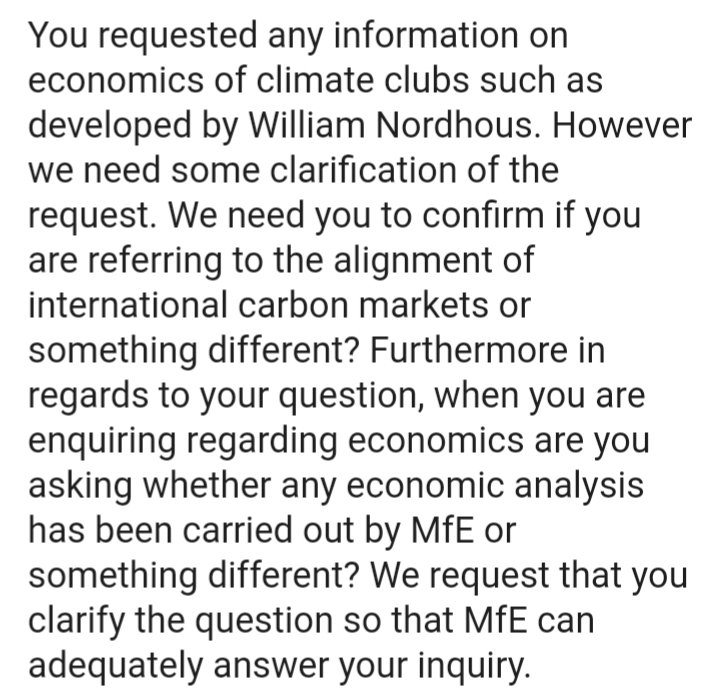
Note to a jetlagged @jamespeshaw from William Nordhous
16 Dec 2018 Leave a comment
in applied price theory, economics of bureaucracy, environmental economics, global warming, income redistribution, international economic law, International law, politics - Australia, politics - New Zealand, politics - USA, property rights, Public Choice, public economics, rentseeking Tags: climate activists, free riding, game theory
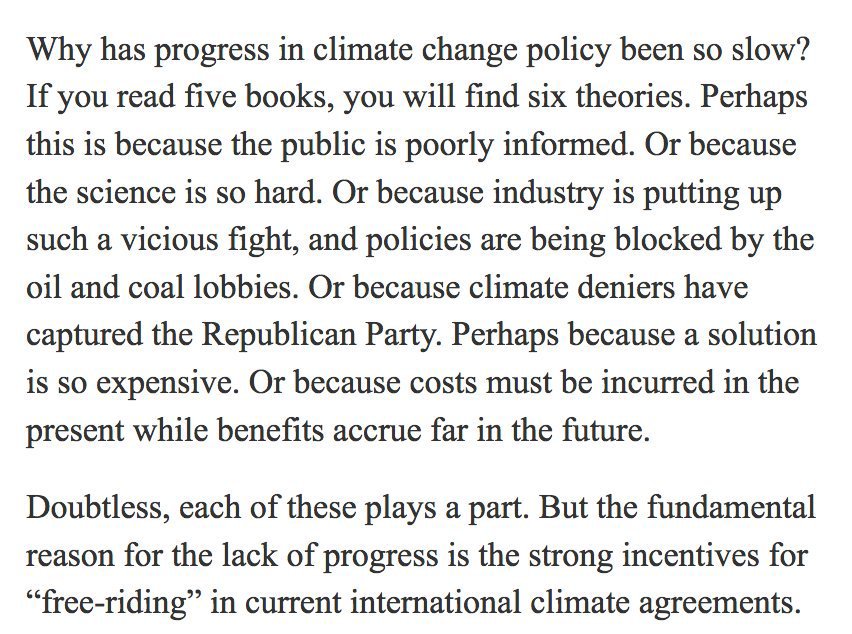
#VirtueSignalling @nzprocom on bit players leading the way in global public good supply
27 Apr 2018 Leave a comment
in applied price theory, applied welfare economics, energy economics, environmental economics, global warming, politics - New Zealand, Public Choice, public economics, rentseeking Tags: free riding, international public goods
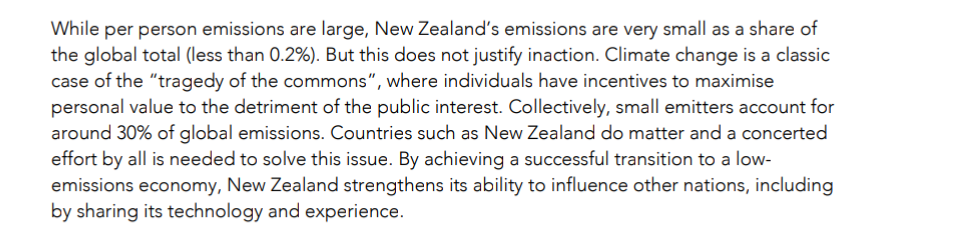
Climate economics (UG): International environmental agreements in theory
26 Jun 2017 Leave a comment
in applied price theory, comparative institutional analysis, economics of bureaucracy, energy economics, environmental economics, global warming, international economics, Public Choice Tags: free riding, game theory, global warming, international public goods
THE PARIS CLIMATE AGREEMENT WON’T CHANGE THE CLIMATE
17 Feb 2017 Leave a comment
in applied price theory, environmental economics, global warming, Public Choice Tags: climate alarmism, climate treaties, free riding, international public goods
Post-disaster co-operation: The voluntary provision of weakest-shot public goods
16 Nov 2016 Leave a comment
in applied price theory, economics of natural disasters, public economics Tags: economics of alliances, free riding, post-disaster cooperation, public goods, weakest shot public goods
After a natural disaster, both the economic and social fabric and the survival of individual employers each become weakest-shot public goods. The provision of these public goods temporarily depend by much more than is usual on the minimum individual contributions made – the weakest shots made for the common good. The supply of most public goods usually is not dependent on the contributions of any one user.
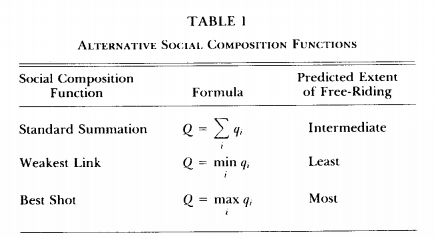
The classic example of a weakest shot public good by that brilliant applied price theorist Jack Hirschleifer is a dyke or a levee wall around a town. It is only as good as the laziest person contributing to its maintenance on their part of the levee. Vicary (1990, p. 376) lists other examples:
Similar examples would be the protection of a military front, taking a convoy across the ocean going at the speed of the slowest ship, or maintaining an attractive village/landscape (one eyesore spoils the view).
Many instances of teamwork involve weak-link elements, for example moving a pile of bricks by hand along a chain or providing a theatrical or orchestral performance (one bad individual effort spoils the whole effect.)
Most doing the duty is essential to the survival of all after a natural disaster. The alliances we call societies and the firm, normally not in danger of collapse, are threatened if there is a natural disaster. In these highly unusual circumstances, alliance-supportive activities, greater cooperativeness and self-sacrifice become an important public good.
In normal periods when threats are small, what social control mechanisms that are in place are sufficient and there is no need for exceptional behaviour and self-sacrifice.
Everyone has an interest in the continuity of the economic and social fabric and the survival of their employers in times of adversity. Individual contributions to these national and local public goods become much more decisive after a natural disaster.
In normal times people behave in a conventionally cooperative way because individually they find it profitable to do so. There is some slippage around the edges and there are social control mechanisms to deter illegal conduct and supply public goods.
As the threat to the social and economic fabric grows after a natural disaster, eventually the social and economic balance may hang by a hair. When this is so, any single person can reason that his own behaviour might be the social alliance’s weakest link. International military and political alliances also rise and fall on this weakest link basis.
The Paris treaty on global warming explained
07 Jan 2016 Leave a comment
in energy economics, environmental economics, global warming Tags: climate alarmism, climate treaties, free riding, rational irrationality
@CarlyFiorina says it all on action to fight global warming @jamespeshaw @AndrewLittleMP @garethmorgannz
24 Oct 2015 Leave a comment
in applied price theory, comparative institutional analysis, energy economics, environmental economics, global warming, Public Choice, rentseeking Tags: 2016 presidential election, climate alarmists, expressive voting, free riding, game theory, global warming, international public goods, rational ignorance, rational irrationality
Why America refuses to sign climate treaties that don’t include the BRICs
12 May 2015 Leave a comment
in environmental economics, global warming, international economic law, international economics Tags: climate alarmism, climate treaties, free riding, game theory, global warming
The shifting sources of greenhouse gas emissions
24 Feb 2015 Leave a comment
in development economics, environmental economics, global warming, growth miracles, politics - Australia, politics - New Zealand, politics - USA Tags: China, climate alarmism, free riding, game theory, global public goods, global warming


How to negotiate a treaty on global warming
20 Mar 2014 Leave a comment
in climate change, economics, environmental economics, politics, Thomas Schelling Tags: credible commitments, free riding, international collective action, treaty negotiations
I found the best writer on global warming to be Thomas Schelling. Schelling has been involved with the global warming debate since chairing a commission on the subject for President Carter in 1980.

Schelling is an economist who specialises in strategy so he focuses on climate change as a bargaining problem. Schelling drew from his experiences with the negotiation of the Marshall Plan and NATO.
International agreements rarely work if they talk in terms of results. They work better if signatories promise to supply specific inputs – to perform specific actions now.
- Individual NATO members did not, for example, promise to slow the Soviet invasion by 90 minutes if it happened after 1962.
- NATO members promised to raise and train troops, procure equipment and supplies, and immediately deploy these assets geographically. All of these actions can be observed, estimated and compared quickly. The NATO treaty was a few pages long.
The Kyoto Protocol commitments were not based on actions but on results, to be measured after more than a decade and several elections and a recession or two in between.
Climate treaties should promise to do certain actions now such as invest in R&D and develop carbon taxes that return the revenue as tax cuts. If the carbon tax revenue is fully refunded as tax cuts, less reliable countries, in particular, have an additional incentive to collect the carbon tax properly to keep their budget deficits under control.
 Utopia, you are standing in it!
Recent Comments